
Your cactus sits on the windowsill looking wrong: the base feels soft, the skin has gone yellow or translucent, and the soil still smells damp days after you watered.
The short version: Yes, an overwatered cactus can usually be saved if you act while some roots or the upper stem are still firm and green. Mild cases recover with a few weeks of drying out.
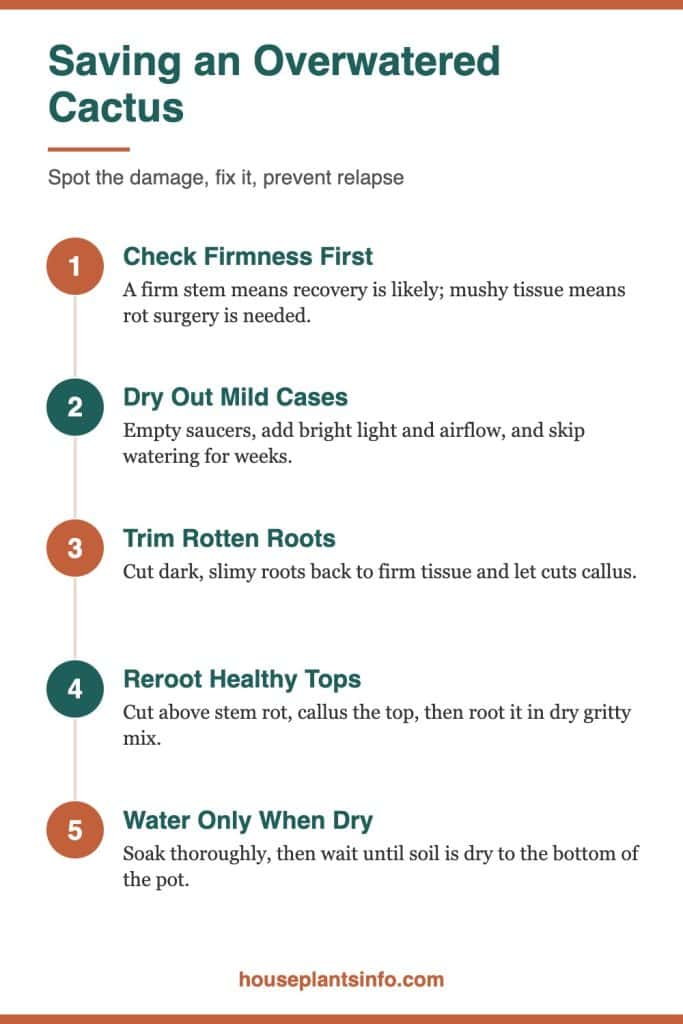
Rotted plants need trimming, repotting or rerooting a healthy top cutting.
This guide covers how to read the damage, the exact rescue steps for each level of rot, and how to keep it from happening again.
Check These First
- Press the stem gently near the soil line. Firm means there is time; mushy or hollow means rot has started.
- Push a finger or wooden skewer 2 inches into the soil. If it is wet days after watering, the pot is holding too much moisture.
- Look under the pot. No drainage hole, or a saucer holding water, is the most common cause.
- Sniff the soil. A sour or rotten smell points to root rot.
- Check for black, brown or orange spots that spread upward from the base.
How Do You Know Your Cactus Is Overwatered?
An overwatered cactus turns soft, swollen or discolored, usually starting at the base and working upward. Healthy cactus tissue is firm, evenly colored and springs back when pressed lightly.
A soil moisture meter or a plain wooden chopstick pushed to the bottom of the pot will tell you how long the soil stays wet. If it comes out damp more than a week after watering, the roots have been sitting in moisture too long.
Early Warning Signs
The first signs are subtle. The stem may look slightly puffed up or develop small cracks where cells burst from taking in too much water. Color often fades to a paler green or yellow.
Some cacti drop spines or segments easily at this stage. Pads on prickly pear types and segments on holiday cacti may detach with a light touch.
Signs Rot Has Set In
Once rot starts, tissue at the base turns brown, black or translucent and feels mushy. The plant may lean or wobble in the pot because the roots holding it are gone.
A foul smell, fuzzy mold on the soil, or dark streaks moving up the stem all mean fungal or bacterial rot is active. These need surgery, not just drying out.
Overwatering vs. Other Problems
Several issues look similar, so rule them out before you unpot.
| Symptom | Overwatering | Underwatering | Other likely cause |
|---|---|---|---|
| Shriveled, wrinkled stem | Only if roots have rotted | Common, stem firm but thin | None |
| Soft, mushy base | Very common | Rare | None |
| Yellowing | Starts at base, soft | Overall dullness, firm | Too much direct sun, often on one side |
| White cottony spots | Not related | Not related | Mealybugs |
| Pale, stretched growth | Not related | Not related | Too little light |
White fluff on the stem or on the roots when you unpot is a pest problem, and you can read more about whether a cactus can get mealybugs and how to treat them.
Holiday cacti are different from desert cacti. They are forest plants that want more regular moisture, so overwatered Christmas cactus care follows slightly different rules than the steps below.

Can an Overwatered Cactus Be Saved? It Depends on the Damage
Most overwatered cacti can be saved, but the method depends on how far the damage has spread. The rule is simple: any firm, green, healthy tissue can potentially grow new roots.
Mild: Wet Soil, Firm Plant
If the soil is soggy but the stem is firm and the base looks normal, the roots are probably still intact. Drying out and correcting the potting mix is usually enough.
Recovery at this stage is highly likely. You may see slight wrinkling as the plant rebalances, which is normal.
Moderate: Some Root Rot, Firm Stem
If you unpot and find some brown, mushy roots alongside firm white or tan ones, the plant can be saved by trimming and repotting. The stem above the soil should still feel solid.
Success depends on how many healthy roots remain. Even a small root mass can support the plant while it regrows.
Severe: Rot in the Stem
When soft, dark tissue climbs into the stem, the bottom is lost. The plant can still be saved by cutting above the rot and rerooting the healthy top as a cutting.
When It Cannot Be Saved
If the whole plant is soft, collapsed or hollow, with no firm green tissue anywhere, it cannot recover. Discard it with its soil and wash the pot in hot, soapy water before reusing it.
Why Too Much Water Hurts a Cactus
Cactus roots need air as much as water. When soil stays wet, air pockets fill with water, roots suffocate, and rot organisms that thrive in soggy soil move in.
How Cacti Are Built
Cacti store water in thick stems and can go weeks without it. Their roots are fine and shallow, designed to soak up a quick rain and then dry out.
That design means the plant cannot use extra water. Constant moisture just sits around the roots until they break down.
What Happens Indoors
Indoor conditions make overwatering easier. A cactus several feet from a window gets far less light than it would outdoors, so it uses water slowly.
In winter, most cacti go semi-dormant and need very little water. Watering on a summer schedule from November through February is one of the most common ways cacti rot indoors.
Why Pot and Soil Matter So Much
Regular potting soil holds moisture for a long time. In a pot without a drainage hole, or in a large pot with lots of extra soil, a cactus can sit wet for weeks after one watering.
Decorative cache pots and saucers also trap water. A cactus that looks dry on top may be standing in a puddle.
Mild Overwatering: How to Dry Out a Cactus Safely
For a firm plant in soggy soil, stop watering, improve drainage, and give it bright light and airflow. Most mild cases settle within 2 to 4 weeks.
Get Water Out of the Pot
Empty any saucer or cache pot right away. Tip the pot on its side for a few minutes to let trapped water run out of the drainage hole.
If the pot has no hole, unpot the plant. Leaving it in a sealed container means the soil may never dry.
Speed Up Drying
Move the cactus to your brightest spot. A south or west window, within 1 to 2 feet of the glass, works well indoors. A grow light placed 6 to 12 inches above the plant helps in dim apartments.

Gentle airflow from a fan on low or a cracked window speeds evaporation. Keep the plant away from cold drafts and directly on top of radiators.
Sophia’s tip: If the soil is still wet after a week, slide the root ball out and set it on a few layers of newspaper or a paper towel for 1 to 2 days.
The paper wicks moisture from the outside of the soil much faster than the pot can.
Watch for Changes
Check the base every few days. If it stays firm, keep the plant dry until the soil is completely dry all the way down.
If the base softens or darkens, rot has started below the surface. Move on to the root rot steps immediately.
Root Rot: How to Unpot, Trim and Repot
If the roots are brown, mushy or smell bad, remove the plant, cut away every rotten root, let it dry, and repot in fresh, gritty mix. This is the most reliable rescue for moderate damage.
Gear Up First
Wear thick gloves, or wrap the cactus in a folded towel or several layers of newspaper to handle it. Kitchen tongs work well for small plants.
Wipe a sharp knife or pruning shears with rubbing alcohol before you start, and again between cuts on rotten tissue.
Step-by-Step Rescue
- Ease the cactus out of the pot. Squeeze plastic pots or run a knife around the edge of ceramic ones.
- Gently shake and crumble away all the old soil. Rinse the roots with room-temperature water if needed to see clearly.
- Inspect each root. Healthy roots are firm and white, tan or light brown. Rotten roots are dark, slimy and pull apart easily.
- Cut away all rotten roots back to firm tissue. If the base of the stem has any soft spots, slice those off too until you see clean, pale flesh.
- Let the plant air-dry in a bright spot out of direct sun until the cut ends form a dry callus. This usually takes 3 to 7 days, or up to 2 weeks for thick cuts.
- Repot into a clean pot with a drainage hole and fresh, dry cactus mix.
- Do not water for about 1 week after repotting, so any small root damage can seal.
Choosing the Right Pot
Pick a pot only slightly wider than the plant, usually 1 to 2 inches wider than the stem or root ball. Oversized pots hold extra soil that stays wet.
Unglazed terracotta is a good choice for rescued cacti because the clay wicks water out of the soil. A drainage hole is not optional.
Choosing the Right Mix
Use a cactus and succulent mix, and improve it with extra grit. A blend of roughly half cactus mix and half perlite, pumice or coarse sand drains quickly and keeps air around the roots.
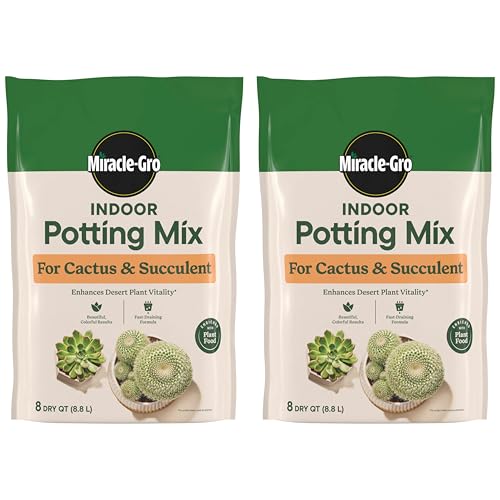
Skip moisture-retaining additives and do not put gravel at the bottom of the pot. A gravel layer raises the wet zone in the soil rather than improving drainage.
Stem Rot: Cut Above the Damage and Reroot the Top
When rot reaches into the stem, cut the healthy upper part off above all discolored tissue, let it callus, and root it as a cutting. The rotted base will not recover.
Making the Cut
Use a clean, sharp knife and slice straight across the stem a little above the highest visible rot. Look at the cut surface carefully.
If you see any brown, orange or dark rings or spots in the flesh, cut again higher up. The surface must be clean and evenly pale green or white before you stop.
Sophia’s tip: Sharpen the cut into a shallow cone by beveling the outer edges slightly. A pointed callus is less likely to cave inward as it dries, and roots tend to emerge more evenly around the edge.
Callusing the Cutting
Set the cutting upright in a dry, empty pot or jar so the cut end does not touch anything. Keep it in bright, indirect light with good airflow.
Thin stems may callus in 3 to 7 days. Thick columnar cacti can take 2 to 3 weeks. The cut should look dry, firm and slightly sunken before planting.
Rooting the Cutting
Place the callused end on top of, or just 1 inch into, dry cactus mix. Prop tall cuttings upright with stakes or stones so they do not tip.
Wait about 1 to 2 weeks before giving a light sip of water, then water sparingly only when the mix is fully dry. Roots typically appear in 2 to 6 weeks in warm conditions around 70°F to 80°F.
The same process applies to columnar species, and the steps to grow Peruvian apple cactus from cutting are a good model for tall, ribbed cacti.
If weeks pass without progress, the usual reasons a Peruvian apple cactus is not rooting (too little warmth, too much water, or a cut that never callused) apply to most rescued cuttings too.
Saving Pups and Offsets
If the main stem is too far gone, look for offsets, pads or branches that are still firm. Remove each one cleanly and treat it as its own cutting.
Aftercare: How to Water and Care for a Recovering Cactus
A recovering cactus needs bright light, warmth and very little water until new roots form. Overcaring is the main reason rescued plants relapse.
Watering After a Rescue
Use the soak-and-dry method once roots are established. Water thoroughly until it runs from the drainage hole, then wait until the soil is completely dry before watering again.
During active growth in spring and summer, that often means every 2 to 4 weeks indoors. In fall and winter, most desert cacti need water only every 4 to 8 weeks, or less in cool rooms.
Light and Temperature
Place the plant in bright light, but ease it back into strong direct sun over 1 to 2 weeks. A weakened cactus can scorch if moved suddenly into a hot south window.
Keep it between about 65°F and 85°F while it roots. Avoid spots near drafty single-pane glass in winter and directly under air conditioning vents in summer.
Signs Recovery Is Working
Look for new spines or fresh growth at the crown, a firm stem, and gentle resistance when you nudge the plant, which means roots are anchoring it.
Slight wrinkling in the first weeks is normal because the plant has fewer roots. It should plump up once roots grow and it receives regular watering.
Hold Off on Fertilizer
Do not fertilize a rescued cactus until it shows active new growth, usually a few months later. Then use a diluted cactus fertilizer once a month in spring and summer only.
How to Keep Your Cactus From Being Overwatered Again
Prevention comes down to four things: a fast-draining mix, a pot with a hole, bright light, and watering by soil dryness rather than by calendar.
Water by Feel, Not Schedule
Check the soil all the way down before every watering. A skewer or moisture meter pushed to the bottom of the pot should come out dry.
Weighing the pot works too. Lift it right after watering and again when it is dry, and you will learn the difference quickly.
Sophia’s tip: In winter, write the date on a strip of tape on the pot each time you water. Seeing that only 3 weeks have passed is often enough to stop an unnecessary watering.
Match Water to Indoor Conditions
Forced-air heat and radiators dry the air, but cacti in winter still use little water because light levels drop. Dry air does not mean dry roots.
Cacti farther than 3 feet from a window, or in north-facing rooms, need much less water than plants right at a south window. A grow light on a 12 to 14 hour timer helps keep them active through Chicago-style gray winters.
Pot and Soil Rules
- Always use a pot with a drainage hole.
- Never leave water in saucers or cache pots for more than 15 minutes.
- Repot every 2 to 4 years into fresh gritty mix, ideally in spring.
- Size up only 1 to 2 inches at a time.
Learn Your Species
Desert cacti and forest cacti have different needs. Columnar species also have their own rhythms, and learning how to care for Peruvian apple cactus shows how watering shifts with size, season and light.
Pet and Kid Safety
The ASPCA lists Christmas cactus as non-toxic to cats and dogs, but many other cacti are not specifically listed. The bigger risk is spines, so keep spiny cacti out of reach of curious pets and kids, especially while handling a rescue.
Your Next Steps
- Press the base of your cactus and check the soil 2 inches down to judge how serious the problem is.
- Empty saucers and move the plant to bright light with gentle airflow today.
- If the base is soft or smells bad, unpot it, trim all rotten roots or stem, and let the cuts callus.
- Repot into a snug pot with a drainage hole and a gritty mix of about half cactus soil and half perlite or pumice.
- Wait at least a week before the first light watering, then water only when the soil is fully dry.
- Cut winter watering back to every 4 to 8 weeks for desert cacti.
Common Questions About Saving an Overwatered Cactus
How long does it take an overwatered cactus to recover?
Mildly overwatered cacti usually stabilize in 2 to 4 weeks once the soil dries. Plants that needed root trimming or rerooting take 1 to 3 months to grow enough new roots to look normal again.
Can a cactus recover from root rot on its own?
No, active root rot keeps spreading as long as the soil stays wet and the infected tissue remains. You need to remove rotten roots, let the plant dry and repot it in fresh, fast-draining mix.
Should I water my cactus after repotting it?
Wait about 1 week after repotting before watering, and longer if you trimmed many roots. Dry soil lets small root wounds seal and reduces the chance of new rot.
Why is my cactus shriveling even though I overwatered it?
A cactus that lost roots to rot cannot take up water, so it shrivels even in wet soil. Check the roots, remove the damaged ones and repot before adding any more water.
Is it better to underwater or overwater a cactus?
Underwatering is far easier to fix. A thirsty cactus usually plumps up within days of a good soak, while overwatering can cause rot that kills the plant.

Hi! I’m Sophia, and I love plants – especially an expert in growing house plants. I stay in Chicago, United States of America, and through my blog and social media platforms, provide tips and tricks on how to grow healthy, vibrant plants indoors. Check out more here.