
You notice that the tall green stems of your Eve’s needle cactus have turned pale, the small pointed leaves along the top are yellow, or a soft yellow patch has appeared near the soil line.
The short version: An Eve’s needle cactus turning yellow is usually caused by too much water, too little light, or the plant’s normal habit of dropping its leaves. Yellow leaves on firm stems are often harmless.
Yellow, soft, or mushy stems point to rot and need fast action.
This guide covers how to tell the causes apart, how to fix each one, and how to set up indoor conditions so the yellowing stops.
Check These First
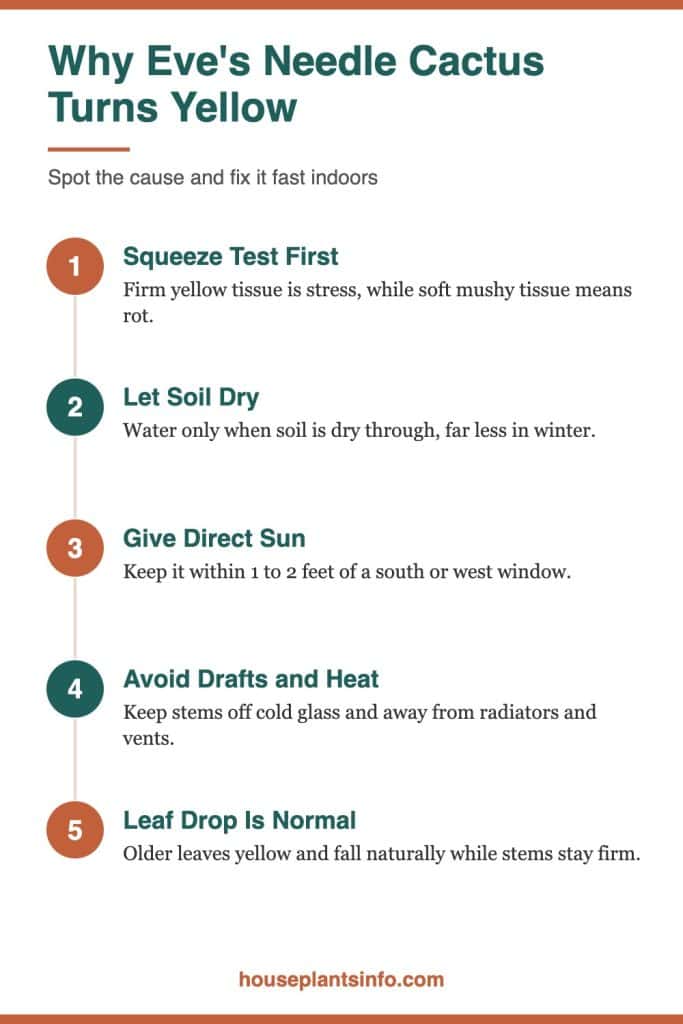
- Squeeze the yellow area gently. Firm tissue suggests light, temperature, or natural leaf loss. Soft or mushy tissue suggests rot.
- Push a finger or wooden skewer 2 inches into the soil. If it is still damp several days after watering, overwatering is the likely cause.
- Look at where the yellow appears. Only the small leaves yellowing is different from the stems themselves losing color.
- Check the window. A plant more than 3 feet from a south or west window, or behind sheer curtains, often goes pale.
- Turn a few stems and look at the joints and leaf bases for white fluff, tiny webs, or brown bumps.
Why Is My Eve’s Needle Cactus Turning Yellow?
Yellowing is the plant’s response to stress, and the location of the color tells you the cause. Leaves, stem tips, stem bases, and whole stems each point to a different problem.
Eve’s needle cactus (Austrocylindropuntia subulata) is a fast, upright cactus from the high Andes. Unlike most cacti, it carries real fleshy leaves, usually 1 to 4 inches long, that grow from the areoles along new stems. These leaves are not permanent, which confuses many owners.
Reading the Pattern
The table below helps match what you see to the most likely cause.
| What you see | Most likely cause |
|---|---|
| Lower leaves yellow and drop, stems stay firm and green | Natural leaf shedding |
| Yellow, soft base or blackening at soil line | Overwatering and root rot |
| Pale, thin, stretched new growth | Not enough light |
| Yellow-white or tan patches on the sun-facing side | Sunburn |
| Yellowing after a cold night near glass | Cold or draft damage |
| Wrinkled, dull yellow stems with dry soil | Underwatering |
| Speckled yellow or patchy color with residue | Pests |
| Slow, overall faded color over months | Old soil or lack of nutrients |
Measuring Instead of Guessing
A soil moisture meter takes much of the guesswork out of watering, since you can read moisture near the roots rather than just the surface.

If light is the issue, a full-spectrum grow light placed 6 to 12 inches above the plant can make up for a dim window.
Track changes for a week or two before making big moves. Cacti respond slowly, and changing water, light, and soil all at once makes it hard to know what worked.
Overwatering and Root Rot: Cause and Fix
Overwatering is the most serious and most common reason for yellow stems. Roots sitting in wet soil lose oxygen, start to rot, and stop moving water to the stems, which then yellow and soften.
Signs It Has Gone Past Simple Overwatering
Early overwatering shows as yellowing leaves and a slightly dull stem. Rot shows as a soft, translucent, or brown-black area, usually starting at the soil line and moving upward.
A sour or musty smell from the soil is another warning sign. So is a stem that leans or wobbles because the roots below can no longer anchor it.
How to Fix It
If the soil is wet but stems are still firm, stop watering and let the pot dry completely. Move the plant to brighter light and better airflow to speed drying. Empty any saucer or cachepot holding water.
If you see soft tissue, take the plant out of the pot. Wear thick gloves or wrap the stems in folded newspaper, since the spines and tiny glochids are hard to remove from skin.
- Shake or rinse off the old soil and inspect the roots.
- Healthy roots are firm and pale. Rotten roots are brown, black, and mushy.
- Cut away all rotten roots and soft stem tissue with a clean, sharp knife.
- Let the cuts dry in a shaded, airy spot for several days until they callus.
- Repot into fresh, dry cactus mix and wait about a week before watering.
Saving Healthy Stems
If the rot has reached the base, the root system may not be saved. Healthy upper stems can still be cut, dried, and rooted to start a new plant. You can follow the steps to propagate eve’s needle cactus from cuttings.
Sophia’s tip: Cut a rotting stem several inches above the last visible discoloration. Check the cut surface. If you see any brown streaks or ring in the flesh, cut higher until the tissue is clean and green.
Natural Leaf Shedding and Winter Rest
Some yellowing is completely normal. The fleshy leaves on Eve’s needle cactus are short-lived compared to the stems, and older ones turn yellow and fall off over time.
What Normal Looks Like
Normal shedding affects the leaves on older sections of stem, usually lower down. The stems beneath stay firm, green, and plump. New growth at the tips keeps producing fresh green leaves during the growing season.
Leaf drop often increases in fall and winter as growth slows. Short days, cooler rooms, and reduced watering all signal the plant to rest. Losing more leaves at this time is not a sign of decline on its own.
When to Look Closer
Shedding becomes a concern when the stems also change color or texture. Sudden heavy leaf loss during spring or summer, when the plant should be growing, also points to stress such as overwatering or a sudden move.
Fallen leaves can be picked up and discarded. Leaving them on damp soil can encourage fungus gnats and mold. You do not need to pull off yellow leaves that are still attached, since they will release on their own.
Not Enough Light or Too Much Sudden Sun
Light problems cause two different kinds of yellowing. Too little light makes the plant pale and stretched, while a sudden jump into strong sun can bleach and burn the surface.
Pale, Stretched Growth
This cactus wants several hours of direct sun each day. Indoors, that usually means a south or west window, with the plant within 1 to 2 feet of the glass. East windows can work in bright apartments, while north windows are usually too dim.
In low light, new growth turns lighter green or yellowish, thinner, and weaker. Stems may bend toward the window. That stretched growth will not thicken back up, but the new growth after you fix the light will be healthy.
Chicago-style winters, with short days and gray skies, often leave even a good window short on light. A grow light run 12 to 14 hours a day keeps color steady through the darkest months.

Sunburn After a Move
A plant moved from a dim room straight to a sunny window, or set outside in summer without adjustment, can develop yellow-white or tan patches on the side facing the sun. These patches may later turn corky and brown.
Sunburned tissue does not recover its green color. The plant usually survives and grows past the scar.
How to Fix Light Problems
- Move a pale plant closer to a bright window in steps over 1 to 2 weeks.
- Rotate the pot a quarter turn every week or two so all sides get light.
- Add a grow light if your best window is shaded by buildings or trees.
- When moving plants outdoors, start in bright shade and add an hour or two of sun every few days.
Sophia’s tip: Glass blocks some light and window screens block more. If your plant is pale in a south window, try moving it from the sill’s back edge to right against the glass before adding a light.
Cold Drafts, Radiators, and Temperature Stress
Temperature stress shows as yellowing, often followed by brown or soft patches on the side nearest the cold or heat. This plant prefers steady indoor warmth and handles cool winters better when its soil is dry.
Cold Damage Near Windows
Comfortable indoor temperatures of 65°F to 85°F suit this cactus well during the growing season. In winter, a rest between roughly 50°F and 60°F is fine if the soil stays dry. Wet soil combined with cold is a fast route to rot.
In a cold climate, the air right next to window glass can be much colder than the room on a winter night. Leaves or stems touching frosty glass can yellow, then turn translucent or brown where the cells were damaged.
Heat and Dry Air
Radiators, baseboard heaters, and forced-air vents blow hot, dry air directly onto plants. This can dry the soil much faster than expected and stress the side of the plant facing the heat.
Low winter humidity does not bother this cactus much on its own. The problem is heat drying out roots and stems unevenly, or a mix of hot days near the radiator and cold nights by the glass.
AC Drafts in Summer
Air conditioning vents can chill the plant and dry the soil at the same time. Steady cold blasts may cause leaf drop and dull, yellowing tips.
How to Fix Temperature Stress
- Keep stems from touching window glass in winter.
- Pull the plant a few inches back on very cold nights, or close blinds behind it.
- Keep it at least 3 feet from radiators, heaters, and air vents.
- Trim away tissue that turns mushy after cold damage, but leave firm scars alone.
Underwatering, Old Soil, and Low Nutrients
Underwatering causes yellowing too, though it is less common than overwatering. Stems turn dull yellow-green, wrinkle, and may feel thin rather than soft.
Signs of Thirst
A thirsty Eve’s needle cactus looks deflated. Stems shrink lengthwise, leaves drop quickly, and the soil pulls away from the sides of the pot. This happens most in summer, when the plant grows quickly in a warm, sunny spot.
The fix is a thorough watering. Water until it runs out the drainage hole, let it drain fully, and expect stems to plump up within a few days.
How Often to Water
In spring and summer, water when the soil is dry all the way through, which may be every 1 to 3 weeks depending on pot size, light, and heat.
In winter, water only lightly every 4 to 6 weeks, or less in a cool room. The guide to eve’s needle cactus watering covers seasonal schedules in more detail.
Old Soil and Nutrient Gaps
Because this cactus grows quickly, it can exhaust its soil faster than slower cacti. Understanding an eve’s needle cactus’ growth rate helps explain why it may need repotting and feeding more often than other cacti on your shelf.
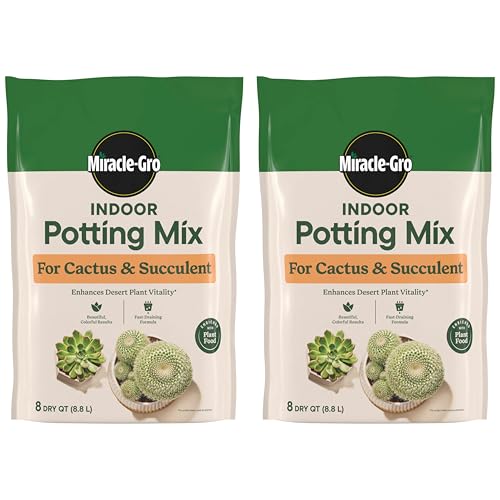
Old potting mix breaks down, compacts, and holds water longer, which also raises rot risk. Repotting every 2 to 3 years into fresh cactus mix solves both problems.
- Feed with a cactus fertilizer diluted to half strength once a month in spring and summer.
- Skip fertilizer in fall and winter while the plant rests.
- Never fertilize a plant with root rot or freshly repotted roots.
Sophia’s tip: Mix commercial cactus soil with an equal amount of perlite or pumice. Water should drain out the bottom within a few seconds of pouring, not pool on the surface.
Pests That Cause Yellow Patches
Sap-feeding pests can cause yellow speckles, patches, or general fading. Mealybugs, spider mites, and scale are the most common on indoor cacti.
What Each Pest Looks Like
| Pest | What to look for |
|---|---|
| Mealybugs | White, cottony clusters at areoles, leaf bases, and stem joints |
| Spider mites | Fine webbing, tiny moving dots, speckled yellow or bronze stems |
| Scale | Small brown or tan bumps stuck to the stem surface |
| Root mealybugs | White fluff on roots, plant fading despite good care |
How to Treat Them
Isolate the plant from your other houseplants first. Spider mites spread easily in dry indoor air, especially near heaters.
- Dab mealybugs and scale with a cotton swab dipped in 70% isopropyl alcohol.
- Rinse spider mites off with a gentle stream of lukewarm water, then let the plant dry well.
- Apply insecticidal soap according to the label, repeating every 7 to 10 days for several weeks.
- For root mealybugs, remove the plant, wash the roots, and repot in fresh mix and a clean pot.
The dense spines make close inspection tricky, so use a flashlight and long tweezers. Yellow spots left by feeding will not turn green again, but new growth should come in healthy.
How to Keep Your Eve’s Needle Cactus From Turning Yellow Again
Prevention comes down to bright light, soil that dries fully, and a steady location. Most yellowing happens when one of those three slips, often in winter.
Pot and Soil Setup
Use a pot with a drainage hole. Terracotta helps soil dry faster than plastic or glazed ceramic. Choose a pot only 1 to 2 inches wider than the root ball, since extra soil holds extra water.
This plant can become top-heavy as stems lengthen. A heavier clay pot also keeps it from tipping over, which protects roots from damage.
Seasonal Adjustments
Treat the year as two seasons. From spring through early fall, give full light, regular deep watering, and light feeding. From late fall through winter, cut water sharply, stop feeding, and keep it in the brightest cool spot available.
For full details on light, repotting, and seasonal care, see the guide on how to grow and care eve’s needle cactus.
Similar Problems on Related Plants
If you also grow a pencil cactus, its yellowing has some overlapping causes, though it is a succulent euphorbia rather than a true cactus. The article on pencil cactus turning yellow explains how its care differs.
Pet and Child Safety
I could not confirm a specific ASPCA toxicity listing for this species, so treat it with caution.
The real hazard is physical: long spines and fine glochids can injure curious pets and kids, so keep the plant on a high shelf or in a room they cannot reach.
Your Next Steps
- Squeeze the yellow area to decide whether you are dealing with firm tissue or soft rot.
- Check soil moisture 2 inches down and hold off watering until it is dry through.
- Move the plant within 1 to 2 feet of a south or west window, or add a grow light.
- Pull it away from cold glass, radiators, and air vents.
- Inspect stems and joints with a flashlight for pests.
- Repot into fresh, fast-draining cactus mix if the soil is more than 2 or 3 years old.
Common Questions About Eve’s Needle Cactus Turning Yellow
Can a yellow Eve’s needle cactus turn green again?
Stems yellowed from mild low light can regain some color once light improves. Sunburned, cold-damaged, or rotted tissue will not turn green again. Focus on making new growth healthy rather than restoring old sections.
Should I cut off yellow stems?
Cut off stems that are soft, mushy, or blackening, since rot can spread. Firm yellow stems with scars can stay unless you dislike the look. Always use a clean blade and let cuts dry before watering.
Is it normal for the leaves to fall off?
Yes, the small fleshy leaves are temporary and older ones yellow and drop over time. This is more common in fall and winter. It is only a problem if the stems also soften or lose color.
Why is my cactus yellow only at the base?
Yellowing at the soil line usually means rot from wet soil. Unpot the plant and check the roots right away. If the base is soft, cut above the damage and root the healthy stem.
How much light does an Eve’s needle cactus need indoors?
It needs several hours of direct sun daily, ideally from a south or west window within 1 to 2 feet of the glass. In dim winters, a grow light for 12 to 14 hours a day keeps it compact and green. Introduce stronger sun gradually to avoid burn.

Hi! I’m Sophia, and I love plants – especially an expert in growing house plants. I stay in Chicago, United States of America, and through my blog and social media platforms, provide tips and tricks on how to grow healthy, vibrant plants indoors. Check out more here.