
You are looking at a cactus on your windowsill, maybe freshly unpotted with its roots exposed, and wondering whether it really needs that bag of potting mix at all.
The short version: Yes, you can grow a cactus without soil, and many growers prefer it.
Cacti need oxygen at the roots, fast drainage, and regular nutrients, not soil itself, so mineral mixes like pumice, lava rock, or clay pebbles work well as long as you fertilize.
This guide covers the best soil-free mediums, how to pot and water in them, how long a bare-root cactus can wait, and what to watch for indoors.
At a Glance
| Factor | What it needs |
|---|---|
| Light | Bright, direct light; a south or west window within 1 to 2 feet of the glass, or a grow light |
| Water | Water thoroughly, then wait until the medium is dry 1 to 2 inches down; more often than in soil |
| Soil | Not required; pumice, lava rock, or clay pebbles with regular diluted fertilizer |
| Temperature | 65°F to 85°F in the growing season; 50°F to 60°F winter rest suits many desert species |
| Humidity | Low is fine; average indoor air of 20% to 40% works |
| Pet safety | Spines are the main hazard; the ASPCA lists Christmas cactus as non-toxic to cats and dogs |
| Difficulty | Easy to moderate; feeding is the step most people forget |
Can You Grow Cactus Without Soil?
You can grow cactus without soil because roots do not need soil, they need a stable anchor, air, water, and dissolved minerals. A gritty inorganic medium provides the first three, and fertilizer supplies the fourth.
In their native habitats, many cacti grow in crumbled rock, coarse gravel, and rocky slopes with very little organic matter. That is why a pot full of pumice often looks more like home to a cactus than a peat-heavy bagged mix does.
Why Growers Skip the Soil
The biggest advantage is drainage. Standard potting soil holds water for days, and in a cool apartment window during winter, that soggy core is where root rot starts.
Mineral mediums dry from the inside out much faster. They also do not compact, break down, or attract fungus gnats the way peat and bark-heavy mixes can.
What You Give Up
Inert mediums contain almost no nutrients. Soil slowly releases food from organic matter, but pumice and lava rock do not, so a soilless cactus slowly starves without regular feeding.
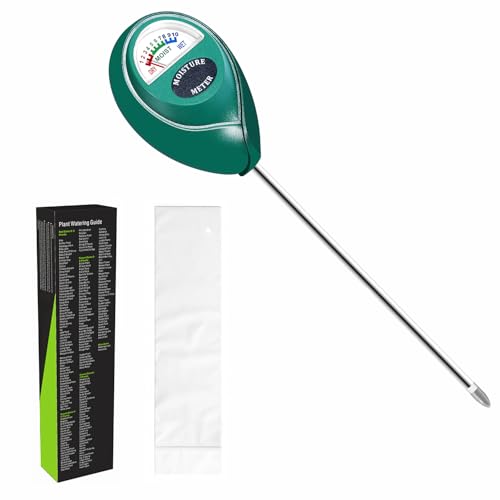
You also water more often. A thin wooden skewer pushed into the medium works better than a soil moisture meter here, because meters read poorly in coarse rock.
If your window is weak, a full-spectrum grow light 6 to 12 inches above the plant keeps growth compact while the roots settle.
Light Still Matters More Than Medium
Changing the medium will not fix poor light. A cactus in perfect pumice will still stretch and pale in a dim north window.
If you are wondering whether you can grow cactus without sunlight, the answer depends on supplemental lighting, not on what is in the pot.
Which Soilless Mediums Work Best for Cactus?
Pumice is the best all-around choice, followed by lava rock and calcined clay. Pure sand, decorative pebbles, and glass gems are poor choices because they either pack down or hold nothing.
| Medium | Drainage | Water holding | Weight | Notes |
|---|---|---|---|---|
| Pumice | Excellent | Moderate | Light | Porous, stays put, does not float much once wet |
| Lava rock (scoria) | Excellent | Low to moderate | Heavy | Good for top-heavy cacti; rinse dust first |
| Calcined clay granules | Excellent | Moderate | Light | Absorbs and releases water evenly |
| Clay pebbles (LECA) | Very high | Low unless used semi-hydro | Light | Best in a reservoir setup |
| Perlite | Excellent | Low | Very light | Floats to the top; better mixed than used alone |
| Fine sand | Poor when wet | High | Heavy | Compacts and suffocates roots |
| Decorative gravel | Varies | Very low | Heavy | Fine as top dressing, not as the main medium |
Pumice as the Base
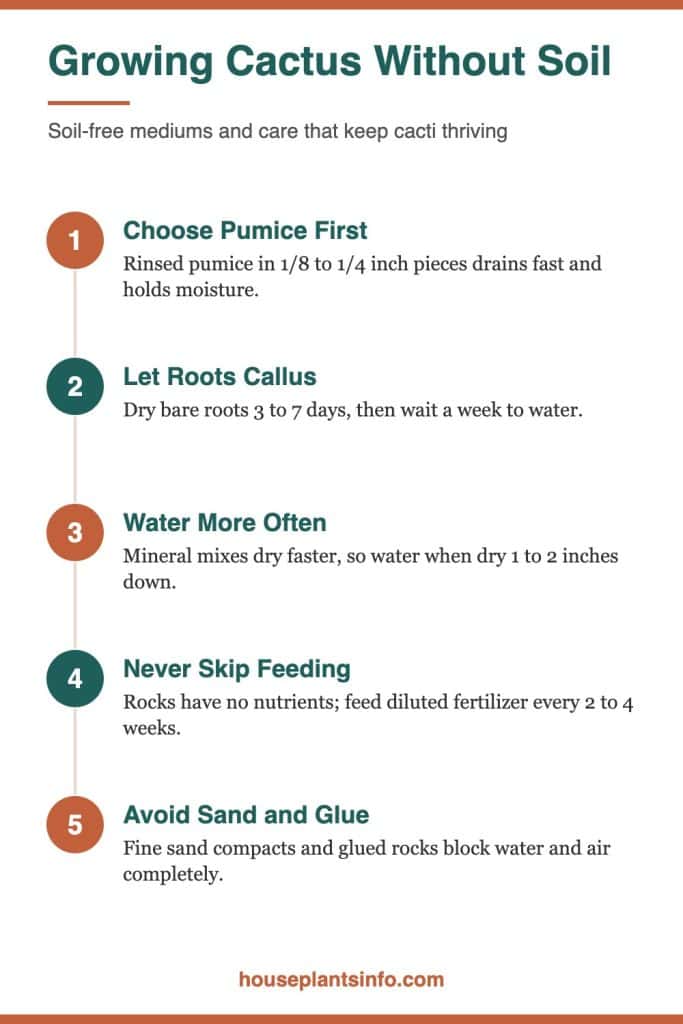
Pumice holds water inside its pores while leaving open air gaps between pieces. That balance is exactly what cactus roots want. Particles about 1/8 to 1/4 inch wide suit most small and medium cacti.
For larger cacti in pots over 8 inches wide, you can go slightly coarser, up to about 3/8 inch, so the center does not stay wet.
Lava Rock and Calcined Clay
Lava rock is heavier, which helps tall columnar cacti stay upright. It holds a bit less water than pumice, so it suits very sunny windows and hot summer rooms.
Calcined clay granules behave much like pumice and blend well with it. A mix of half pumice and half lava rock or clay granules is a reliable all-purpose blend.
Mediums to Avoid
Fine sand sounds desert-appropriate, but it fills every air pocket and sets like concrete when wet. Glued decorative rocks, sometimes found on store-bought cacti, block water and air entirely and should be pulled off.
Plain aquarium gravel drains well but holds almost no moisture, so roots dry out within hours and struggle to establish.
Sophia’s tip: Rinse any new pumice or lava rock in a strainer before potting. The fine dust otherwise settles at the bottom of the pot, forms a dense layer, and slows drainage exactly where rot likes to start.
How Do You Pot a Cactus in a Soil-Free Mix?
Unpot the cactus, clean off old soil, let the roots dry for a few days, then set it in dry mineral medium and wait about a week before the first watering. This sequence prevents rot in damaged roots.
Step-by-Step Repotting
- Wear thick gloves or wrap the cactus in folded newspaper to handle it.
- Tip it out of its pot and gently crumble away old soil. A soft brush or a quick rinse under lukewarm water clears stubborn bits.
- Inspect the roots. Healthy roots are firm and pale; trim any that are black, mushy, or hollow with clean scissors.
- Set the cactus somewhere dry and shaded for 3 to 7 days so cut root tips callus.
- Fill a pot with a drainage hole about one-third full of dry, rinsed medium.
- Hold the cactus at the same depth it grew before and fill around it, tapping the pot to settle the pieces.
- Wait 5 to 7 days, then water thoroughly.
If you need to shape the plant while it is out of the pot, learn how to trim a cactus without killing it first, and give those cuts the same drying time as the roots.
Picking the Right Pot
Unglazed terracotta is my preferred choice for soilless cactus because it wicks moisture through its walls. Plastic works too, but you will water a little less often.
Choose a pot only 1 to 2 inches wider than the root ball. Oversized pots hold extra medium that stays damp without roots to use it.
Keeping It Upright
Loose rock does not grip roots the way soil does, so a freshly potted cactus may lean. Pile a few larger stones around the base, or prop it with chopsticks for 2 to 4 weeks until new roots anchor it.
Can a Cactus Grow in Water or Hydroponics?
A cactus can root and survive in water, but it is risky for long-term growth. Semi-hydroponic setups using clay pebbles and a small reservoir are a far more reliable soil-free method.
Rooting a Cactus in Water
Some growers root callused cuttings by suspending them just above water, so only the base touches or sits within half an inch of the surface. Roots may appear within a few weeks under good light.
Water roots are thin and adapted to constant moisture. When you later move the cutting into a mineral mix, many of those roots die back and the plant has to regrow them, which costs time.
Fully submerging the stem usually leads to rot. If you try this, change the water every few days and keep it in bright light.
Semi-Hydroponics With Clay Pebbles
In a semi-hydro setup, the cactus sits in clay pebbles inside a container with a small reservoir at the bottom. Water wicks up through the pebbles, and the roots sit in the drier upper zone.
For cacti, keep the reservoir shallow, about 1/2 to 1 inch, and let it dry out completely before refilling. A constantly full reservoir works for many tropical plants but is too wet for most desert species.
True Hydroponics
Deep water culture and similar systems can grow cacti, but they require careful control of nutrients, oxygen, and algae. For a windowsill plant, it is more effort than the benefit justifies.
Sophia’s tip: If a cutting refuses to root in water after 4 to 6 weeks, stop and move it to barely damp pumice instead. Most cactus cuttings root more reliably in a gritty medium than in a jar, especially near a cold winter window.
How Do You Feed and Water a Cactus With No Soil?
Water deeply whenever the medium is dry 1 to 2 inches down, and feed with a diluted fertilizer during spring and summer. Without soil, fertilizer is the plant’s only food source.
Watering Rhythm Indoors
In a bright window during the growing season, a cactus in pumice often needs water every 5 to 10 days. In regular cactus soil, the same plant might go 2 to 3 weeks.
Pour water until it runs out the drainage hole, then let the pot drain fully. Never leave it sitting in a saucer of water.
In winter, most desert cacti rest. Cut watering back to once every 3 to 6 weeks, or just enough to keep the stem from shriveling, especially if the plant sits near a cold window.
Heat, Air, and the Drying Rate
Radiators and forced-air heat dry mineral mixes very quickly in a Chicago winter. A cactus on a sill above a radiator may dry twice as fast as one across the room, yet it should still be watered sparingly during its rest period.
Summer AC vents blowing directly on a pot also speed drying and chill roots. Move the plant a few feet away from vents if growth stalls.
Fertilizer Basics
Use a balanced or low-nitrogen fertilizer labeled for cacti and succulents, diluted to one-quarter to one-half strength. Feed every 2 to 4 weeks from spring through late summer.
Because inert mediums lack trace minerals, choose a fertilizer that includes micronutrients such as calcium, magnesium, and iron. Stop feeding in fall and winter.
Flushing Salts
Fertilizer salts and tap water minerals build up as white crust on rock and pot rims. Every month or two in the growing season, run plain water through the pot for a minute to flush them out.
How Long Can a Cactus Survive Bare-Root?
A healthy cactus can survive out of soil for several weeks to a few months because it stores water in its stem. Smaller cacti run out of reserves faster than large, thick-stemmed ones.
Why Cacti Tolerate It
Cactus stems are water storage tissue with a waxy coating that limits moisture loss. Growers routinely ship cacti bare-root, and many arrive after a week or more in a box without trouble.
Large barrel or columnar cacti can sit bare-root for a month or longer if kept dry and shaded. Small seedlings and thin-stemmed species may only manage 1 to 3 weeks before shriveling.
Storing a Cactus Out of Soil
Keep it in bright, indirect light, away from direct sun that can scorch an unpotted plant. Lay it on newspaper or stand it upright in an empty pot so the roots get air.
Do not mist or water the roots during storage. Moisture on exposed roots without a medium invites rot rather than helping.
Signs It Needs Potting Now
Slight wrinkling is normal after a couple of weeks. Deep shriveling, soft spots, or yellowing at the base mean the plant needs a medium and water soon.
Cuttings follow the same rules. When you grow peruvian apple cactus from cutting, the stem segment can sit callusing for one to two weeks before planting, which is exactly this bare-root tolerance at work.
What Goes Wrong Without Soil, and How Do You Fix It?
Most soilless cactus problems come from three causes: starvation from skipped feeding, drying out too fast, or a medium that holds too much water. Each has a simple fix.
Pale or Yellowing Growth
Cause: nutrient deficiency, since inert rock supplies nothing. Fix: start feeding at half strength every 2 to 3 weeks in spring and summer, using a fertilizer with micronutrients.
Also rule out light. Pale, stretched growth that leans toward the window usually means too little light rather than poor nutrition.
Shriveled or Wrinkled Stem
Cause: the medium dries faster than you expected, especially near a radiator or a hot west window. Fix: water deeply and check the medium every few days until you learn the new rhythm.
If the stem stays wrinkled after watering, slide the plant out and check the roots. Dead roots cannot absorb water no matter how often you water.
Soft, Dark Base
Cause: rot, often from a medium with too many fines, a pot without drainage, or a reservoir kept full. Fix: unpot, cut away all soft tissue with a clean blade, let it callus for a week, and repot in fresh, rinsed pumice.
Leaning or Wobbling
Cause: loose rock with no root grip yet. Fix: add heavier stones around the base or stake it until roots establish, usually within a month.
Cold Damage
Cause: roots in mineral medium chill quickly against cold glass. Many cacti tolerate cool winter rest near 50°F, but frost-tender species suffer below that.
If you grow outdoors in summer, research questions like will a peruvian apple cactus grow in zone 8 before leaving plants out into fall.
Do Epiphytic Cacti Need Soil at All?
Epiphytic cacti, such as Christmas cactus and orchid cactus, grow on tree branches in nature and do not need soil. They do need more moisture and organic material than desert cacti, so pure pumice is not ideal.
How Their Needs Differ
These forest cacti come from humid environments and like their roots to stay lightly moist, never soggy. They prefer bright, indirect light rather than hours of direct sun.
A mix of orchid bark, perlite, and some pumice suits them far better than straight rock. Some growers even mount them on bark slabs like orchids.
Choosing the Right Mix
For a detailed breakdown of blends, see what soil does a christmas cactus need. The short answer is a chunky, airy mix with some organic material.
Water when the top inch feels dry, and keep them away from heat vents, which dry bark mixes fast and can cause bud drop.
Pet Safety
The ASPCA lists Christmas cactus as non-toxic to cats and dogs, though eating it can still cause mild stomach upset. For spiny desert cacti, the spines are the real hazard, so keep them on high shelves away from curious pets and kids.
Sophia’s tip: Top dress soilless cacti with a layer of larger stones if you have cats. Loose pumice can look like litter to them, and heavier rock discourages digging while keeping the stem base dry.
Your Next Steps
- Check your current cactus pot and remove any glued decorative rocks or dense, soggy soil.
- Buy rinsed pumice in 1/8 to 1/4 inch pieces, or mix it half and half with lava rock.
- Repot bare-root, let roots callus for 3 to 7 days, and wait about a week before watering.
- Set a reminder to feed at quarter to half strength every 2 to 4 weeks from spring through summer.
- Place the plant within 1 to 2 feet of a south or west window, or add a grow light.
- Flush the pot with plain water every month or two to clear fertilizer salts.
Common Questions About Growing Cactus Without Soil
Can a cactus live in just rocks?
Yes, a cactus can live in porous rocks like pumice, lava rock, or calcined clay. It also needs regular diluted fertilizer, since rocks provide almost no nutrients. Smooth decorative pebbles and aquarium gravel hold too little water to work well alone.
Can I grow a cactus in sand only?
Pure sand is a poor choice because fine particles compact when wet and push out air. Coarse grit or pumice gives the same desert look with far better drainage. If you like sand, use a thin layer as top dressing only.
How often should I water a cactus in pumice?
During spring and summer in a bright window, every 5 to 10 days is typical. Water when the medium is dry 1 to 2 inches down, and drain fully each time. In winter, drop to once every 3 to 6 weeks for most desert species.
Can a cactus grow in LECA?
It can, especially in a semi-hydroponic setup with a very shallow reservoir. Let the reservoir dry out completely between refills, since constant moisture causes rot. Use a fertilizer formulated with micronutrients because LECA is completely inert.
Is it better to grow cactus without soil?
For many indoor growers, yes, because mineral mixes drain fast and reduce rot risk in cool, dim winters. The tradeoff is more frequent watering and the need to feed consistently. If you tend to forget fertilizer, a gritty cactus soil mix may be easier.

Hi! I’m Sophia, and I love plants – especially an expert in growing house plants. I stay in Chicago, United States of America, and through my blog and social media platforms, provide tips and tricks on how to grow healthy, vibrant plants indoors. Check out more here.