
You spot a cottony white fleck tucked into the spines of the cactus on your windowsill, or fine webbing near the top that wasn’t there last week.
Your first instinct is to grab something that works fast without harsh chemicals, and neem oil is usually the first thing that comes to mind.
The short version: Yes, you can spray cactus with neem oil, and it works well against mealybugs, spider mites, scale crawlers and aphids.
Dilute it properly, test a small patch first, spray out of direct sun, and keep the soil from getting soaked. Skip it on fuzzy, hairy or heavily powdered cacti, where the oil can leave lasting marks.
This guide covers how neem works, the right mix, a step-by-step spraying method, timing, which cacti to avoid treating, and what to do if pests come back.
At a Glance
| Factor | What it needs |
|---|---|
| Dilution | About 1 to 2 teaspoons neem oil plus 1/2 teaspoon mild liquid soap per quart of warm water |
| Timing | Evening or on a cloudy day, away from direct sun for 24 hours |
| Temperature | Between about 60°F and 85°F; avoid spraying above 90°F |
| Frequency | Every 5 to 7 days for 3 to 4 weeks |
| Patch test | Spray one small area and wait 24 to 48 hours |
| Pet safety | Keep pets and kids away until the spray has fully dried |
| Difficulty | Easy, but precise dilution matters |
Can You Spray Cactus with Neem Oil Without Harming It?
Yes. Most cacti tolerate a properly diluted neem spray without trouble, because their thick, waxy skin resists light oil coatings better than thin leaves do.
Damage usually comes from a mix that is too strong, spraying in hot sun, or treating a cactus that is already stressed.
Why the Waxy Skin Helps and Hurts
A cactus’s outer layer, the cuticle, is built to hold water in. That same coating sheds a thin oil film fairly well, so a light spray rarely burns healthy green tissue.
The problem is that some cacti carry a powdery or bluish bloom on top of that cuticle. Oil can dissolve or smear that bloom, leaving shiny patches that don’t regrow on the existing stem.
What You’ll Want on Hand
A fine-mist spray bottle gives you even coverage without drenching the plant. Cotton swabs dipped in neem mix or isopropyl alcohol let you work into areoles and between ribs where pests hide.
If your cactus lives under a grow light, plan to switch it off or raise it for a day after spraying. Oil on the skin plus intense light close to the plant can cause scorching, just as a sunny south window can.

Signs Your Cactus Is Ready for Treatment
Treat when you’ve confirmed pests, not as a vague preventive habit. Look for white cottony clusters, tiny moving specks, brown bumps that scrape off, sticky residue, or pale stippling on the skin.
A cactus that is otherwise firm, upright and evenly colored is a good candidate. A plant that is soft, shriveled or freshly repotted should recover first, if the pests allow.
What Neem Oil Actually Does to Cactus Pests
Neem oil kills pests in two ways: the oil smothers soft-bodied insects on contact, and a natural compound in it disrupts feeding, growth and egg-laying. It works best on soft insects and weakens over a few days, so repeat sprays are essential.
Where Neem Comes From
Neem oil is pressed from the seeds of the neem tree, which is native to the Indian subcontinent. Cold-pressed neem contains azadirachtin, the compound that interferes with insect hormones and appetite.
Clarified hydrophobic neem oil has most of the azadirachtin removed. It still smothers pests but acts mainly as a contact oil, with less lasting effect on feeding and development.
Pests Neem Handles Well
Neem works against the most common indoor cactus pests:
- Mealybugs, the white fuzzy clusters in areoles and joints
- Spider mites, which leave fine webbing and pale speckling
- Scale crawlers, the young mobile stage before the hard shell forms
- Aphids, more common on new growth and flower buds
- Fungus gnat larvae, when a diluted mix is used carefully as a light soil drench
If you’re unsure what you’re looking at, read whether cactus can get mealybugs for clear identification signs. Mealybugs are the pest most indoor cactus growers end up treating.
Where Neem Falls Short
Adult armored scale has a waxy shell that oil struggles to penetrate. You’ll get better results scraping these off with a fingernail or a swab first, then spraying to catch new crawlers.
Root mealybugs live in the soil around roots, out of reach of a foliar spray. Those need repotting, root cleaning and fresh mix rather than neem alone.
Neem also does little for fungal rot inside the stem. Soft, mushy, darkening tissue usually points to overwatering, not insects.
How to Mix a Cactus-Safe Neem Spray
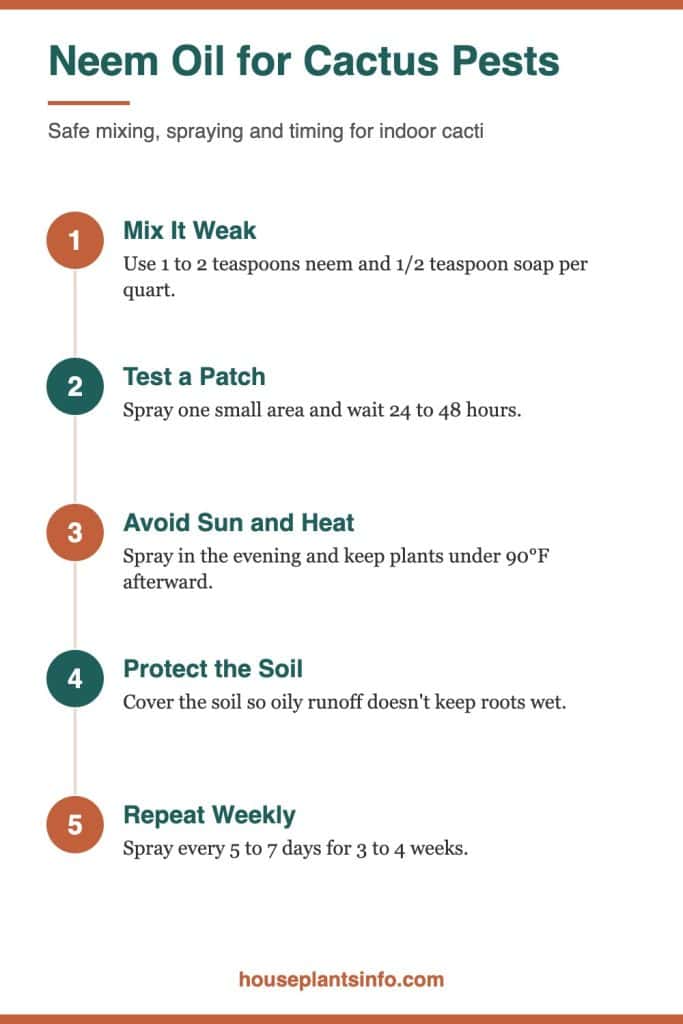
Use about 1 to 2 teaspoons of pure neem oil and about 1/2 teaspoon of mild liquid soap per quart of warm water. Start at the low end for cacti, since you can always strengthen a later spray if pests persist.
Why the Soap Matters
Oil and water separate within seconds. A small amount of gentle liquid soap acts as an emulsifier, so the oil spreads in fine droplets instead of floating in a slick on top.
Choose a plain soap without degreasers, bleach or strong fragrances. Harsh detergents can strip the cactus’s protective coating and cause more damage than the pests.
Mixing Steps
- Pour a quart of warm, not hot, water into a clean container.
- Add the soap and stir gently to dissolve it.
- Add the neem oil slowly while stirring.
- Pour into your spray bottle and shake well.
Warm water helps cold-pressed neem flow, since it thickens and turns semi-solid below about 70°F. If your bottle of neem has gone cloudy and thick in a chilly Chicago winter apartment, set it in a bowl of warm water for a few minutes first.
Freshness and Storage
Mixed neem breaks down quickly once diluted, usually within about 8 hours. Mix only what you’ll use in one session and discard the rest.
Store the undiluted oil in a cool, dark cabinet, away from radiators and sunny shelves. Shake the bottle frequently while spraying to keep the mixture even.
Sophia’s tip: Mix your spray in a measuring cup with a spout, not directly in the bottle. You’ll see whether the oil has fully emulsified into a milky liquid before it goes on your plant.
How to Spray Neem Oil on a Cactus, Step by Step
Isolate the plant, test a patch, clean off visible pests, then mist every surface lightly and evenly. The goal is a thin film that touches the pests, not dripping liquid that pools at the base.
Step 1: Move the Cactus Away From Other Plants
Pests like mealybugs and spider mites spread easily between pots on a shared windowsill. Move the affected cactus to its own spot, at least a few feet from other plants.
A bathroom counter, laundry area or table lined with newspaper works well. It also keeps overspray off floors, curtains and wood furniture.
Step 2: Do a Patch Test
Spray one small section on the side of the stem and wait 24 to 48 hours. Check for yellowing, browning, shiny patches or a water-soaked look.
If the patch looks unchanged, the plant should tolerate a full spray. If it marked up, dilute further or switch to spot-treating with swabs.
Step 3: Remove What You Can by Hand
Dab visible mealybugs with a cotton swab dipped in isopropyl alcohol. Scrape adult scale off gently with a fingernail or a soft toothbrush.
Removing the bulk of the colony first means the neem only needs to catch survivors, eggs and crawlers. It also reduces how much oil you need on the plant.
Step 4: Protect the Soil
Cover the soil surface with plastic wrap, a paper towel or a piece of foil tucked around the stem. Cacti hate wet soil, and a heavy oily runoff can sit around the roots.
This step matters most in pots without drainage holes or in dense, peat-heavy mixes that dry slowly.
Step 5: Spray Lightly and Evenly
Hold the bottle about 8 to 12 inches from the cactus. Mist the top, every side, between ribs, around areoles and right down to the soil line.
Turn the pot as you go so you don’t miss the back. Pests often cluster on the shaded side facing away from the window.
Step 6: Work Into Hidden Spots
Mealybugs love the crevices where spines emerge and where pads or branches join. Dip a cotton swab in your neem mix and dab directly into those spots.
For clumping cacti with tight offsets, gently tilt the pot and spray up into the gaps between heads.
Step 7: Let It Dry and Repeat
Leave the cactus out of direct sun and away from grow lights until it’s completely dry, usually a few hours. Then return it to its spot, ideally after a full day.
Repeat every 5 to 7 days for 3 to 4 weeks. Neem won’t reliably kill eggs, so repeated treatments catch each new hatch before it matures and lays more.
Sophia’s tip: After the second or third spray, wipe old residue gently with a soft, damp brush before reapplying. Layered oil buildup can block the cactus’s pores and dull its color.
When to Spray Neem Oil on Cactus: Timing, Light and Temperature
Spray in the evening or on an overcast day, in a room between about 60°F and 85°F. Avoid treating in hot sun or right after watering, since both raise the risk of damage.
Light After Spraying
Oil on the skin can act like a magnifier under strong sun, leading to scorched, bleached or brown patches. This is the most common way neem harms cacti.
If your cactus sits in a bright south or west window, pull it back several feet from the glass or move it to another room for 24 hours. East windows are gentler, but morning sun through glass can still be strong.
Temperature and Airflow
Above about 90°F, oil-based sprays are much more likely to burn plant tissue. Keep the cactus away from radiators, baseboard heaters and sunny glass right after spraying.
Gentle air movement helps the spray dry evenly. Avoid placing the plant directly in an AC draft or forced-air vent, which can cause uneven drying and stress.
Watering and Neem
Spray when the soil is dry or nearly dry, a few days before you’d normally water. That way, any runoff that reaches the soil isn’t adding to an already damp pot.
Many readers also wonder whether to spray their cactus with water between treatments. Routine misting isn’t helpful for most cacti and adds moisture they don’t need, so save the spray bottle for pest control.
Seasonal Notes
Spider mites tend to flare up during dry winter months, when forced-air heat drops indoor humidity well below 30%. Check your cacti closely from November through March.
Mealybugs and scale show up year-round indoors. Many cacti slow down in winter, so treat gently and give extra recovery time during that dormant period.
Which Cacti and Situations Should Skip Neem Oil
Avoid neem on cacti covered in fine hair, wool or a powdery coating, and on plants that are freshly repotted, newly rooted, sunburned or rotting. In these cases, spot-treat with swabs or use a different method.
Fuzzy, Woolly and Powdered Cacti
Old man cactus, bunny ear cactus with dense glochids, and other hairy or woolly species trap oil in their fibers. The hair can mat, yellow or hold residue that attracts dust.
Cacti with a bluish or white powdery bloom, often called farina, can lose that coating where oil touches. The marks are permanent on existing growth, though new growth will come in normally.
For these plants, dab pests individually with an alcohol swab. Rinsing gently with lukewarm water and letting the plant dry quickly can also dislodge mites and mealybugs.
Stressed or Recovering Plants
Skip neem on a cactus repotted within the last two weeks, since disturbed roots make the plant more vulnerable. Also hold off on any cactus showing sunburn, shriveling, or soft, darkening tissue.
Rot needs to be cut out and the soil corrected first. Spraying oil on a plant already fighting rot only adds stress.
New Cuttings and Young Plants
Fresh cuttings are still callusing and pushing roots, so they’re especially sensitive. If you’re learning to grow Peruvian apple cactus from a cutting, wait until it’s rooted and actively growing before using any oil spray.
Pests can slow rooting as well. If you’re dealing with Peruvian apple cactus not rooting, check the base and cut end closely for mealybugs before assuming the problem is moisture or temperature.
Flowering Cacti
Spray carefully around buds and open blooms, or cover them with a small paper bag. Oil can spot and shorten the life of delicate petals.
Christmas and Easter cacti tolerate neem fairly well on their flat stems. Still, start with a weak mix and a patch test, since their segments are thinner than desert cacti.
Sophia’s tip: Keep a dedicated pack of cotton swabs and a small jar of isopropyl alcohol on the shelf near your cacti. Catching a single mealybug early often means you never need a full neem treatment.
What to Do If Neem Oil Doesn’t Clear the Pests
If pests are still present after 3 to 4 weeks of steady treatment, the problem is usually hidden pests, too few repeat sprays, or a pest neem can’t reach. Look again at the roots, crevices and neighboring plants.
Check the Roots
Gently slide the cactus out of its pot using folded newspaper or tongs to protect your hands. White cottony patches on roots or along the inside of the pot mean root mealybugs.
Shake off the old soil, rinse the roots, trim damaged parts, and let the roots air-dry for a day. Repot into fresh, fast-draining cactus mix and a clean pot.
Reinfestation From Nearby Plants
A single untreated plant nearby can send pests right back. Inspect everything within a few feet, especially succulents, which share the same pests.
Wipe down the windowsill, saucers and shelves. Mealybug eggs and mites can sit on surfaces and pots between treatments.
Alternatives and Additions
Insecticidal soap is a good option for soft-bodied pests and is generally gentle on cacti when diluted correctly. Isopropyl alcohol spot treatments remain the most precise method for mealybugs.
Systemic insecticides exist for stubborn infestations, but read labels carefully and keep them away from pets and children. For most indoor cacti, patient hand removal plus neem or soap is enough.
Fix the Conditions Pests Love
Spider mites thrive in hot, dry, still air, typical near radiators and forced-air vents. Move the plant a few feet away from heat sources and add gentle airflow.
A healthy cactus with good light and proper watering resists pests better. If you grow Cereus, it helps to care for Peruvian apple cactus with bright light, gritty soil and deep but infrequent watering.
Is Neem Oil Safe Around Pets and Kids?
Diluted neem oil is considered low in toxicity, but it isn’t meant to be eaten or licked. Keep pets and children away from treated plants until the spray has fully dried, and store the bottle out of reach.
Practical Precautions
The EPA classifies azadirachtin and cold-pressed neem oil as low-toxicity pesticides. Swallowing larger amounts can still cause stomach upset, vomiting or drooling in pets.
Cats are especially likely to sniff and rub against plants. Do your spraying in a closed room and keep the plant there until dry.
The Cactus Itself
The ASPCA lists Christmas cactus as nontoxic to cats and dogs. For many other cacti, the main risk is physical injury from spines and glochids rather than poisoning.
Place spiny cacti on high shelves or in rooms pets don’t use. That protects both your animals and the cactus.
Your Next Steps
- Confirm the pest by checking areoles, ribs, the soil line and the underside of the pot.
- Isolate the cactus and remove visible pests with an alcohol-dipped cotton swab.
- Mix 1 to 2 teaspoons neem oil and 1/2 teaspoon mild soap per quart of warm water.
- Patch test, wait 24 to 48 hours, then spray in the evening away from sun and heat.
- Repeat every 5 to 7 days for 3 to 4 weeks, covering the soil each time.
- Check roots and nearby plants if pests return after a month of treatment.
Common Questions About Spraying Cactus with Neem Oil
How often should I spray my cactus with neem oil?
Spray every 5 to 7 days for 3 to 4 weeks to break the pest life cycle. Neem doesn’t reliably kill eggs, so the repeat sprays catch each new hatch before it can reproduce.
Can neem oil burn my cactus?
It can if the mix is too strong, the plant is in direct sun, or the room is hotter than about 90°F. Use a weak dilution, spray in the evening, and keep the cactus out of strong light for a day afterward.
Should I wash neem oil off my cactus?
You usually don’t need to rinse after a single spray. Before reapplying, gently brush away dusty residue with a soft, damp brush so oil doesn’t build up on the skin.
Can I use neem oil as a soil drench for cactus?
A light, diluted drench can help with fungus gnat larvae, but use it sparingly on cacti. Apply only when the soil is dry and the pot drains well, since lingering wet soil can lead to root rot.
Does neem oil prevent pests on cactus?
Neem gives limited short-term protection, but regular preventive spraying isn’t recommended for most indoor cacti. Inspecting your plants weekly and quarantining new ones does more to stop infestations before they start.

Hi! I’m Sophia, and I love plants – especially an expert in growing house plants. I stay in Chicago, United States of America, and through my blog and social media platforms, provide tips and tricks on how to grow healthy, vibrant plants indoors. Check out more here.