
Your west window sits soft and dim all morning, then floods the room with hot, golden light from midafternoon until sunset. The right house plants for west facing window conditions turn that strong late-day sun into steady growth instead of crispy leaves.
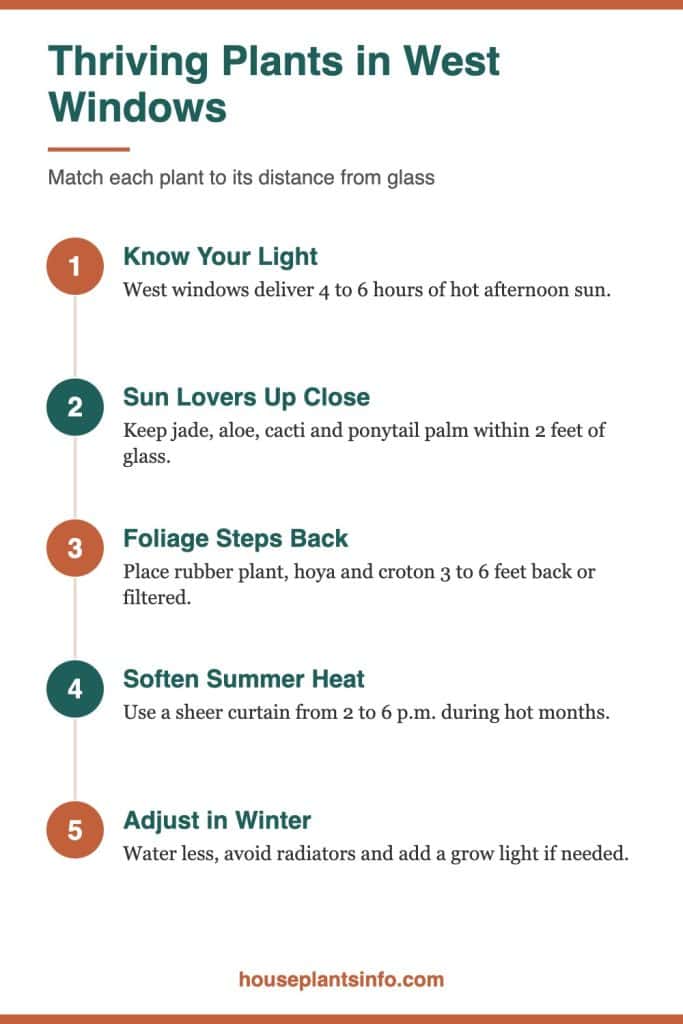
The short version: Sun-loving succulents, cacti, jade, aloe, ponytail palm and bird of paradise can sit within 1 to 2 feet of a west window.
Tropical foliage like rubber plant, hoya and snake plant does best 3 to 6 feet back or behind a sheer curtain.
This guide covers how much light a west window really gives, which plants fit each spot, pet safety, and how care shifts through the seasons.
At a Glance
| Factor | What it needs |
|---|---|
| Light | 4 to 6 hours of direct afternoon sun near the glass; bright indirect light 3 to 6 feet back |
| Water | Let the top 1 to 2 inches dry for foliage plants; let succulents dry fully |
| Humidity | 30 to 50% suits most picks; succulents tolerate dry winter air |
| Temperature | 60 to 85°F; keep leaves off glass that tops 90°F in summer |
| Soil | Gritty, fast-draining mix for succulents; chunky, airy mix for tropicals |
| Pet safety | Mixed; ponytail palm, hoya, haworthia and echeveria are non-toxic per the ASPCA |
| Difficulty | Easy to moderate, depending on distance from the glass |
How Much Sun Does a West Facing Window Really Get?
A clear west window gives roughly 4 to 6 hours of direct sun in the afternoon and early evening, with the strongest heat between about 2 and 6 p.m. Mornings are bright but indirect, so the light is uneven across the day.
That combination matters. The afternoon sun arrives when the room is already warm, so leaves near the glass deal with both intense light and heat at once.
Why Afternoon Sun Feels Harsher Than Morning Sun
Morning sun from the east hits plants while the air is cool. By afternoon, the room, the windowsill and the glass have been warming for hours, so the same amount of light carries more heat stress.
This is why a fern that thrives on an eastern sill can scorch in the west. If you have both exposures, the best houseplants for east-facing window spots are where gentler, shade-loving plants belong.
Measuring Your Actual Light
Not every west window is equal. Trees, a neighboring building, an awning or a deep overhang can cut the direct sun to an hour or two.
A simple light meter, or a light meter app held at leaf height, takes the guesswork out. Readings near the glass on a clear afternoon often land well above what tropical foliage wants, while a spot 5 feet back may read a fraction of that.
A sheer curtain is the other item worth having on hand. It filters the harshest rays and lets you grow tropical plants closer to the window than bare glass allows.
Distance Changes Everything
Light intensity drops quickly as you move away from the window. A plant 6 feet back gets a small share of the light available right at the sill.
Think of a west window as three zones:
- Zone 1 (0 to 2 feet): full afternoon sun for desert and sun-loving plants
- Zone 2 (3 to 6 feet): bright light with brief or filtered sun for most tropical foliage
- Zone 3 (beyond 6 feet or off to the side): medium light for tolerant plants like snake plant
Best House Plants for West Facing Window Sun Close to the Glass
The plants that handle direct west sun are mostly succulents, cacti and a few tough tropicals from open, sunny habitats. They want the window, not a corner.
If you are still deciding what fits your home overall, this list of best indoor plants to buy (picked by light, pets and effort) sorts options by more than window direction.
Succulents and Cacti
Jade plant (Crassula ovata) loves 4 or more hours of direct sun and may develop red leaf edges in strong light, which is normal. It is among the longest living houseplants to get for your houseplant collection, often lasting decades with basic care.
Aloe vera wants bright sun and soil that dries completely between waterings. Too little light makes it stretch and flop; too much sudden sun can turn it orange or brown.
Echeveria and similar rosette succulents keep tight, colorful shapes only in strong light. A west sill is one of the few indoor spots where they hold their form without a grow light.
Desert cacti, such as golden barrel, bunny ears and many columnar types, are built for this exposure. They need very little water in winter and plenty of sun in summer.
Sun-Tolerant Tropicals
Ponytail palm (Beaucarnea recurvata) stores water in its swollen base and tolerates both full sun and dry air. It grows slowly and stays manageable for years.
Bird of paradise (Strelitzia reginae) wants as much light as you can give it indoors. A west window is a good match, though young plants should be introduced to direct sun gradually.
Croton needs strong light to keep its red, orange and yellow coloring. In a west window, a spot 1 to 3 feet back or a sheer curtain usually prevents faded or scorched patches.
Sophia’s tip: When you move a plant into direct west sun, start it 4 to 5 feet back for a week, then shift it about a foot closer every few days. This gives new leaves time to adjust before they face full afternoon heat.
Which Plants Do Better a Few Feet Back From the Glass?
Most tropical foliage plants prefer bright light without hours of hot direct sun. Placing them 3 to 6 feet from a west window, or behind a sheer, gives them strong light without scorch.
Rubber Plant and Fiddle-Leaf Relatives
Rubber plant (Ficus elastica) grows best in bright indirect light with an hour or two of gentle sun. Variegated forms keep their cream and pink tones better in a bright west room than in a dim one.
Fiddle-leaf fig enjoys the same treatment. It dislikes being moved, so pick its spot carefully and turn it a quarter turn every couple of weeks rather than relocating it.
Hoyas, Snake Plants and Other Tolerant Choices
Hoya carnosa and many other hoyas thrive in bright filtered light and often bloom more freely with some direct sun. Their thick leaves handle the dry air that comes with forced-air heat.
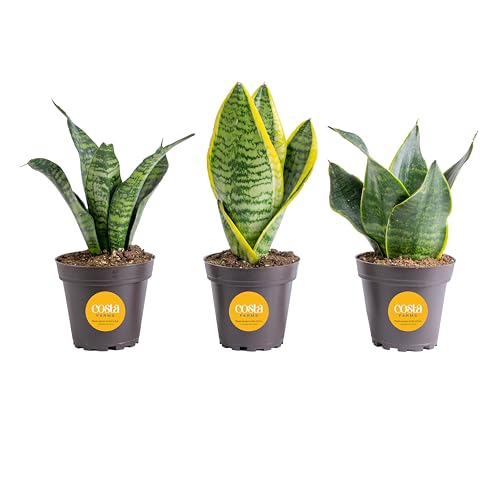
Snake plant adapts to almost any spot in a west room. It handles a sunny sill once acclimated, but it also does well several feet back, which makes it useful for filling the edges of the room.
Haworthia, the small striped succulent, actually prefers less sun than most succulents. A spot just off to the side of a west window, or behind a sheer, suits it better than the hot sill.
Plants to Keep Away From the Hot Sill
Some popular plants struggle with direct west sun even when watered well:
- Ferns, such as Boston and maidenhair, crisp quickly in afternoon heat
- Calatheas and prayer plants fade and curl in strong sun
- Peace lilies and pothos bleach or burn on the sill but do fine 6 or more feet back
- African violets want bright indirect light, not direct afternoon sun
These plants can still live in a west room. Just treat them as Zone 3 plants and keep them out of the sun’s direct path.
Which West Window Plants Are Safe for Cats and Dogs?
Several sun-loving plants are non-toxic to cats and dogs per the ASPCA, including ponytail palm, hoya, haworthia and echeveria. Jade, aloe, snake plant, croton, rubber plant and bird of paradise are listed as toxic.
| Plant | ASPCA status for cats and dogs | Best west window spot |
|---|---|---|
| Ponytail palm | Non-toxic | Close to the glass |
| Hoya carnosa | Non-toxic | 2 to 5 feet back |
| Haworthia | Non-toxic | Beside the window or filtered |
| Echeveria | Non-toxic | Close to the glass |
| Spider plant | Non-toxic | 3 to 6 feet back |
| Jade plant | Toxic | Close to the glass |
| Aloe vera | Toxic | Close to the glass |
| Snake plant | Toxic | Anywhere in the room |
| Croton | Toxic | 1 to 3 feet back or filtered |
| Rubber plant | Toxic | 3 to 6 feet back |
| Bird of paradise | Toxic | Close to the glass |
A sunny windowsill is also a favorite cat lounging spot. If you share your home with pets, put non-toxic plants on the sill and move toxic ones to a high shelf or a plant stand they cannot reach.
Spines on cacti are a separate concern from toxicity. Keep spiny cacti out of reach of curious pets and young kids, even if a species is not listed as poisonous.
How Do You Keep Afternoon Sun From Scorching Leaves?
Scorch comes from too much light and heat too quickly, often made worse by dry soil. The fix is to adjust distance, add filtering and keep watering consistent during the hottest months.
Signs of Sun Damage
Sunburn shows up as bleached, white, tan or brown patches on the leaves that face the window. Damage often appears within a few days of a move or during the first hot spell of summer.
Burned tissue does not recover. Trim badly damaged leaves if they bother you, and focus on protecting new growth instead.
Simple Ways to Soften the Light
- Hang a sheer or light-filtering curtain and close it from about 2 to 6 p.m. in summer
- Move tropical foliage back 1 to 2 feet when temperatures climb above 85°F
- Use a plant stand to set plants slightly to the side of the window rather than directly in the beam
- Keep leaves from touching the glass, which can get hot in summer and cold in winter
Heat Buildup at the Window
A west sill can run 10 to 20°F hotter than the rest of the room on a summer afternoon. Dark pots and metal planters absorb that heat and can warm the roots.
Light-colored or terracotta pots stay cooler. Terracotta also lets moisture escape through its walls, which suits succulents but means tropical plants in clay may need water more often.
Sophia’s tip: Feel the windowsill around 4 p.m. on a hot day. If it is too warm to rest your hand on comfortably, slip a cork mat or wooden tray under the pots to keep root zones cooler.
How Should Care Change From Summer to Winter?
West light is strongest and hottest in summer and much weaker in winter, when the sun sits lower and days are short. Water more often in summer, then cut back sharply and watch for heat sources in winter.
Summer Care
Long, hot afternoons dry soil quickly. Succulents may need water every 1 to 2 weeks, and tropical plants near the window may need it every 5 to 10 days depending on pot size and room temperature.
Check the soil before watering every time. A finger pushed 1 to 2 inches into the mix, or a soil moisture meter for larger pots, is more reliable than a fixed schedule.
Air conditioning adds another variable. Keep plants out of the direct path of AC vents, since cold, dry blasts can cause leaf drop and brown tips.
Winter Care
In northern cities, winter west light may only provide a couple of weak hours. This is the season when you can safely move sun-sensitive plants closer to the glass.
Succulents and cacti go mostly dormant. Water them only every 3 to 6 weeks, and only when the soil is completely dry.
Radiators often sit right under windows. Their heat dries soil fast and cooks nearby leaves, so lift plants onto a shelf above or set them a foot or more to the side.
Cold Glass and Drafts
Single-pane and older windows can drop well below room temperature on winter nights. Leaves touching the glass can develop dark, water-soaked damage from the cold.
Pull plants back a few inches on freezing nights. Most picks in this guide prefer to stay above 55°F, and many tropicals dislike anything under 60°F.
When a Grow Light Helps
A full-spectrum LED grow light can fill the gap on gray winter days or if your west window is shaded by buildings. Run it 10 to 12 hours a day, positioned 6 to 12 inches above succulents.
Sophia’s tip: Put the grow light on an outlet timer so it switches on and off at the same times daily. Consistent light hours matter more than occasional long sessions.
What Pests Show Up in Sunny West Windows?
Warm, bright, dry conditions favor spider mites and mealybugs, while overwatered pots invite fungus gnats and other soil pests. Regular inspection catches most problems while they are still easy to fix.
Spider Mites
Spider mites thrive in hot, dry air, which makes a west window in summer or a radiator-heated room in winter a perfect setting. Look for fine webbing and tiny pale speckles on leaves.
Rinse affected plants in the shower, then treat with insecticidal soap or horticultural oil, repeating every 5 to 7 days for several weeks. Raising humidity slightly also slows them down.
Mealybugs
Mealybugs look like small tufts of white cotton in leaf joints and along stems. Jade, hoya and many succulents are common targets.
Dab visible bugs with a cotton swab dipped in 70% isopropyl alcohol. Check again weekly, since eggs hidden in crevices can hatch later.
Soil Pests and What Not to Use
Small white worms or larvae in the soil usually point to soggy potting mix. This guide on white worms in house plant soil, what they are and how to get rid of them walks through identifying and clearing them.
Garden insecticide dusts are designed for outdoor use and leave residue where pets and kids can contact it. Here is why you might use Sevin dust on houseplants? Why I’d skip it indoors explains safer alternatives.
Always follow label directions for any treatment, and check that it is approved for indoor houseplants. The EPA registers pesticides for specific uses, so the label tells you where a product can be used.
Your Next Steps
- Measure your window’s light on a clear afternoon at the sill and again 5 feet back
- Place succulents, cacti, jade, aloe, ponytail palm or bird of paradise within 2 feet of the glass
- Set rubber plant, hoya, croton and other foliage 3 to 6 feet back or behind a sheer curtain
- Move pets’ favorite sill spots to non-toxic plants and shelve toxic ones higher
- Shift plants away from radiators in winter and AC vents in summer
- Inspect leaf undersides every week or two for mites and mealybugs
Common Questions About House Plants for West Facing Windows
Is a west facing window good for houseplants?
Yes, a west window is one of the brighter exposures in most homes. It suits sun-loving plants right at the glass and tropical foliage a few feet back, as long as you manage summer heat.
Is west facing light direct or indirect?
It is indirect in the morning and direct from midafternoon until sunset. The direct portion usually lasts 4 to 6 hours on clear days, depending on obstructions and season.
Can a snake plant go in a west window?
Yes, snake plants handle west light well and can sit near the glass once acclimated. They also tolerate spots farther back, so they are flexible for almost any part of the room.
Is a west window better than an east window?
It depends on the plant. West windows give more intense, hotter light that suits succulents and cacti, while east windows give gentle morning sun better for ferns, calatheas and other shade lovers.
Do I need a curtain for plants in a west window?
Succulents and cacti usually do not need one once they are acclimated. Tropical foliage plants benefit from a sheer curtain during summer afternoons to prevent scorched leaves.

Hi! I’m Sophia, and I love plants – especially an expert in growing house plants. I stay in Chicago, United States of America, and through my blog and social media platforms, provide tips and tricks on how to grow healthy, vibrant plants indoors. Check out more here.