
You are looking at a houseplant on your windowsill with sticky leaves, tiny webs, or a cloud of gnats, and a bag of garden dust sitting in the closet.
Reaching for Sevin dust on houseplants can feel like a fast fix when the pests keep coming back.
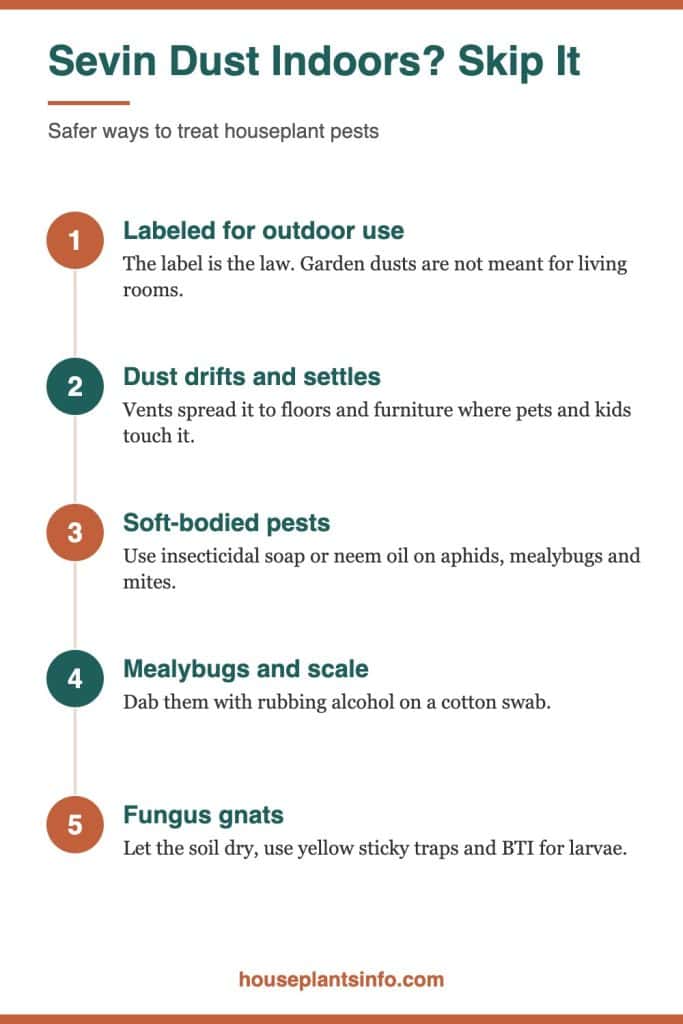
The short version: No, you should not use Sevin dust on houseplants indoors. These dusts are labeled for outdoor garden use, and applying them inside your home goes against the label, which makes it illegal under EPA rules.
The fine powder also drifts onto floors and furniture where pets and kids can touch it.
This guide explains what is in Sevin dust, why it does not belong indoors, what to use instead for each common pest, and what to do if you already dusted a plant inside.
Check These First
- Read the label on your bag or shaker. Look for the active ingredient and the “Directions for Use” section to see where the product is allowed.
- Identify the pest before treating anything. Webbing, white fluff, brown bumps, and flying gnats each point to a different fix.
- Check whether pets or kids can reach the plant, the pot saucer, or the floor around it.
- Look at the soil. Constantly wet soil often explains fungus gnats better than any insecticide can solve.
- If you already applied dust indoors, skip ahead to the cleanup section and start there.
Is Sevin Dust Safe to Use Indoors?
Sevin dust is not considered safe for indoor use, and the label does not permit it inside homes. Indoors, the powder spreads into the air and settles on surfaces where people and animals spend time.
What You Should Reach for Instead
For most houseplant pests, a ready-to-use insecticidal soap spray or a neem oil spray will handle the problem without coating your living room in powder. Both are sold in spray bottles meant for close-range use on leaves.
These products work by contact, so you need to hit the pests directly. That means spraying the undersides of leaves and the leaf joints, where most pests hide.
Why “Just a Little” Still Causes Problems
A small puff of dust can travel farther than you expect. Forced-air heat in winter and AC vents in summer move fine particles across a room and into carpet fibers.
Once dust lands on a rug or a sofa, it does not wash off with the next watering. It stays until you physically remove it.
Pet Safety
Carbaryl, the classic active ingredient in Sevin dust, is toxic to pets, and cats are especially sensitive to it. If your cat sleeps on the windowsill or chews on plants, indoor dusting puts the powder exactly where it can be licked off fur and paws.
What Is in Sevin Dust?
The classic Sevin dust contains carbaryl, a carbamate insecticide. Some newer Sevin-branded products use other active ingredients, such as zeta-cypermethrin, so the only way to know what you have is to read your own label.
Carbaryl: The Classic Active Ingredient
Carbaryl kills insects by interfering with their nervous system. It acts on a wide range of insects, which is why gardeners use it on vegetables and flower beds outdoors.
That broad action is also the problem. It does not stop at the pest you are targeting, and it affects beneficial insects and other animals too.
Newer Formulas Use Different Actives
Over time, some products sold under the Sevin name switched to other insecticides, including zeta-cypermethrin, which belongs to the pyrethroid group. Two bags that look similar on a shelf may contain different chemicals.
This matters if someone is exposed, because Poison Control will ask what the active ingredient is. Keep the bag or take a clear photo of the label before you throw anything away.
Where to Find the Active Ingredient on the Label
Look on the front panel for a box listing “Active Ingredient” with a percentage. The rest of the product is listed as “Other Ingredients,” which are carriers that help the powder spread.
The back panel holds the “Directions for Use,” “Precautionary Statements,” and “Environmental Hazards” sections. Those are the parts that tell you where and how the product can be used.
Why Garden Dusts and Indoor Rooms Don’t Mix
Garden dusts are designed to spread out over open ground and break down with sun, rain, and wind. A sealed apartment has none of those conditions, so the powder lingers.
Dust Drifts and Settles
Indoor air moves more than it seems. A radiator creates rising warm air, a ceiling fan stirs the room, and forced-air heat pushes air through vents for hours each day.
Fine particles ride those currents and settle on window ledges, bookshelves, floors, and counters. If your plant sits near a kitchen, residue can end up near food prep areas.
Pets and Kids Touch Everything
Pets walk across floors and then groom their paws. Toddlers crawl, touch soil, and put their hands in their mouths.
Indoor plants often sit at exactly the heights pets and small kids explore: low stands, windowsills, and coffee tables. A dusted plant becomes a contact point for the whole household.
Fish Tanks and Open Water
Carbaryl is highly toxic to fish and aquatic life. If you keep an aquarium, even a small amount of drifting dust landing on the water surface can harm it.
Open water sources also include pet water bowls and humidifier reservoirs. Dust can settle into any of them if the plant sits nearby.
No Rain, No Sun, No Breakdown
Outdoors, sunlight and weather help many pesticides break down over time. Indoors, behind glass, residue can sit on leaves and soil much longer.
That means you are living with the treatment, not just the plant. Every time you water, touch, or prune the plant, you contact what is left.
Sophia’s tip: If a pest problem feels serious enough for a garden chemical, isolate the plant first. Move it at least 6 feet from other plants, away from vents and radiators, and treat it with soap or neem for two weeks before deciding anything else.
What the Label Says (and Why It Matters)
Sevin dusts are labeled for outdoor garden use, and the label is the law. Under EPA rules, using a pesticide in a way the label does not allow is illegal.
The Label Is the Law
Every registered pesticide goes through an EPA review based on how it is intended to be used. The directions on the label reflect that review, including where the product can go, how much to use, and what to protect.
When you use a product somewhere the label does not list, you are using it outside the conditions it was evaluated for. That is why the EPA treats label directions as legal requirements, not suggestions.
Sections to Read Before You Buy Anything
Before you use any pest product on houseplants, check these parts of the label:
- Directions for Use: look for wording that includes indoor plants or houseplants.
- Site or crop list: outdoor garden plants are not the same as indoor potted plants.
- Precautionary Statements: these warn about hazards to people and pets.
- Environmental Hazards: this is where bee, fish, and aquatic toxicity warnings appear.
- Storage and Disposal: this tells you how to get rid of leftover product.
Bee and Aquatic Warnings
Carbaryl is toxic to bees, and its label carries warnings about protecting pollinators. You may not have bees in your apartment, but those warnings show how broadly the chemical acts.
The aquatic warnings are also a reason not to rinse dusted leaves into the sink or tub. Residue goes down the drain and into the water system.
Comparing Indoor and Outdoor Labels
| Label detail | Outdoor garden dust | Indoor houseplant product |
|---|---|---|
| Listed sites | Vegetables, flowers, lawns, outdoor ornamentals | Houseplants, indoor ornamentals |
| Form | Fine dust or granules for open areas | Ready-to-use spray, soap, or oil |
| Weather role | Relies on outdoor air and sunlight | Designed for still indoor air |
| Pet and child guidance | Keep off treated areas outdoors | Directions for use near living spaces |
Safer Ways to Treat Common Houseplant Pests
The safest approach is to match the treatment to the pest. Most houseplant pests respond well to soap, oil, alcohol, rinsing, traps, or soil changes.
Match the Pest to the Treatment
| Pest | What you see | Safer indoor treatment |
|---|---|---|
| Aphids | Clusters of small green, black, or white insects on new growth | Insecticidal soap, neem oil |
| Mealybugs | White cottony fluff in leaf joints | Rubbing alcohol on a cotton swab, insecticidal soap |
| Spider mites | Fine webbing, speckled or dull leaves | Strong shower rinse, insecticidal soap |
| Scale | Brown or tan bumps on stems and leaf veins | Rubbing alcohol on a cotton swab, neem oil |
| Fungus gnats | Small black flies near the soil | Yellow sticky traps, drying the soil, BTI products |
| Thrips | Silvery streaks, black specks on leaves | Insecticidal soap, neem oil, regular rinsing |
Insecticidal Soap for Soft-Bodied Pests
Insecticidal soap works on aphids, mealybugs, and spider mites by breaking down their outer coating. It only works when it touches the pest, so coverage matters more than strength.
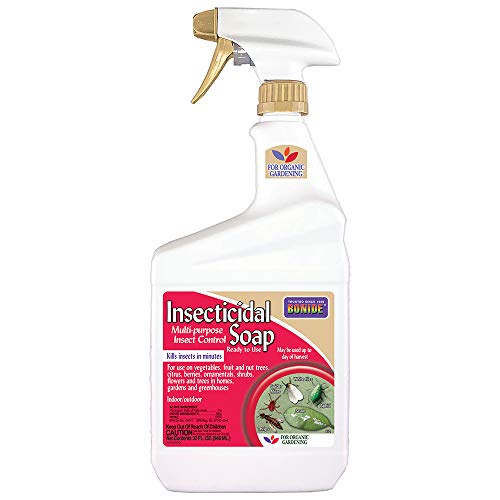
Spray in the morning or evening, not when the plant sits in strong direct sun near a south or west window. Leaves can scorch if soap dries under hot light.
If you want to mix your own, see this guide to a homemade bug spray for houseplants.
Neem Oil for Many Common Pests
Neem oil helps with many soft-bodied pests and is a useful follow-up after the first soap treatment. It coats insects and disrupts their feeding and growth.
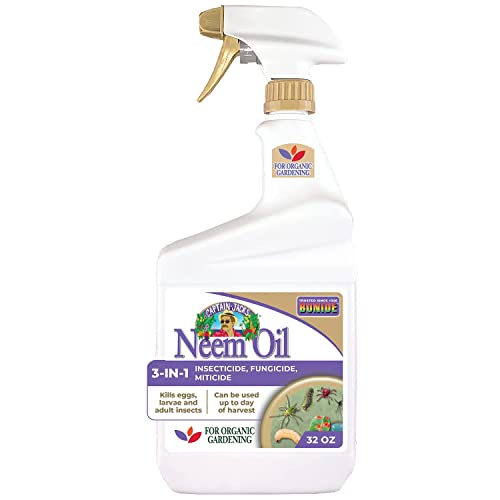
Test it on one leaf first and wait 24 hours. For mixing ratios and timing, read this guide on how to use neem oil on houseplants.
Rubbing Alcohol for Mealybugs and Scale
Dip a cotton swab in 70% isopropyl rubbing alcohol and touch it directly to each mealybug or scale insect. The alcohol dissolves their protective coating.
This method is slow but precise, which makes it ideal for small infestations. For more on hard-shelled pests, see this guide to scale insects on houseplants.
Rinsing for Spider Mites
Spider mites thrive in dry indoor air, especially in winter when radiators and forced-air heat run constantly. A strong rinse in the shower knocks many of them off the plant.
Cover the soil with a plastic bag first so it does not wash out. Then follow up with soap every 5 to 7 days. For a full routine, read this guide to getting rid of spider mites.
Traps and Soil Changes for Fungus Gnats
Fungus gnats breed in moist soil, so letting the top inch or two dry between waterings removes their nursery. Yellow sticky traps catch the adults and show you whether the problem is shrinking.

For larvae in the soil, BTI products are a common choice. If you are curious about one popular option, see this article on whether are Mosquito Bits safe for houseplants is a question worth asking before you use them.
Thrips Need Repeated Treatment
Thrips hide in flowers and new growth, and their eggs sit inside leaf tissue. That makes one-time treatments fail.
Plan on rinsing and spraying every 5 to 7 days for several weeks. For a full plan, read about thrips on houseplants.
Sophia’s tip: Set a phone reminder for every 5 days when treating pests. Most failures happen because the second and third treatments get skipped, and the eggs hatch into a fresh population.
What to Do if You Already Used It Indoors
If you already dusted a houseplant inside, remove the residue from the plant, soil, and room as soon as possible. Keep pets and kids out of the area until cleanup is done.
Clean the Plant First
Wear disposable or rubber gloves for every step. If the weather allows, move the plant outside or into a garage so you are not spreading dust in your living space.
Wipe each leaf with a damp paper towel, top and bottom. Use a fresh towel often so you are removing residue, not smearing it around.
Remove the Top Layer of Soil
Scrape off the top inch of soil, where most of the dust settled. Place it in a sealed bag along with the used paper towels.
Replace it with fresh potting mix. If the dust went deep into the pot, repotting the plant into all-new mix is the cleaner option.
Clean the Room
Vacuum the floor, windowsill, and nearby furniture, then damp-wipe all hard surfaces. Dry sweeping or dusting with a cloth can send particles back into the air.
Wash the plant saucer and any decorative pot cover. Check for dust on nearby pet beds, bowls, and toys, and wash those as well.
Keep Pets and Kids Away
Close the door or block access to the room until cleanup is finished. Cats are highly sensitive to carbaryl, so watch for signs like drooling, vomiting, trembling, or unusual behavior.
If you have an aquarium nearby, cover it during cleanup and check the water surface for dust.
If Someone Was Exposed
Call Poison Control at 1-800-222-1222 if a person swallowed, inhaled, or got dust on their skin or in their eyes. You can also contact the National Pesticide Information Center for guidance on the product.
For pets, call your veterinarian or an animal poison control line right away. Have the product label in hand so you can share the active ingredient.
Sophia’s tip: Before you throw out the bag, photograph the front label and the back panel. If anyone needs medical advice later, the active ingredient and percentage are the first things you will be asked.
When an Outdoor Insecticide Makes Sense
An outdoor insecticide only makes sense for plants that are actually growing outside, used at the rates the label specifies. It is not a tool for indoor rooms, even temporarily.
Plants That Live Outside
Garden beds, outdoor vegetables, and in-ground ornamentals are what Sevin dusts are labeled for. If your label lists the plant and the pest, outdoor use follows the directions.
Even then, follow the label rate exactly. More product does not mean better control, and overuse adds risk to pollinators and nearby water.
Houseplants Summering on a Balcony
Many Chicago apartment growers move tropical plants to a balcony from late May through September. Those plants are outside, but they are still houseplants that will come back indoors.
I would still treat them with soap, neem, or rinsing. Anything you apply outside comes back in on the leaves and soil when temperatures drop below about 50°F and the plants return to your windows.
Bringing Plants Back Indoors
Before moving plants inside in fall, inspect leaf undersides and stems, and rinse each plant well. Treat any pests outdoors with soap or neem while the weather is still mild.
Keep returning plants apart from your indoor collection for about two weeks. This gives hidden pests time to show up before they spread.
Your Next Steps
- Read the label on any pest product you own and confirm it allows indoor houseplant use.
- Identify the pest by its signs: webbing, cottony fluff, bumps, specks, or flying gnats.
- Isolate the affected plant away from other plants, vents, and radiators.
- Start a matched treatment such as insecticidal soap, neem oil, rubbing alcohol, rinsing, or sticky traps.
- Repeat treatments every 5 to 7 days for at least three rounds.
- If you already dusted indoors, clean the plant, soil, and room today, and keep pets out until you finish.
Common Questions About Sevin Dust on Houseplants
Can I use Sevin dust on houseplants if I take them outside first?
Not if they come back indoors afterward, because the residue returns with them on leaves and soil. Outdoor use is meant for plants that stay outside, and safer options like soap and neem work well on houseplants.
Is Sevin dust toxic to cats?
Yes, carbaryl, the classic active ingredient, is highly toxic to cats. If your cat may have touched or licked dusted soil or leaves, call your veterinarian or an animal poison control line right away.
Will Sevin dust kill fungus gnats in houseplant soil?
It is not labeled for indoor houseplant soil, so it should not be used that way. Letting the soil dry between waterings, using yellow sticky traps, and applying a BTI product for larvae are the safer indoor approach.
How do I know which active ingredient my Sevin product has?
Check the “Active Ingredient” box on the front of the package. The classic dust contains carbaryl, but some newer Sevin-branded products use other actives such as zeta-cypermethrin.
What should I do with leftover Sevin dust?
Store it in its original container, sealed, out of reach of pets and kids, and use it only on outdoor plants as the label directs. Follow the “Storage and Disposal” section on the label, and never pour it down a drain.

Hi! I’m Sophia, and I love plants – especially an expert in growing house plants. I stay in Chicago, United States of America, and through my blog and social media platforms, provide tips and tricks on how to grow healthy, vibrant plants indoors. Check out more here.