
You are looking at a small cactus on your windowsill, watching gray rain run down the glass, and wondering whether it could ever live outside year-round in Virginia.
The short version: Yes, some cactus can grow in Virginia, and one prickly pear is even native to the state. Cold-hardy species survive outdoors in nearly every part of Virginia if they get full sun and fast drainage.
Most popular desert and tropical cactus still need to spend winter indoors.
This guide covers Virginia’s climate zones, which species survive outside, how to plant them, and how to care for the ones that live in your home.
At a Glance
| Factor | What it needs |
|---|---|
| Light | Outdoors: 6+ hours of direct sun. Indoors: a south or west window or a grow light |
| Water | Water deeply, then let soil dry completely; very little in winter |
| Humidity | Tolerates Virginia’s humid summers if drainage and airflow are good |
| Temperature | Hardy species handle below 0°F when dry; tender species need 50°F or warmer |
| Soil | Gritty, fast-draining mix; amend clay with gravel or use raised beds |
| Pet safety | Most cactus are not on the ASPCA list; spines are the main hazard |
| Difficulty | Easy indoors; moderate outdoors because of winter wet |
Can Cactus Grow in Virginia Outdoors?
Cactus can grow outdoors in Virginia, but only cold-hardy species planted in sharp-draining soil. Cold alone rarely kills them. Cold combined with wet soil is what usually does the damage.
Virginia’s native eastern prickly pear grows wild on sandy coastal soils, rocky slopes and shale barrens across the state. That tells you a lot: cactus survive here when their roots never sit in soggy ground.
Why Virginia Is Tricky but Workable
Virginia gets roughly 40 to 45 inches of rain a year, spread fairly evenly through the seasons. Desert cactus come from places that get a fraction of that. Winter rain followed by a hard freeze is the combination hardy cactus struggle with most.
Summers bring heat and humidity. Hardy cactus handle the heat well, but humid, still air can encourage fungal spots if plants are crowded or shaded.
Watching Conditions Before You Plant
Before you commit a spot in the yard, place an outdoor thermometer near it for a season to see how cold it gets compared to the forecast. Low spots collect cold air and can run several degrees colder than a slope a few feet away.
If you are testing a cactus in a large container first, a soil moisture meter helps you see how long the mix stays wet after rain.

If it reads wet for more than three or four days, that container or spot needs better drainage before winter.
Which Virginia Growing Zones Matter for Cactus?
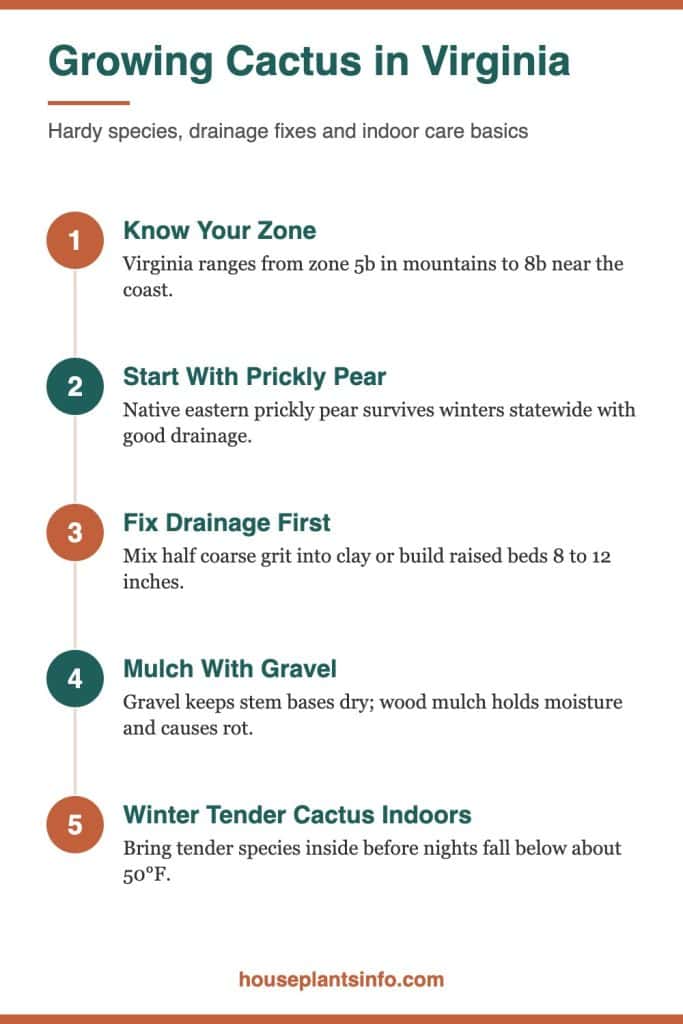
Virginia spans USDA hardiness zones from about 5b in the highest western mountains to about 8a and 8b in the Hampton Roads and Virginia Beach area. Your zone sets which species can stay outside all winter.
Western Mountains and the Shenandoah Valley
This region falls mostly in zones 6a and 6b, with colder pockets at higher elevations. Winter lows of -5°F to -10°F are possible. Stick to the hardiest species, such as eastern prickly pear and fragile prickly pear.
Piedmont and Northern Virginia
Richmond, Charlottesville and the Washington suburbs sit mostly in zones 7a and 7b. Average coldest lows range from about 0°F to 10°F. A wider group of hardy prickly pears, chollas and hedgehog cactus can work here with good drainage.
Coastal Virginia and Hampton Roads
The southeastern corner reaches zones 8a and 8b, with typical lows of 10°F to 20°F. Sandy coastal soils help drainage.
Even here, frost-tender species like the Peruvian apple cactus are a gamble, and you can read whether a Peruvian apple cactus will grow in zone 8 before trying one outdoors.
Which Cactus Species Survive Virginia Winters?
The cactus that survive Virginia winters come mainly from cold, high-elevation or northern regions. They shrivel and drop water from their pads or stems in fall, which helps protect their tissue from freezing.
| Cactus | Approximate hardiness | Best Virginia regions |
|---|---|---|
| Eastern prickly pear (Opuntia humifusa) | Zones 4 to 9 | Statewide |
| Fragile prickly pear (Opuntia fragilis) | Zones 3 to 9 | Statewide |
| Plains prickly pear (Opuntia polyacantha) | Zones 4 to 9 | Statewide |
| Tree cholla (Cylindropuntia imbricata) | Zones 5 to 9 | Piedmont and coast |
| Lace hedgehog (Echinocereus reichenbachii) | Zones 5 to 9 | Statewide with excellent drainage |
| Claret cup (Echinocereus triglochidiatus) | Zones 5 to 9 | Statewide with excellent drainage |
| Spinystar (Escobaria vivipara) | Zones 4 to 9 | Statewide with excellent drainage |
Prickly Pears Are the Most Reliable
Prickly pears are the easiest hardy cactus for Virginia. They tolerate clay better than most others, grow quickly, and produce yellow flowers in late spring or early summer. Eastern prickly pear is the safest first choice because it is adapted to local rainfall.
Small Globular and Hedgehog Types Need More Care
Hedgehog cactus and spinystar are fully cold-hardy but rot quickly in wet soil. Plant them in raised, gravelly beds or rock gardens. A slight slope that sheds water helps them more than any amount of extra protection.
Species That Should Stay Potted
Golden barrel, saguaro, most columnar cactus, Peruvian apple cactus and Eve’s needle cactus cannot handle a Virginia winter outdoors.
You can grow and care for Eve’s needle cactus in a pot that moves outside for summer and comes back in before frost. Holiday cactus such as Christmas cactus are tropical forest plants and are houseplants only.

Sophia’s tip: Check the plant tag for a hardiness zone, not just the word “hardy.” If it lists zone 9 or higher, treat it as a houseplant that can vacation outdoors in summer.
Why Wet Winters Kill Cactus and How to Fix Drainage
Wet winter soil is the main reason hardy cactus die in Virginia. Freezing water in saturated roots and stems leads to rot, which shows up as soft, brown or black tissue in spring.
Fixing Heavy Clay
Much of the Piedmont has dense red clay that holds water for days. Mixing in a small amount of sand is not enough and can make clay denser. Instead, add a generous amount of coarse material such as pea gravel, crushed granite or expanded shale.
A good target is roughly half native soil and half coarse grit in the planting area. Work it in at least 8 to 12 inches deep so roots have a well-drained zone.
Building Raised Beds and Mounds
Raised beds or mounds 8 to 12 inches high are the most dependable fix. They lift the crown above standing water and dry faster after storms. A south-facing slope or the base of a south-facing wall adds warmth and better drainage.
Soil pH
Virginia soils are often acidic, sometimes with a pH around 5 to 6. Most cactus grow well from slightly acidic to slightly alkaline, roughly pH 6 to 7.5.
Drainage matters far more than pH, but a soil test will tell you whether a light lime application makes sense.
Mulching the Right Way
Use gravel or small stones as mulch, not wood chips or shredded bark. Organic mulch holds moisture against the stem base and invites rot. A 1 to 2 inch layer of gravel keeps the crown dry and reflects heat.
How to Plant Cactus Outdoors in Virginia
Plant hardy cactus outdoors in late spring or early summer, after the last frost and once soil has warmed. This gives roots a full growing season to settle before winter.
Choosing the Spot
Pick the sunniest place you have, ideally with 6 or more hours of direct sun. Avoid spots near downspouts, at the bottom of slopes, or where snow piles up from shoveling. Good airflow helps leaves and pads dry after summer rain.
Planting Steps
- Wear thick gloves and wrap the cactus in folded newspaper or a towel to handle it.
- Dig a hole in your amended bed about as deep as the root ball.
- Set the cactus at the same depth it grew in the pot, never deeper.
- Backfill with your gritty mix and top with gravel mulch.
- Wait about a week before watering so any damaged roots can heal.
Watering and Feeding Outdoors
Established hardy cactus in Virginia usually survive on rainfall alone. Water new plantings every one to two weeks during dry summer spells, letting soil dry between waterings. Stop extra watering by late summer so the plants harden off for winter.
Feeding is rarely needed. If growth seems weak, a diluted, low-nitrogen fertilizer once in late spring is plenty. Too much nitrogen produces soft growth that is more likely to be damaged by cold.
What Winter Looks Like
Do not panic when prickly pear pads wrinkle, droop and turn purplish in winter. This is normal. The plant is reducing water in its tissues, and pads usually firm up again in spring as temperatures rise.
Sophia’s tip: If a cold, rainy stretch is forecast for a newly planted hedgehog cactus, prop a clear plastic panel or an old window over it on bricks. It keeps rain off while leaving the sides open for airflow.
How to Care for Cactus Indoors in a Virginia Home
Most cactus grown in Virginia live indoors at least part of the year. Indoor care focuses on bright light, careful watering, and a cool, dry winter rest.
Light
Place cactus in a south or west window, within a foot or two of the glass. East windows can work for smaller species. North windows rarely give enough light, and cactus stretch toward the glass and turn pale.
Virginia’s short, cloudy winter days can weaken light even in good windows. A full-spectrum grow light set 6 to 12 inches above the plants for 12 to 14 hours a day solves this.

Watering
Water deeply until it drains from the pot, then wait until the mix is completely dry before watering again. In spring and summer, that is often every 1 to 3 weeks depending on pot size, light and temperature.
In winter, cut back to once every 4 to 6 weeks, or stop entirely for cool-rested plants. Always use pots with drainage holes and empty saucers after watering.
Temperature and Winter Rest
Many desert cactus bloom better after a cool, dry winter with nights around 45°F to 55°F. A bright, unheated room or a spot near a cold window can provide this. Keep them away from radiators and forced-air vents, which dry and stress plants.
Keep tender cactus above 50°F in general. Watch for cold drafts from leaky windows and doors, and avoid placing pots directly in front of summer AC vents.
Humidity
Indoor winter air in Virginia homes can get quite dry from heating, but cactus handle that easily. Summer humidity is the larger concern if your home runs without AC. Space plants so air moves around them, and never mist cactus.
Soil and Fertilizer
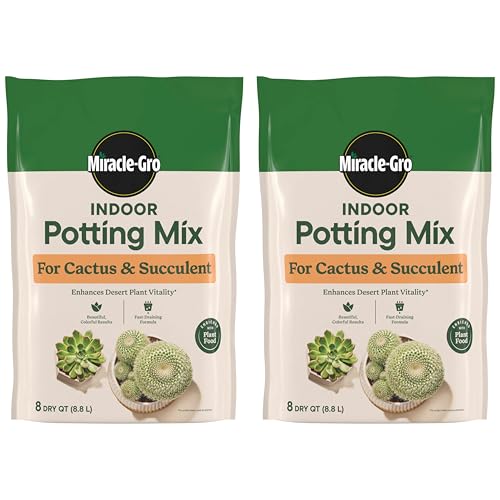
Use a cactus and succulent mix, and add extra perlite or pumice so it is roughly one-third to one-half grit. Terra-cotta pots dry faster than plastic and suit people who tend to overwater.
Feed with a diluted cactus fertilizer once a month in spring and summer. Skip fertilizer from fall through late winter.
Holiday Cactus Are Different
Christmas cactus come from humid tropical forests, not deserts. They prefer bright, indirect light, more regular watering, and potting mix with some organic matter. You can learn how to grow a bigger Christmas cactus with its own care routine.
Pet Safety
The ASPCA lists Christmas cactus as non-toxic to cats and dogs. Most desert cactus are not listed by the ASPCA, but spines and glochids can injure mouths, paws and skin, so place spiny plants out of reach of pets and kids.
How to Move Potted Cactus Between Patio and Windowsill
Potted tender cactus can spend Virginia summers outdoors and winters inside. The key is changing their light and temperature gradually, not overnight.
Moving Outside in Spring
Wait until nights stay above 50°F, usually from late April in the coast to mid-May in the mountains. Start in bright shade for about a week, then give a few hours of morning sun, and increase direct sun over two to three weeks.
Skipping this step causes sunburn. Burned areas turn white, tan or yellow and do not recover, though the plant usually survives.
Bringing Plants In for Fall
Bring tender cactus indoors before nights drop below about 45°F to 50°F, typically late September or October. Check the soil surface, pot bottom and spines for pests before they come inside, and rinse plants with a hose a few days earlier.
Expect some stretching in winter if your windows are weak. Add a grow light or move plants to your brightest window.
Propagating Before Frost
Fall is a good time to save pieces of large tender cactus that are too big to bring in. You can grow a Peruvian apple cactus from a cutting by letting the cut end dry and callus before potting.
If you want new plants from scratch, you can also grow a cactus from seed indoors under lights.
Sophia’s tip: Mark pots with the date you first moved them outdoors. It makes the next spring’s hardening schedule easy to repeat.
Pests and Problems for Cactus in Virginia
The most common cactus problems in Virginia are mealybugs, scale, spider mites and rot. Most are caught early with a quick look at stems, spine bases and soil each time you water.
Mealybugs and Scale
Mealybugs look like small tufts of white cotton in crevices and around the base. Scale appears as tan or brown bumps stuck to the stem. Dab both with a cotton swab dipped in rubbing alcohol, and repeat every week until they are gone.
Spider Mites
Spider mites thrive in warm, dry indoor air near heat sources. Look for fine webbing and pale, speckled patches. Rinse the plant, raise airflow, and treat with insecticidal soap if they return.
Fungal Spots and Rot
Outdoors, humid summers can cause brown or black spots on prickly pear pads. Remove badly affected pads, improve spacing, and avoid overhead watering. Soft, mushy tissue at the base usually means root rot from wet soil.
If rot appears, cut away soft tissue with a clean knife until only firm, healthy tissue remains. Let the cut callus, then replant in dry, gritty mix.
Animal Damage
Rabbits and deer occasionally chew prickly pear pads, especially in late winter. Voles may tunnel under beds. A gravel mulch and a low wire barrier usually discourage them.
Your Next Steps
- Look up your USDA zone and match it against the hardiness chart before buying an outdoor cactus.
- Start outdoors with eastern prickly pear or fragile prickly pear for the best success rate.
- Build a raised bed or mound with roughly half coarse grit before planting anything.
- Use gravel mulch, never wood mulch, around outdoor cactus.
- Move tender cactus to your sunniest south or west window by early fall, adding a grow light if needed.
- Cut winter watering to once every 4 to 6 weeks for indoor desert cactus.
Common Questions About Cactus in Virginia
Is there a cactus native to Virginia?
Yes, the eastern prickly pear (Opuntia humifusa) is native to Virginia. It grows wild in sandy coastal areas, rocky slopes and shale barrens. It is one of the easiest cactus to grow outdoors anywhere in the state.
Do I need to cover hardy cactus in winter?
Hardy cactus usually do not need covering for cold. A rain shield over small hedgehog or globular types can help during long, wet spells. Never wrap them in plastic, which traps moisture and can cause rot.
Why are my prickly pear pads shriveled in winter?
Shriveling is a normal cold-weather response. The plant reduces water in its pads to protect against freezing. They should plump up again in spring once temperatures warm and growth resumes.
Can I leave a potted cactus outside in Virginia all winter?
Only cold-hardy species should stay outdoors, and pots are riskier than the ground because roots freeze more easily. Raise pots on feet for drainage and group them against a south-facing wall. Tender species must come indoors before frost.
What is the best time to plant cactus outdoors in Virginia?
Late spring to early summer is best, after the last frost date for your area. Warm soil helps roots establish before winter. Avoid fall planting, since new roots need a full season to settle.

Hi! I’m Sophia, and I love plants – especially an expert in growing house plants. I stay in Chicago, United States of America, and through my blog and social media platforms, provide tips and tricks on how to grow healthy, vibrant plants indoors. Check out more here.