
You are looking at the plump, ribbed cactus on your windowsill and wondering whether all that stored moisture is actually drinkable. It looks like a living canteen, and movies have told you it is.
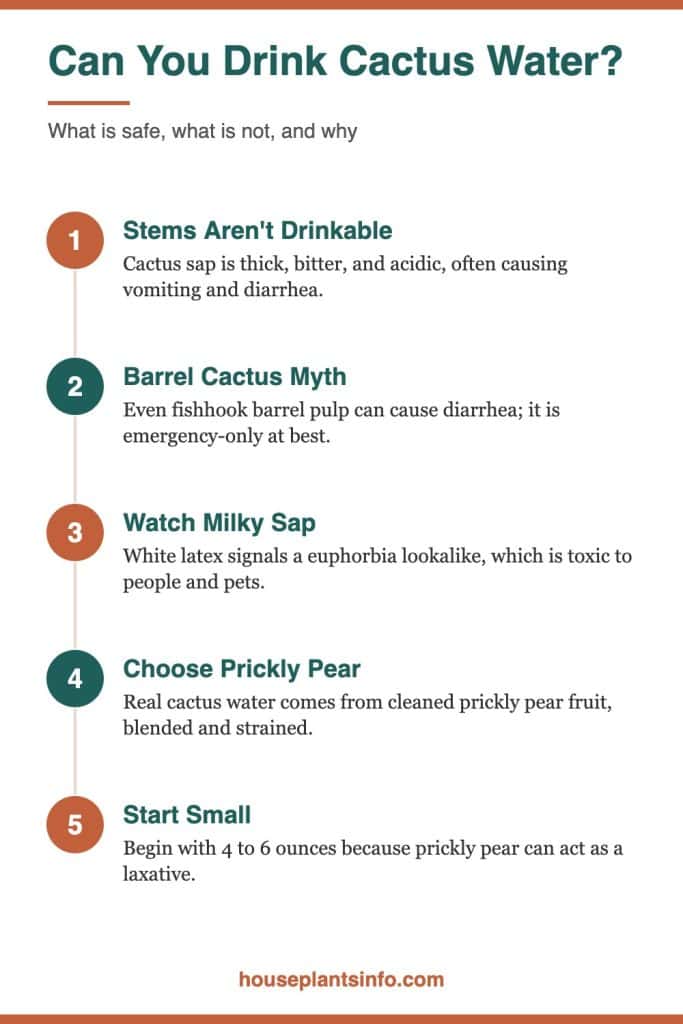
The short version: No, you generally cannot drink water straight from a cactus. Most cacti hold a thick, bitter, acidic sap that can cause vomiting and diarrhea, which makes dehydration worse.
The safe way to enjoy “cactus water” is juice pressed from prickly pear fruit, not liquid squeezed from a stem.
This guide covers why cactus sap is not drinking water, the barrel cactus myth, risks from houseplant cacti and lookalikes, the real benefits and side effects of bottled cactus water, and how to make it at home.
Check These First
- If anyone, child or adult, has chewed or swallowed sap from a houseplant cactus, rinse their mouth and watch for vomiting, drooling, or skin irritation. Call Poison Control at 1-800-222-1222 if symptoms appear.
- If a pet chewed the plant, remove spines from the mouth area and call your veterinarian or the ASPCA Animal Poison Control Center at 888-426-4435.
- Check whether your “cactus” leaks white, milky sap when scratched. If it does, it is likely a euphorbia, and that latex is irritating and toxic.
- Look for a plant tag. Spineless, columnar cacti sold as ornamentals may be species that contain psychoactive alkaloids.
- If you only want to try cactus water, buy or make prickly pear juice and leave your plant alone.
Can You Drink Water Straight From a Cactus?
You cannot drink water straight from a cactus in any useful or reliably safe way. Cutting into the stem gives you wet, slimy pulp, not a pocket of clear liquid, and the moisture in that pulp often carries compounds your body rejects.
What You Actually Find Inside
Slice a cactus open with a serrated knife while wearing thick gloves and you will see pale green, fibrous tissue. Squeezing it yields a small amount of cloudy, mucilaginous liquid that tastes bitter or sour.

Even if you ran the pulp through a blender, you would get a thick slurry, not something resembling water.
Why the Movie Scene Fails
Films show a hero hacking open a cactus and drinking from it like a coconut. Real cacti do not have hollow reservoirs. The water is bound inside living cells and mixed with mucilage, acids, and in many species alkaloids.
The Dehydration Problem
The most serious issue is what happens after you swallow. Many cactus saps trigger nausea, vomiting, or diarrhea, and each of those pulls more water out of your body than the sap put in. In a genuine survival situation, that tradeoff can be dangerous.
Why Cactus Moisture Isn’t Drinking Water
Cactus moisture is stored for the plant’s survival, not yours, and the plant chemistry that keeps it alive in drought also makes it unpleasant or harmful to drink. Understanding how do cactus store water explains most of the problem.
Mucilage Holds Water Tightly
Cacti store water in spongy tissue called parenchyma, and much of it is bound up in mucilage, a gel-like substance. Mucilage helps the plant hold moisture through long dry stretches.
For you, it means the liquid is thick, slippery, and hard to separate from the flesh.
Acids From Nighttime Breathing
Most cacti use a process called CAM photosynthesis. They open their pores at night to reduce water loss and store carbon dioxide as organic acids until daylight.
That is one reason cactus tissue can taste sour, especially in the morning, and why it can upset your stomach.
Defensive Chemistry
Many cactus species produce alkaloids and other compounds that discourage animals from eating them. Some contain oxalates, and a few contain psychoactive substances like mescaline. Those defenses do not disappear because you are thirsty.
What Indoor Growing Adds
A cactus grown in your apartment adds its own risks. Its tissue can carry residue from fertilizer salts, systemic pest treatments applied at the nursery, and anything sprayed on it since. None of that belongs in your mouth.

Is Barrel Cactus the One Exception?
The fishhook barrel cactus, Ferocactus wislizeni, is the species most often named as the exception, but it is a weak exception at best. Its pulp is less toxic than many other cacti, yet chewing it can still cause diarrhea and stomach upset.
Where the Idea Comes From
Old survival advice suggested cutting the top off a barrel cactus and mashing the pulp to chew for moisture. The fishhook barrel’s pulp is relatively low in harmful alkaloids, so the story stuck.
Many people then assumed all round, ribbed cacti work the same way. They do not.
Why It Still Isn’t Recommended
Even with the fishhook barrel, you are chewing pulp, not drinking water. The yield is small for the energy spent cutting through a spiny, tough plant. Several other barrel-shaped species look similar and are far more irritating, so a wrong identification is easy and costly.
Wild Cacti and the Law
Many wild cacti in the American Southwest are protected by state law. Cutting or removing them without permission can bring fines.
If you are curious about the survival question in more detail, read about whether you can get water from a cactus before trying anything outdoors.
Sophia’s tip would not help in the desert, but it does apply at home: carry enough water on hikes so a cactus never becomes your plan. A common guideline for hot, dry trails is roughly 1 liter per hour of hiking.
What About the Cactus in Your Apartment?
Do not drink, chew, or squeeze sap from a houseplant cactus. Some are mildly irritating, some are toxic, and several popular plants sold as cacti are not cacti at all.
Watch for Euphorbia Lookalikes
Pencil cactus, African milk tree, and crown of thorns are euphorbias, not true cacti. When damaged, they leak a white, milky latex that irritates skin and eyes and can cause burning in the mouth, vomiting, and diarrhea if swallowed.
True cacti almost never bleed white sap.
Sophia’s tip: To tell a euphorbia from a true cactus, look closely where the spines attach. True cacti grow spines from small, fuzzy cushions called areoles; euphorbias have spines without that fuzzy base. Wear gloves when you check.
Columnar Cacti With Psychoactive Compounds
Some columnar cacti sold as ornamentals, including San Pedro types (Echinopsis pachanoi), contain mescaline. They are legal to grow as decorative plants in many places but should never be consumed. If kids are in the home, keep any unlabeled columnar cactus out of reach.
Spines Are the Bigger Everyday Risk
For most homes, the realistic hazard is spines and fine glochids, especially on Opuntia types like bunny ears cactus. Glochids are tiny, barbed bristles that lodge in skin, lips, and pet muzzles.
Use tape or tweezers to remove them, and keep these plants above counter height.
Pet Safety
The ASPCA lists Christmas cactus (Schlumbergera) as non-toxic to cats and dogs, though chewing a lot of it can still cause mild vomiting.

For other cacti, the main danger to pets is spines; for euphorbia lookalikes, it is the toxic latex. Place spiny plants on high shelves away from radiators where cats like to perch.
If you grow holiday cacti, their care looks nothing like a desert cactus. Learn how often do you water christmas cactus so you keep it healthy rather than wondering what is inside it.
What Is Commercial Cactus Water Made From?
Bottled cactus water is almost always made from the fruit of prickly pear cactus (Opuntia), not from cactus stems. The fruit is blended or pressed, strained, and diluted with water, often with added sugar or lemon juice.
Prickly Pear Fruit, Also Called Tuna
Prickly pear fruit grows on the edges of the flat pads. When ripe, it turns magenta, red, orange, or yellow-green depending on the variety.
The flesh is sweet and juicy, with many hard seeds, and has been eaten for thousands of years in Mexico and the Southwest.
Why the Fruit Works and the Stem Doesn’t
Cactus fruit is meant to be eaten. The plant uses sweet flesh to attract animals that spread its seeds, so it lacks the defensive bitterness found in many stems.
The pads, called nopales, are also edible, but they are cooked as a vegetable, not juiced for drinking water.
What It Tastes Like
Prickly pear juice tastes somewhere between watermelon, bubblegum, and cucumber. Bottled versions are bright pink from the fruit’s natural pigments, called betalains. Unsweetened versions are mild and lightly earthy.
| Part of the Cactus | Edible? | How It Is Used |
|---|---|---|
| Prickly pear fruit (tuna) | Yes, once spines and glochids are removed | Fresh, juiced, cactus water, jams |
| Prickly pear pads (nopales) | Yes, once cleaned and cooked | Grilled, sautéed, in eggs and salads |
| Most cactus stems | No | Bitter, acidic, can cause vomiting and diarrhea |
| Fishhook barrel pulp | Emergency only, still risky | Chewed, not drunk; often causes diarrhea |
| Euphorbia “cactus” sap | No | Toxic, irritating milky latex |
Does Cactus Water Have Real Benefits?
Prickly pear cactus water is a reasonable lower-calorie drink with some antioxidants and electrolytes, but it is not a miracle hydrator. Its most reliable side effect is a laxative one, which deserves attention.
What It Offers
Prickly pear fruit contains betalain pigments, which act as antioxidants, along with vitamin C, magnesium, and potassium. Cactus water is usually lower in calories and sugar than many fruit juices. Some people prefer it to sports drinks after light exercise.
What It Doesn’t Do
It does not hydrate you better than plain water for everyday needs. Claims about curing hangovers, reversing aging, or detoxing are not well established. Treat it as a pleasant drink, not a treatment.
The Laxative Effect
Prickly pear fruit can have a laxative effect, especially in larger amounts. Some people notice loose stools after one or two servings. Eating many seeds in large quantities has also been linked to constipation and, rarely, intestinal blockage.
Who Should Be Careful
Prickly pear may lower blood sugar, so people with diabetes or on blood sugar medication should talk to their doctor before drinking it regularly. Anyone with a sensitive stomach should start with a small glass.
Sophia’s tip: Start with about 4 to 6 ounces of cactus water and wait a day before having more. That small test tells you how your digestion responds without a rough afternoon.
How to Make Prickly Pear Cactus Water at Home
You can make cactus water at home with ripe prickly pear fruit, water, and a strainer. The work is mostly in handling the fruit safely so no glochids end up in the juice.
Choose and Handle the Fruit
Look for fruit that is deeply colored and gives slightly when pressed. Grocery store fruit is often already de-spined, but glochids may remain. Handle it with tongs or thick gloves, and never rub it with bare hands.
Clean and Peel
- Rinse the fruit under running water while holding it with tongs.
- Scrub it with a vegetable brush, or char the skin briefly over a gas flame to burn off remaining bristles.
- Slice off both ends, cut a shallow slit down the length, and peel the thick skin away.
Blend and Strain
- Cut the peeled fruit into chunks and blend about 4 to 6 fruits with 2 to 3 cups of cold water.
- Pour through a fine-mesh strainer or cheesecloth to remove all seeds and pulp.
- Add lime juice to taste; skip sugar if you want it closer to commercial unsweetened versions.
Store It
Keep homemade cactus water in a covered glass container in the refrigerator for about 2 to 3 days. Shake before serving, since it separates. Freeze extra in ice cube trays for up to a few months.
Other Cactus Fruit You Can Grow
A few cacti produce edible fruit indoors if they get enough light. The Peruvian apple cactus (Cereus repandus) grows smooth, sweet fruit, though indoor plants often need years and very bright light to flower.
If you grow one, learn how often should i water a peruvian apple cactus to give it the best chance.
For any fruiting cactus indoors, a south-facing window within 1 to 3 feet of the glass, or a full-spectrum grow light for 12 to 14 hours a day, makes the biggest difference. Keep the plant away from forced-air vents in winter.
Your Next Steps
- Leave your houseplant cactus intact and enjoy it as decor; its sap is not a drink.
- Scratch-test unlabeled “cacti” for milky sap and move any euphorbia away from pets and kids.
- Save Poison Control (1-800-222-1222) and ASPCA Animal Poison Control (888-426-4435) in your phone.
- Try a small glass of store-bought or homemade prickly pear cactus water before committing to a larger batch.
- Keep your own cactus healthy by learning how often should i water my cactus through each season, especially in dry, radiator-heated winters.
Common Questions About Drinking Water From a Cactus
Will drinking cactus sap kill you?
Most true cactus sap is unlikely to be fatal in small amounts, but it can cause vomiting and diarrhea that worsen dehydration. Euphorbia latex and psychoactive columnar cacti carry more serious risks. If symptoms appear after swallowing any plant sap, call Poison Control.
Is cactus water just water from a cactus?
No, commercial cactus water is made from prickly pear fruit that is pressed, strained, and diluted. It is not liquid extracted from cactus stems. The fruit is naturally sweet and safe to eat once cleaned.
Can you drink from a saguaro cactus?
You should not, because saguaro pulp is bitter and can make you sick. Saguaros are also protected in Arizona, and damaging one can lead to heavy fines. Its fruit, harvested legally, is edible, but the stem is not a water source.
Is cactus water good for your kidneys?
There is no well-established evidence that cactus water helps or harms healthy kidneys. It contains potassium, so anyone with kidney disease or on a potassium-restricted diet should check with their doctor first. For everyday hydration, plain water works best.
Can my cat or dog drink cactus water?
It is best not to give pets cactus water, since added sugar and the laxative effect can upset their stomachs. A small accidental lick of unsweetened juice is unlikely to cause harm. Call your veterinarian if your pet shows vomiting or diarrhea.

Hi! I’m Sophia, and I love plants – especially an expert in growing house plants. I stay in Chicago, United States of America, and through my blog and social media platforms, provide tips and tricks on how to grow healthy, vibrant plants indoors. Check out more here.