
A bowl of spiny, egg-shaped fruit sits on your kitchen counter, some deep magenta, some still blushing green, and you are not sure which ones are ready to eat.
Knowing how to tell if a cactus pear is ripe saves you from biting into a sour, starchy fruit or tossing one that was perfect.
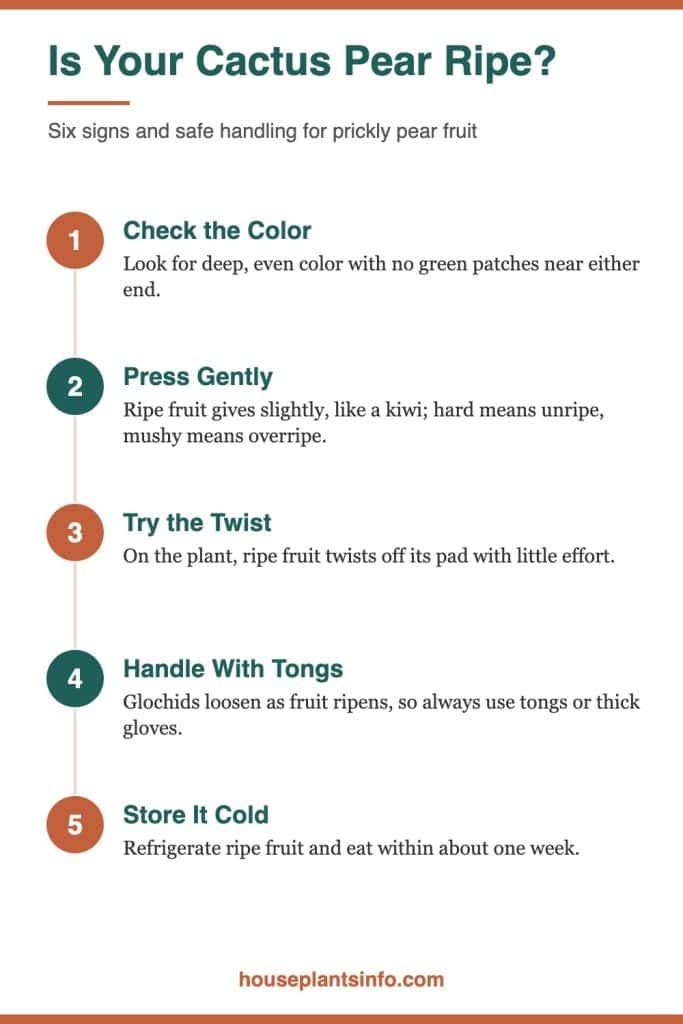
The short version: A ripe cactus pear has deep, even color with no green patches, gives slightly under gentle pressure like a ripe kiwi, and twists off its pad easily.
Its tiny hairlike spines also brush away more readily, and the flower scar at the top looks flat or slightly sunken.
This guide covers color, firmness, glochids, timing, overripe warning signs, ripening at home, and safe handling and storage indoors.
At a Glance
| Factor | What it needs |
|---|---|
| Color | Deep, uniform red, magenta, orange or yellow, depending on variety |
| Firmness | Slight give under gentle pressure, never rock hard or mushy |
| Glochids | Brush off easily; always handle with tongs or gloves |
| Season | Late summer through fall outdoors; rarely fruits indoors |
| Storage | Refrigerate ripe fruit; use within about 1 week |
| Pet safety | Glochids and spines are the main hazard for pets and kids |
| Difficulty | Easy once you know the signs and handle it carefully |
How to Tell if a Cactus Pear Is Ripe: The Six Signs
Check six things together: color, firmness, the flower scar, how easily the fruit detaches, how loose the glochids are, and smell. One sign alone can mislead you, but three or four agreeing means the fruit is ready.
Before you touch anything, put on a pair of thick gloves or grab kitchen tongs. Cactus pears are covered in glochids, which are tiny barbed bristles that lodge in skin and are hard to see.
The Six Signs in Order
- Color is deep and even, with no green zones near the base or tip.
- The fruit yields slightly when pressed with a gloved fingertip.
- The flower scar on top looks flattened or slightly cupped, not raised.
- The fruit twists free from the pad with little effort.
- Glochids rub off more easily than on unripe fruit.
- It smells faintly sweet near the scar.
Why One Sign Is Not Enough
Some varieties stay green or pale yellow when fully ripe, so color alone can fool you. Firmness also varies with how long the fruit has sat in a cool kitchen or fridge.
Combining color with firmness is the most reliable pairing for store-bought fruit. For fruit still on the plant, the twist test is often the clearest signal.
What Color Should a Ripe Cactus Pear Be?
A ripe cactus pear shows the full, uniform color of its variety, most often deep red to magenta, but sometimes orange, yellow or green. Uneven patches of lighter green usually mean it needs more time.
Common Color Types
The fruit most people buy comes from prickly pear cactus (Opuntia), and its skin color depends on the variety. Red and purple types are the most common in stores, while yellow, orange and green types show up in specialty markets.
| Skin color when ripe | Typical flesh color | What unripe looks like |
|---|---|---|
| Deep red to magenta | Bright magenta to purple | Green with red blush |
| Orange | Orange to golden | Green-yellow, patchy |
| Yellow | Pale yellow to gold | Light green |
| Green | Pale green to whitish | Darker, duller green, very firm |
Reading Color on Green Varieties
Green-skinned types can be ripe even though they never turn red. For these, rely more on firmness, the flower scar and a slight softening of the green to a lighter, yellowish tone.
Light and Color Indoors
Check color in natural daylight near a window rather than under warm kitchen bulbs. Yellow-toned indoor lighting can make a green-tinged fruit look riper than it is.
How Soft Should a Ripe Cactus Pear Feel?
A ripe cactus pear feels firm but yields slightly when pressed, similar to a ripe kiwi or a just-ripe avocado. Rock-hard fruit is unripe, and fruit that dents deeply or feels squishy is past its best.
Doing the Press Test Safely
Wear gloves or hold the fruit with tongs, then press gently near the middle with one fingertip. Do not squeeze the whole fruit in your palm, since glochids can work through thin gloves under pressure.

What Each Feel Means
- Hard with no give: unripe, likely tart and starchy.
- Slight, even give: ripe and ready to eat.
- Soft spot on one side only: possibly bruised, check for damage.
- Squishy all over or leaking: overripe or spoiling.
Cold Fruit Feels Firmer
Fruit straight from the refrigerator feels firmer than it really is. Let it sit at room temperature for 20 to 30 minutes before judging firmness.
Sophia’s tip: Compare fruit against each other rather than judging one alone. Line up three or four on a plate with tongs and press each in turn, and the ripest one is usually obvious within seconds.
Do the Glochids, Stem and Birds Tell You Anything?
Yes. On a growing plant, ripe fruit detaches with a gentle twist, its glochids loosen, and birds and other wildlife start pecking at it. These signs matter most if you are picking from a garden plant or a large potted specimen.
The Glochids Loosen
As the fruit matures, glochids come away more easily when brushed. This is a helpful clue, but it also means ripe fruit sheds more bristles onto gloves, counters and towels, so handle it with extra care.
The Fruit Twists Off Easily
Grip the fruit with tongs and give it a gentle quarter twist. Ripe fruit separates cleanly from the pad, while unripe fruit resists and may tear.
If the fruit falls off on its own, it is usually fully ripe or close to overripe. Check fallen fruit quickly for bruising, splits or insect damage.
Birds and Wildlife
Outdoors, birds often peck at fruit as it ripens. When you see pecked fruit on a plant, the unpecked ones nearby are usually ready or close, so pick them promptly.
When Do Cactus Pears Ripen?
Outdoors in warm climates, prickly pear fruit usually ripens from late summer through fall, roughly August to October in much of the United States. Fruit takes several weeks to a few months to mature after the flowers fade.
Outdoor Plants
Prickly pears flower in spring to early summer, and fruit follows. Ripening is staggered, so a single plant may carry ripe, nearly ripe and green fruit at once, and you can pick over several weeks.
Indoor Plants
Cactus grown indoors rarely fruits. It needs years of maturity, very strong light, a cool dry winter rest and pollination, which are hard to provide in an apartment.
If you keep a prickly pear by a south window in winter, keep it at least 3 feet from radiators and forced-air vents. Steady blasts of hot, dry air stress the pads and make flowering even less likely.
Peruvian Apple Cactus Fruit
Peruvian apple cactus (Cereus repandus) also produces edible fruit, and the same basic signs apply. Its fruit is nearly spineless, turns from green to red, pink or yellow when ripe, and often splits open to show white flesh with tiny black seeds.
Indoor plants seldom fruit because night-flying pollinators are absent, though hand pollination with a soft brush sometimes works. If you want to try, learn how to care for Peruvian apple cactus so it has the light and winter rest that flowering needs.
Many growers start new columns from pieces of an older plant. You can grow Peruvian apple cactus from a cutting, though it takes several years before a new plant is mature enough to bloom.
Is It Overripe or Spoiled? Signs to Toss It
An overripe cactus pear feels mushy, looks wrinkled or dull, and may leak juice or smell fermented. Mold, deep dark bruises or a sour, alcoholic odor mean it should go in the compost.
Overripe but Still Usable
Fruit that is slightly too soft but smells sweet and shows no mold is often fine for juice, smoothies or syrup. Cut away any bruised areas and use it the same day.
Signs It Has Spoiled
- Fuzzy white, gray or green mold on the skin or scar.
- A sour, vinegary or alcoholic smell.
- Skin that is shriveled, sunken and leaking.
- Flesh that is brown, slimy or translucent in patches.
- Fruit flies gathering around it on the counter.
Avoid Spoilage on the Counter
Keep fruit out of direct sun on a windowsill and away from radiators, the oven and the top of the refrigerator. Warmth speeds softening and mold, especially in a closed fruit bowl.
Sophia’s tip: Store cactus pears in a single layer on a paper towel rather than piled in a bowl. Fruit that touches stays damp at the contact points, and that is where soft spots and mold usually start.
When the Plant Itself Looks Wrong
Sometimes the fruit shrivels because the whole pad or plant is in trouble. Soft, collapsing or blackened stems at the base point to rot, and it helps to know how to tell if a cactus is dead or can still be saved.
White cottony clusters around fruit or pads are a different problem. If you are wondering whether a cactus can get mealybugs, the answer is yes, and they often hide in the seams where fruit joins the pad.
Can You Ripen a Cactus Pear at Home?
Only a little. Cactus pears do most of their ripening on the plant, so a hard, green fruit will not turn sweet on your counter, but a nearly ripe one can soften and deepen in color over 1 to 3 days at room temperature.
What Room-Temperature Ripening Can Do
If a fruit has good color but feels slightly too firm, leave it on the counter at normal room temperature, around 65 to 75°F. Check it daily with the press test.
The Paper Bag Method
Placing fruit in a loosely closed paper bag with a banana or apple can help soften nearly ripe fruit a bit faster. This works best on fruit that is already mostly colored; it will not fix fruit picked very green.
What Will Not Work
- Setting fruit on a sunny windowsill, which warms it unevenly and can cause soft, spoiled spots.
- Placing it near a radiator or heating vent, which dries and shrivels the skin.
- Sealing it in plastic, which traps moisture and invites mold.
Choose Better at the Store
Since ripening at home is limited, picking well matters most. Look for deep, even color, a slight give and no wrinkles, bruises or moldy scars.
How to Pick, Clean and Store Ripe Cactus Pears Safely
Handle cactus pears only with tongs or thick gloves, remove glochids before peeling, and refrigerate ripe fruit for up to about a week. Careful handling prevents painful, hard-to-remove bristles in your hands.
Picking From the Plant
Hold the fruit with kitchen tongs and twist gently until it comes free. Drop it into a sturdy container rather than a cloth bag, since glochids cling to fabric and transfer to your hands later.
Removing Glochids
Many store-bought cactus pears have been partly cleaned, but some glochids usually remain. You can remove them in a few ways:
- Scrub the fruit under running water with a stiff vegetable brush while holding it with tongs.
- Roll it in a folded towel you set aside only for this job.
- Hold it with tongs over a gas burner flame for a few seconds per side to singe off the bristles, then rinse.
Rinse the sink afterward and wipe the counter with a damp paper towel. Loose glochids are easy to miss and can end up in a pet’s paw or a child’s hand.
Sophia’s tip: Keep a roll of wide packing tape near the sink when you prep cactus pears. Pressing the sticky side onto your gloves or skin and peeling it away lifts stray glochids that tweezers miss.
Peeling the Fruit
Cut off both ends with a sharp knife, then make one shallow lengthwise slit through the skin. Peel the thick skin back with your fingers or the knife, and the flesh comes out in one piece.
The flesh is full of small, hard seeds. They are edible and commonly swallowed whole, or you can strain the pulp for juice.
Storage Times
| Fruit condition | Where to keep it | How long |
|---|---|---|
| Nearly ripe, slightly firm | Counter, 65 to 75°F, out of sun | 1 to 3 days |
| Ripe, whole | Refrigerator, crisper drawer | About 1 week |
| Peeled or cut | Covered container, refrigerator | 1 to 3 days |
| Pulp or juice | Freezer | Several months |
Pets and Kids
Prickly pear spines and glochids are the main hazard, both on the plant and on fresh fruit left on a counter.
Keep fruit, peels and potted plants out of reach of cats, dogs and toddlers, and check the ASPCA toxic and non-toxic plant list for current guidance on specific species.
Starting Your Own Plant
Some people want to grow a fruiting cactus after enjoying the fruit. Cuttings can stall in cool, damp or dim conditions, so read about a Peruvian apple cactus not rooting if a new piece sits for weeks without growing.
Your Next Steps
- Put on thick gloves or use tongs before handling any cactus pear.
- Check each fruit for deep, even color and a flat or slightly cupped flower scar.
- Press gently to find a slight give, letting cold fruit warm up first.
- Leave nearly ripe fruit on the counter for 1 to 3 days, away from windows and radiators.
- Remove glochids with a brush, towel or quick flame before peeling.
- Refrigerate ripe fruit and eat it within about a week.
Common Questions About Cactus Pear Ripeness
What does a ripe cactus pear taste like?
A ripe cactus pear tastes sweet and mild, often compared to watermelon, berries or bubblegum. Unripe fruit tastes bland, tart or starchy, which is a clear sign it was picked too early.
Will a green cactus pear ripen after picking?
A fully green, hard cactus pear will not ripen much after picking. Fruit that is mostly colored and only slightly firm can soften over 1 to 3 days at room temperature, but its sweetness will not increase much.
Are cactus pear seeds safe to eat?
Yes, the small hard seeds are edible and usually swallowed whole. If you dislike their texture, press the pulp through a strainer to make juice or puree.
How do I get glochids out of my skin?
Press wide tape onto the area and peel it off to lift most bristles, then use tweezers under bright light for any that remain. Wash the area with soap and water afterward, and avoid rubbing it, which pushes bristles deeper.
Can an indoor cactus produce ripe fruit?
It is possible but uncommon. The plant needs to be mature, receive very strong light from a south or west window or a grow light, rest cool and dry in winter, and be pollinated, often by hand.

Hi! I’m Sophia, and I love plants – especially an expert in growing house plants. I stay in Chicago, United States of America, and through my blog and social media platforms, provide tips and tricks on how to grow healthy, vibrant plants indoors. Check out more here.