
Your Peruvian apple cactus stands tall and blue-green by the window, and you are holding a watering can, unsure whether today is the day. This is the most common question growers have, and it causes the most damage when guessed wrong.
The short version: Water a Peruvian apple cactus only when the soil is completely dry from top to bottom, then soak it until water drains out.
Indoors, that usually means every 1 to 3 weeks in spring and summer and every 4 to 8 weeks in winter.
This guide covers how to check the soil, how to water correctly, how seasons and pots change the schedule, and how to spot and fix watering mistakes.
At a Glance
| Factor | What it needs |
|---|---|
| Light | Full sun to very bright light; a south or west window within 1 to 3 feet of the glass |
| Water | Soak thoroughly, then let soil dry completely; every 1 to 3 weeks in the growing season, every 4 to 8 weeks in winter |
| Humidity | Low to average household humidity; dry winter air is fine |
| Temperature | 65°F to 90°F in the growing season; 50°F to 60°F in winter is ideal, never below about 40°F indoors |
| Soil | Fast-draining cactus mix with added perlite or pumice |
| Pet safety | Not known as a toxic plant, but spines can injure pets and kids |
| Difficulty | Easy, as long as you avoid overwatering |
How Often Should I Water a Peruvian Apple Cactus?
How often should I water a Peruvian apple cactus? The honest answer is “when it is dry,” which indoors usually lands between every 7 and 21 days in warm months and every 4 to 8 weeks in winter.
Treat the calendar as a rough guide, and let the soil make the final call.
Peruvian apple cactus (Cereus repandus, often sold as Cereus peruvianus) is a columnar cactus from dry regions of South America. Its thick stems store water, so it handles drought far better than it handles soggy roots.
Why a Fixed Schedule Fails
A plant in a bright south window with forced-air heat dries out much faster than the same plant in a cool east window. Pot size, soil mix, and room temperature all shift the timing by days or weeks.
That is why watering “every Sunday” often leads to rot. The plant may need water on day 9 in July and not again until day 45 in January.
Simple Ways to Check Dryness
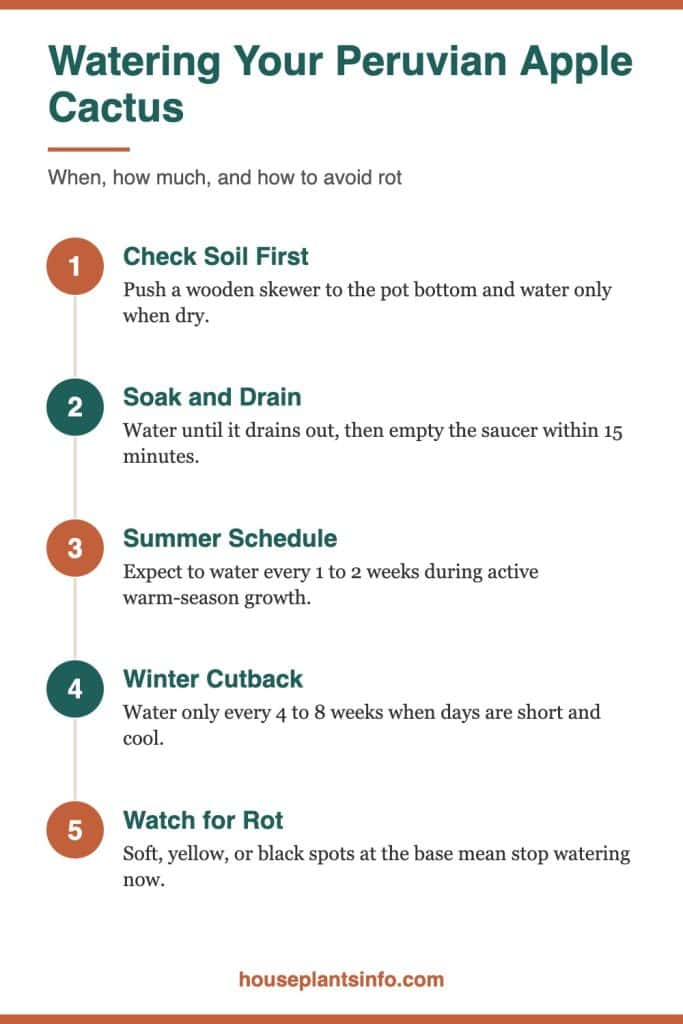
The most reliable check is a wooden skewer or chopstick pushed to the bottom of the pot. Leave it in for a minute; if it comes out clean and dry, the cactus is ready for water.
A soil moisture meter also works well for deeper pots, as long as you push the probe down into the root zone rather than reading the top inch. Lifting the pot helps too, since dry cactus soil feels noticeably lighter.

Sophia’s tip: Weigh the pot right after a thorough watering, then again when the skewer comes out dry. After a few cycles, a quick lift tells you more than any calendar.
How Do You Know When It Needs Water?
Your cactus needs water when the soil is dry all the way through and the stems look firm but slightly less plump than usual. Never water just because the surface looks dry.
Signs in the Soil
- The skewer comes out clean from the bottom of the pot.
- The soil has pulled slightly away from the pot edges.
- The pot feels light when lifted.
- A moisture meter reads in the dry range at root depth.
Signs in the Plant
A well-hydrated stem looks full, with ribs that stand out sharply. When the plant is using its stored water, the ribs may look a little deeper and the stem slightly thinner.
Mild thinning is normal and not an emergency. Wrinkling, softening, or a dull, deflated look means the plant has gone too long without water.
What Not to Rely On
The top inch of soil dries within a day or two in a warm room, while the bottom can stay wet for a week or more. Surface checks alone are one of the main causes of overwatering.
Leaf color is also unreliable, because the plant has no true leaves. Color changes in the stem usually point to light, cold, or rot problems rather than a simple need for water.
How to Water a Peruvian Apple Cactus the Right Way
Use the soak-and-dry method: water slowly until it runs out the drainage holes, let it drain fully, then wait until the soil is completely dry again. Deep, infrequent watering builds strong roots.
The Soak-and-Dry Method Step by Step
- Confirm the soil is dry at the bottom of the pot.
- Water slowly at the base, around the soil surface, until water flows from the drainage holes.
- Wait a few minutes and water again if the soil was very dry and water ran straight through.
- Let the pot drain for 10 to 15 minutes.
- Empty the saucer or cachepot so the roots never sit in water.
Water Temperature and Type
Use room-temperature water. Cold tap water straight from the faucet in winter can shock roots, especially in a cool apartment.
Tap water is usually fine for this cactus. If you see white crust building up on the soil or pot rim, flush the pot with a heavy watering every few months to rinse out mineral salts.
Top Watering vs. Bottom Watering
Top watering is the better choice for most cacti because it flushes salts down and out. Bottom watering can work for small pots, but remove the pot once the surface darkens, usually within 15 to 30 minutes.
Avoid misting. This cactus does not need extra humidity, and water sitting at the stem base or in crevices can encourage fungal problems.
Sophia’s tip: Water in the morning so any splashes on the stem dry during the day. In a dim winter room, damp stems overnight are an easy way to invite rot.
How Do Water Needs Change by Season?
Watering rises in spring and summer when the cactus grows, and drops sharply in fall and winter when it rests. The winter cutback is the change most indoor growers miss.
| Season | Typical indoor frequency | What the plant is doing |
|---|---|---|
| Spring | Every 2 to 3 weeks, increasing as days warm | Waking up, starting new growth |
| Summer | Every 1 to 2 weeks | Active growth, highest water use |
| Fall | Every 3 to 4 weeks, tapering | Slowing down |
| Winter | Every 4 to 8 weeks, or less in cool rooms | Semi-dormant, very low water use |
Spring and Summer
As daylight lengthens and temperatures climb above about 65°F, the plant starts pushing new growth from the stem tips. You may notice fresh, brighter green sections at the top.
This is when the cactus uses the most water. A plant in a hot west window or outdoors on a summer balcony may dry out within a week.
Fall and Winter
From roughly October through February, shorter days slow growth to a crawl. In a Chicago apartment, that low light is the main reason to cut back, even if the radiator keeps the room warm.
A cool winter rest around 50°F to 60°F with very little water helps the plant stay compact. In a cool room, watering once every 6 to 8 weeks, or just enough to prevent shriveling, is often plenty.
Heated Rooms and Grow Lights
Radiators and forced-air heat dry soil faster, so a cactus near a heat source may need water every 3 to 5 weeks instead of every 6 to 8. Keep it at least a few feet from direct hot airflow.
A cactus under a strong grow light for 12 or more hours a day may keep growing through winter. In that case, water closer to the spring schedule, still checking dryness first.

How Pot, Soil, and Light Change the Watering Schedule
Pot material, drainage, soil mix, and light can double or halve the time between waterings. Getting these right does more to prevent problems than any schedule.
Pot Size and Material
Unglazed terracotta wicks moisture through its walls, so soil dries noticeably faster than in plastic or glazed ceramic. It is a forgiving choice for anyone who tends to overwater.
Choose a pot only 1 to 2 inches wider than the root ball. An oversized pot holds extra wet soil that the roots cannot reach, which keeps the bottom soggy for weeks.
Drainage holes are essential. A decorative pot without a hole should only be used as an outer cover, with the plant in a draining pot inside it.
Soil Mix
Use a commercial cactus mix and add perlite or pumice, aiming for roughly half mineral grit. The goal is soil that drains within seconds and dries within days, not weeks.
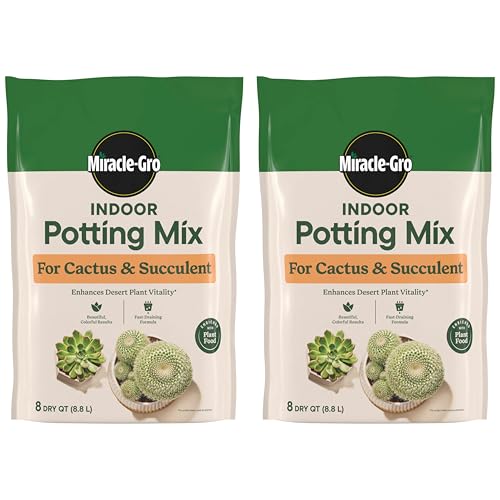
Regular potting soil holds too much water for this plant. If your cactus came in dense, peaty soil, plan to repot in spring.
Light and Window Placement
A south or west window within 1 to 3 feet of the glass gives the strong light this cactus wants. More light means more water use and faster drying.
In an east or north window, or farther back in the room, the plant uses water slowly. Stretch the interval and check more carefully, since low light plus frequent watering is a classic setup for rot.
For the full picture on light, feeding, and repotting, see how to care for Peruvian apple cactus.
Overwatering: Signs, Causes, and the Fix
Overwatering is the most common way indoor Peruvian apple cacti die, usually through root rot. Catch it early by watching for soft spots, discoloration, and soil that stays wet for more than a week or two.
Warning Signs
- Soft, mushy areas, often starting at the base of the stem
- Yellowing or translucent patches on the stem
- Brown or black spots that spread
- A sour or rotten smell from the soil
- The plant leaning or wobbling in the pot
- Soil that stays damp long after watering
Yellow stems can have several causes, including too much water and too little light. This guide to Peruvian apple cactus yellowing helps you sort out which applies.
Dark patches are more serious. If you see spreading dark areas, read up on Peruvian apple cactus turning black to tell rot from harmless corking or sunburn.
How to Rescue an Overwatered Cactus
If the stem is still firm and only the soil is wet, simply stop watering. Move the plant to brighter light and let the soil dry completely before watering again.
If the base feels soft or smells bad, act quickly:
- Wear thick gloves or wrap the stem in folded newspaper to protect your hands from spines.
- Remove the plant from the pot and gently shake off the wet soil.
- Inspect the roots; healthy ones are firm and pale, rotten ones are brown, black, and mushy.
- Cut away all rotten roots and any soft stem tissue with a clean, sharp knife.
- Let the plant dry in bright, indirect light for several days to a week until cuts callus.
- Repot in fresh, dry cactus mix and wait about a week before watering lightly.
When the Base Is Too Far Gone
If rot has climbed well up the stem, cut above the damaged area into clean, firm tissue with no discoloration. That healthy top section can be callused and rooted as a new plant.
Sophia’s tip: After cutting, check the cut face carefully. Any brown or orange ring in the flesh means rot is still present, so slice another inch higher until the tissue is uniformly green and clean.
Underwatering: Signs and How to Fix Them
Underwatering is far less dangerous than overwatering, and this cactus usually recovers quickly. Look for wrinkled, deflated stems and soil that has shrunk away from the pot.
Warning Signs
- Stems look wrinkled, thin, or shriveled
- Ribs look deeper and the plant seems to shrink
- New growth at the tip is narrow and pinched
- Soil is rock-hard and pulls away from the pot edges
- Water runs straight through without soaking in
How to Rehydrate a Thirsty Cactus
Give the plant a slow, thorough soak, watering in two or three rounds a few minutes apart. Very dry cactus mix can repel water at first, so the repeated passes help it absorb.
For bone-dry soil, you can bottom water by setting the pot in a few inches of water for 20 to 30 minutes. Let it drain fully afterward.
The stems should start to plump up within a few days to two weeks. Then return to the soak-and-dry rhythm rather than watering more often.
Underwatering vs. Winter Shrinking
Some mild thinning in winter is normal when you are holding back water. If the plant is only slightly less plump, leave it until spring.
Deep wrinkling in winter is a signal to give a modest drink, enough to moisten the root zone. In a cool room, a light watering is safer than a full soak.
How to Water Cuttings, New Plants, and Repotted Cacti
Cuttings and freshly repotted cacti need much less water than established plants, because their roots are missing or damaged. Wait before watering, then start small.
Unrooted Cuttings
Let a cutting callus for 1 to 3 weeks before planting, until the cut end is dry and sealed. Plant it in dry cactus mix and hold off on water for about a week.
After that, water lightly every 1 to 2 weeks, just enough to dampen the soil, until roots form. You can find the full process in this guide on how to grow Peruvian apple cactus from cutting.
Rooting usually takes several weeks and is slower in cool, dim conditions. If nothing happens after a couple of months, check the common causes of a Peruvian apple cactus not rooting, since too much water is a frequent culprit.
After Repotting
Repot into dry soil and wait about 5 to 7 days before the first watering. This gives any broken roots time to heal and reduces the risk of rot.
Spring is the best time to repot, when the plant is entering active growth and recovers fastest.
New Plants From the Store
Nursery cacti are often in dense soil and watered on a commercial schedule. Check the soil with a skewer before watering, and let it dry fully first.
If the soil stays wet for more than two weeks, repot into a gritty cactus mix in a pot with drainage.
A Note on Pets and Kids
Peruvian apple cactus is not known as a toxic plant, and its fruit is edible. The real hazard is the spines, which can injure curious pets and children, so place it where they cannot brush against it.
Your Next Steps
- Push a wooden skewer to the bottom of the pot today, and water only if it comes out completely dry.
- Confirm the pot has drainage holes and empty any saucer within 15 minutes of watering.
- Move the cactus to a south or west window within 1 to 3 feet of the glass if it is sitting in dim light.
- Cut back to watering every 4 to 8 weeks from fall through winter, unless it is under a strong grow light.
- Check the base of the stem for soft or discolored spots each time you water.
- Plan a spring repot into gritty cactus mix if the soil stays wet for more than two weeks.
Common Questions About Watering a Peruvian Apple Cactus
Should I water my Peruvian apple cactus in winter?
Yes, but sparingly. Most indoor plants need water only every 4 to 8 weeks in winter, and a cool room may need even less. Water just enough to prevent serious shriveling.
How much water should I give it each time?
Water until it runs freely from the drainage holes, so the entire root zone is moistened. Then let the pot drain and empty the saucer. Small sips that wet only the top inch encourage shallow roots.
Can I use ice cubes to water my cactus?
No. Ice cubes deliver too little water to soak the root zone and can chill the roots. Room-temperature water using the soak-and-dry method works far better.
Why is my cactus soft at the base even though I rarely water?
Rare watering can still cause rot if the soil is dense, the pot lacks drainage, or the plant sits in low light. Unpot it, check the roots, and remove any rotten tissue. Repot in a fast-draining cactus mix.
Does a Peruvian apple cactus need more water outdoors in summer?
Usually yes, since sun, heat, and wind dry soil much faster outdoors. Plants on a sunny balcony may need water every 5 to 10 days in hot weather. Keep checking dryness first, especially after rain.

Hi! I’m Sophia, and I love plants – especially an expert in growing house plants. I stay in Chicago, United States of America, and through my blog and social media platforms, provide tips and tricks on how to grow healthy, vibrant plants indoors. Check out more here.