
You notice a dull, tan patch near the top of your cactus, and when you lean closer to the window light, faint threads of webbing stretch between the spines.
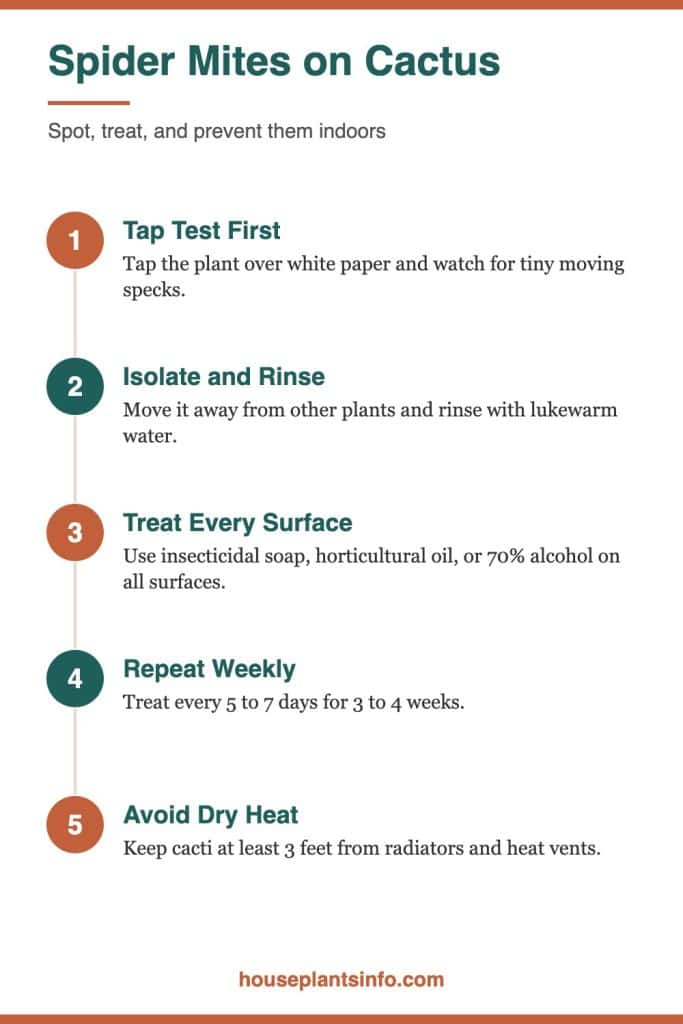
The short version: Isolate the cactus, rinse it hard with lukewarm water, then treat every surface with insecticidal soap, horticultural oil, or 70% rubbing alcohol. Repeat every 5 to 7 days for at least 3 to 4 weeks, because most sprays miss the eggs.
This guide covers how to confirm you have mites, why they love indoor cacti, a step-by-step treatment plan, which remedies actually work, and how to keep them from coming back.
Check These First
- Hold a sheet of white paper under the stem and tap the plant firmly. Tiny specks that start crawling are mites; specks that sit still are usually dust.
- Look between the spines with a magnifier for fine, silky webbing, especially near the growing tip.
- Check whether the discoloration is stippled or speckled. Mite damage looks like a fine dusting of pale dots, not a soft or mushy spot.
- Note where the cactus sits. A spot near a radiator, a forced-air vent, or a hot south window makes mites far more likely.
- Inspect nearby plants. Mites travel on air currents, hands, and touching leaves, so neighbors are often infested too.
How to Tell If Your Cactus Has Spider Mites
Spider mites show up as fine pale stippling, rusty or corky patches, and thin webbing between spines, usually starting on the newest growth. The mites themselves are about 1/50 inch long, so you will need magnification to see them clearly.
What the Mites Look Like
The most common indoor species is the two-spotted spider mite. Adults are oval, roughly the size of a period on this page, and can be pale yellow, green, red, or brown. Many have two darker spots on their bodies.
A 10x hand lens makes identification easy. Look along the ribs and at the base of the spines, where mites cluster. You may see round, translucent eggs and tiny moving dots that look like specks of paprika.
A bright flashlight held at an angle also helps. Webbing catches the light and shows up as a faint shimmer even when the mites are hard to spot.
What the Damage Looks Like
Spider mites pierce plant cells and suck out the contents. On a cactus, this leaves tiny pale or yellow dots that merge into dull, bronzed, or rusty patches. Over time those areas can turn tan and corky.
Damage usually begins on the side facing the window or near the growing tip, where tissue is softest. Columnar cacti and soft-skinned species tend to show it first.
Mites or Something Else?
Several problems can look similar. Corky scarring at the base of an old cactus is often normal aging. Sunburn appears as a bleached or brown patch on the side facing the glass, with no stippling and no webbing.
White, cottony clumps tucked between ribs point to a different pest. If that is what you see, read up on whether cactus can get mealybugs, since the treatment approach differs slightly.
Why Spider Mites Target Indoor Cacti
Spider mites thrive in warm, dry, still air, which describes most heated apartments in winter. Cacti also tolerate that dryness so well that owners rarely notice the conditions are perfect for mites.
Dry Winter Air and Heat
Mite populations explode when temperatures sit above about 80°F and humidity drops low. Indoor humidity often falls to 10 to 30% during heating season, especially near radiators and forced-air vents.
Heat also speeds up their life cycle. In warm conditions, a mite can go from egg to egg-laying adult in about one to two weeks, and each female lays dozens of eggs.
Stress and Lack of Airflow
A cactus that is stressed from too little light, cramped roots, or a recent move is easier for mites to colonize. Still air in a corner or a crowded windowsill also lets populations build without disturbance.
How Mites Get Inside
Mites usually arrive on a new plant, a cutting, or cut flowers. They can also drift in through an open window in summer or ride on clothing and hands. They do not need to fly; they simply crawl and float on air currents.
How to Get Rid of Spider Mites on a Cactus, Step by Step
The fix is a repeated routine: isolate, rinse, treat, and repeat until no live mites show up for several weeks. One spray almost never solves it, because eggs survive and hatch days later.
Step 1: Isolate the Plant
Move the cactus at least a few feet from other plants, ideally to a separate room. Check every plant that was nearby, especially other cacti and succulents, palms, and ivy.
Wash your hands after handling the infested plant, and clean the windowsill or shelf with soapy water to remove stray mites and webbing.
Step 2: Rinse It Down
Take the cactus to a sink or shower and spray it with lukewarm water. A firm stream knocks off a large share of mites and breaks up webbing.
Tip the pot sideways or cover the soil with plastic wrap so the root zone does not get soaked. Let the plant dry in bright, indirect light before the next step.
Step 3: Wipe or Brush Problem Areas
Use a soft toothbrush or a cotton swab to work along the ribs and around the areoles, where mites and eggs hide. For dense spines, a small paintbrush dipped in soapy water reaches deep without damaging the plant.
Step 4: Apply a Treatment
Choose one primary treatment: insecticidal soap, horticultural oil, or 70% isopropyl alcohol. All three work by direct contact, so coverage matters more than strength.
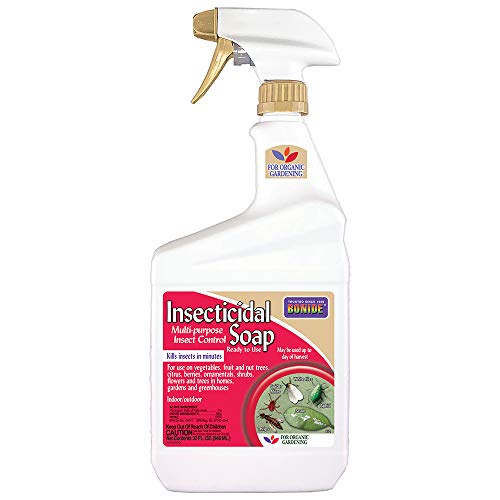
Spray until every surface is wet, including the underside of ribs, the base of the stem, and the soil line. Treat in the evening or out of direct sun, and keep the plant out of strong light until it dries.
Step 5: Repeat on Schedule
Treat again every 5 to 7 days for at least 3 to 4 treatments. This timing catches newly hatched mites before they mature and lay more eggs.
Keep using the paper tap test between treatments. Continue until you see no live mites for at least two weeks in a row.
Sophia’s tip: Write the treatment dates on a piece of tape stuck to the pot. It is easy to lose track after the first week, and skipping a round is the most common reason mites return.
Step 6: Fix the Conditions
While you treat, move the cactus away from radiators and heat vents. Running a small fan nearby on low adds air movement, which makes it harder for mites to settle.
Grouping humidity-loving plants elsewhere and running a humidifier in the room during winter helps the rest of your collection, though cacti themselves do not need high humidity.
Step 7: Know When to Cut Losses
If the infestation is severe and the plant is mostly bronzed and webbed, consider taking a cutting from the healthiest section and discarding the rest. Inspect and treat the cutting first so you do not carry mites along.
Which Spider Mite Treatments Work Best?
Insecticidal soap, horticultural oil, and rubbing alcohol are the most reliable home treatments, and a labeled miticide is the backup for stubborn cases. Many popular kitchen remedies have little evidence behind them and can damage cactus skin.
| Treatment | How it works | Best for | Cautions |
|---|---|---|---|
| Strong water rinse | Knocks off mites and webbing | First step, light infestations | Keep soil from getting soaked |
| Insecticidal soap | Breaks down mite bodies on contact | Most infestations | Must contact mites; no residual effect |
| Horticultural oil | Smothers mites and many eggs | Moderate infestations | Avoid heat above about 90°F and direct sun |
| Neem oil | Smothers and disrupts feeding | Light to moderate cases | Can leave residue; test a small spot first |
| 70% rubbing alcohol | Dissolves mites on contact | Spot treatment, small cacti | Test first; can scorch some species |
| Labeled miticide | Targets mites specifically | Severe or repeated infestations | Follow the label exactly; keep pets away |
| Predatory mites | Eat spider mites and eggs | Ongoing control, large collections | Do not combine with most sprays |
Insecticidal Soap and Horticultural Oil
These two are the backbone of indoor mite control. Both are low in toxicity once dry and work well on cacti when applied in cool, shaded conditions.
Oils have a slight edge on eggs because they coat surfaces. Soaps are gentler and less likely to leave a film on waxy or fuzzy cacti.
Sophia’s tip: Before treating the whole plant, spray one small patch and wait 48 hours. Fuzzy or powdery-coated cacti in particular can mark easily, and a test spot shows you whether that product is safe.
Rubbing Alcohol
Dabbing 70% isopropyl alcohol on a cotton swab works well for small cacti and for spot treatment. Some growers dilute it with an equal part water to reduce the risk of burns.
Do not use it on cacti with a powdery white coating, since it strips that protective layer.
Why Regular Bug Sprays Often Fail
Spider mites are arachnids, not insects, so many general insecticides do little against them. Some broad-spectrum insecticides even make mite problems worse by killing the natural predators that keep them in check.
If you need something stronger, choose a product labeled specifically as a miticide and alternate it with other methods so mites do not build resistance.
What About Home Remedies?
Diatomaceous earth works only while completely dry, which makes it impractical alongside rinsing and spraying. Cinnamon has little evidence as a mite treatment.
Peppermint and clove oils can repel some pests, but concentrated essential oils can burn cactus skin, and results are inconsistent. Pyrethrin, which comes from chrysanthemum flowers, kills mites on contact but breaks down quickly and harms beneficial predators.
I would use these as minor additions at most, never as your main treatment.
Can You Use Predatory Mites Indoors?
Yes, predatory mites are a practical option for larger collections or recurring infestations. They hunt spider mites and their eggs, and they die off once their food runs out.
Which Predators Fit Indoor Conditions
Phytoseiulus persimilis is a fast spider mite predator, but it prefers humidity above about 60%, which is hard to reach around a cactus in winter. Neoseiulus californicus tolerates drier air and lower prey levels, so it often suits indoor cacti better.
Green lacewing larvae also eat mites, along with aphids and other soft pests. They are less targeted but useful in sunrooms or large plant setups.
How to Use Them Well
Release predators after you have knocked numbers down with a water rinse, not after a soap or oil spray. Most sprays kill predators too, so wait at least several days after treating.
Keep the plants away from strong drafts and heat vents after release. Expect results over two to four weeks rather than overnight.
How to Keep Spider Mites From Coming Back
Regular inspection, good airflow, and steady growing conditions prevent most repeat infestations. Mites rarely disappear permanently, but they can stay at levels too low to cause damage.
Quarantine Every New Plant
Keep new plants and cuttings in a separate spot for two to three weeks. Do the paper tap test weekly before they join your collection.
This is especially useful if you plan to grow Peruvian apple cactus from cutting, since cuttings shared between growers can carry hidden mites and eggs.
Watch the Winter Danger Zone
Heating season is when mites peak indoors. Keep cacti at least 3 feet from radiators and forced-air vents, and avoid spots where hot air blows directly on the stems.
A south or west window is ideal for light, but keep the plant a few inches from the glass so it does not overheat on sunny winter afternoons.
Rinse and Inspect Monthly
A gentle lukewarm shower every month or two removes dust and early mites before they build up. Combine it with a quick check of the ribs and new growth using your hand lens.
Sophia’s tip: Do your inspection right after watering, when you are already handling the plant. Linking the two habits means you check for mites every time without adding another chore.
Keep the Cactus Healthy
A well-grown cactus resists pests better. Give it bright light, gritty fast-draining soil, and thorough watering only when the soil is completely dry. If you grow columnar types, this guide on how to care for Peruvian apple cactus covers light and watering in detail.
For a wider look at other pests that can follow mites onto stressed plants, see these 8 ways to get rid of cactus bugs and bring your succulent back to life.
Can a Damaged Cactus Recover?
Yes, most cacti survive spider mites once the infestation is controlled, but the scarring is permanent. Corky or bronzed patches will not turn green again; new healthy growth simply grows beyond them.
What Recovery Looks Like
Look for fresh, evenly colored growth at the tip within one growing season. In spring and summer, healthy cacti in good light usually put on visible new tissue, while winter growth is slow or absent.
Damaged areas may stay tan or rough indefinitely. As long as they are firm and dry, they are only cosmetic.
When to Take a Cutting Instead
If the top of a columnar cactus is heavily scarred, you can cut a clean, healthy section, let it callus for one to two weeks, and root it in dry cactus mix.
Rooting can be slow, so if it stalls, this guide on Peruvian apple cactus not rooting explains common reasons.
Discard soft, collapsing, or blackened sections, since those signal rot rather than mite damage.
Keeping Pets and Kids Safe
The ASPCA lists Christmas cactus as non-toxic to cats and dogs, but many cacti are not listed at all, and spines can still injure curious pets and children.
Keep treated plants out of reach until sprays have fully dried, and store soaps, oils, alcohol, and miticides securely.
Your Next Steps
- Do the white paper tap test on your cactus and every plant nearby today.
- Move the infested cactus to a separate room and away from heat sources.
- Rinse it with lukewarm water, then treat all surfaces with insecticidal soap, horticultural oil, or rubbing alcohol.
- Mark your calendar to repeat treatment every 5 to 7 days for at least 3 to 4 weeks.
- Set up a quarantine spot for new plants and a monthly inspection routine.
- Consider predatory mites if you have a large collection or mites keep returning.
Common Questions About Spider Mites on Cactus
Can spider mites kill a cactus?
A heavy, untreated infestation can weaken a cactus badly enough to stunt or kill it, especially small or young plants. Most cacti survive if you start treatment once you spot stippling or webbing. The scarring stays, but the plant keeps growing.
How long does it take to get rid of spider mites?
Expect at least 3 to 4 weeks of repeated treatments. Eggs hatch over several days, so a single spray leaves survivors behind. Continue until you see no live mites for two weeks straight.
Do spider mites live in cactus soil?
Spider mites live mainly on the plant itself, not in the soil. They can shelter at the soil line or in debris around the base, so include that area when you treat. Repotting is usually unnecessary unless the soil is old or poorly draining.
Will raising humidity get rid of spider mites?
Higher humidity slows mites but rarely eliminates them on its own. Cacti also dislike constantly damp conditions, so misting them heavily can cause other problems. Use humidity as a supporting step alongside rinsing and treatments.
Are spider mites harmful to people or pets?
Plant spider mites feed on plants and do not bite people or pets or infest homes. They are only a threat to your plants. The bigger safety concern is the treatments, so keep pets and kids away until sprays are dry.

Hi! I’m Sophia, and I love plants – especially an expert in growing house plants. I stay in Chicago, United States of America, and through my blog and social media platforms, provide tips and tricks on how to grow healthy, vibrant plants indoors. Check out more here.