
You turn your cactus toward the window and notice brown patches on its skin that were not there a few weeks ago.
The short version: Brown spots on a cactus usually come from one of four things: natural corking at the base, sunburn after a light change, too much water, or a fungal or pest problem.
Firm, dry, tan spots are often harmless, while soft, dark, or spreading spots need fast action.
This guide shows you how to tell the causes apart, what to do for each one, and how to keep new spots from forming indoors.
Check These First
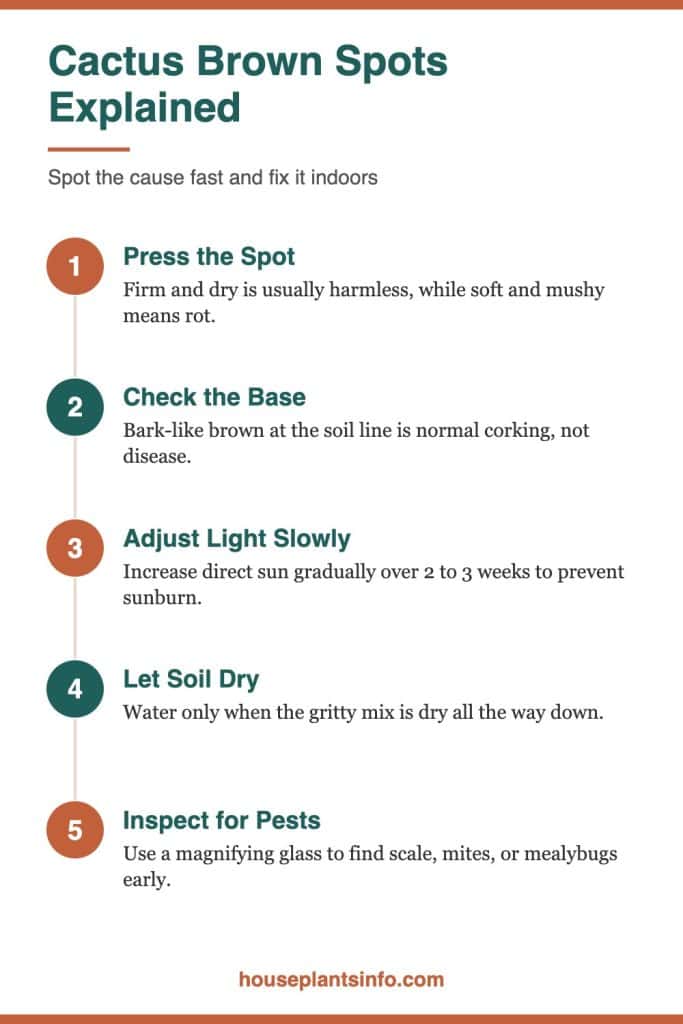
- Press the spot gently with a clean finger. Firm and dry points to corking, sunburn, or old damage. Soft or mushy points to rot.
- Look at where the spot sits. Spots near the soil line suggest corking or rot, while spots on the side facing the window suggest sunburn.
- Push a finger or wooden skewer 2 inches into the soil. If it is still damp days after watering, overwatering is likely.
- Check the spots and the creases near the spines for tiny bumps, webbing, or cottony tufts.
- Think back over the last month. A new window, a move outdoors, a cold draft, or a bump against furniture often explains a sudden spot.
Why Does My Cactus Have Brown Spots? How to Read the Clues
Why does my cactus have brown spots? The answer depends on texture, color, location, and how fast the spots spread, so start by observing before you treat anything.
Texture Tells You the Most
Firm, rough, bark-like brown patches are usually corking or healed scars. Dry, flat, tan or bleached patches are usually sunburn. Soft, sunken, wet-looking, or smelly spots almost always mean rot, which is the urgent one.
A small hand lens or magnifying glass helps a lot here. It lets you see whether a “spot” is actually a cluster of scale insects or fine mite webbing rather than damaged tissue.
Location and Pattern
Spots that start at the soil line and creep upward slowly over months point to corking. Spots concentrated on one side point to light. Scattered round spots with rings or halos suggest a fungal or bacterial infection.
Check the Soil Too
Many brown spot problems start below the surface. A soil moisture meter or a simple wooden skewer pushed toward the bottom of the pot tells you whether the roots are sitting in moisture longer than a cactus can handle.

| Spot Appearance | Likely Cause | Urgency |
|---|---|---|
| Rough, tan, bark-like at base | Corking | Low |
| Bleached, tan, or brown on window side | Sunburn | Low to medium |
| Soft, dark, sunken, spreading | Rot from overwatering | High |
| Round spots with rings or halos | Fungal or bacterial infection | Medium to high |
| Tiny raised bumps that scrape off | Scale insects | Medium |
| Speckled brown with fine webbing | Spider mites | Medium |
| Brown scar with clear edges | Physical injury | Low |
| Mushy brown or translucent patches after cold | Cold damage | Medium to high |
Corking: Brown Spots That Are Natural Aging
Corking is a normal process where older cactus tissue hardens into a brown, bark-like layer, usually starting at the base. It is not a disease, and there is nothing to fix.
How to Recognize Corking
Corked tissue feels firm, dry, and slightly rough, like tree bark. It typically begins at the soil line and moves upward very slowly over months or years. The top of the plant stays green and keeps growing normally.
Columnar cacti and older plants cork the most. It helps support a tall, heavy stem and often appears on plants that are several years old.
When It Is Not Corking
Corking never feels soft. If the brown base gives under your finger, smells sour, or looks wet, treat it as rot instead and read the section on overwatering below.
Corking also does not usually jump to the middle or top of a young plant overnight. Sudden brown patches high on the stem have another cause.
What You Can Do
Leave corked tissue alone. Do not scrape, cut, or try to “clean” it, because that opens wounds where infection can start.
Keep your watering and light steady, and the plant will continue to grow from the top while the base corks naturally.
Sunburn: Brown or Tan Patches After a Light Change
Sunburn causes bleached, yellow, tan, or brown patches on the side of the cactus that faces the strongest light. It happens most often after a sudden move to brighter conditions.
Common Indoor Triggers
Moving a cactus from a dim corner to a south- or west-facing window can scorch it within days. Putting it outdoors for summer without a gradual adjustment does the same.
Even rotating a plant so its pale shaded side suddenly faces the glass can burn it.
Grow lights placed too close can also cause burn spots. Strong LED panels sitting only a few inches above a cactus can bleach the top.

What Sunburn Looks Like Over Time
Fresh sunburn often looks whitish or yellow at first, then turns tan or brown as the tissue dies and dries. The damaged area stays firm and flat or slightly sunken.
Sunburn scars are permanent. The plant will not turn that patch green again, but new growth will be healthy once the light is right.
How to Fix It
Move the cactus back a foot or two from the glass, or diffuse the light with a sheer curtain for a few weeks. Then reintroduce bright light gradually over 2 to 3 weeks, adding an hour or so of direct sun every few days.
For grow lights, raise the fixture or lower the intensity. Most cacti do well with the light about 12 to 24 inches away, depending on the strength of the fixture.
Sophia’s tip: Put a small piece of tape on the pot facing the window. When you rotate the plant, turn it only a quarter turn at a time so no side gets a sudden jump in direct sun.
Overwatering and Root Rot: Soft Brown Spots Near the Base
Soft, dark brown spots that spread are the most serious type, and they usually mean rot from too much water. Act within days, because rot can move through a cactus quickly.
Signs You Are Dealing With Rot
Rot spots feel mushy or spongy and may look wet, dark brown, or almost black. The plant may lean, wobble in the pot, or smell sour.
If the browning is spreading and soft, the guide on a cactus turning brown and soft covers that symptom in more depth.
Rot often starts at the roots and moves up into the stem. By the time you see a soft brown patch above the soil, the roots may already be damaged.
Why It Happens Indoors
Cacti store water and need their soil to dry out completely between waterings. Dense potting mix, pots without drainage holes, cold windowsills, and winter watering schedules all keep roots wet too long.
In winter, many cacti slow down or go semi-dormant. A plant that needed water every 2 to 3 weeks in summer may need it only every 4 to 6 weeks, or even less, in a cool winter window.
How to Save the Plant
Unpot the cactus and inspect the roots. Healthy roots are firm and pale, while rotted roots are brown, mushy, and fall apart easily.
Using a clean, sharp knife, cut away all soft brown tissue until you see healthy, firm, green or white flesh with no discolored streaks. Wipe the blade with rubbing alcohol between cuts.
Let the plant dry in bright, indirect light for several days to a couple of weeks until the cut surface forms a dry callus. Then replant in fresh, dry cactus mix and wait about a week before watering lightly.
If the rot has reached most of the plant, take a cutting from a healthy upper section, let it callus, and root it in dry gritty mix. Discard the rotted base and the old soil.
Sophia’s tip: Use a terracotta pot with a drainage hole and a gritty mix that is roughly half potting soil and half perlite or pumice. Water only when the soil is dry all the way to the bottom.
Fungal and Bacterial Spots: Rings, Halos and Spreading Lesions
Round brown spots with darker rings, yellow halos, or raised edges usually point to a fungal or bacterial infection. These often follow wet conditions and can spread to nearby plants.
What Infection Spots Look Like
Fungal spots are often circular, tan to brown, and sometimes have concentric rings or tiny dark dots in the center. Bacterial spots tend to look wetter and may ooze or smell.
Some infections start brown and darken over time. If your spots are mostly dark from the start, compare them with the guide on why a cactus has black spots, since the causes overlap.
Conditions That Encourage It
Water sitting on the skin, high humidity with poor airflow, and cool temperatures all help fungi and bacteria take hold. Crowded shelves and misting are common indoor triggers.
Wounds from pests, scrapes, or careless cuts give pathogens an easy way in.
Treatment Steps
Isolate the plant from other succulents right away. Stop misting and water only at the soil, never over the top of the plant.
For small, dry spots that are not spreading, improve airflow and light and watch them for a few weeks. For spreading spots, cut out the infected tissue with a sterilized knife and let the wound callus before watering again.
A general fungicide labeled for houseplants can help with fungal spots after you remove infected tissue. Follow the label directions exactly and keep treated plants away from pets until the product dries.
Bacterial soft rot does not respond to fungicide, so cutting out the damage is the main option.
Pests: Scale, Spider Mites and Mealybugs
Several common houseplant pests feed on cactus skin and leave brown spots or speckling behind. The damage stays, but stopping the pests prevents new spots.
Scale Insects
Scale look like small, round, brown or tan bumps that cling tightly to the stem. Many people mistake them for spots until one scrapes off with a fingernail.
Remove scale by dabbing each one with a cotton swab dipped in rubbing alcohol, then gently lifting it off. Repeat every week for several weeks, since eggs and young insects are hard to spot.
Spider Mites
Spider mites cause fine brown or tan speckling, often with faint webbing between spines. They thrive in the dry air created by radiators and forced-air heat in winter.
Rinse the plant with lukewarm water, tilting the pot so the soil stays mostly dry, then let it dry fully in bright light. Follow with insecticidal soap or horticultural oil, applied according to the label, and repeat weekly for 3 to 4 weeks.
Mealybugs
Mealybugs look like small cottony tufts in creases, near spines, and sometimes on the roots. Their feeding can leave brown or yellow marks.
If you see white cottony patches, the guide on why a cactus has white fuzz helps you tell mealybugs apart from the natural fuzz some species grow. Treat mealybugs the same way as scale, with alcohol on a cotton swab.
Sophia’s tip: Run a soft, clean paintbrush dipped in rubbing alcohol along the areoles and ribs. It reaches pests between the spines without poking your fingers.
Cold Damage and Physical Injury
Cold drafts and bumps or scrapes both leave brown marks. Cold damage can turn soft and spread, while physical injuries usually dry into a firm scar.
Cold and Frost Damage
Most common indoor cacti dislike temperatures below about 40°F to 50°F, and many species are damaged by freezing. In a Chicago-style winter, the glass of a single-pane window can get much colder than the room.
Cold-damaged tissue often looks translucent or water-soaked at first, then turns brown or black and may go soft. Leaves or pads touching the glass are the most at risk.
Move the cactus a few inches away from the window on very cold nights, or pull it back into the room. Once the damage settles, cut away any soft tissue and let the plant callus as you would for rot.
Heat and Drafts
Radiators, heat vents, and space heaters can scorch the side of a cactus and dry it unevenly. Air conditioner vents in summer can chill tissue too.
Keep cacti at least a few feet away from heat sources and out of direct blasts from vents.
Scrapes, Bumps and Pets
A cactus that gets knocked over, brushed by a curtain, or batted by a cat can develop brown scars where the skin was broken. These scars have clear edges and stay firm.
Spines protect against many animals in nature, and if you are curious about that, read more on why a cactus has thorns. Indoors, a stable shelf and a spot out of high-traffic paths prevent most injuries.
How to Prevent New Brown Spots on Your Cactus
Most brown spots are preventable with steady light, a dry gritty mix, careful winter watering, and regular checks. Small changes to placement make the biggest difference indoors.
Light and Placement
A south- or west-facing window usually gives cacti the strong light they need, while east-facing windows suit species that prefer a bit less sun. North-facing windows are often too dim and lead to weak growth.
If your window light is weak, a grow light running 12 to 14 hours a day can fill the gap. Introduce any brighter setup gradually to avoid sunburn.
Water and Soil
Water deeply, let excess drain completely, and wait until the soil is fully dry before watering again. Never let a pot sit in a saucer of water.
Repot every 2 to 4 years into fresh cactus mix, or sooner if the soil breaks down and stays wet.
Air and Temperature
Aim for a room range of roughly 60°F to 85°F during the growing season. Many cacti appreciate a cooler winter rest around 45°F to 55°F with very little water, which also helps some species bloom.
Good airflow matters more than humidity for cacti. Avoid crowding plants together, and skip misting entirely.
Know the Other Spot Colors
Not every discoloration is brown. White patches can mean mealybugs, mineral residue, or natural wax, and the guide on why a cactus has white spots explains those causes.
Pet Safety
Most true cacti are not considered highly toxic, and the ASPCA lists Christmas cactus as non-toxic to cats and dogs.
The bigger risk is spines, which can injure mouths and paws, so place spiny cacti out of reach of pets and kids. Some plants sold as “cactus,” like pencil cactus, are actually euphorbias and are toxic.
Your Next Steps
- Press each brown spot to sort it into firm and dry or soft and spreading.
- Check the soil with a skewer or soil moisture meter and stop watering until it is dry to the bottom.
- Inspect the spots and creases with a magnifying glass for scale, mites, or mealybugs.
- Move the plant a few inches away from cold glass, radiators, or vents, and adjust light changes gradually.
- Unpot and trim any soft brown tissue with a sterilized knife, then let it callus before replanting.
- Mark the edge of any spot with a small dot of washable marker on the pot and check weekly to see if it spreads.
Common Questions About Cactus Brown Spots
Will brown spots on a cactus go away?
No, brown spots are permanent scars on the existing tissue. Once you fix the cause, the cactus stops making new spots and new growth stays green. Over time, healthy growth makes the old marks less noticeable.
Should I cut off brown spots on my cactus?
Cut only soft, mushy, or spreading spots, because those are usually rot or infection. Firm, dry spots from corking, sunburn, or old injuries should be left alone. Cutting healthy scarred tissue just creates new wounds.
Can a cactus with brown spots still be healthy?
Yes, many cacti with corking or old sunburn scars are completely healthy. If the top is green, firm, and growing, the plant is fine. Concern is only needed when spots are soft, spreading, or paired with leaning or a sour smell.
How often should I water a cactus to avoid brown spots?
There is no fixed schedule, since it depends on light, pot, mix, and season. In bright summer conditions, every 2 to 3 weeks is common, while winter may need every 4 to 6 weeks or less. Always wait until the soil is completely dry.
Why is my cactus brown at the bottom?
A brown, firm, bark-like base is usually corking, a normal sign of aging. A brown base that feels soft, wet, or smells sour is rot and needs immediate trimming and repotting. Press gently to tell the two apart.

Hi! I’m Sophia, and I love plants – especially an expert in growing house plants. I stay in Chicago, United States of America, and through my blog and social media platforms, provide tips and tricks on how to grow healthy, vibrant plants indoors. Check out more here.