
You notice your cactus on the windowsill has gone soft at the base, turned an odd yellow, or started leaning toward the glass like it is giving up.
Learning how to save a dying cactus starts with finding the real cause, because rot, thirst, poor light and pests all look alarming but need very different fixes.
The short version: Most dying cacti can be saved if part of the plant is still firm and green.
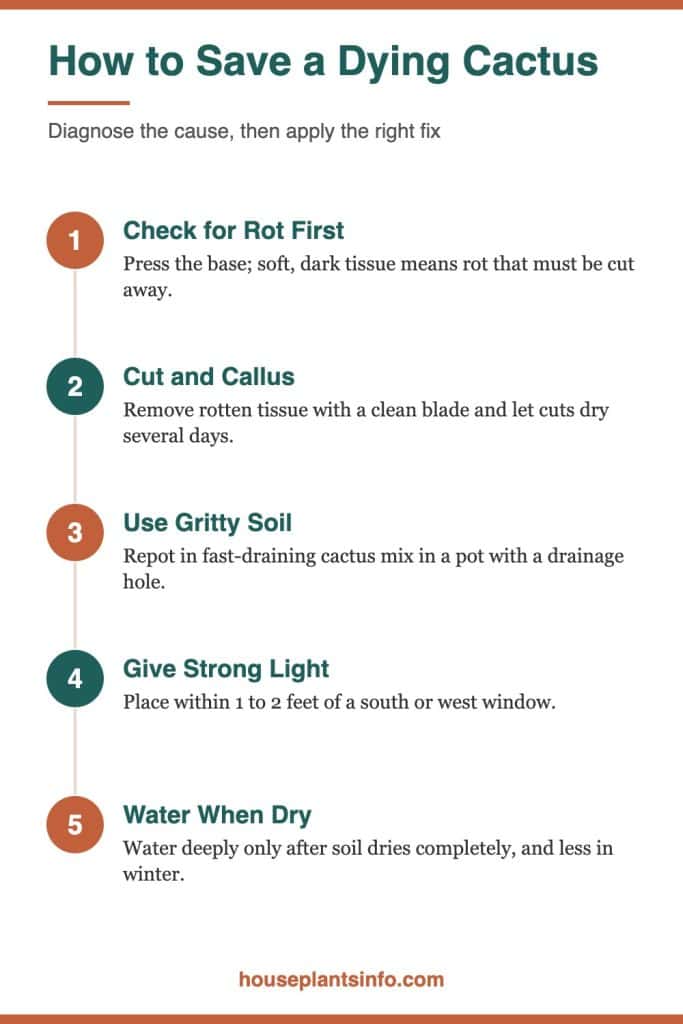
Diagnose the cause first, then act: cut away rot, repot into dry gritty soil, fix the light, and water deeply only when the soil is completely dry.
This guide covers how to read the symptoms, how to fix each cause step by step, and how to care for a rescued cactus while it recovers indoors.
Check These First
- Press the stem gently near the soil line. Mushy, brown or black tissue that gives under your finger usually means rot.
- Push a finger or wooden skewer 2 to 3 inches into the soil. If it is damp days after watering, the roots are sitting wet.
- Look at the newest growth. Pale, thin, stretched tips point to low light, not a watering problem.
- Check the spines, ribs and soil surface for white fluff, brown bumps or fine webbing, which signal pests.
- Feel the window glass and nearby air. A cold pane, an AC vent or a radiator within a foot or two can stress the plant fast.
Can You Save a Dying Cactus?
Yes, in most cases, as long as some healthy, firm tissue remains. Cacti store water and energy in their stems, so even a badly damaged plant can regrow from a healthy section, a top cutting or an offset.
Signs the Plant Is Still Recoverable
A cactus has a good chance if the upper stem is firm, green and plump, even when the base looks rough. Brown corky patches at the bottom of older plants are often normal aging, not disease.
Shriveling, wrinkling and mild yellowing are usually reversible. These signs often mean thirst, light stress or root trouble caught early.
When It Is Too Late for the Whole Plant
If the entire stem is soft, smells sour, or collapses when touched, the plant itself cannot be saved. Rot that has spread up through the core of the stem rarely reverses.
Even then, check for any firm section at the top or any small offsets around the base. A clean, healthy piece can often be cut, dried and rooted into a new plant.
Tools That Make Diagnosis Easier
A soil moisture meter helps you confirm whether the root zone is wet or dry, which settles the most common question about any struggling cactus. A wooden skewer pushed into the pot works well too.

If your window light is weak, a full-spectrum grow light placed 6 to 12 inches above the plant can carry a recovering cactus through a dim Chicago winter. Most cacti do well with 12 to 14 hours under a light.
For a broader look at symptoms by type, this guide on why your cactus is dying breaks down the most common warning signs.
How to Save a Dying Cactus From Root Rot
Root rot is the most common reason indoor cacti die, and it almost always comes from too much water, dense soil or a pot without drainage.
The fix is to remove the plant, cut away all rotten tissue, let it dry, and replant in fresh, gritty mix.
Recognizing Rot Early
Early rot shows up as a soft, darkening area at the base, a plant that wobbles in the pot, or yellowing that starts low and moves upward. The soil often stays wet for a week or more.
Pull the plant out and look at the roots. Healthy roots are firm and white to tan. Rotten roots are brown or black, mushy, and slide off with a light pull.
The Rescue Steps
Work on newspaper and wear thick gloves or wrap the cactus in folded paper to protect your hands from spines.
- Remove the plant from its pot and shake or brush away all the old soil.
- Cut off every soft, dark root with a clean, sharp knife or pruners wiped with rubbing alcohol.
- If rot has entered the stem, slice upward in thin layers until the cut face is clean, pale green or white, with no brown streaks.
- Set the plant in a dry, bright spot out of direct sun and let the cut surfaces callus for 3 to 7 days, longer for thick cuts.
- Replant in dry cactus mix and wait about a week before the first light watering.
Sophia’s tip: After each cut, wipe your blade with rubbing alcohol before the next one. Rot spreads easily, and a dirty knife can carry it straight into the clean tissue you are trying to save.
Saving a Top Cutting When the Base Is Gone
If the base and roots are fully rotten, cut off the healthy top section. Let the cut end dry until a firm, dry callus forms, usually 1 to 2 weeks.
Then set the cutting upright on dry cactus mix, barely pressed in. Mist the soil lightly or wait until small roots appear, typically in 2 to 6 weeks, before watering normally.
The Right Soil and Pot
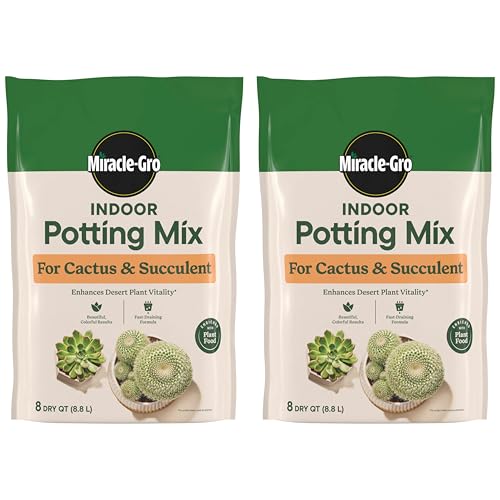
Use a fast-draining cactus mix and add perlite, pumice or coarse grit so roughly half the mix is mineral. Regular potting soil holds too much moisture for most cacti.
Choose a pot with a drainage hole and only about 1 inch wider than the root ball. Unglazed terracotta dries faster than plastic, which helps in apartments with low light.
Shriveled or Wrinkled Cactus: Fix Underwatering Carefully
A cactus that looks deflated, wrinkled or puckered with dry, crisp soil is usually thirsty. Water it deeply and let it plump back up over the next week or two.
How to Tell Thirst From Rot
Both can cause shriveling, which confuses many growers. The difference is texture and soil: a thirsty cactus feels firm but thin, and the soil is bone dry.
A rotting cactus shrivels because damaged roots cannot take up water. The soil is often damp and the base feels soft. Always check the roots before watering a shriveled plant sitting in moist soil.
Rehydrating the Right Way
Water slowly until it drains from the bottom, then empty the saucer after 10 to 15 minutes. If the soil has gone hydrophobic and water runs straight through, bottom-water by setting the pot in a few inches of water for 20 to 30 minutes.
Do not water again until the soil is dry all the way through. In spring and summer that is often every 1 to 3 weeks indoors, depending on pot size, light and heat.
Adjust for Season
Most cacti slow down in fall and winter. Cut watering to roughly once every 4 to 6 weeks in a cool room, or skip it for small, cool, dormant plants.
Forced-air heat dries soil faster, so a cactus near a heating vent may need a bit more water than one in a cool corner. Let the soil, not the calendar, decide.
Pale, Stretched or Leaning: Fix the Light
A cactus that grows thin, pale and stretched toward the window is not getting enough light. The fix is more light, but you need to increase it gradually.
What Etiolation Looks Like
Stretching, called etiolation, shows up as narrow new growth, wider spacing between spines, and a pale green or yellowish color. Columnar cacti may develop a pinched “waist” where weak growth started.
The stretched section will not shrink back to normal. Once light improves, new growth will be compact again, and the odd section often becomes less noticeable over time.
Best Indoor Spots
Most desert cacti want at least 4 to 6 hours of direct sun daily. A south- or west-facing window is usually best, with the plant within 1 to 2 feet of the glass.
East windows can work for smaller or jungle-type cacti. North windows rarely give enough light for desert cacti, so a grow light makes a real difference there.

Sophia’s tip: Rotate your cactus a quarter turn every week or two. This keeps growth even and stops the slow lean toward the window that weakens tall, columnar plants.
Brown, White or Bleached Patches: Fix Sunburn
Sudden tan, white or brown patches on the side facing the window usually mean sunburn. Move the plant to slightly softer light, then acclimate it to stronger sun over a few weeks.
Why Sunburn Happens Indoors
Sunburn typically appears after a cactus moves from a dim spot into intense sun, or goes outdoors for summer without a transition. Glass can also concentrate heat on plants pressed right against it.
The scarred tissue will not turn green again. As long as the burn is dry and firm rather than soft, the plant is fine and new growth will cover it over time.
How to Acclimate Safely
Increase direct sun by about an hour every few days over 2 to 3 weeks. A sheer curtain helps soften the first week of exposure.
When moving a cactus outside for summer, start in bright shade and move it into sun gradually. Bring it back inside before nights drop below about 50°F.
Cold Damage, Drafts and Heat Stress
Most cacti handle cool nights but suffer below about 40°F to 45°F, and frost can turn tissue to mush within hours. Hot, dry blasts from radiators and heating vents cause their own stress, mostly through rapid drying and uneven growth.
Winter Windows in a Cold City
In a Chicago winter, the glass itself can get very cold even when the room feels comfortable. Leaves or stems touching a frozen pane can develop translucent, water-soaked patches that later turn brown or black.
Keep the plant a few inches back from the glass on the coldest nights. Close blinds behind it if your windows are drafty, but open them during the day for light.
Radiators, Vents and AC
A cactus right above a radiator or in front of a forced-air vent dries out fast and can scorch on one side. Keep plants at least 2 to 3 feet from direct heat sources.
In summer, AC drafts are less dangerous but can still chill a wet plant. Move cacti away from vents that blow directly across them.
Handling Damaged Tissue
Cold-damaged areas that turn soft should be cut away once the damage is clear, usually within a week. Let the cut dry and treat the plant like a rot rescue.
Firm, discolored scars from mild cold can be left alone. Hold off on fertilizer and keep watering light until you see new growth.
Pests: Mealybugs, Scale and Spider Mites
Pests weaken cacti slowly by draining sap, which leads to yellowing, stunted growth and spotting. Most indoor infestations can be cleared with careful hand removal and repeated treatments.
Spotting the Culprits
Mealybugs look like small cottony white tufts, often tucked between ribs or at spine bases. Root mealybugs hide in the soil and show up as white fuzz on the roots when you unpot the plant.
Scale insects are small brown or tan bumps that do not brush off easily. Spider mites leave fine webbing and a dusty, bronzed or speckled look, especially in dry winter air.
Treating an Infestation
Isolate the plant from your other houseplants right away. Dab mealybugs and scale with a cotton swab dipped in 70% rubbing alcohol, which dissolves their coating.
Follow up with insecticidal soap or horticultural oil, testing a small area first. Repeat every 5 to 7 days for several weeks, because eggs hatch after each treatment.
For root mealybugs, remove the old soil, rinse the roots, trim any damaged ones, and repot into fresh mix in a clean pot.
Specific Cactus Types and Problems
Some plants called cacti have their own quirks. If yours is a euphorbia, see this guide on how do you save a dying pencil cactus, since its sap and care differ from true cacti.
A haworthia that is losing its stripes or turning mushy needs slightly different light, covered in this article on a dying zebra cactus. Grafted plants are trickier too, so learn how do I know if my moon cactus is dying before you start cutting.
Caring for a Rescued Cactus While It Recovers
A rescued cactus needs bright light, very careful watering and patience. Expect several weeks to a few months before you see clear new growth, especially if roots were removed.
The First Month
Keep the plant in bright, indirect light for the first 1 to 2 weeks after repotting, then move it back to direct sun gradually. Damaged roots cannot support a plant in full heat right away.
Water lightly once roots have had time to heal, usually about 7 to 10 days after repotting. Then switch to deep watering only when the soil is completely dry.
Feeding and Repotting
Skip fertilizer until the plant shows active new growth. After that, use a diluted, low-nitrogen cactus fertilizer once a month in spring and summer only.
Avoid repotting again for at least a year unless rot returns. Frequent disturbance slows root recovery.
Sophia’s tip: Mark the date you water on a small piece of tape on the pot. During recovery, this simple record keeps you from watering again just because the plant looks dry on top.
Flowers and Blooms
A stressed cactus often drops buds or skips blooming for a season, which is normal during recovery. If blooms are fading early on a healthy plant, read why are the flowers on my cactus dying for the usual causes.
Pet Safety
The ASPCA lists the Christmas cactus as non-toxic to cats and dogs. Many desert cacti are not highly toxic, but their spines can injure curious pets and kids, and euphorbias like pencil cactus have irritating sap, so keep plants on high, stable shelves.
Your Next Steps
- Press the base and check the soil today to decide whether you are dealing with rot, thirst, light or pests.
- If the base is soft, unpot the plant, cut away all rot with a sterilized blade, and let it callus before replanting.
- Repot into gritty cactus mix in a pot with a drainage hole, about 1 inch wider than the roots.
- Move the plant within 1 to 2 feet of a south- or west-facing window, or add a grow light for 12 to 14 hours a day.
- Water deeply only when the soil is dry all the way through, and cut back sharply in winter.
- Inspect the ribs, spine bases and roots every few weeks for mealybugs, scale or webbing.
Common Questions About Saving a Dying Cactus
Can a mushy cactus be saved?
A cactus with a soft base can often be saved if the upper stem is still firm. Cut away all rotten tissue until the cut face is clean, let it callus, and replant in dry cactus mix.
How long does it take a cactus to recover?
Mild thirst can reverse within 1 to 2 weeks after a deep watering. A plant recovering from root rot or a rooted cutting may take 1 to 3 months to show new growth.
Should I water a dying cactus?
Only if the soil is dry and the plant is firm but shriveled. If the soil is damp or the base is soft, watering will make rot worse, so check the roots first.
Why is my cactus turning yellow?
Yellowing usually comes from overwatering, poor drainage, low light or pests. Yellowing that starts at the base and feels soft points to rot, while pale yellow stretched tips point to too little light.
Can I save a cactus by cutting off the top?
Yes, if the top section is firm and clean inside. Let the cut end dry for 1 to 2 weeks, then set it on dry cactus mix and wait for roots before watering regularly.

Hi! I’m Sophia, and I love plants – especially an expert in growing house plants. I stay in Chicago, United States of America, and through my blog and social media platforms, provide tips and tricks on how to grow healthy, vibrant plants indoors. Check out more here.