
Your cactus sits on the windowsill looking wrong: maybe soft and yellow at the base, maybe thin and leaning toward the glass, maybe dotted with brown patches that weren’t there last month.
If you’re asking why is my cactus dying, the answer is usually one of a few predictable problems.
The short version: Most indoor cacti decline from too much water, too little light, or a soil mix that stays wet too long. Cold drafts, sunburn, and pests cause most of the rest. Catch the problem early, correct the conditions, and many cacti recover fully.
This guide covers how to read the symptoms, what causes each one, and the fix that works in a typical apartment.
Check These First
- Press the base of the stem gently. Soft, mushy, or dark tissue at soil level points to rot.
- Push a finger 2 inches into the soil. If it’s damp and you watered more than a week ago, the mix is holding too much water.
- Look at the growing tip. Pale, narrow, stretched growth means the plant needs more light.
- Check where the plant sits. A spot near a radiator, a drafty window, or an AC vent can stress it quickly.
- Inspect the spines and creases for white fluff, fine webbing, or brown bumps, which signal pests.
Overwatering and Root Rot: Cause and Fix
Overwatering is the most common reason indoor cacti die. Roots sitting in wet soil run out of oxygen, then rot, and the rot moves up into the stem.
Cacti store water in their stems and are built for long dry spells. Indoors, with lower light and less airflow than their native habitat, soil dries slowly. Watering on a fixed weekly schedule often keeps the roots wet far longer than they can handle.
Signs the Roots Are Rotting
- The base turns soft, translucent, yellow, brown, or black.
- The plant wobbles or leans because the roots no longer anchor it.
- The soil smells sour or musty.
- Segments or pads drop off with the slightest touch.
Rot often starts below the soil line, so the top of the plant can look normal while the roots are already gone. A sudden lean is often the first visible clue.
How to Fix It
Stop watering and slide the plant out of its pot. Healthy roots are firm and pale; rotted roots are dark, mushy, and peel away easily. Trim every rotted root with clean, sharp scissors.
If the stem itself is soft, cut above the damaged tissue until the inside looks clean and evenly green or white.
Let the cut surface dry and callus for several days to two weeks in a bright spot out of direct sun, then repot into dry cactus mix.
Wait about a week before watering the repotted plant so any damaged roots can seal. A soil moisture meter helps you avoid guessing, though pushing a wooden skewer into the pot and checking for damp soil works too.

An unglazed terracotta pot with a drainage hole also dries far faster than plastic or glazed ceramic.
For a step-by-step rescue when rot is advanced, this guide on how to save a dying cactus walks through cuttings and repotting in more detail.
Sophia’s tip: Water only when the soil is completely dry all the way down, then soak it until water runs from the drainage hole. Empty the saucer within 15 minutes so the pot never sits in runoff.
Why Is My Cactus Dying When I Barely Water It?
A cactus can also decline from underwatering, especially during the growing season. The plant uses its stored water, then shrivels, wrinkles, and stops growing.
Underwatering is far less dangerous than overwatering, and it’s easy to reverse. The challenge is telling it apart from rot, because both can cause wrinkling.
Telling Thirst From Rot
A thirsty cactus wrinkles or puckers but stays firm to the touch. The soil is bone dry, often pulling away from the pot edges. A rotting cactus wrinkles too, but the tissue feels soft and the soil is often still damp.
How to Fix It
Give the plant a thorough soak, letting water run through the pot.
If the soil has become so dry that water runs straight down the sides, set the pot in a bowl of water for 20 to 30 minutes so the mix can rehydrate from below.
A dehydrated cactus usually plumps up within a few days to two weeks. From spring through early fall, most indoor cacti need water every 1 to 3 weeks depending on pot size, light, and heat.
Winter Is Different
Most desert cacti slow down or go dormant from late fall through winter. During this time they need very little water, often once every 4 to 6 weeks or less in a cool room.
Shrinking slightly in winter is normal. Forced-air heat dries soil faster, so check more often if your plant sits in a warm room, but still water sparingly.
Not Enough Light and Stretching: Cause and Fix
Most cacti need several hours of bright light daily, and many indoor spots don’t provide it. A light-starved cactus stretches, turns pale, and weakens over time.
This stretching is called etiolation. The new growth comes in thin, narrow, and pale green, often leaning hard toward the window. The plant may look like it’s tapering to a point.
Best Window Placement
South-facing and west-facing windows give most desert cacti the light they need. An east window works for some species, especially smaller ones. A north window is usually too dim on its own.
Distance matters as much as direction. Light drops off quickly the farther you move from the glass, so a cactus 3 feet back from a south window gets far less than one right on the sill.
How to Fix It
Move the plant closer to a bright window or add a full-spectrum grow light. Position the light 6 to 12 inches above the plant and run it 12 to 14 hours a day, especially through dark winter months.

Stretched growth won’t shrink back to normal. Once the plant is in good light, new growth will come in thicker and greener. If the stretched section looks awkward, you can cut it off later and root it as a new plant.
Sophia’s tip: Rotate the pot a quarter turn every week or two so all sides get light. This keeps the cactus growing upright instead of leaning toward the glass.
Sunburn and Sudden Light Changes
Sunburn happens when a cactus moves too quickly from low light to strong direct sun. The exposed side develops bleached, yellow, white, or tan patches that later turn brown and crusty.
Many people move a pale cactus outdoors or into a hot south window to fix low light, and the plant scorches within days. Indoor-grown cacti haven’t built up tolerance for intense sun.
What the Damage Looks Like
Sunburn appears on the side facing the light source. It starts as a faded or whitish patch, then hardens into a dry, brown, scar-like area. Unlike rot, the tissue stays firm and dry.
How to Fix It
Move the plant out of the harshest direct sun and reintroduce it gradually. Increase direct exposure by about an hour every few days over two to three weeks.
Sunburn scars are permanent, but they don’t spread. As long as the rest of the plant is healthy and firm, it will continue growing normally. A sheer curtain on a hot west window can soften the afternoon sun during summer.
Wrong Soil or Pot: Cause and Fix
Dense potting soil and pots without drainage are behind many slow cactus deaths. Both keep moisture around the roots far too long, even when you water carefully.
Regular indoor potting mix is designed to hold water, which is the opposite of what cacti need. Peat-heavy mixes can also turn hard and water-repellent when they dry, then soggy when wet.
What a Good Cactus Mix Looks Like
A suitable mix drains within seconds and dries within several days. Commercial cactus and succulent mix works, but many growers improve it by adding about one-third to one-half extra grit, such as perlite or pumice.
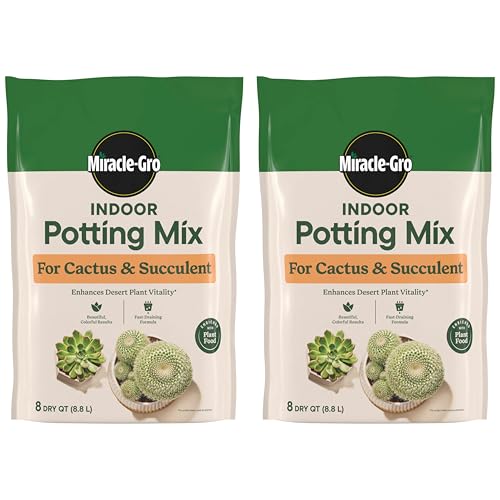
If the soil looks like dark, fluffy garden soil and stays damp for a week or more, it’s too rich for a cactus.
Choosing the Right Pot
Always use a pot with at least one drainage hole. Decorative containers without holes collect water at the bottom, where roots rot unseen.
Choose a pot only slightly wider than the plant, about 1 to 2 inches larger than the stem’s diameter. An oversized pot holds extra soil, and extra soil stays wet longer.
When to Repot
Repot in spring or early summer, every 2 to 4 years, or sooner if the plant is root-bound or sitting in poor soil. Wear thick gloves or wrap the cactus in folded newspaper to handle it safely.
Cold Drafts, Radiators and Temperature Stress
Most indoor cacti are comfortable between 65°F and 85°F during the growing season, with cooler winter rest temperatures around 50°F to 60°F. Freezing temperatures, hot radiators, and blasts of air can all damage them.
Many cacti handle a cool winter well, but cold combined with wet soil is a dangerous mix. Below about 40°F, most tropical-origin houseplant cacti start to suffer, and frost can kill tissue outright.
Cold Damage
A cactus pressed against a single-pane window in a Chicago winter can get chilled tissue even though the room feels warm. Cold damage shows up as soft, dark, water-soaked patches, often on the side touching the glass.
Pull plants a few inches back from the window on the coldest nights, and keep them out of the path of an opening door.
Heat and Dry Air
Radiators and forced-air vents dry soil quickly and can scorch the side of the plant facing them. Keep cacti at least 3 feet from radiators and heating vents.
Dry winter air itself rarely hurts desert cacti, since they’re adapted to low humidity. The real risk from heat is uneven drying and scorching, not the dryness of the air. Forest cacti such as Christmas cactus are an exception and appreciate a bit more humidity.

AC Drafts
Air conditioners blowing directly on a cactus cause chilling and stress. Move the plant out of the direct airflow during summer.
Sophia’s tip: On a cold night, hold the back of your hand against the window glass. If it feels cold, it’s cold enough to stress a cactus sitting right against it, so slide the pot back several inches.
Pests on Cacti: Mealybugs, Spider Mites and Scale
Sap-sucking pests weaken cacti slowly, causing yellowing, stunted growth, and dull or blotchy skin. Indoors, mealybugs, spider mites, and scale are the most common culprits.
Pests thrive on stressed plants, so an infestation often shows up alongside another problem like low light. Check new plants carefully and keep them apart from others for a couple of weeks.
Identifying the Pest
| Pest | What You’ll See | Where to Look |
|---|---|---|
| Mealybugs | White, cottony clumps | Spine bases, creases, roots |
| Root mealybugs | White fuzz on roots and soil | Inside the root ball |
| Spider mites | Fine webbing, tiny moving dots, rusty or speckled skin | Growing tip, between ribs |
| Scale | Small brown or tan bumps that don’t move | Along stems and ribs |
| Fungus gnats | Tiny flying insects | Soil surface, usually wet soil |
How to Treat Them
For mealybugs and scale, dab each visible insect with a cotton swab dipped in 70% isopropyl alcohol. Repeat every few days for a few weeks, since eggs keep hatching.
Spider mites like dry, warm conditions. Rinse the plant with lukewarm water, letting it drain fully, then treat with insecticidal soap according to the label. Repeat weekly until no mites remain.
For root mealybugs, remove the plant from its pot, wash off the old soil, inspect and rinse the roots, and repot into fresh mix in a clean pot. Fungus gnats usually disappear once you let the soil dry out properly between waterings.
Isolate Affected Plants
Move an infested cactus away from other plants until it’s clear. Many pests spread easily between pots on a crowded windowsill.
Is Your Cactus Actually Dying or Just Changing?
Some changes look alarming but are completely normal. Brown, bark-like tissue at the base, spent flowers, and gradual decline in grafted plants aren’t always signs of a dying cactus.
Corking Versus Rot
Older columnar cacti often develop corking: tan or brown, firm, woody tissue that starts at the base and slowly moves upward. It’s a natural aging process. The key difference is texture. Corking feels hard and dry, while rot feels soft or wet.
Fading Flowers
Cactus blooms often last only a day to a week, and some open for a single night. Wilting flowers on a healthy plant are usually just finishing their cycle.
If you’re wondering why are the flowers on my cactus dying, short bloom life, low light, or bud drop after moving the plant are common reasons.
Species That Behave Differently
Some popular plants called cacti have their own quirks. Moon cacti are grafted, and the colorful top can’t make its own food, so it often lives only a few years.
Learn how do I know if my moon cactus is dying to tell graft failure from ordinary care problems.
Zebra plants are actually small succulents, not true cacti, and they prefer gentler light than desert species. If yours is fading, read about a dying zebra cactus for symptoms specific to that plant.
Pencil cactus is also a succulent rather than a true cactus, and it often drops branches when overwatered or chilled. For that plant, see how do you save a dying pencil cactus.
Pet Safety
The ASPCA lists Christmas cactus as non-toxic to cats and dogs. The ASPCA lists pencil cactus as toxic to pets because of its irritating milky sap.
Spines on any cactus can injure curious pets and kids, so keep spiny plants on a high shelf or out of reach.
Quick Symptom Guide
| Symptom | Likely Cause | First Step |
|---|---|---|
| Soft, mushy base | Root rot | Unpot and inspect roots |
| Wrinkled but firm | Underwatering | Soak thoroughly |
| Thin, pale, leaning growth | Low light | Move closer to a bright window or add a grow light |
| Bleached or tan patches on one side | Sunburn | Reduce direct sun gradually |
| Dark, water-soaked spots near glass | Cold damage | Move away from the window |
| White fluff or webbing | Pests | Isolate and treat |
| Hard, brown base on an old plant | Corking | No action needed |
Your Next Steps
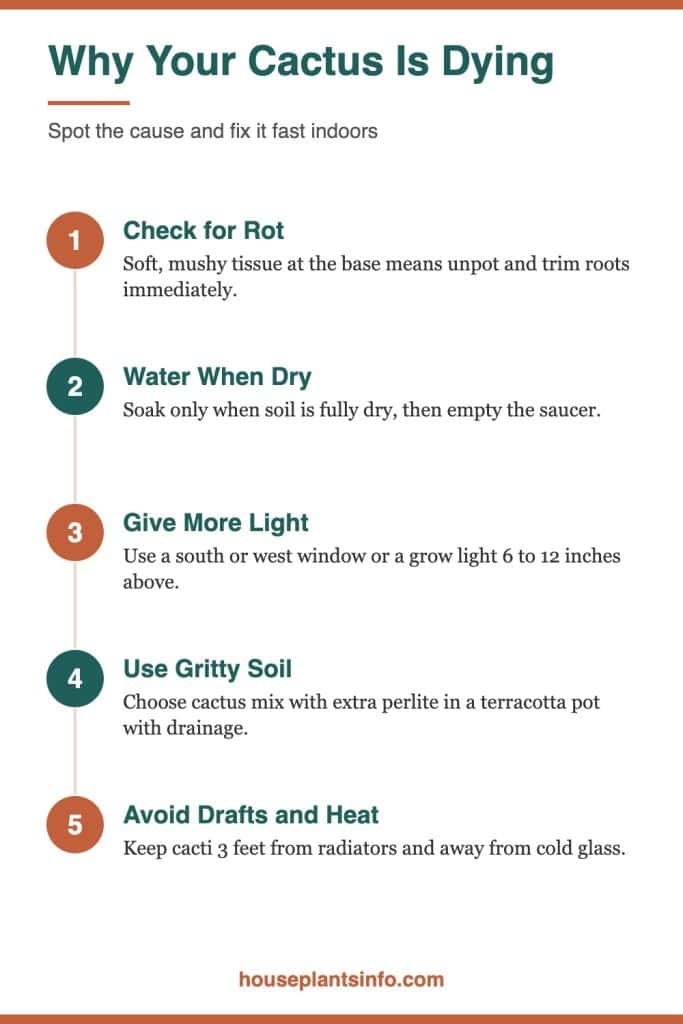
- Press the base and check the roots if anything feels soft, since rot needs action within days.
- Switch to watering only when the soil is fully dry, and empty the saucer after every watering.
- Move your cactus to a south or west window, or add a grow light 6 to 12 inches above it.
- Repot into a gritty cactus mix in a terracotta pot with a drainage hole if the current soil stays wet.
- Keep the plant at least 3 feet from radiators and out of AC drafts, and pull it back from cold glass in winter.
- Inspect spines, creases, and roots for pests every few weeks, and isolate any new plant for two weeks.
Common Questions About Why Your Cactus Is Dying
Can a cactus recover from root rot?
Yes, if healthy tissue remains above the rot. Cut away all soft or discolored parts, let the cut callus, and repot in dry cactus mix. If the entire base is gone, you can often root a healthy top section as a new plant.
Why is my cactus turning yellow?
Yellowing usually points to overwatering, low light, or a sudden move into strong sun. Check whether the tissue is soft, which suggests rot, or firm, which points toward light stress. Yellow patches can also appear with pest damage, so inspect the plant closely.
How often should I water an indoor cactus?
In spring and summer, most indoor cacti need water every 1 to 3 weeks, only after the soil dries completely. In winter, water much less, often every 4 to 6 weeks or less. Pot size, light, and room heat all change the timing.
Why is my cactus turning brown at the bottom?
Firm, dry, bark-like brown tissue is usually corking, a normal part of aging. Soft, wet, or dark brown tissue at the base is a sign of rot and needs immediate attention. Press the area gently to tell which one you’re seeing.
Should I mist my cactus?
Desert cacti don’t need misting and are adapted to dry air. Frequent misting can leave moisture in crevices and encourage fungal problems. Forest cacti like Christmas cactus can tolerate occasional misting, but good watering habits matter far more.

Hi! I’m Sophia, and I love plants – especially an expert in growing house plants. I stay in Chicago, United States of America, and through my blog and social media platforms, provide tips and tricks on how to grow healthy, vibrant plants indoors. Check out more here.