
You look over at the cactus on your windowsill and notice its green skin has taken on a reddish purple tint, sometimes just at the tips and sometimes across the whole stem.
If you are asking why is my cactus turning purple, the answer is usually stress, and the plant is telling you something specific about its light, temperature, water or roots.
The short version: Cacti make purple and red pigments called betalains when they are stressed, much like a protective sunscreen.
The most common triggers indoors are too much sudden sun, cold glass in winter, drought, cramped or damaged roots, and low nutrients, though some cacti are naturally purple.
This guide walks you through each cause, how to tell them apart, and the exact fix for your indoor setup.
Check These First
- Feel the stem. Firm purple tissue is usually stress coloring, while soft, mushy or sunken purple areas point to rot.
- Note the location. Purple on the side facing the window suggests sun or cold, while purple all over suggests roots, water or nutrients.
- Push a finger 2 inches into the soil. Bone dry for weeks or soggy for days both narrow down the cause quickly.
- Think back to recent changes. A new window, a move outdoors, a repot or the heat turning on often lines up with the color shift.
- Look up your cactus type. Some species turn purple every winter or in bright light as part of their normal look.
Why Is My Cactus Turning Purple?
Your cactus is turning purple because it is producing betalain pigments in response to stress, or because its species is naturally colored. The pigment shields the green tissue from damage, so the color is a warning sign, not usually a death sentence.
What the Pigment Actually Does
Cacti belong to a group of plants that use betalains instead of the pigments most leafy plants use for red and purple tones.
When light is too intense, temperatures drop, or the roots cannot deliver enough water and nutrients, the plant builds up these pigments in its outer layers.
The pigment absorbs excess light and helps protect the plant’s chlorophyll. That is why a stressed cactus can look purple for weeks while staying firm and healthy underneath.
How to Narrow It Down Indoors
Start with the pattern of the color. One-sided purple almost always comes from the window side, while even purple across the plant points to something happening at the roots.
A soil moisture meter helps you see whether the root zone is staying wet or drying out too fast, which rules water problems in or out.

If your cactus sits far from a window, a full-spectrum grow light can replace weak winter light without the harsh, sudden intensity of a move to a south window.
| Where the purple shows | Most likely cause | First fix |
|---|---|---|
| Side facing the window | Too much sun or cold glass | Move 2 to 3 feet back or add a sheer curtain |
| Tips and edges | Drought or cold | Check soil and nighttime temperature |
| Whole plant, slow growth | Root bound or low nutrients | Inspect roots, repot, feed in spring |
| Base, soft and dark | Root or stem rot | Unpot and cut away damaged tissue |
| Every winter, then fades | Natural seasonal color | No fix needed |
Too Much Direct Sun: Shade It and Acclimate Slowly
Sudden strong sun is the most common reason a cactus turns purple. Even desert cacti need time to adjust when they move from dim indoor light to a bright south or west window, or outdoors for summer.
Signs It Is Light Stress
Light stress shows up first on the side facing the glass. The purple or reddish tint may sit next to tan, bleached or crusty patches, which are true sunburn scars that will not turn green again.
If the color is even and the plant is firm, it is usually just protecting itself. If you see pale yellow or white patches, the tissue is already damaged and needs shade right away.
How to Fix It
Pull the cactus 2 to 3 feet back from a south or west window, or hang a sheer curtain to filter the afternoon sun. An east window, with its gentler morning light, suits most indoor cacti while they recover.
When you want to move a plant into stronger light, do it over 1 to 2 weeks. Increase direct sun by an hour or two every few days so the plant can build up its own protection gradually.
Sophia’s tip: Before you move a cactus outside for summer, start it in bright shade under a porch roof or tree for a week. Then give it morning sun only for another week before trying full afternoon sun.
Grow Lights Can Cause It Too
Grow lights are a common hidden cause. If your cactus sits a few inches from a strong LED, the top can turn purple even in a dim room.

Most cacti do well with the light 6 to 12 inches above the plant for 12 to 14 hours a day. If purple appears on the top, raise the light a few inches or shorten the schedule by an hour or two.
Cold Windows and Drafts: Move It Away From the Glass
Cold stress turns many cacti purple, especially in winter when window glass gets far colder than the rest of the room. Most desert cacti handle cool nights fine, but sustained temperatures below about 50°F often trigger purple tones.
Why Winter Windowsills Are Tricky
On a cold night, the air right against a single-pane or older window can be 10 to 20 degrees colder than your thermostat reading. A cactus pressed against that glass sits in its own little cold zone.
Drafts from leaky frames, an exterior door or an air conditioner in summer can have the same effect. The side nearest the draft usually colors first.
How to Fix It
On cold nights, keep the cactus at least 6 inches from the glass, or slide it off the sill onto a nearby table. A layer of cardboard or a folded towel between the pot and a cold stone sill also helps the roots stay warmer.
Aim for daytime temperatures of 65 to 80°F and nights no lower than about 50°F for most species. Keep the plant away from radiators and forced-air vents too, since blasts of hot, dry air stress the plant in a different way.
When Cold Is Actually Helpful
Many cacti, including holiday cacti, need a cool rest period in fall and winter to set buds. A bit of purple from cool nights in the 50s is normal during this stretch and fades once spring growth begins.
The problem is freezing. If a cactus sits near 32°F, the tissue can turn dark, then mushy and translucent, which is frost damage rather than stress coloring.
Thirst and Drought: Water Deeply When the Soil Dries
A cactus that goes too long without water will often shrink, wrinkle and turn purple at the same time. The plant is pulling water from its own tissue and protecting what remains.
How to Tell It Is Underwatering
A thirsty cactus looks slightly deflated, with deeper ribs or a wrinkled surface. The soil is dry all the way through, and the pot feels light when you lift it.
The purple color here usually shows on the edges, tips or the oldest stems first. The plant stays firm, not soft.
How to Fix It
Water thoroughly until water runs out the drainage hole, then let the pot drain completely. Never let a cactus sit in a saucer of water for more than about 15 minutes.
During spring and summer, most indoor cacti need water every 2 to 4 weeks, once the soil is completely dry. In winter, stretch that to every 4 to 6 weeks, or less if the plant is in a cool room.
Sophia’s tip: Lift the pot right after watering and again when it is fully dry. Learning that difference in weight tells you when to water faster than any calendar.
Dry Winter Air and Fast-Drying Pots
Forced-air heat dries soil faster than you might expect, especially in small terracotta pots. A cactus near a heating vent may need water a little more often than one across the room.
Cacti do not need added humidity. Normal indoor air, even dry winter air, is fine for most species, so focus on the soil rather than misting.
Crowded or Damaged Roots: Inspect, Trim and Repot
Roots that fill the entire pot, or roots that have been damaged, cannot move enough water and nutrients to the stem. The result is often a purple tint across the whole plant with slow or stalled growth.
Signs of a Root Problem
Look for roots poking out of the drainage hole or circling the top of the soil. A cactus that has been in the same pot for several years and stopped growing is a strong candidate.
Damaged roots are harder to spot from above. If the plant is purple all over, the soil has been watered properly and the light is fine, the roots are the next thing to check.
How to Repot Safely
Repot in spring or early summer, when the plant is actively growing. Wear thick gloves or wrap the cactus in folded newspaper to handle it without getting spined.
Gently remove old soil and look at the roots. Healthy roots are firm and pale, while dead ones are dry and brittle, and rotted ones are brown, black and soft.
Trim away any damaged roots with clean scissors. Move the cactus to a pot only 1 to 2 inches wider than the root ball, with a drainage hole, and use a fast-draining cactus mix.
Wait Before Watering
After repotting, hold off on water for about a week. This lets any cut or broken roots seal over so they do not rot in damp soil.
Expect the purple color to linger for several weeks after repotting. It fades as new roots grow and the plant starts pushing out fresh green growth.
Nutrient Deficiency: Feed Lightly During the Growing Season
A shortage of nutrients, particularly phosphorus or magnesium, can turn cacti reddish purple. This is more likely in a plant that has stayed in the same soil for years without fertilizer.
Why It Happens in Pots
Potting mix runs low on nutrients over time, and every watering washes a bit more out. Fast-draining cactus mixes hold fewer nutrients to begin with.
Nutrient-related purple often appears gradually over months, starts on older growth, and comes with slow growth. It rarely appears suddenly like sun or cold stress.
How to Feed a Cactus
Use a balanced or low-nitrogen fertilizer made for cacti and succulents, diluted to half the label strength. Feed about once a month from spring through late summer.
Skip fertilizer in fall and winter, when the plant is resting. Feeding a dormant cactus does not help and can build up salts in the soil.
A Note on Magnesium
Some growers use Epsom salt, which is magnesium sulfate, when they suspect a magnesium shortage. If you try it, use about 1 teaspoon per gallon of water no more than once a month during the growing season.
Fresh cactus mix and regular diluted fertilizer cover most needs, so I recommend starting there before adding anything extra. Too much of any supplement can cause its own problems.
Some Cacti Are Naturally Purple
Not every purple cactus is in trouble. Several species and varieties show purple, red or plum tones as part of their normal coloring, often deeper in bright light or cool weather.
Species Known for Purple Tones
Some prickly pears, such as the Santa Rita prickly pear, are known for violet pads, especially in winter or full sun. Certain hedgehog cacti and some Gymnocalycium varieties also show purple or reddish skin.
Grafted moon cacti come in bright red, pink, yellow and orange because they lack chlorophyll. Their color is permanent and not a stress signal.
Holiday Cacti Have Their Own Patterns
Christmas, Thanksgiving and Easter cacti are forest cacti, not desert types, and they color up for slightly different reasons. They tend to turn purple or red from bright direct sun, cool temperatures, root stress or low magnesium.
If your plant is a holiday type, read more about why a christmas cactus turning purple happens and how its care differs. You can also learn why do christmas cactus leaves turn purple in more specific seasonal conditions.

Reddish segments are closely related. If the tint looks more red than purple, see why are christmas cactus leaves turning red, and for lighter blush tones, read about christmas cactus leaves turning pink.
How to Tell Natural Color From Stress
Natural purple is even, appears on healthy growth and comes and goes with the seasons. The plant keeps growing, flowering and staying plump.
Stress purple usually shows up after a change and comes with other signs, like wrinkling, bleached patches or slowed growth. When in doubt, fix the basics and watch whether new growth comes in green.
Sophia’s tip: Take a photo of your cactus in the same spot every few weeks. Comparing the pictures shows whether the purple is spreading, fading or holding steady far better than memory.
Purple or Rot? When Discoloration Is Serious
Purple that stays firm is usually stress, but purple that turns soft, dark or mushy signals rot. Rot spreads, so it needs fast action rather than a wait-and-see approach.
Warning Signs of Rot
Press gently near the base with a gloved finger. Healthy tissue feels firm, while rotting tissue feels soft, squishy or hollow.
Other red flags include dark brown or black patches, a sour smell, oozing, or a plant that leans or wobbles in the pot. Rot usually starts at the roots or base and moves upward.
Darkening on some columnar cacti can also come from corking or sun scarring. If your plant is a tall species, see what causes a peruvian apple cactus turning black to compare harmless changes with true rot.
How to Save a Rotting Cactus
Unpot the cactus and remove all the old soil. Cut away every soft or discolored piece of root and stem with a clean, sharp knife until you see only firm, healthy tissue.
Let the cut surfaces dry in a bright spot out of direct sun for several days to two weeks, until a dry callus forms. Then replant in fresh, dry cactus mix and wait about a week before watering.
Preventing Rot Next Time
Rot almost always comes from soil that stays wet too long. Use pots with drainage holes, a gritty cactus mix, and water only when the soil is completely dry.
Cool, dim winter conditions make overwatering much more likely. Cut back on water sharply from late fall through winter.
Is a Cactus Safe Around Pets?
The ASPCA lists Christmas cactus as non-toxic to cats and dogs. Many other cacti are not toxic, but their spines can still injure curious pets and kids, so keep spiny types on a high shelf or out of reach.
Your Next Steps
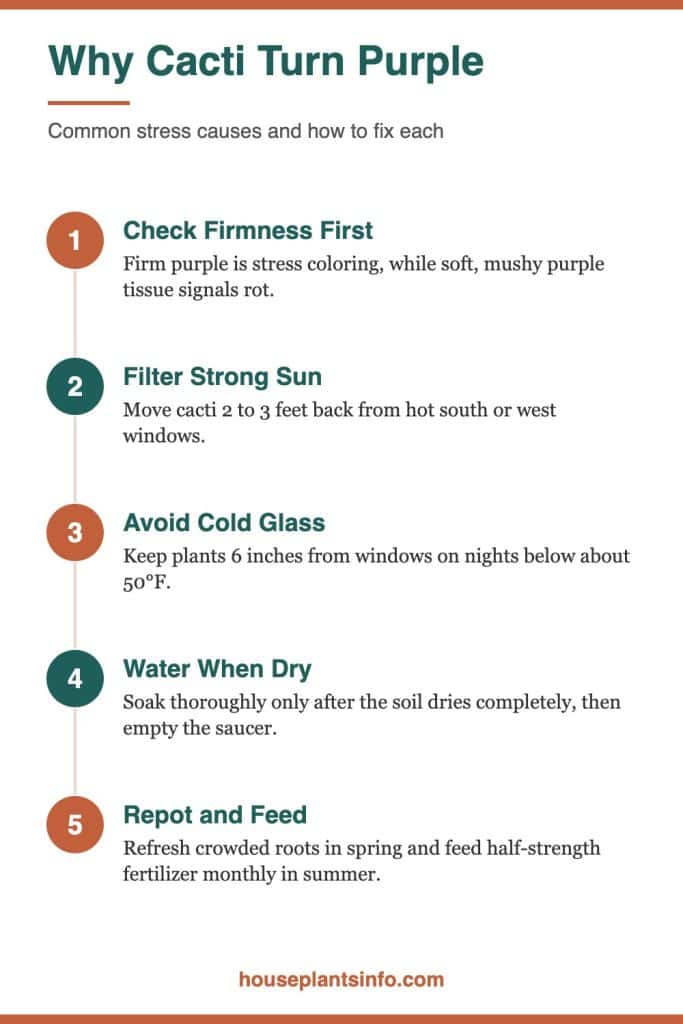
- Check whether the purple is firm or soft, and treat soft areas as rot right away.
- Move the cactus 2 to 3 feet back from a hot south or west window, or add a sheer curtain.
- Keep the plant at least 6 inches from cold glass on winter nights and away from radiators and vents.
- Water deeply only when the soil is completely dry, then empty the saucer.
- Inspect the roots and repot in spring if the cactus has outgrown its pot.
- Feed with half-strength cactus fertilizer monthly from spring through summer.
Common Questions About Cactus Turning Purple
Will my purple cactus turn green again?
In most cases, yes, once the stress is removed. The color usually fades over several weeks to a few months, and new growth comes in green. Sunburn scars that are tan or bleached will stay, though.
Is a purple cactus dying?
Usually not. Firm purple tissue is a protective response, and the plant can recover fully. It is only serious when the purple area becomes soft, dark, mushy or smells bad, which points to rot.
Can overwatering make a cactus turn purple?
Yes, indirectly. Overwatering damages the roots, and damaged roots cannot supply the stem, which can cause purple stress coloring. If the plant also feels soft at the base, check for root rot right away.
Should I move my purple cactus out of the sun?
If the purple appeared after a move to brighter light, give it filtered light or move it back a few feet from the window. Do not move it into deep shade, since most cacti still need several hours of bright light daily to stay healthy.
Does a purple cactus need fertilizer?
It might if it has been in the same soil for years and is growing slowly. Feed with diluted cactus fertilizer once a month in spring and summer. Rule out sun, cold and water problems first, since those are more common causes.

Hi! I’m Sophia, and I love plants – especially an expert in growing house plants. I stay in Chicago, United States of America, and through my blog and social media platforms, provide tips and tricks on how to grow healthy, vibrant plants indoors. Check out more here.