
You glance at the Christmas cactus on your windowsill and notice the flat green segments have taken on a rosy, pinkish blush along the edges.
If you are asking why are my christmas cactus leaves turning pink, the plant is almost always telling you it feels stressed, and the stress is usually easy to find.
The short version: Pink segments happen when a Christmas cactus produces protective reddish pigments in response to stress. The most common triggers are too much direct sun, cold temperatures, watering problems, crowded or damaged roots, and nutrient imbalances.
Remove the stress and new growth comes in green again.
This guide covers each cause, how to tell them apart, and the exact fix for each one.
Check These First
- Feel the glass. If the plant sits within 1 foot of a south or west window, or the pane feels cold at night, light or chill is the likely cause.
- Push a finger 1 inch into the soil. Bone dry suggests thirst, while soggy and sour-smelling suggests root trouble.
- Squeeze a segment gently. Firm and pink usually means light or cold stress, while soft and pink points to water or root problems.
- Look at the pattern. Pink edges on the sunny side only means sun, while pink across the whole plant suggests roots, cold or feeding.
- Think back on recent changes. A new spot, a repotting, or a missed feeding schedule often lines up with the color shift.
Why Are My Christmas Cactus Leaves Turning Pink?
Your Christmas cactus turns pink because it is making reddish pigments that shield its tissue from stress.
The green chlorophyll is still there, but the pink tint shows through when the plant feels exposed to too much light, cold or a shortage of water or nutrients.
What the Color Means
These pigments act a bit like sunscreen. They absorb excess light and help protect cells when the plant cannot use all the energy it receives, which happens when it is chilled, thirsty or underfed.
The tint usually starts at the edges and tips of segments, then spreads inward if the stress continues. A light blush is a warning sign, while deep red or purple across whole segments means the stress has gone on for a while.
Pink, Red or Purple
Pink, red and purple are really points on the same scale. Pink is the earliest stage, and the color deepens as stress builds or lasts longer.
If your plant has moved past pink into strong red tones, the guide on why are christmas cactus leaves turning red covers that stage. A dusky violet cast has its own patterns, explained in why do christmas cactus leaves turn purple.

How to Narrow It Down
Start with the two easiest checks: soil moisture and temperature. A soil moisture meter tells you what is happening at root level, which matters in pots deeper than 6 inches where the surface can look dry while the bottom stays wet.
A simple indoor thermometer placed on the windowsill overnight shows you how cold that spot really gets. Window glass in a Chicago winter can sit far colder than the rest of the room.
| Clue | Most likely cause |
|---|---|
| Pink only on the side facing the window | Too much direct sun |
| Pink after cold nights near glass or a door | Cold stress |
| Pink plus thin, wrinkled segments | Underwatering |
| Pink plus soft, mushy segments and wet soil | Overwatering or root rot |
| Pink across the plant, roots circling the pot | Rootbound or old soil |
| Pale, pinkish segments after months without feeding | Nutrient shortage |
| Pink plus white crust on soil | Fertilizer salt buildup |
Too Much Direct Sun: Move It Back and Filter the Light
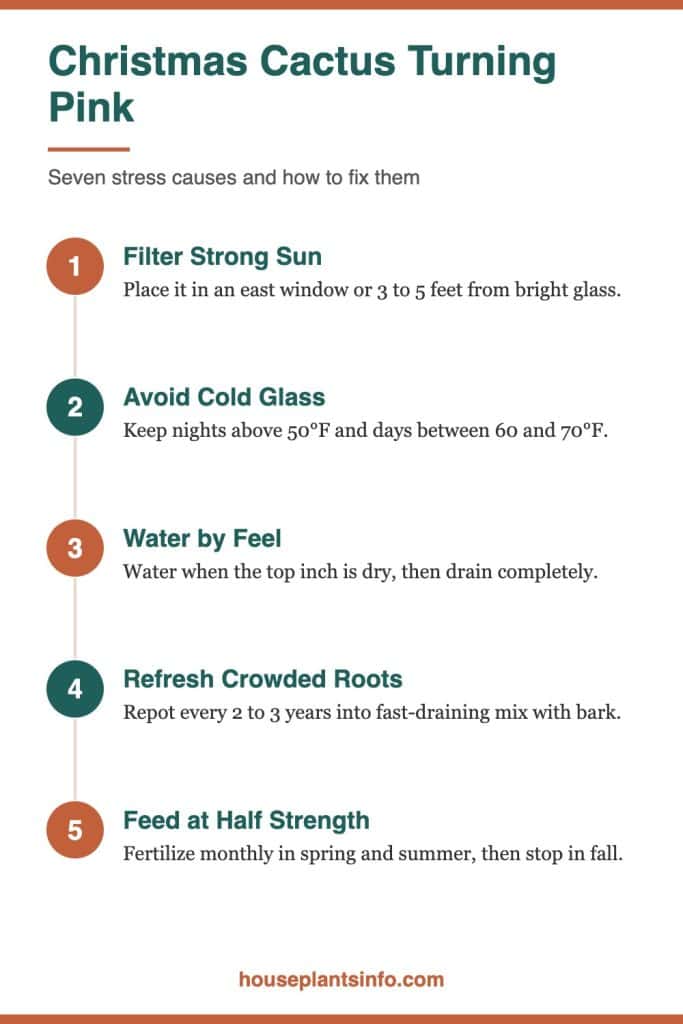
Strong direct sun is the most common reason for pink segments. Move the plant a few feet back from the glass or filter the light, and new growth should come in green within weeks.
Why Sun Turns It Pink
The Christmas cactus is an epiphyte from shaded, humid mountain forests in Brazil, where it grows on tree branches under a leafy canopy. It wants bright light, but not hours of hot sun beating on its segments.
When it gets more light than it can use, it produces pink pigments to protect itself. Sun-stressed segments are usually still firm, and the color is strongest on the side facing the window.
Finding the Right Window
An east-facing window is ideal, with gentle morning sun and bright light the rest of the day. A bright north window also works well, especially with no buildings or trees blocking it.
South and west windows can be too intense, particularly from spring through early fall. Set the plant 3 to 5 feet back from the glass, or hang a sheer curtain to soften the light.
Light That Is Too Low
Too little light does not cause pink coloring, but it does cause weak, stretched growth and few flowers. If your apartment is dim, a full-spectrum LED grow light placed about 12 inches above the plant for 10 to 12 hours a day keeps it healthy.
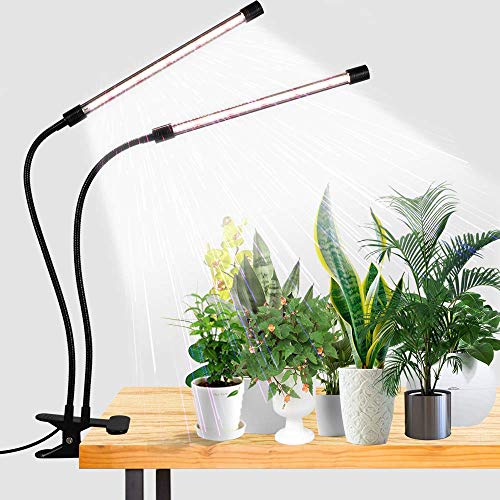
In fall, switch the grow light off earlier. The plant needs about 12 to 14 hours of uninterrupted darkness each night for roughly 6 weeks to set flower buds.
Sophia’s tip: Move the plant gradually, a foot or two every few days, rather than shifting it straight from a dark corner into a bright window. Sudden jumps in light are what often trigger a pink flush.
Cold Windows and Drafts: Keep It Between 60 and 70°F
Cold stress turns segments pink, especially during winter on a windowsill. Keep the plant in a spot that stays roughly 60 to 70°F during the day and no colder than about 50 to 55°F at night.
Cool Nights Versus Real Cold
Cool fall nights of 50 to 55°F are actually helpful, because they encourage bud formation. A slight pink blush during this period is common and usually harmless.
Extended temperatures below about 45 to 50°F are a different story. Chilled segments turn pink or red, and true cold damage can make them soft, translucent and limp. Frost kills tissue outright.
Common Cold Spots Indoors
Windowsills are the usual problem, because glass can be far colder than the room overnight. Trapping a plant between a cold window and a closed curtain makes this worse.
Drafty entryways, spots near frequently opened doors, and unheated sunrooms also deliver repeated cold blasts. In summer, an AC vent blowing directly on the plant causes similar stress and dries the soil quickly.
Heat Is a Stressor Too
Radiators, baseboard heaters and forced-air vents create hot, dry pockets that pull water out of segments. A plant within 2 to 3 feet of a heat source can show pink or red tints alongside softening and bud drop.
Sustained temperatures above about 80°F also stress the plant. Aim for a stable, moderate spot away from both cold glass and hot air.
Sophia’s tip: On winter nights, slip a piece of cardboard between the window and the plant, or move the pot onto a table a few feet from the glass.
Hold your hand near the nearest vent to check whether warm or cold air is reaching the leaves.
Watering Stress: Too Little or Too Much
Both underwatering and overwatering can turn segments pink, because in both cases the plant is not getting enough water into its tissue. The fix depends on whether the soil is dry or soggy, so always check before you water.
Signs of Thirst
An underwatered Christmas cactus has thin, wrinkled segments that may take on a pink or reddish tone. The pot feels light, and the soil often shrinks away from the pot edges, letting water run straight past the roots.
Dry winter air speeds this up. A plant that needed water every 2 weeks in summer may need it every 7 to 10 days once the furnace runs.
To rehydrate, set the pot in a sink or bowl with 2 to 3 inches of room-temperature water for 20 to 30 minutes. Then let it drain completely, and never leave it sitting in water.
Signs of Overwatering
When soil stays wet, roots run out of oxygen and begin to rot. Damaged roots cannot take up water, so the segments become stressed, discolored and often soft or mushy.
If the soil is wet days after watering and the segments feel squishy, the guide to christmas cactus leaves soft walks through the full root rot rescue.
If whole stems are drooping rather than individual segments softening, see why are the leaves on my christmas cactus limp.
A Watering Routine That Works
Water when the top 1 inch of soil feels dry, which is often every 1 to 2 weeks indoors. Water thoroughly until it runs from the drainage hole, then empty any saucer or decorative outer pot.
Use a pot with a drainage hole every time. Pots without one, and cachepots that collect water at the bottom, are the most common reasons for soggy soil.
| Symptom | Underwatering | Overwatering |
|---|---|---|
| Soil | Dry, pulling from pot edges | Wet days after watering |
| Segments | Thin, wrinkled, pink-tinged | Soft, mushy, discolored |
| Stem base | Firm, normal color | Brown or black, soft |
| Smell | None | Sour or musty |
| After watering | Plumps up in 1 to 3 days | Stays soft or gets worse |
Humidity and Dry Air
Christmas cactus prefers moderate humidity, roughly 40 to 60 percent. Winter apartment air often drops to 20 or 30 percent, which adds to water stress.
Group the cactus with other plants, set it on a pebble tray with water below the pot base, or run a humidifier nearby. I prefer a humidifier over misting, since misting raises humidity only briefly and can leave water sitting in stem joints.
Crowded or Damaged Roots: Repot Into Fresh Mix
If watering and placement seem right, the roots may be the problem. A pot packed with roots or filled with broken-down soil cannot hold water well, and the plant shows stress in pink segments.
Rootbound Plants
The Christmas cactus likes a snug pot, but after 3 to 4 years roots can fill every inch. Water runs straight through without soaking in, and the plant stays thirsty even when you water on schedule.
Slide the plant out of its pot to check. If roots circle the outside of the root ball thickly with little soil visible, it is time to repot.
How to Repot
Repot every 2 to 3 years, ideally in spring after blooming ends. Choose a pot only 1 to 2 inches wider than the current one, with a drainage hole.
A good mix is roughly two parts regular potting soil to one part perlite and one part orchid bark. A cactus mix amended with bark also works well and drains quickly.
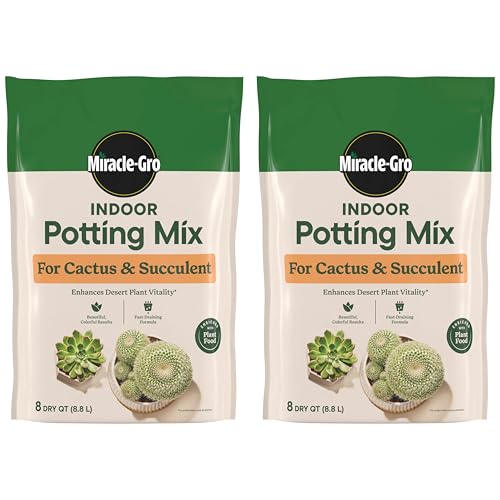
Gently loosen circling roots, trim any that are brown or mushy with clean scissors, and set the plant at the same depth as before. Water lightly and keep it in bright, indirect light.
Repotting Shock
Some pink coloring or softness for 1 to 3 weeks after repotting is normal, because disturbed roots need time to resume drinking. Avoid fertilizing for about a month and keep the plant out of direct sun.
If the stem base has rotted, save the plant by taking cuttings of 2 to 4 healthy segments. Let them dry for 1 to 2 days, then set them about 1 inch deep in slightly moist mix.
Nutrient Problems: Feed Lightly and Consistently
A shortage of nutrients can turn a Christmas cactus pale and pinkish, while too much fertilizer can damage roots and cause similar coloring. A balanced feeding routine at half strength prevents both problems.
Nutrient Shortages
Plants growing for years in the same soil without feeding can run short of nutrients. Magnesium shortage is often linked to reddish or pinkish segments in this plant, and a lack of phosphorus can cause purplish tones.
The first step is not extra supplements. Refreshing old soil and feeding with a balanced houseplant fertilizer usually corrects the issue over a few months.
Some growers use a dilute magnesium supplement, commonly about 1 teaspoon of Epsom salt per gallon of water, once a month in the growing season. Use it sparingly and never in place of regular fertilizer.
Fertilizer Burn
Too much fertilizer builds up salts in the soil that damage roots. Damaged roots cannot absorb water or nutrients, so segments may turn pink, brown at the tips or soft.
Look for a white crust on the soil surface or pot rim. Flush the pot by running lukewarm water through it for several minutes, then let it drain completely.
When to Feed
Feed with a balanced houseplant fertilizer at half strength about once a month from spring through summer. Stop feeding in early fall so the plant can focus on setting buds.
Do not feed a plant that is bone dry, freshly repotted or recovering from root rot. Water first, and wait until the roots are healthy.
Sophia’s tip: Mark your monthly feeding day on a calendar, and water the plant the day before. Fertilizer on moist soil spreads evenly and is far less likely to burn roots.
Is Pink Ever Normal?
Yes. A light pink blush is sometimes harmless, especially on new growth, during cool fall nights, or on plants with naturally tinted segments. The difference is whether the plant otherwise looks firm and healthy.
New Growth and Cultivar Traits
Fresh segments sometimes emerge with a pinkish or reddish edge that turns green as they mature. Some holiday cactus varieties also carry a faint tint along segment margins as a normal trait.
If the segments are firm, growing well and the color fades as they age, there is nothing to fix.
Seasonal Color Shifts
During fall bud-setting, cooler nights and brighter autumn light can bring a mild blush. Once the plant is in bloom and the nights stay moderate, this usually fades.
After flowering, many growers give the plant a rest of about 4 to 6 weeks with slightly less water. A touch of color during this period is fine, as long as segments do not shrivel.
When to Worry
Take action if the pink deepens to red or purple, spreads across the whole plant, or appears alongside soft, wrinkled or mushy segments. Those signs mean the stress has not gone away.
If segments start detaching at the joints along with color changes, read the guide on christmas cactus dropping leaves for the main triggers.
Pet Safety
The ASPCA lists the Christmas cactus as non-toxic to cats and dogs. Chewing on segments may still cause mild stomach upset, so keep it out of easy reach of curious pets and kids.
| Normal pink | Stress pink |
|---|---|
| Faint blush on new segments | Color spreading to older segments |
| Fades as segments mature | Deepens to red or purple over time |
| Segments firm and plump | Segments wrinkled, soft or mushy |
| Appears during cool fall nights | Persists after conditions are moderate |
Your Next Steps
- Check the soil 1 inch down and at the bottom of the pot before watering, then water only when the top inch is dry.
- Move the plant to an east window, or 3 to 5 feet back from a south or west window.
- Keep it away from cold glass at night and at least 3 feet from radiators, heat vents and AC vents.
- Unpot the plant if soil stays soggy or water runs straight through, and repot into fresh, fast-draining mix.
- Feed at half strength once a month from spring through summer, and stop in early fall.
- Watch new growth over the next 4 to 8 weeks, since stressed segments may stay pink while new ones come in green.
Common Questions About Christmas Cactus Leaves Turning Pink
Will pink Christmas cactus leaves turn green again?
Often, yes. Once you correct the light, temperature or water problem, mildly tinted segments can slowly regain green color over several weeks. Heavily stressed segments may stay tinted, but new growth should come in green.
Is too much sun the main reason for pink leaves?
Direct sun is the most common cause, especially in south and west windows. Cold, watering problems, crowded roots and nutrient issues can all cause the same color. Check where the pink appears first, since sun stress usually shows on the side facing the glass.
Should I give my pink Christmas cactus Epsom salt?
Only if you have ruled out light, cold and watering problems first. Some growers use about 1 teaspoon per gallon of water once a month during the growing season. It should never replace a regular balanced fertilizer.
Can a pink Christmas cactus still bloom?
Yes, a lightly stressed plant can still flower, and cool fall nights with mild blushing are part of normal bud-setting. Severe stress from cold, drought or root rot can cause buds to drop. Keep conditions stable once buds appear.
Is a pink Christmas cactus safe for my cat or dog?
The ASPCA lists the Christmas cactus as non-toxic to cats and dogs, and the color change does not affect that. Eating larger amounts may cause mild vomiting or diarrhea. Keep the plant where pets cannot chew it regularly.

Hi! I’m Sophia, and I love plants – especially an expert in growing house plants. I stay in Chicago, United States of America, and through my blog and social media platforms, provide tips and tricks on how to grow healthy, vibrant plants indoors. Check out more here.