
Your cactus leans away from its pot, the top looks wider or heavier than the base, and the whole plant wobbles when you brush past the windowsill.
If you’re wondering why your cactus is getting top heavy, the cause is almost always something you can see and correct indoors.
The short version: Most top heavy cacti are reaching for light, sitting in soil that stays wet too long, or growing in a pot too small or light to anchor them.
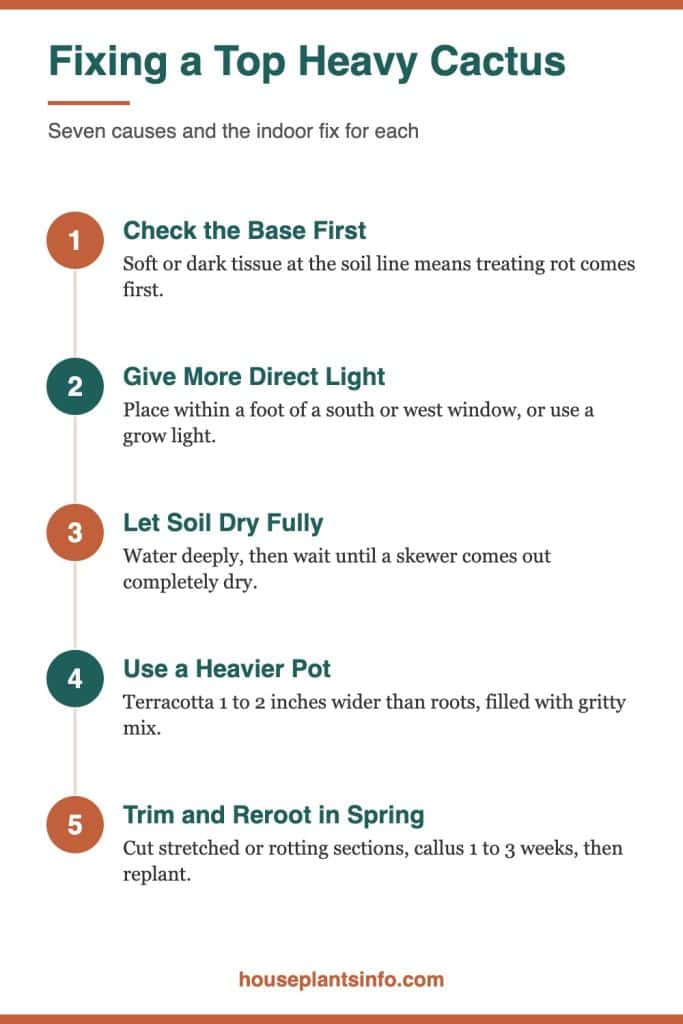
Fix the light first, let the soil dry fully between waterings, and move the plant into a heavier pot with gritty mix. Trim and reroot any stretched or rotting sections.
This guide covers the symptoms, seven common causes with a fix for each, how to stabilize or rescue a leaning plant, and pet safety.
Check These First
- Press the base of the stem gently. If it feels soft, mushy, or dark, treat it for rot before anything else.
- Look at new growth at the tip. Pale, narrow, or pointed growth means the plant is stretching for light.
- Push a wooden skewer to the bottom of the pot. If it comes out damp several days after watering, the soil drains too slowly.
- Tip the pot slightly. If it topples easily, the container is too small or too light for the plant.
- Inspect the ribs and areoles for white cottony tufts, brown bumps, or fine webbing.
What Does a Top Heavy Cactus Look Like?
A top heavy cactus carries more weight above the soil than its roots and pot can support, so it leans, wobbles, or tips over. The signs usually develop slowly over weeks or months.
The easiest way to confirm a moisture or light problem is to measure rather than guess. A soil moisture meter shows whether the root zone stays wet, and a grow light on a timer quickly reveals whether stretching stops once light improves.
Visual Signs
- The top of the stem is wider than the section just above the soil.
- The column bends or curves toward the window.
- Branches or offsets cluster on one side.
- A narrow “waist” appears partway up the stem where growth stretched.
Physical Signs
- The plant rocks in the pot when touched.
- Soil cracks or lifts on one side of the base.
- The pot tips over when the plant is watered or bumped.
- The base feels soft, wrinkled, or hollow compared with the top.
When It Is Normal
Tall column cacti and branching species naturally get heavy as they mature. A firm, upright plant that has simply outgrown its pot is not sick; it just needs a bigger, heavier container and possibly a stake.
Why Are My Cactus Getting Top Heavy From Low Light?
Low light is the most common cause indoors. The cactus stretches toward the brightest spot, producing thin, weak growth that can’t support the heavier tissue above or beside it.
How Stretching Happens
This stretching is called etiolation. New growth turns pale green, narrow, and pointed, and the spines may look farther apart. Because the stretched section never thickens later, the plant ends up with a thin neck holding a heavy top.
Light falls off sharply with distance from the glass. A cactus 3 or 4 feet back from a window gets only a fraction of the light it would get on the sill, even if the room looks bright to you.
Fix: Give It Direct Sun or a Grow Light
Most cacti need at least 4 to 6 hours of direct sun daily. Place yours within about a foot of an unobstructed south or west window. East windows can work for smaller species, but north windows are rarely enough.
If your windows face north or are shaded by buildings, add a full-spectrum LED grow light. Keep it 6 to 12 inches above the top of the plant and run it 12 to 14 hours a day.
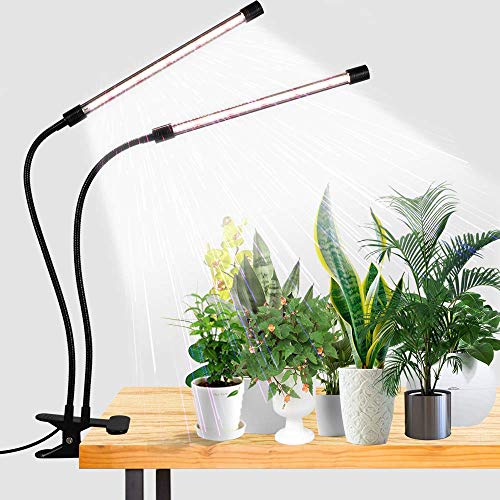
In Chicago-style winters, short gray days weaken even south windows. Running a grow light from roughly November through February keeps new growth compact.
Fix: Rotate and Acclimate
Turn the pot a quarter turn every one to two weeks so all sides receive light evenly. This keeps the plant growing straight instead of bending toward the glass.
Move a plant from dim to bright light gradually over 1 to 2 weeks. Sudden full sun can scorch the skin, leaving tan or white patches on the side facing the window.
Sophia’s tip: Stick a small piece of tape on one side of the pot. Every time you water, check where the tape faces and rotate a quarter turn, so you never lose track.
If you grow column types, the full routine to care for Peruvian apple cactus covers light, watering, and winter rest in detail.
Overwatering and Root Rot: Firm Up a Weak Base
Overwatering weakens the roots and lower stem, so the base can no longer hold the weight above it. The plant leans, wobbles, or collapses even when the top looks healthy.
Why Wet Soil Causes Leaning
Cactus roots need air as much as water. Soil that stays wet for days suffocates them, and fungal rot moves in. As roots die, the plant loses its anchor and the base softens.
Cool temperatures make this worse. A cactus sitting in wet soil near a drafty window in winter is at much higher risk than one in warm, bright conditions.
Signs of Rot
- Soft, mushy, or translucent tissue at or below the soil line.
- Brown or black patches that feel wet rather than dry and corky.
- Yellowing that starts at the base and moves upward.
- A sour or musty smell from the soil.
Hard, dry, tan patches near the base of an older plant are often harmless corking, not rot. If you grow a column type and see color changes, this guide to Peruvian apple cactus yellowing explains what each pattern means.
Fix: Water Deeply but Rarely
Water thoroughly until it drains from the bottom, then wait until the soil is completely dry before watering again. Indoors, that usually means every 2 to 3 weeks in spring and summer and every 4 to 6 weeks or less in winter.
Empty the saucer or decorative outer pot within 15 minutes. Standing water at the bottom keeps the lowest roots wet, which is exactly where rot starts.
Radiators and forced-air heat dry the surface faster in winter, but the plant still rests. Check the soil, not the calendar.
Fix: Treat Active Rot
Unpot the plant and remove all soft, dark roots with a clean knife. If rot has reached the stem, cut upward until the tissue is firm, clean, and evenly green with no discolored rings.
Let the healthy section callus and replant it in dry, fresh mix. Discard the old soil and scrub the pot before reusing it.
Wrong Pot or Soil: Fix the Foundation
A pot that is too small, too light, or filled with dense soil can’t anchor a growing cactus. The plant becomes top heavy because its base simply can’t counterbalance the stem.
Pot Size and Weight
Plastic nursery pots are light, and a tall cactus easily tips them over. Unglazed terracotta is heavier, breathes, and helps soil dry evenly, which makes it a better match for most cacti.
Choose a pot about 1 to 2 inches wider than the root ball. Oversized pots hold extra wet soil that roots can’t reach, which raises the risk of rot. Always use a pot with a drainage hole.
For very tall plants, a wide, shallow-based pot resists tipping better than a narrow one of the same volume.
Soil Mix
Bagged cactus soil works as a base, but many blends hold more moisture than cacti prefer. Mix in 30 to 50% pumice or coarse perlite so water drains within seconds.
Avoid fine sand, which packs down and blocks drainage. The finished mix should feel loose and gritty and never stay soggy for more than a day or two.
Root-Bound Plants
Cacti that have stayed in the same pot for years can circle their roots tightly. The root ball becomes a dense block that holds little soil, so the plant has nothing heavy to grip.
Repot every 2 to 3 years, or when roots poke out of the drainage hole. Spring and early summer are best because the plant recovers quickly during active growth.
How to Repot Safely
Wear thick gloves and wrap the stem in a folded towel or strip of cardboard. Let the soil dry first so it falls away cleanly from the roots.
Set the cactus at the same depth it grew before. Wait about a week before watering so small root injuries can seal.
Sophia’s tip: For plants taller than about 2 feet, set a few fist-sized stones on the soil around the base after repotting. They add weight low in the pot and stop rocking when pets or a vacuum bump it.
Natural Growth, Branches, and Offsets: Rebalance the Plant
Some cacti become top heavy simply because they are healthy. Branching species, plants producing offsets near the top, and mature columns can outgrow their roots and pot.
Growth Patterns That Add Weight
Column cacti can add several inches to a foot a year in strong light. Branching types may grow arms on one side, especially if light comes from one direction.
Flowering and fruiting add temporary weight to mature plants. Large flowers or developing fruit near the top can shift the balance enough to tip a light pot.
Fix: Balance the Growth
Rotate regularly so branches form evenly around the stem. If one side already carries much more weight, remove a branch or two in spring to even out the shape.
Removed branches become cuttings. Healthy, firm segments root readily once callused.
Fix: Upgrade the Support
Move a heavy but healthy plant into a larger, heavier pot. A padded bamboo stake with soft plant ties can hold the column upright while new roots anchor it.
Don’t tie a stake tightly against the skin. Leave a little room and check the ties every few weeks as the plant thickens.
Pests, Heat, and Drafts: Remove the Hidden Stress
Pests and environmental stress weaken tissue unevenly, so one side of the plant sags or the base loses strength. These problems often go unnoticed until the plant starts to lean.
Sap-Feeding Pests
Mealybugs look like small tufts of white cotton tucked into ribs and around spines. Root mealybugs also feed below the soil, where they quietly weaken the roots that hold the plant upright.
Dab visible mealybugs with a cotton swab dipped in 70% isopropyl alcohol and repeat weekly until no new ones appear. If you’re unsure what you’re seeing, this guide on whether can cactus get mealybugs walks through identification and control.
Scale appears as tan or brown bumps that scrape off with a fingernail. Spider mites leave fine webbing and a dull, speckled surface, often in dry winter air near heaters.
Treat both with insecticidal soap every 5 to 7 days for several weeks, and isolate the plant.
Heat and Cold Drafts
Keep the cactus at least 3 feet from radiators and out of the direct path of heating or AC vents. Hot, dry air on one side can stress the skin and cause uneven growth.
Window glass can drop far below room temperature on cold nights. Keep the plant an inch or two away from the pane and above about 40°F.
Wind Outdoors
If your cactus spends summer on a balcony, strong wind can rock it loose and break fine roots. Use a heavy pot, shelter it from gusts, and bring it in before nights drop below 50°F.
How to Trim and Reroot a Top Heavy Cactus
If the plant has a stretched neck, a rotting base, or more weight than any pot can hold, cutting it is often the best fix. Cacti regrow from the cut, and the top roots as a new plant.
When to Cut
- A thin, stretched section won’t thicken even after light improves.
- Rot has damaged the base or roots.
- The plant is too tall for your ceiling or window.
- One heavy branch keeps pulling the plant over.
Cut in spring or early summer. Cuts heal slowly during the winter rest, which leaves more time for rot to set in.
How to Make the Cut
Sterilize a sharp knife or pruning saw with rubbing alcohol. Wear gloves and wrap the section you’re removing so it doesn’t fall and bruise.
Cut straight across through firm, healthy tissue. The remaining base will seal over and often push one or more new branches just below the cut.
Rooting the Top
Set the cutting upright in a dry, shaded spot with good airflow. Let the cut end callus for 1 to 3 weeks, until it forms a dry, firm seal.
Plant the callused end 1 to 2 inches deep in dry cactus mix and support it with a stake if it’s tall. Wait about a week, then water lightly.
For column types, this walkthrough on how to grow Peruvian apple cactus from cutting covers each step.
Roots usually form in 3 to 6 weeks in warm conditions. A gentle tug that meets resistance means roots have formed.
If It Won’t Root
Cuttings in cool rooms, wet soil, or dim light often sit for weeks without progress. Check temperature, light, and moisture first. This guide on a Peruvian apple cactus not rooting explains common reasons and fixes.
Sophia’s tip: Stand callusing cuttings on a seedling heat mat set near a bright window. Steady bottom warmth around 70 to 75°F roots cuttings noticeably faster than a cold winter sill.
Is a Top Heavy Cactus Safe Around Pets and Kids?
The biggest danger from a top heavy cactus is physical: spines, and a heavy pot that can fall. Toxicity varies by species, so check the ASPCA toxic and non-toxic plant list for your specific cactus.
The ASPCA lists Christmas cactus as non-toxic to cats and dogs, but that doesn’t apply to every cactus. Place leaning or tall plants where cats, dogs, and toddlers can’t brush against them or pull them over, and weight the pot well.
Your Next Steps
- Press the base today and treat any soft or dark tissue before fixing anything else.
- Move the cactus within about a foot of a south or west window, or add a grow light on a 12 to 14 hour timer.
- Check soil with a skewer before every watering and empty the saucer after each soak.
- Repot into gritty mix and a terracotta pot only 1 to 2 inches wider than the roots.
- Add a padded stake or surface stones to stop rocking while new roots anchor.
- Plan any trimming or rerooting for spring or early summer.
Common Questions About Top Heavy Cactus
Can a top heavy cactus straighten itself?
Leaning growth won’t straighten on its own, but new growth will grow upright once light comes from above or evenly from all sides. Stake the plant for support and rotate it regularly. Severely bent or stretched sections usually need to be cut and rerooted.
Should I cut the top off my top heavy cactus?
Cut only if the plant has a thin stretched neck, rot at the base, or more height than you can support. Healthy, firm plants usually just need a heavier pot and better light. If you cut, do it in spring and reroot the top as a cutting.
How do I stop my cactus from falling over?
Use a heavy terracotta pot sized just slightly larger than the roots, fill it with gritty mix, and add stones on the soil surface. A padded stake gives extra support for tall plants. Keep it away from busy walkways where pets or people bump it.
Why is my cactus thin at the bottom and fat at the top?
This usually means the plant went through a period of low light, then received better light later. The stretched lower section stays thin while healthy new growth thickens above it. It can also signal rot at the base, so check for softness.
How often should I water a top heavy cactus?
Water deeply only when the soil is completely dry, typically every 2 to 3 weeks in spring and summer and once a month or less in winter. A leaning plant with weak roots needs even less water until it recovers. Always confirm with a skewer first.

Hi! I’m Sophia, and I love plants – especially an expert in growing house plants. I stay in Chicago, United States of America, and through my blog and social media platforms, provide tips and tricks on how to grow healthy, vibrant plants indoors. Check out more here.