
You press a thumb against your cactus on the windowsill and the stem gives way like a ripe tomato instead of pushing back firm and solid.
If you are wondering what to do if my cactus is squishy, the answer depends on where the softness is, what color it is, and how it smells.
The short version: A squishy cactus is usually rotting from too much water, cold, or infection, and the soft tissue will not recover.
Cut away every bit of mushy flesh, let the healthy part dry, and replant it in fresh, dry cactus mix. If the cactus is soft but wrinkled and not discolored, it is likely just thirsty.
This guide covers how to read the symptoms, the seven most common causes, a step-by-step rescue, and how to keep it from happening again indoors.
Check These First
- Press the base of the stem at the soil line. Soft, dark tissue there usually means root or stem rot.
- Smell the plant and the soil. A sour or rotten odor points to rot, not thirst.
- Look at the color. Brown, black, yellow, or translucent patches are damage; uniform green with wrinkles is dehydration.
- Check the soil moisture 2 inches down. Wet soil days after watering is a warning sign.
- Note the location. A cactus pressed against cold glass or near an AC vent may have chill damage.
Why Is My Cactus Squishy? Read the Texture First
A cactus turns squishy when its water-storing cells collapse or break down. Rot causes mushy, discolored tissue, while dehydration causes soft, shriveled tissue that stays green.
Rot Versus Thirst
Healthy cactus flesh is firm because each cell is full of water under pressure. When cells die from rot or freezing, the walls rupture and the tissue goes soft, wet, and often dark.
Thirst feels different. The stem is leathery and flexible, the ribs fold closer together, and the skin wrinkles, but nothing looks wet or bruised.
Testing the Soil Properly
A soil moisture meter or a plain wooden skewer pushed to the bottom of the pot tells you more than the surface does. If the skewer comes out dark and damp, the roots have been sitting wet.

Also lift the pot. A heavy pot several days after watering means the mix is holding too much water for a cactus.
Where the Softness Starts
Softness at the base usually means the problem began in the roots or soil line. Softness at the top or on one side often traces back to injury, sunburn, or cold glass.
| Symptom | Likely cause | Can that tissue recover? |
|---|---|---|
| Mushy, brown or black base, wet soil | Root or stem rot | No, remove it |
| Soft, wrinkled, still green, dry soil | Underwatering | Yes, with water |
| Translucent, glassy patches after cold | Chill or frost damage | No, remove it |
| Soft spot with oozing or a crack | Injury plus infection | No, remove it |
| Bleached or tan soft patch facing window | Sunburn | No, but plant can survive |
| Soft areas with white cottony clumps | Mealybugs | Depends on extent |
| Soft top after moving to new spot | Stress plus overwatering | Sometimes |
Overwatering and Root Rot: Cause and Fix
Overwatering is the most common reason a cactus goes squishy indoors. Roots sitting in wet soil run out of oxygen, die, and rot, and the rot then travels up into the stem.
How It Happens Indoors
Indoor cacti get far less light than they would outdoors, so they use water slowly. A cactus a few feet back from a north or east window may need water only every few weeks in summer and barely at all in winter.
Pots without drainage holes, cache pots that collect runoff, and regular potting soil all keep roots wet too long. Big pots make it worse because the extra soil stays damp.
Signs to Look For
- Soft, darkening tissue at or just above the soil line
- A cactus that leans or wobbles in the pot
- Roots that are brown, black, slimy, or pull apart easily
- A musty or sour smell from the soil
The Fix
Slide the cactus out of the pot and shake off the soil. Healthy roots are firm and white or tan; cut off anything mushy or dark with a clean, sharp knife.
If the base of the stem is still firm, let the plant air dry for several days to a week, then repot in fresh, dry cactus mix in a pot with a drainage hole. Wait about a week before giving any water.
If the rot has moved into the stem, skip ahead to the rescue section, because you will need to cut above the damage.
Sophia’s tip: Mix bagged cactus soil with perlite or pumice at roughly 1 part grit to 1 part soil. Indoors, that extra drainage matters far more than it does on a sunny patio.
Stem Rot From Bacteria or Fungus: Cause and Fix
Bacterial and fungal rot can start anywhere on a cactus, not just the base. It spreads quickly through soft tissue, so act the same day you notice it.
What It Looks Like
Bacterial soft rot often appears as a water-soaked spot that turns brown or black and becomes mushy, sometimes with a foul smell or oozing liquid. Fungal rot may show dark, sunken lesions, sometimes with a fuzzy or powdery surface.
The skin of a cactus can look intact while the inside has turned to mush. Press gently around a suspicious spot to find the edge of the damage.
Why It Starts
Pathogens usually enter through a wound, a scar, or roots already weakened by wet soil. Cool temperatures, poor air flow, and water sitting on the stem or in the crown all help them spread.
Crowded windowsills and terrariums with little air movement are common trouble spots in apartments.
The Fix
Cut out all soft and discolored tissue until you reach clean, firm, pale green flesh with no streaks. Remove a little extra healthy tissue around the edge, because infection often runs slightly ahead of what you can see.
Wipe your knife with rubbing alcohol between every cut so you do not spread the infection. Let the wound dry in a bright, airy spot out of direct sun until it forms a hard callus.
Throw out the old soil and scrub the pot with soapy water before you reuse it. Keep the plant isolated from your other cacti for a few weeks.
Cold Damage and Frost Injury: Cause and Fix
Most common indoor cacti dislike temperatures below about 50°F, and many are damaged near freezing. Chilled tissue turns soft, glassy, or translucent within a day or two, then darkens.
Where It Happens in an Apartment
In a Chicago winter, the glass of a single-pane or drafty window can be much colder than the room. A cactus touching the glass, or sitting between a closed curtain and the window at night, can get chilled even when the thermostat reads 68°F.
Summer brings a different risk. A cactus parked right under an AC vent can take a steady blast of cold, dry air for months.
Recognizing Chill Damage
- Soft, watery, or see-through patches, often on the side facing the window
- Damage that appears suddenly after a cold night or a move
- Tissue that turns tan, brown, or black over the following week
The Fix
Move the cactus 6 to 12 inches back from the glass, or keep it in front of the curtain at night. Do not water it until you know how much tissue is affected.
Wait a few days for the damage to show its full extent, then cut away anything mushy. Small cold-damaged spots on the surface may simply scar over and dry into a firm brown patch, which is cosmetic.
Sophia’s tip: On nights below about 10°F, slide a hand between your cactus and the window. If the air feels noticeably cold, pull the plant back for the night.
Injuries, Sunburn, and Pests: Cause and Fix
A cactus can also go soft where it has been hurt. Bumps, bites, sunburn, and pest feeding all open the door to rot.
Physical Injuries
Knocking a pot over, a cat swatting at a stem, or a kid poking the plant can crack the skin or bruise the tissue inside. The injury itself may look small, but bruised cells can collapse and turn soft over several days.
Keep an eye on any wound for a week. If it dries into a firm, corky scar, it is healing; if it spreads, darkens, or turns wet, treat it as rot and cut it out.
Sunburn
A cactus moved suddenly from a dim corner to a south or west window, or set outside in summer without adjustment, can scorch. Burned patches turn white, tan, or yellow, and the tissue underneath may soften.
Sunburned areas do not turn green again. Move the plant to slightly less intense light, then increase sun over two to three weeks so new growth adapts.
Mealybugs and Other Pests
Mealybugs hide in spines, between ribs, and on roots, feeding on sap and leaving tissue weak and prone to rot. If you have ever wondered can cactus get mealybugs, the answer is yes, and root mealybugs are easy to miss until a plant starts struggling.
Dab visible clusters with a cotton swab dipped in rubbing alcohol. When you repot, check the roots for white, waxy patches.
Underwatering and Dehydration: Soft but Wrinkled
Not every soft cactus is in trouble. A cactus that has used up its stored water feels soft and flexible, but it stays green, smells normal, and firms up again after a good drink.
How to Tell It Is Thirst
Dehydrated cacti look deflated. Ribs pinch in, the skin wrinkles or puckers, and the plant may lean slightly, yet there is no bruising, oozing, or dark color.
This is common in winter when radiators and forced-air heat dry out the air and the soil, or in summer on a hot south-facing sill.
The Fix
Water thoroughly until water runs out of the drainage hole, then empty the saucer. Most cacti plump up within a few days to a week.
Do not try to fix it with frequent small sips. A deep watering followed by letting the soil dry completely is safer and closer to how cacti grow naturally.
When Thirst and Rot Overlap
A cactus with rotted roots can look dehydrated because the dead roots cannot take up water. If your cactus stays shriveled after watering and the soil stays wet, unpot it and check the roots.
Yellowing combined with softness can point to either problem. If you grow Cereus, this guide to peruvian apple cactus yellowing helps you sort out light, water, and root causes.
What to Do If My Cactus Is Squishy: The Step-by-Step Rescue
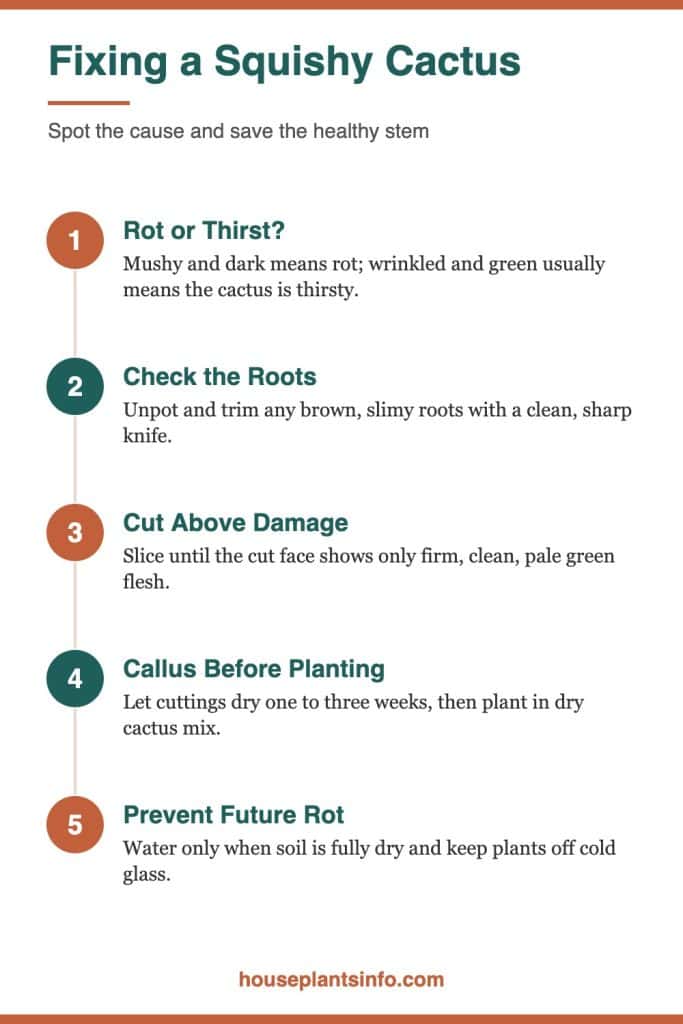
The rescue for true rot is surgery: cut off everything soft, dry the healthy piece, and reroot it. Squishy tissue never firms back up, so the goal is to save the healthy part.
Step 1: Assess How Much Is Healthy
Unpot the cactus and look at the whole plant. If rot is limited to roots or a small spot, you can trim and repot; if most of the base is mushy, plan to save the healthy top as a cutting.
Even a few inches of firm, clean stem can root and grow into a new plant.
Step 2: Cut Clean Above the Rot
Use a sharp, clean knife and cut straight across the stem above the soft area. Look at the cut face: healthy tissue is solid and pale green, while rot shows brown, red, or black rings or streaks.
Keep slicing thin sections until the cut face is completely clean. Sterilize the blade with rubbing alcohol between cuts.
Step 3: Let It Callus
Set the cutting upright in a dry pot or stand it in an empty jar so the cut end does not touch anything. Place it in bright, indirect light with good air flow, away from radiators and direct sun.
Callusing usually takes one to three weeks, depending on how thick the stem is. The cut end should be dry, firm, and sealed before planting.
Step 4: Replant and Wait
Set the callused end about 1 to 2 inches deep in dry cactus mix, using a small pot with a drainage hole. Stake tall cuttings so they stay upright.
Hold off on water for about a week or two, then water lightly once the soil is fully dry. Roots usually form within several weeks in warm conditions, slower in winter.
The same method works for columnar types, and the steps to grow peruvian apple cactus from cutting follow this process closely. If a cutting just sits without growth for months, read through the common reasons for peruvian apple cactus not rooting.
Sophia’s tip: A seedling heat mat set under the pot, along with a grow light a few inches overhead, helps winter cuttings root faster in a cool apartment. Keep the soil dry while you wait.
How to Prevent a Squishy Cactus Indoors
Prevention comes down to drainage, light, and watering on the plant’s schedule rather than yours. Most squishy cacti are the result of wet soil plus low light.
Water by Soil, Not Calendar
Water only when the soil is completely dry all the way down. Indoors, that may mean every two to four weeks in spring and summer and every four to eight weeks, or less, in winter.
Cut back sharply when days get short and growth slows. Many cacti benefit from a nearly dry winter rest in a cool, bright spot around 50 to 60°F.
Give Enough Light
A south or west window is usually best, ideally within a few feet of the glass. East windows work for many species; north windows usually need a grow light for 12 to 14 hours a day.
Plants in low light stretch, grow weak, and stay wet longer, which raises the risk of rot.
Choose the Right Pot and Mix
Use a pot with a drainage hole that is only slightly wider than the root ball. Terracotta dries faster than plastic or glazed ceramic, which helps in a humid bathroom or kitchen.
A gritty mix that drains within seconds is ideal. For a full routine on light, water, and soil, see how to care for peruvian apple cactus, which applies well to most upright cacti.
Pet Safety
Toxicity varies by species, so check your specific cactus. The ASPCA lists Christmas cactus as non-toxic to cats and dogs, but spiny cacti can still injure curious pets and kids, so keep them on a high shelf or out of reach.
Your Next Steps
- Press, smell, and look at the soft area today to decide whether it is rot or thirst.
- Unpot the cactus and check the roots if the soil is wet or the base is soft.
- Cut away all mushy tissue with a sterilized knife until the flesh is clean and firm.
- Let the healthy section callus in bright, indirect light before replanting in dry cactus mix.
- Move the plant away from cold glass, AC vents, and radiators.
- Switch to deep, infrequent watering based on dry soil, not a fixed schedule.
Common Questions About a Squishy Cactus
Can a squishy cactus become firm again?
Only if the softness comes from dehydration. A thirsty cactus firms up within days after a deep watering, but rotted or frozen tissue has collapsed cells and will never recover.
How do I know if my cactus is too far gone?
If the rot has spread through nearly the entire stem and no clean, firm green tissue remains, the plant cannot be saved. As long as a few inches of healthy stem remain, you can usually take a cutting and reroot it.
Should I water a cactus that just had rot removed?
No. Let the cut surface callus fully and keep the plant dry for at least a week after replanting, longer in winter, because water on fresh wounds invites new rot.
Why is my cactus squishy at the bottom but fine on top?
Softness at the base almost always starts with wet soil and root rot spreading upward. Cut the healthy top off above the damage, let it callus, and root it in fresh mix.
Can I use cinnamon or sulfur on the cut?
Some growers dust cuts with powdered sulfur or cinnamon to help dry them, though a clean cut and good air flow do most of the work. The most important steps are removing all rotted tissue and keeping the cutting dry while it calluses.

Hi! I’m Sophia, and I love plants – especially an expert in growing house plants. I stay in Chicago, United States of America, and through my blog and social media platforms, provide tips and tricks on how to grow healthy, vibrant plants indoors. Check out more here.