
Your cactus sits on a windowsill or shelf, maybe leaning slightly toward the glass, maybe looking a little paler than when you brought it home.
If you are wondering how much sunlight a cactus needs, the answer depends on what kind of cactus it is, which window it faces, and the season.
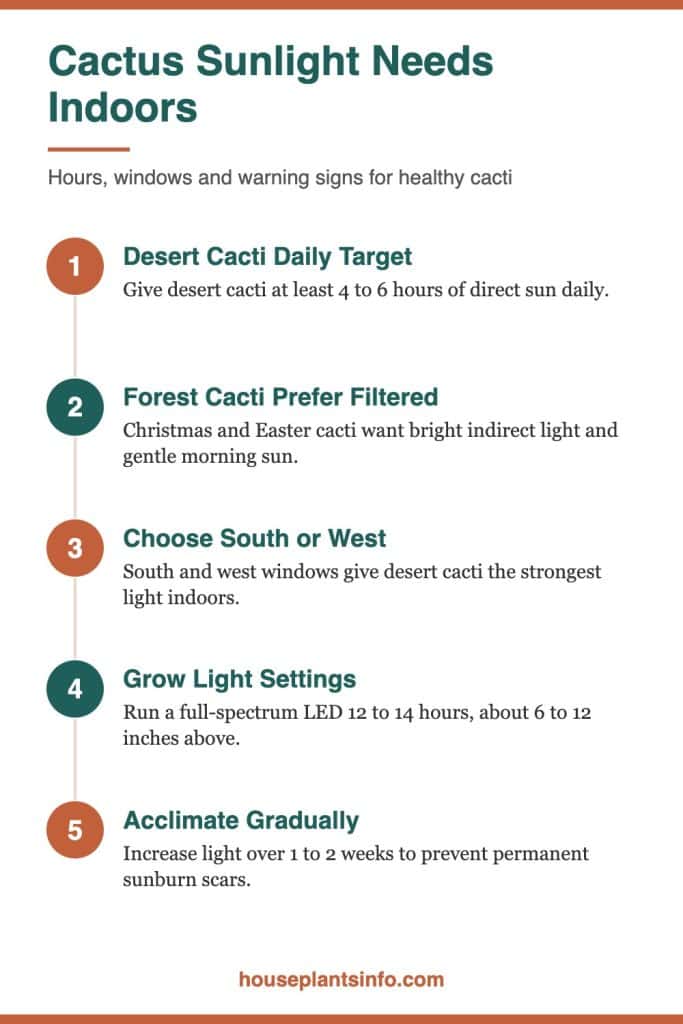
The short version: Most desert cacti need at least 4 to 6 hours of direct sun a day, and many do best with 6 or more.
Forest cacti such as Christmas cactus prefer bright, indirect light and can scorch in strong afternoon sun. If a window cannot provide enough light, a grow light running 12 to 14 hours a day can fill the gap.
This guide covers daily light targets, window choices, grow light setup, seasonal changes, and how to read the warning signs of too much or too little sun.
At a Glance
| Factor | What it needs |
|---|---|
| Light | Desert cacti: 4 to 6+ hours of direct sun. Forest cacti: bright, indirect light |
| Water | Water deeply, then let soil dry completely; much less in winter |
| Temperature | 65 to 85°F in the growing season; 45 to 60°F winter rest suits many desert types |
| Humidity | Average to dry indoor air is fine for desert cacti; forest cacti like a bit more |
| Soil | Fast-draining cactus mix with grit, in a pot with a drainage hole |
| Pet safety | Most cacti are not listed as toxic by the ASPCA, but spines can injure pets |
| Difficulty | Easy, once light is right |
How Much Sunlight Does a Cactus Need Each Day?
A typical desert cactus needs a minimum of 4 hours of direct sun daily, with 6 to 8 hours being closer to ideal. Indoors, the brightest spot in your home is usually the right spot.
Desert cacti evolved in open, high-light environments where they receive full sun for most of the day.
Even a sunny indoor windowsill delivers far less light than that, because glass filters some of it and walls block much of the sky. That is why cacti that seem to “get plenty of light” indoors still stretch over time.
What Direct Light Means Indoors
Direct light means the sun’s rays land on the plant itself, casting a sharp shadow. Bright indirect light means the plant sees a lot of sky but not the sun, and its shadow looks soft and fuzzy.
A simple test works well. Hold your hand about 12 inches above the cactus at midday. A crisp, dark shadow means direct sun; a faint, blurry one means indirect light.
Measuring Light Instead of Guessing
If you want numbers, a handheld light meter or a light meter app on your phone gives a reading in foot-candles. Full outdoor sun can reach around 10,000 foot-candles, while a bright windowsill might read anywhere from 1,000 to 5,000 depending on direction and season.
For desert cacti, aim for readings in the several-thousand range for a good part of the day. If your best spot reads under about 1,000 foot-candles for most of the day, a grow light will make a clear difference.
Distance From the Glass Matters More Than You Think
Light intensity drops off quickly as you move away from a window. A cactus 3 feet back from a south window may receive less than half the light of one sitting right on the sill.
For sun-loving cacti, keep them within about 12 inches of the glass. A shelf across the room, even in a bright room, is usually too dim for long-term health.
Sophia’s tip: Check your window at three times on one sunny day, around 9 a.m., noon and 3 p.m. Note when direct sun actually touches the sill. Many windows get far fewer direct hours than people assume.
Do All Cacti Need the Same Amount of Sun?
No. Cacti fall into two broad groups with very different light needs: desert cacti, which want strong direct sun, and forest (epiphytic) cacti, which prefer bright filtered light.
Knowing which group your plant belongs to prevents the two most common mistakes: keeping a desert cactus too dim and scorching a forest cactus in a hot window.
Desert Cacti
These include barrel cacti, Mammillaria, Echinopsis, Opuntia (prickly pear), Gymnocalycium, and columnar types such as Cereus. They generally have heavy spines, thick ribbed or rounded stems, and come from open, arid habitats.
They want the most sun you can give them indoors. If you are growing a columnar type, our guide on how to care for peruvian apple cactus explains its specific light and water rhythm.
Some desert cacti tolerate a little less light than others. Gymnocalycium, for example, often grows under shrubs in nature and can handle bright partial sun better than heavily spined, pale species.
Forest Cacti
Christmas cactus, Thanksgiving cactus, Easter cactus, Rhipsalis and orchid cactus (Epiphyllum) grow on trees in humid forests. They receive dappled light filtered through leaves rather than open sun.

Indoors, they do well near an east window, or a few feet back from a south or west window. A couple of hours of gentle morning sun is fine, but harsh afternoon sun can turn their segments red, yellow or bleached.
A Quick Way to Tell Them Apart
| Trait | Desert cactus | Forest cactus |
|---|---|---|
| Shape | Round, ribbed or columnar stems | Flat, segmented or trailing stems |
| Spines | Usually prominent | Few, soft or absent |
| Light | 4 to 6+ hours direct sun | Bright indirect, some morning sun |
| Water | Dry out fully between waterings | Kept lightly moist, never soggy |
Which Window Is Best for a Cactus?
In the Northern Hemisphere, a south-facing window is best for desert cacti, followed by west, then east. North windows rarely give a desert cactus enough light without a grow light.
Window direction is the single biggest factor you control. Obstructions such as trees, neighboring buildings, deep eaves or screens can reduce light significantly, so judge your actual window, not just its compass direction.
South-Facing Windows
A south window gets the most hours of direct sun, especially in winter when the sun sits low in the sky. This is the top spot for barrel cacti, Mammillaria, Opuntia and most other desert types.
In summer, a south window can get hot near the glass. Most desert cacti handle it well once acclimated, but keep forest cacti back from this window.
West- and East-Facing Windows
West windows get strong afternoon sun, which is hotter and more intense than morning sun. Desert cacti usually thrive here; forest cacti may scorch.
East windows offer gentle morning sun for a few hours. They suit forest cacti very well. Desert cacti can survive in an east window, but they may grow slowly or stretch a little over time, especially in winter.
North-Facing Windows
A north window provides only indirect light. Forest cacti can manage close to the glass, but desert cacti will usually etiolate within months.
If a north window is your only option, plan on supplemental lighting. Our article on whether you can grow cactus without sunlight explains what is realistic with artificial light alone.
| Window direction | Typical direct sun | Best for |
|---|---|---|
| South | 6+ hours, longest in winter | Desert cacti |
| West | 4 to 6 hours of strong afternoon sun | Desert cacti |
| East | 2 to 4 hours of gentle morning sun | Forest cacti; tolerant desert types |
| North | Little to none | Forest cacti close to glass; others need a grow light |
Sophia’s tip: Give the pot a quarter turn in the same direction once a week. Cacti lean toward the light, and regular rotation keeps growth even and prevents a lopsided plant.
How Do You Use a Grow Light for a Cactus?
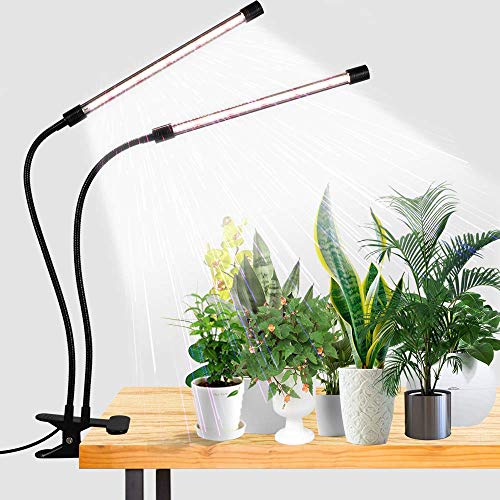
Run a full-spectrum LED grow light for 12 to 14 hours a day, positioned roughly 6 to 12 inches above the cactus. Adjust the distance based on the light’s strength and how the plant responds.
Grow lights are the answer for dim apartments, north windows, and dark winters. Cacti are high-light plants, so a weak decorative bulb will not do much. Choose a light sold for growing plants, not general room lighting.
Setting the Right Distance
Closer means more intense light. Many LED fixtures work well at 6 to 12 inches for cacti, while stronger panels may need 12 to 24 inches.
Watch the plant for a few weeks. Stretching or pale growth means the light should move closer or run longer. Bleaching or yellow-tan patches on the top means it is too close.
Timing and Schedule
A plug-in outlet timer makes the schedule automatic. Twelve to fourteen hours on, followed by a full dark period, works for most desert cacti during the growing season.
In winter, if you want to encourage a rest period, you can shorten the schedule to around 10 to 12 hours while keeping the plant cooler and drier.
Combining Window Light and Grow Lights
You do not have to choose one or the other. A cactus on an east windowsill with a grow light overhead for a few hours in the afternoon and evening often does very well. This approach is especially useful from November through February.
What Are the Signs of Too Little Sunlight?
The main sign of too little light is etiolation: the cactus stretches toward the light, growing thin, pale and narrow at the top. Other signs include leaning, faded color and no flowers.
Low light develops slowly, so it is easy to miss until the damage is visible. Unfortunately, stretched growth does not shrink back once light improves.
Stretching and Narrowing
A round cactus may turn into a cone or bowling-pin shape. A columnar cactus may develop a narrow “waist” where growth occurred in poor light. Spines often grow farther apart along the stretched section.
Pale or Washed-Out Color
Healthy desert cacti usually show a deep green, blue-green or gray-green color. Light-starved plants turn a lighter, yellowish green, especially in new growth at the tip.
Leaning and No Blooms
A cactus that leans strongly in one direction is reaching for a light source. Many cacti also need strong light, plus a cool, dry winter, to set flower buds. A healthy-looking cactus that never blooms is often getting too little light.
What to Do About It
Move the plant to brighter light gradually, over 1 to 2 weeks, to avoid sunburn. New growth will come in normal and compact.
The stretched section remains, though. Some growers cut off the etiolated top and reroot it. The technique is similar to how you would grow peruvian apple cactus from cutting: let the cut end callus, then set it in dry cactus mix.
What Are the Signs of Too Much Sunlight?
Too much sun shows up as sunburn: yellow, white, tan or bleached patches on the side facing the light. Severe burns turn brown and corky, and that scarring is permanent.
Indoors, sunburn usually happens after a sudden change, such as moving a plant from a dim room to a south window or setting it outside for summer without preparation.
Sunburn vs. Sun Stress
Sun stress is a mild, often reversible color change. Many cacti blush red, purple or bronze in strong light, and some forest cacti turn reddish in too much sun. This is a protective response and usually fades in softer light.
True sunburn damages tissue. It appears as patches that look bleached or faded, then may turn tan, brown or crusty. Those areas will not turn green again, though the plant can keep growing around them.
Don’t Confuse Sunburn With Other Problems
Corky brown patches at the base of a cactus can be normal aging in older plants. Soft, dark or mushy spots are more likely rot from overwatering, not sun damage.
White, cottony specks in the spines or along the ribs are not a light problem at all. Check whether your plant has pests; our guide on whether can cactus get mealybugs shows how to spot and treat them.
How to Acclimate a Cactus to More Sun
Increase light in stages over about 1 to 2 weeks. Start with an hour or two of direct sun, or a spot a few feet back from the glass, and move it closer every few days.
The same rule applies to summer outings. A cactus that has spent winter indoors needs shade at first and should be introduced to full outdoor sun slowly, since outdoor sun is far stronger than what comes through a window.
Sophia’s tip: When you move a cactus to a brighter spot, keep it facing the same direction it faced before. The side that is already used to more light handles the change better.
How Do Light Needs Change With the Seasons?
Cacti use more light in spring and summer, when they actively grow, and slow down in fall and winter. Winter light is weaker and shorter, so indoor cacti often need your brightest window or a grow light during these months.
In a city like Chicago, winter days can drop to around 9 hours of daylight, with frequent overcast skies. Even a south window delivers much less usable light from November through February.
Winter: Rest, Not Darkness
Many desert cacti benefit from a winter rest with cool temperatures around 45 to 60°F, very little water, and still as much light as possible. This rest helps many species set flower buds in spring.
Keep cacti away from radiators and forced-air vents, which warm and dry them while light stays low. Warmth plus low light is a classic recipe for stretching, because the plant tries to grow without the energy to grow well.
A spot near cool window glass often works well in winter, as long as leaves and stems do not touch freezing glass on the coldest nights.
Spring and Summer: Full Growth
As days lengthen, increase light and resume regular watering. This is the season when desert cacti can handle the most direct sun.
Watch for sudden heat near glass on summer afternoons, and keep plants out of the direct path of air conditioner drafts, which can cause stress even for tough species.
Forest Cacti and Day Length
Christmas and Thanksgiving cacti set buds in response to longer nights and cooler temperatures in fall. Roughly 12 to 14 hours of uninterrupted darkness each night for about 6 weeks, along with cool temperatures, encourages blooming.
Even a lamp switched on in the evening can interrupt this process. If yours refuses to bloom, move it to a room that stays dark at night from early fall.
Are Cacti Safe Around Pets and Kids?
Most true cacti are not listed as toxic by the ASPCA, and the ASPCA lists Christmas cactus as non-toxic to cats and dogs. The real risk is physical: spines and tiny glochids can lodge in paws, mouths and fingers.
The sunniest spots in many homes, such as windowsills, are also favorite perches for cats. Choose a placement that gives the cactus light without putting it in a pet’s path.
Safer Placement Ideas
- Use a sturdy shelf mounted in front of a south or west window, above pet height.
- Put spiny cacti in heavy pots that will not tip if bumped.
- Keep Opuntia (prickly pear) well out of reach, since its fine glochids are hard to see and remove.
- Grow cacti under a grow light on a high bookshelf if windowsills are pet territory.
Do not confuse cacti with look-alike succulents such as some euphorbias, which have toxic sap. If you are unsure what you have, identify it before placing it near pets or children.
Your Next Steps
- Identify whether your plant is a desert cactus or a forest cactus, since the light target is very different.
- Check your window at morning, midday and afternoon to count how many hours of direct sun actually reach the sill.
- Move desert cacti within about 12 inches of a south or west window, increasing light gradually over 1 to 2 weeks.
- Add a full-spectrum grow light on a 12 to 14 hour timer if your best window gives fewer than 4 direct hours.
- Rotate the pot a quarter turn weekly and watch new growth for stretching or bleached patches.
- In winter, keep cacti bright, cool and dry, away from radiators and heating vents.
Common Questions About Cactus Sunlight Needs
Can a cactus get too much sun indoors?
Yes, especially right after a move to a brighter spot. Sunburn shows as bleached, yellow or tan patches on the side facing the window. Acclimate plants over 1 to 2 weeks and most desert cacti will handle full window sun without trouble.
Can a cactus survive in a room with no windows?
A cactus cannot survive long-term without light, but it can grow well under a strong grow light. Run a full-spectrum LED 12 to 14 hours a day, positioned roughly 6 to 12 inches above the plant. Weak household bulbs will not provide enough intensity.
Why is my cactus turning yellow on one side?
Yellowing on the side facing the window is often sunburn or sun stress from a sudden increase in light. If the yellowing is soft and spreads from the base, overwatering and rot are more likely causes. Check the soil and the texture of the affected area to tell the difference.
Is an east-facing window enough for a cactus?
An east window is ideal for forest cacti such as Christmas cactus. Desert cacti can live there, but they often grow slowly and may stretch, especially in winter. Adding a grow light for a few hours each afternoon usually solves the problem.
Will a stretched cactus go back to normal in better light?
No, etiolated growth does not shrink back once light improves. New growth will come in compact and healthy, leaving a narrow section below it. If the look bothers you, you can cut off the stretched top, let it callus and reroot it.

Hi! I’m Sophia, and I love plants – especially an expert in growing house plants. I stay in Chicago, United States of America, and through my blog and social media platforms, provide tips and tricks on how to grow healthy, vibrant plants indoors. Check out more here.