
Your cactus sits on the windowsill looking exactly the same as it did last month, and you can’t tell if it is thriving or quietly thirsty.
If you keep asking yourself how often should I water my cactus, you are already ahead of most growers, because guessing is how most indoor cacti get into trouble.
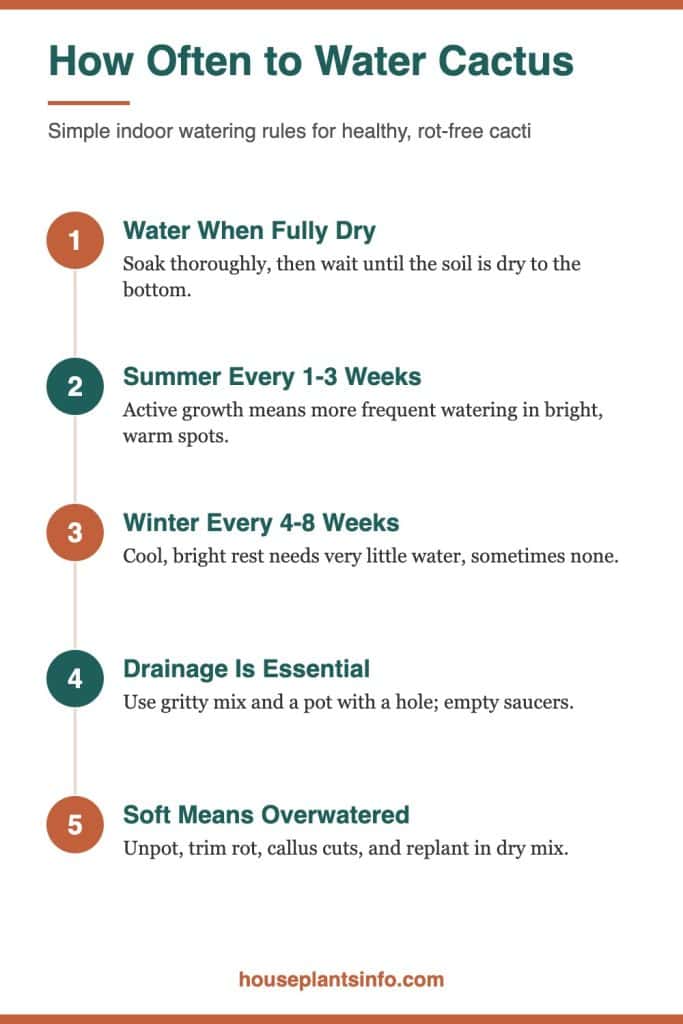
The short version: Water a desert cactus thoroughly, then wait until the soil is completely dry before watering again. Indoors that usually means every 1 to 3 weeks in spring and summer and every 4 to 8 weeks, or less, in winter.
This guide covers indoor schedules, the factors that change them, how to water properly, seasonal shifts, different cactus types, warning signs, and how to rescue an overwatered plant.
At a Glance
| Factor | What it needs |
|---|---|
| Water | Deep soak, then full dry-out between waterings |
| Light | 4 to 6+ hours of direct sun or a strong grow light |
| Soil | Gritty, fast-draining cactus mix |
| Temperature | 65 to 85°F in the growing season, 45 to 60°F in winter rest |
| Humidity | Low; average dry indoor air is fine |
| Pet safety | Spines are the main hazard; check the species |
| Difficulty | Easy, as long as you don’t overwater |
How Often Should I Water My Cactus Indoors?
Most indoor desert cacti need water every 1 to 3 weeks during spring and summer, and every 4 to 8 weeks during winter. The real rule is simpler than any calendar: water only when the soil is dry all the way through.
A Starting Schedule by Season
Use these ranges as a starting point, then adjust to what your soil tells you.
| Season | Typical indoor frequency | Notes |
|---|---|---|
| Spring | Every 10 to 21 days | Increase as growth resumes |
| Summer | Every 7 to 14 days | Small pots in hot south windows dry fastest |
| Fall | Every 14 to 28 days | Taper as days shorten |
| Winter | Every 4 to 8 weeks, or not at all | Cool, bright rest period |
Small cacti in 2 to 4 inch pots dry out much faster than large specimens in 10 inch pots. A tiny cactus in terracotta on a sunny sill might need water weekly in July, while a big columnar cactus in plastic could go a month.
How to Check the Soil Before You Water
Push a wooden skewer or chopstick down to the bottom of the pot, leave it for a minute, and pull it out. If it comes out damp, dark, or with soil clinging to it, wait several more days.
A soil moisture meter can help with larger pots, though readings in gritty cactus mix are sometimes unreliable. I prefer combining a meter or skewer with lifting the pot, since a fully dry pot feels noticeably lighter.

Sophia’s tip: Right after a thorough watering, lift the pot and remember how heavy it feels. When it feels distinctly lighter and the skewer comes out clean, it’s time to water again.
Why Does Controlling Water Matter So Much?
Cacti are built to survive long droughts, so too little water rarely kills them quickly, while too much water can rot roots in days. Controlling your watering is the single biggest factor in keeping an indoor cactus alive.
Built for Storage, Not Constant Moisture
A cactus stores water in thick, spongy stem tissue protected by a waxy skin, and its spines help reduce water loss.
If you’re curious about the mechanics, this guide on how cactus store water explains the tissue and pleated ribs that let the stem swell and shrink.
That stored water is meant for the plant, not for people. Despite survival myths, it’s generally not a good idea to drink water straight from a cactus, since many species contain bitter, irritating compounds.
Why Roots Rot So Fast
Cactus roots evolved in loose, airy soil that dries within days after rain. When they sit in wet soil, they can’t get oxygen, and fungi and bacteria move in.
Rot often starts below the soil line where you can’t see it. By the time the stem turns soft, much of the root system may already be gone.
Drought Stress Is Slower and Reversible
An underwatered cactus shrinks, wrinkles, or leans, but it usually plumps back up within days of a good soak.
The internal water reserves that survival guides describe when explaining how to get water from a cactus are exactly what carry your plant through a missed watering.
What Changes Your Cactus Watering Schedule at Home?
Light, pot type, soil mix, temperature, and plant size all change how fast the soil dries. Two identical cacti in different spots of the same apartment can need very different schedules.
Light and Window Direction
More light means faster growth and faster water use. A cactus right against a south or west window dries out much quicker than one 4 feet back from an east window.
North windows rarely give a desert cactus enough light. In low light the plant barely uses water, so the soil stays wet longer and rot risk climbs.
A grow light kept 6 to 12 inches above the plant for 12 to 14 hours a day solves this.

Pot Material, Size, and Drainage
Unglazed terracotta pulls moisture out through its walls, so soil dries faster than in plastic or glazed ceramic. For most indoor growers, terracotta is the safer choice.
Every cactus pot needs a drainage hole. A pot without one traps water at the bottom, and no watering schedule can fix that. Choose a pot only 1 to 2 inches wider than the root ball, since excess soil holds extra moisture.
Soil Mix
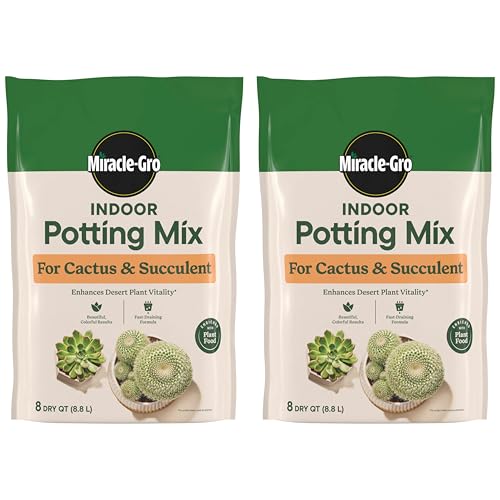
Use a fast-draining cactus mix, ideally amended with extra perlite, pumice, or coarse grit to make up roughly 40 to 60 percent of the volume. Regular potting soil holds too much water and stays soggy for days.
Heat, Air, and Drafts
Radiators and forced-air heat dry the air and the soil quickly, but they also confuse the plant’s winter rest. A cactus on a sill above a radiator may need water more often in winter than one in a cool, bright window.
Cold drafts work the other way. A cactus near a leaky window or AC vent stays cooler, uses less water, and is more vulnerable to rot if watered on a summer schedule.
How Do You Water a Cactus the Right Way?
Water deeply until it drains from the bottom, empty the saucer, and then let the soil dry completely. This “soak and dry” method copies the heavy desert rains followed by long dry spells that cacti evolved with.
The Soak and Dry Method
Pour room-temperature water slowly over the soil surface until it runs freely out the drainage hole. Wait a minute, then water again so the whole root ball is moistened, not just one channel.
Let the pot drain for 10 to 15 minutes, then dump any water left in the saucer or decorative cover pot. Standing water is one of the most common causes of indoor root rot.
Bottom Watering as an Alternative
You can also set the pot in a few inches of water for 15 to 30 minutes until the top of the soil feels damp. This works well for spiny or densely clustered cacti where it’s hard to reach the soil.
Flush from the top every few months so mineral salts don’t build up. A white crust on the soil or pot rim is a sign it’s time.
Mistakes That Cause Trouble
- Small sips every few days, which keep the top wet and the roots shallow
- Misting, which raises surface humidity without reaching the roots
- Watering on a fixed calendar without checking the soil
- Using very cold water straight from the tap in winter
- Leaving water pooled in the crown or between clustered stems
Sophia’s tip: Water in the morning so any splashes on the stem dry during the day. In a cool winter apartment, damp stems overnight invite fungal spots.
How Should You Change Watering Through the Seasons?
Water most in spring and summer when your cactus is actively growing, then cut back sharply in fall and winter. Most desert cacti rest during the cooler, darker months and need very little water.
Spring and Summer Growth
Look for new spines, fresh green at the tip, or flower buds as signs that growth has started. That’s your cue to shift from winter watering to a regular soak-and-dry rhythm.
If you move your cactus outdoors or to a balcony for summer, expect it to dry out faster in heat and wind. Acclimate it to direct sun over 1 to 2 weeks to avoid sunburn.
Fall Tapering
As days shorten in September and October, stretch the time between waterings gradually. This helps the plant harden its tissue before winter.
Winter Rest
In a cool, bright spot around 45 to 60°F, many desert cacti need water only once a month or less, and some growers keep them almost dry until spring. This cool, dry rest also encourages many species to bloom.
Chicago-style apartments with steam radiators are rarely that cool. If your cactus sits in a warm room around 70°F, it will keep using some water, so check the soil every couple of weeks rather than stopping completely.
Do All Cacti Need the Same Watering?
No. Desert cacti like barrel, bunny ear, and columnar types want full dry-outs, while forest cacti such as Christmas and Easter cactus need more frequent, lighter watering. Identifying your type makes the schedule much clearer.
Desert Cacti
Most round, columnar, and paddle-shaped cacti with heavy spines are desert species. They follow the soak-and-dry schedule in this guide closely.
Large columnar types hold a lot of water in their stems and can go longer between waterings. For a closer look at one popular species, see how often should I water a Peruvian apple cactus for size-specific advice.
Forest and Holiday Cacti
Christmas, Thanksgiving, and Easter cacti grow on trees in humid forests, not in deserts. They have flat, segmented stems and few or no sharp spines.
These plants like their soil to dry only in the top inch or so before watering, which often means every 1 to 2 weeks. Read how often do you water a Christmas cactus for a detailed schedule around its bloom cycle.

Quick Comparison
| Cactus type | When to water | Winter approach |
|---|---|---|
| Desert (barrel, columnar, Opuntia) | Soil fully dry | Very sparse, cool rest |
| Small or young desert cacti | Soil fully dry, checked more often | Sparse but not bone dry for months |
| Forest (Christmas, Easter) | Top inch dry | Slightly reduced, never fully dry |
| Grafted cacti | Soil fully dry | Light, as the top part can rot easily |
Pet Safety
The ASPCA lists Christmas cactus as non-toxic to cats and dogs. For desert cacti, the bigger risk is spines, which can injure mouths and paws, so keep spiny plants out of reach of pets and kids.
Is Your Cactus Overwatered or Underwatered? Signs and Fixes
Overwatered cacti turn soft, mushy, yellow, or black near the base, while underwatered cacti look shriveled, wrinkled, or deflated but stay firm. Checking the soil and squeezing the stem gently usually tells you which problem you have.
Signs of Too Much Water
- Soft, squishy stem, especially at the soil line
- Yellow, translucent, or brown-black patches
- Stem leaning or toppling because roots have rotted
- Sour or musty smell from the soil
- Fungus gnats hovering over constantly damp soil
Signs of Too Little Water
- Wrinkled, puckered, or shrinking stem
- Ribs pulled in tighter than usual
- Firm texture despite the shriveled look
- Soil pulling away from the pot edges
- Dull or slightly brown color in very dry conditions
What to Do
| Symptom | Likely cause | Fix |
|---|---|---|
| Wrinkled but firm | Underwatering | Soak thoroughly; expect plumping in 2 to 7 days |
| Soft base, wet soil | Overwatering, root rot | Unpot and inspect roots (see next section) |
| Pale, stretched growth | Too little light | Move to a brighter window or add a grow light |
| Corky brown patches, firm | Age, sunburn, or old damage | Usually harmless; adjust light if new |
If a wrinkled cactus doesn’t firm up after a deep watering, check the roots. A rotted root system can’t absorb water, so overwatering sometimes looks like thirst.
How Do You Save an Overwatered Cactus?
Stop watering, remove the cactus from its pot, cut away any rotted roots or stem, let the cuts dry for several days, and replant in dry, fresh cactus mix. Acting quickly gives the plant the best chance.
Step 1: Unpot and Inspect
Wrap the cactus in folded newspaper or use thick gloves, then ease it out of the pot. Shake or rinse off the old soil so you can see every root.
Healthy roots are firm and white to tan. Rotted roots are brown or black, mushy, and slip off easily when pulled.
Step 2: Cut Away the Rot
Use a clean, sharp knife wiped with rubbing alcohol. Trim off all soft roots, and if rot has entered the stem, slice off thin sections until the cut surface is clean and pale green with no brown streaks.
Wipe the blade between cuts so you don’t spread infection to healthy tissue.
Step 3: Let It Callus
Set the cactus upright in a bright spot out of direct sun for 3 to 14 days, until the cut ends form a dry, firm callus. Larger cuts need longer.
Sophia’s tip: Rest the cactus across the rim of an empty pot or jar while it callouses so the cut end gets airflow and doesn’t sit flat on a surface.
Step 4: Replant and Wait
Pot it into dry, fresh cactus mix in a clean pot with a drainage hole. Don’t water for about 1 to 2 weeks so new roots grow in search of moisture.
After that, water lightly and resume the soak-and-dry schedule once you see new growth. If only the top of the stem is healthy, you can cut it off, callus it, and root it as a new plant.
Your Next Steps
- Identify whether your plant is a desert cactus or a forest cactus like a Christmas cactus.
- Check the soil today with a wooden skewer and lift the pot to learn its dry weight.
- Confirm the pot has a drainage hole and empty any saucer or cover pot after watering.
- Move your cactus to your brightest window, or add a grow light if you only have north light.
- Cut back watering from fall through winter, especially if the plant sits in a cool spot.
- Gently squeeze the base of the stem every few weeks to catch softness early.
Common Questions About Watering Cactus
Can I water my cactus with tap water?
Yes, most tap water is fine for cacti. Let it reach room temperature first, and flush the soil every few months if you notice white mineral crust on the soil or pot.
Should I water a cactus after repotting?
Wait about 1 week after repotting before watering, so any broken roots can heal. Repotting into dry mix and holding off on water helps prevent rot.
How much water should I give my cactus at once?
Give enough that water drains freely from the bottom of the pot. A full soak followed by a full dry-out is much safer than frequent small sips.
Do cacti need water in winter?
Most desert cacti need very little water in winter, often once every 4 to 8 weeks in a cool spot. In a warm apartment near radiators, check the soil more often since the plant may still use some water.
How long can a cactus go without water?
A healthy, established desert cactus can usually go several weeks to a couple of months without water indoors, especially in winter. Small or young cacti have smaller reserves and should be checked more often.

Hi! I’m Sophia, and I love plants – especially an expert in growing house plants. I stay in Chicago, United States of America, and through my blog and social media platforms, provide tips and tricks on how to grow healthy, vibrant plants indoors. Check out more here.