
Your spring cactus sits on a windowsill, its flat, scalloped segments arching over the pot edge, with no buds in sight.
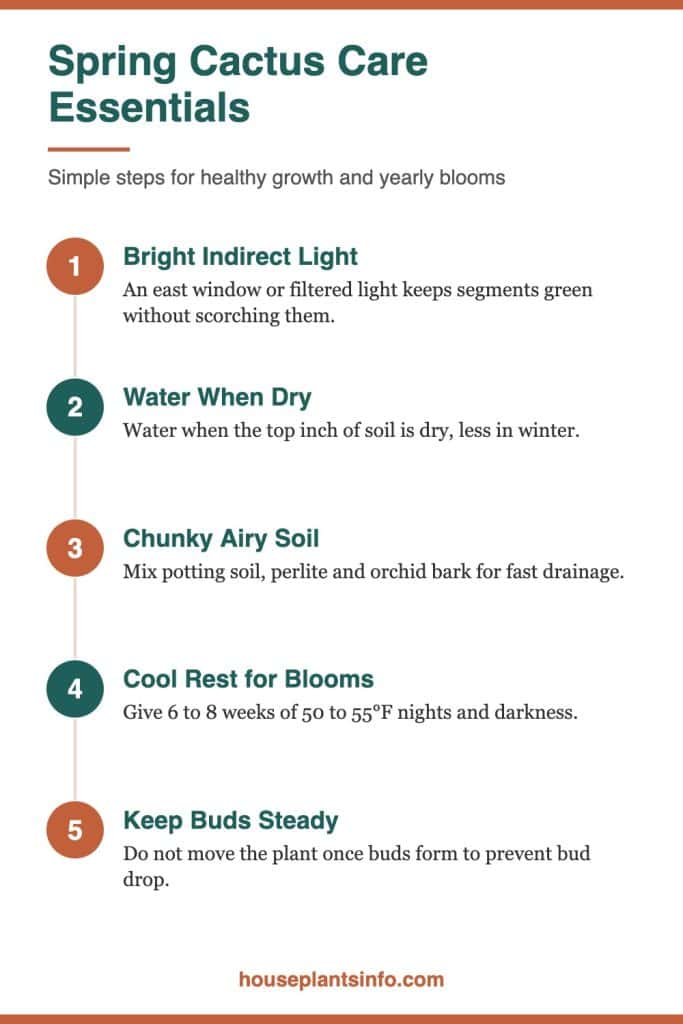
The short version: Give a spring cactus bright, indirect light, water when the top inch of soil is dry, and keep it in a fast-draining, slightly acidic mix.
For flowers, it needs 6 to 8 weeks of cool nights, around 50 to 55°F, and long dark periods in late fall and winter.
This guide covers how to care for a spring cactus through the year, including light, watering, soil, reblooming, common problems, propagation and pet safety.
At a Glance
| Factor | What it needs |
|---|---|
| Light | Bright, indirect light; an east window is ideal |
| Water | Water when the top 1 inch of soil is dry; less in fall and winter |
| Humidity | 50 to 60 percent preferred |
| Temperature | 65 to 75°F most of the year; 50 to 55°F nights to set buds |
| Soil | Chunky, fast-draining mix with a pH around 5.5 to 6.5 |
| Pet safety | ASPCA lists Easter cactus as non-toxic to cats and dogs |
| Difficulty | Easy to moderate; reblooming takes planning |
What Kind of Light Does a Spring Cactus Need?
A spring cactus needs bright, indirect light for most of the day. It grows naturally under the canopy of Brazilian forests, so direct midday sun through glass can scorch it.
Choosing the Right Window
An east-facing window is the best fit in most homes. It gives gentle morning sun and bright light for the rest of the day without the heat of an afternoon exposure.
A north window works if the plant sits within 1 to 2 feet of the glass, though growth may be slower and blooms fewer. Farther back than that, the light drops quickly.
South and west windows are often too strong in summer. Set the plant 3 to 5 feet back from the glass, or hang a sheer curtain to soften the light.
Reading the Leaves for Light Problems
The segments tell you a lot. Healthy segments are a medium to deep green and feel firm.
- Reddish or purple segments often mean too much direct sun or cold stress.
- Pale, yellowish segments can point to sun bleaching.
- Long, thin, stretched new growth means the plant wants more light.
- A plant that never sets buds may be getting too little light overall.
Supplementing With a Grow Light
In a Chicago winter, daylight is short and weak, even in an east window. A full-spectrum LED grow light placed 6 to 12 inches above the plant can fill the gap during spring and summer growth.

Turn the grow light off in fall, though. During the bud-setting period, the plant needs long, uninterrupted nights, and extra light works against you.
Sophia’s tip: If you are unsure whether a spot is bright enough, use a light meter app on your phone at noon. Aim for roughly 1,000 to 2,500 foot-candles of filtered light for steady growth without scorching.
How Often Should You Water a Spring Cactus?
Water a spring cactus when the top inch of soil feels dry, which is often every 7 to 14 days in spring and summer. It is not a desert cactus, so it should never stay bone dry for long.
A Watering Routine That Works
Push a finger into the soil up to the first knuckle. If it feels dry, water thoroughly until it drains from the bottom, then empty the saucer after 10 to 15 minutes.
A soil moisture meter can help if you tend to second-guess yourself. Water when the reading reaches the low end of “moist,” not when it reads fully dry.

Use room-temperature water. Cold water straight from the tap can shock roots, especially in winter.
Adjusting Through the Seasons
Watering needs shift through the year, and following the season matters more than following a calendar.
| Season | Growth stage | Watering approach |
|---|---|---|
| Spring | Flowering | Keep evenly moist; do not let it dry out fully |
| Summer | Active growth | Water when the top inch is dry |
| Early fall | Slowing growth | Let the top 1 to 2 inches dry |
| Late fall to winter | Bud setting rest | Water lightly, just enough to keep segments firm |
Overwatering Versus Underwatering
Both problems cause limp, wrinkled segments, which confuses many growers. The difference is in the soil and roots.
- Wet soil plus limp, soft segments usually means overwatering or root rot.
- Dry soil plus thin, shriveled segments means the plant is thirsty.
- A sour smell or black, mushy roots confirm rot.
The rescue steps for rot are similar across holiday cacti. This guide to overwatered Christmas cactus care walks through trimming damaged roots and repotting, and the same process applies to a spring cactus.

What Humidity and Temperature Does a Spring Cactus Prefer?
A spring cactus does best at 65 to 75°F with humidity around 50 to 60 percent. It tolerates average home conditions, but dry winter air and heat sources can cause stress.
Keeping Humidity Up Indoors
Forced-air heat and radiators can drop indoor humidity below 30 percent in winter. That dry air can lead to shriveled segments and dropped buds.
Simple fixes help:
- Run a small humidifier nearby during heating season.
- Set the pot on a pebble tray filled with water, keeping the pot base above the water line.
- Group the plant with other houseplants to create a slightly moister pocket of air.
Misting gives only a brief bump in humidity. I do not rely on it as the main strategy.
Temperature Ranges to Aim For
Daytime temperatures between 65 and 75°F suit active growth. Nighttime drops of 10 degrees or so are welcome.
Keep the plant above 45°F. Temperatures below that can damage segments, and frost will kill it.
Above 85°F, growth slows and the plant may wilt. Move it away from hot, sunny glass in summer.
Drafts and Heat Sources
Keep the plant at least 3 feet from radiators, heating vents and space heaters. Hot, dry air blowing on it dries the segments and can make buds fall.
AC vents cause similar trouble in summer. A steady blast of cold air can stress the plant and stall growth.
Which Soil, Pot and Fertilizer Work Best?
Use a chunky, fast-draining mix, a pot with drainage holes, and a balanced fertilizer at half strength during growth. The roots need air as much as moisture.
Building a Good Potting Mix
Spring cactus is an epiphyte, meaning it grows on trees in the wild. Its roots are adapted to loose, airy material, not dense soil.
A reliable homemade blend:
- 2 parts quality potting mix
- 1 part perlite or pumice
- 1 part orchid bark
A commercial cactus mix alone is often too gritty and drains too fast for this plant. Mixing it with some potting soil and bark gives a better balance. Aim for a slightly acidic pH of about 5.5 to 6.5.
Choosing a Pot
A drainage hole is not optional. Terracotta dries faster and suits people who tend to overwater, while plastic holds moisture longer.
Spring cactus likes to be slightly root-bound. Choose a pot only 1 to 2 inches wider than the root ball when you repot.
Feeding Schedule
Fertilize after flowering ends, from late spring through summer. A balanced houseplant fertilizer, such as 10-10-10 or 20-20-20, diluted to half strength every 2 to 4 weeks, works well.
Stop feeding by early fall. Fertilizing during the rest period can encourage leafy growth instead of buds.
Some growers add a pinch of Epsom salt, about 1 teaspoon per gallon of water, once a month in summer. Holiday cacti have a reputation for liking extra magnesium, but this is optional, and you should skip it if your fertilizer already contains magnesium.
How to Care for a Spring Cactus So It Blooms Again
To rebloom, a spring cactus needs a cool, dim rest period in late fall and winter. Expect 6 to 8 weeks of cool nights, long darkness and reduced water to trigger buds.
Setting Up the Rest Period
Start the rest period around October or November. The goal is to mimic the conditions that signal spring is coming.
- Keep nights between 50 and 55°F if you can.
- Give 12 to 14 hours of uninterrupted darkness each night.
- Water only enough to keep segments from shriveling.
- Stop all fertilizer.
An unheated spare room, an enclosed porch that stays above 45°F, or a cool spot near a window away from radiators can work. Even streetlight or a lamp turned on for an hour can interrupt the dark period.
Sophia’s tip: If your apartment stays warm, move the plant into a closet from about 6 p.m. to 8 a.m. each night, then back to its bright window by day. Set a phone reminder so you do not skip nights.
When Buds Appear
Buds usually form by late winter. Once you see them, gradually return the plant to normal watering and warmer temperatures.
Avoid moving the plant to a new spot once buds have set. Sudden changes in light, temperature or orientation are a common cause of bud drop.
During and After Flowering
Spring cactus typically blooms from March through May. Flowers are star-shaped and come in red, pink, orange, lavender and white, often lasting a few days each over several weeks.
Keep the soil evenly moist while it blooms. After flowering finishes, give the plant a month or so of lighter watering before resuming regular summer care and feeding.
Spring Cactus vs. Christmas Cactus: How Do You Tell Them Apart?
A spring cactus has rounded segment edges with small bristles at the tips and star-shaped flowers that open in spring. Christmas and Thanksgiving cacti have different segment shapes and tubular flowers that bloom in late fall and winter.
Comparing the Three Holiday Cacti
Many plants sold as “holiday cactus” are mislabeled. Looking closely at segments and flowers is the most reliable way to identify yours.
| Feature | Spring (Easter) cactus | Thanksgiving cactus | Christmas cactus |
|---|---|---|---|
| Segment edges | Rounded, scalloped | Sharp, claw-like points | Rounded, gentle scallops |
| Bristles | Fine bristles at segment tips | None noticeable | None noticeable |
| Flower shape | Star-shaped, open, symmetrical | Tubular, angled | Tubular, hanging |
| Bloom time | March to May | November | December to January |
| Pollen color | Yellow | Yellow | Pinkish purple |
The botanical name has shifted over the years. You may see spring cactus labeled as Rhipsalidopsis gaertneri, Hatiora gaertneri or Schlumbergera gaertneri.
How It Differs From Desert Cacti
Spring cactus has no real spines and needs more water and less sun than desert species. Treating it like a desert cactus usually leads to sunburn and dehydration.
Desert types have very different needs. For contrast, see how to care for a Peruvian apple cactus, a sun-loving columnar species, or grow and care for Eve’s needle cactus, which handles far drier conditions.
Grafted novelty cacti are different again. If you have one alongside your spring cactus, here is how to care for a moon cactus.
Is a Spring Cactus Safe for Pets?
The ASPCA lists Easter cactus as non-toxic to cats and dogs. Eating segments can still cause mild stomach upset, so keep the plant out of reach of pets and kids who like to chew.
What Are the Most Common Spring Cactus Problems and Their Fixes?
Most spring cactus problems trace back to watering, light or sudden changes. Match the symptom to the cause below, then fix the condition rather than just the symptom.
Bud Drop
Buds that fall before opening are the most frustrating issue. Common causes include moving the plant, temperature swings, dry air, or letting the soil dry out completely.
Fix: Keep the plant in one spot once buds form. Maintain even moisture, steady temperatures, and keep it away from vents and radiators.
Limp or Wrinkled Segments
Check the soil first. If it is soggy, suspect overwatering or root rot; if it is dry, the plant is underwatered.
Fix: For dry soil, water thoroughly and let it drain. For wet soil, unpot the plant, trim black or mushy roots, and repot in fresh, dry mix.
Segments Falling Off
Dropping whole segments usually signals root stress from rot, severe drought, or a sudden cold draft. Healthy segments that fall off can be rooted as cuttings.
Fix: Inspect the roots and correct watering. Move the plant away from cold windows in winter.
Red or Purple Segments
This color change is a stress response. Causes include too much direct sun, cold temperatures, or a nutrient shortage, often magnesium.
Fix: Move the plant to softer light and keep it above 50°F. Resume regular feeding during the growing season.
Pests
Spring cactus can attract a few common houseplant pests.
- Mealybugs: white, cottony clumps in segment joints. Dab them with rubbing alcohol on a cotton swab.
- Spider mites: fine webbing and speckled segments, often in dry winter air. Rinse the plant and raise humidity.
- Scale: small brown bumps on segments. Scrape off and treat with insecticidal soap.
- Fungus gnats: tiny flies around the soil, a sign it stays too wet. Let the top inch dry between waterings.
Quick Troubleshooting Reference
| Symptom | Likely cause | Fix |
|---|---|---|
| Buds fall off | Moving, drafts, dry soil | Keep in place, steady moisture and temperature |
| Soft, limp segments with wet soil | Overwatering, root rot | Trim rotted roots, repot in dry mix |
| Thin, wrinkled segments with dry soil | Underwatering | Water thoroughly, check more often |
| Red or purple tint | Strong sun or cold | Softer light, warmer spot |
| No flowers | No cool rest period | Provide 6 to 8 weeks of cool, dark nights |
| Stretched growth | Low light | Move closer to a window or add a grow light |
How Do You Propagate and Repot a Spring Cactus?
Propagate a spring cactus from segment cuttings in late spring or early summer, after flowering. Repot every 2 to 3 years at the same time, when the plant is actively growing.
Taking and Rooting Cuttings
Gently twist off a section of 2 to 4 connected segments at a joint. Clean cuts at the joint root more reliably than torn pieces.
Let the cuttings sit in a dry, shaded spot for 1 to 3 days until the base calluses. This step helps prevent rot.
Push the bottom segment about 1/2 to 1 inch deep into a moist, airy mix. Keep it in bright, indirect light and water lightly when the surface dries.
Roots usually form in 2 to 6 weeks. A gentle tug that meets resistance tells you roots have formed.
Callusing cuttings before planting is a common step for many cacti. The same principle appears when you grow Peruvian apple cactus from cutting, though that species needs a longer drying time and much more sun.
Sophia’s tip: Plant three or four cuttings in the same small pot rather than one. The pot fills in faster, and you get a fuller plant with more blooms sooner.
Repotting Step by Step
Repot only when roots circle the pot or poke out of the drainage hole. Spring cactus blooms better when slightly snug.
- Water a day before so the root ball holds together.
- Ease the plant out and loosen the outer roots gently.
- Trim any dark, mushy roots with clean scissors.
- Set it in a pot 1 to 2 inches wider, at the same depth.
- Fill with fresh mix and wait about a week before watering.
That short wait lets any damaged roots heal before they sit in moist soil.
Pruning for Shape
Pruning is optional but helpful. Twisting off a segment or two at the tips after flowering encourages branching and a fuller plant.
Never prune during the rest period or after buds appear. You would be removing next season’s flowers.
Your Next Steps
- Move your spring cactus to an east window, or 3 to 5 feet back from a south or west one.
- Check the soil with your finger before each watering and water only when the top inch is dry.
- Repot into a chunky mix of potting soil, perlite and orchid bark if water sits on the surface.
- Mark your calendar for October to start 6 to 8 weeks of cool, dark nights.
- Pull the plant at least 3 feet away from radiators, vents and AC drafts.
- Twist off a few segments after flowering to start new plants.
Common Questions About Spring Cactus Care
Why is my spring cactus not blooming?
The most common reason is a missing rest period. Without 6 to 8 weeks of cool nights around 50 to 55°F and long darkness in late fall and winter, the plant will not set buds. Low light during the growing season can also reduce flowering.
Is a spring cactus the same as an Easter cactus?
Yes, spring cactus and Easter cactus are common names for the same plant. It blooms in spring, often around Easter, and has star-shaped flowers and bristle-tipped segments.
Can a spring cactus live outside in summer?
Yes, it can spend summer outdoors in a shaded or dappled spot once nights stay above 50°F. Keep it out of direct afternoon sun and bring it inside before temperatures drop below 45°F, checking for pests first.
How long does a spring cactus live?
With good care, a spring cactus can live for decades. Repotting every few years, taking cuttings, and avoiding root rot are the best ways to keep it going for the long term.
Should I water my spring cactus while it is blooming?
Yes, keep the soil evenly moist during flowering. Letting it dry out completely while in bloom can cause flowers and buds to drop early.

Hi! I’m Sophia, and I love plants – especially an expert in growing house plants. I stay in Chicago, United States of America, and through my blog and social media platforms, provide tips and tricks on how to grow healthy, vibrant plants indoors. Check out more here.