
Your Christmas cactus sits on the windowsill with the same few drooping stems it had last year, healthy enough but stubbornly small.
If you want to know how to grow a bigger Christmas cactus, the answer lies in a handful of changes to light, water, feeding, pruning and potting that work together during the growing season.
The short version: Give your plant bright, indirect light, water when the top inch of soil dries, and feed it with a diluted balanced fertilizer from spring through late summer.
Pinch back stem tips after blooming so each one branches, and keep it slightly snug in a fast-draining pot so it puts energy into new segments.
This guide covers why growth stalls, the conditions that drive size, pruning and propagation for fullness, and how to fix problems that hold a plant back.
At a Glance
| Factor | What it needs |
|---|---|
| Light | Bright, indirect light; an east window or 2 to 3 feet from a south or west window |
| Water | When the top 1 inch of soil is dry; less in fall and right after flowering |
| Humidity | 40% to 60%; higher than most cacti prefer |
| Temperature | 60°F to 75°F for growth; 50°F to 55°F nights in fall to set buds |
| Soil | Fast-draining mix of potting soil, perlite and orchid bark |
| Pet safety | Non-toxic to cats and dogs per the ASPCA |
| Difficulty | Easy to moderate |
Why Isn’t My Christmas Cactus Getting Bigger?
Most Christmas cacti stay small because they get too little light, too little food, or no pruning, so they never branch. Some are simply resting, since this plant grows mainly in spring and summer and barely adds segments the rest of the year.
It is not a desert cactus
The Christmas cactus (Schlumbergera) is an epiphyte from the humid mountain forests of coastal Brazil. In the wild it grows on tree branches in filtered light, with frequent rain and quick drainage around its roots.
That background explains most growth problems indoors. Treating it like a desert cactus, with blazing sun and long dry spells, leads to stunted, reddish stems. Treating it like a typical tropical plant, with dense wet soil, leads to root rot.
Growth happens in a short window
New segments appear mostly from late spring through summer, after the plant finishes blooming and rests for a few weeks. If conditions are poor during those months, you lose a full year of size.
In fall the plant shifts its energy into bud production. In winter it blooms. So when you notice it “not growing” in November, that is normal, not a sign of trouble.
The common growth blockers
- Low light from a north window or a spot far from the glass
- Soil that stays wet, which damages fine roots
- No fertilizer during the growing season
- Single long stems that were never pinched to branch
- A plant stressed by radiator heat or cold drafts
A soil moisture meter takes the guesswork out of watering, which is where many people go wrong.

If your best window is dim, a full-spectrum grow light placed 12 to 18 inches above the plant for 10 to 12 hours a day can supply the energy it needs for new growth from spring through summer.
How to Grow a Bigger Christmas Cactus With the Right Light
Bright, indirect light is the single biggest driver of size. A plant in good light produces thicker, larger segments and more of them, while a plant in dim light grows slowly and stretches.
Choosing the window
An east-facing window is ideal in most homes, since the morning sun is gentle. A south or west window works if you set the plant 2 to 3 feet back from the glass or behind a sheer curtain.
North windows rarely provide enough light for real growth in a Chicago-style climate. They can keep a plant alive, but expect little new size without a grow light.

Signs the light is wrong
Segments that turn red, purple or yellowish and feel thin often mean too much direct sun. Leggy stems with small, pale new segments and long gaps usually mean too little light.
Healthy segments in good light are a rich medium green and feel firm. That color is your best everyday gauge.
Summer outdoors and seasonal shifts
Many growers move the plant to a shaded porch or balcony from late spring until nighttime temperatures drop below 50°F. Bright shade outdoors often produces a strong flush of growth.
Keep it out of direct afternoon sun, which scorches the flat stems. Bring it in before the first cold night, and check for pests before it goes back on the sill.
Sophia’s tip: Rotate the pot a quarter turn every week or two during spring and summer. The plant grows toward the light, and regular turning gives you an even, rounded shape instead of a lopsided one.
How Much Water Does a Growing Christmas Cactus Need?
Water thoroughly whenever the top inch of soil feels dry, which is often every 7 to 14 days in spring and summer. The goal is evenly moist roots during growth without soggy soil.
Watering during the growing season
Pour water slowly until it drains from the bottom holes, then empty the saucer after 15 minutes. Standing water at the base is a fast route to root rot.
Warm apartments with forced-air heat or AC can dry soil faster than you expect. Check with your finger or a meter rather than following a fixed calendar.
When to cut back
Water less in fall, roughly when the top half of the soil is dry, to help the plant set buds. Keep it slightly more moist while buds and flowers are open, since severe drying makes buds drop.
After flowering, give the plant a rest of about 4 to 6 weeks with lighter watering. Resume normal watering when you see new growth at the stem tips.
Humidity indoors
This plant prefers 40% to 60% humidity, and winter indoor air in a heated apartment can fall below 30%. Low humidity causes shriveled segments and slow growth.
Group it with other plants, set the pot on a pebble tray with water below the pot’s base, or run a room humidifier nearby. Keep it at least a few feet from radiators and heating vents.
What Soil and Pot Help a Christmas Cactus Grow Larger?
A loose, fast-draining mix and a pot only slightly larger than the root ball give the best growth. Roots need air as much as water, and an oversized pot keeps soil wet too long.
The right mix
A good homemade blend is roughly equal parts regular potting soil, perlite and fine orchid bark. Store-bought cactus mix works too, especially with a handful of bark added for structure and air pockets.
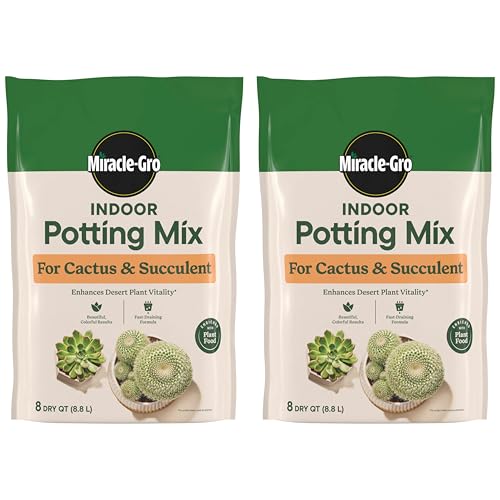
Avoid heavy garden soil or plain moisture-retaining potting mix. Both hold water around the roots and lead to rot, the most common reason these plants decline.
Pot size and material
Christmas cacti grow well when slightly root-bound. When you move up, choose a pot only 1 to 2 inches wider than the current one.
Terra cotta dries faster and suits people who tend to overwater. Plastic or glazed ceramic holds moisture longer, which helps in very dry rooms. Any pot must have drainage holes.
Timing a repot
Repot every 2 to 3 years, or when roots fill the pot and water runs straight through. Do it in spring, after the post-bloom rest, so the plant can settle in during peak growth.
For details on signs and seasons, read this guide on when to transplant Christmas cactus. Avoid repotting in fall, when disturbance can cause buds to drop.

How Should You Feed a Christmas Cactus for More Growth?
Feed every 2 to 4 weeks from spring through late summer with a balanced, water-soluble houseplant fertilizer at half strength. Regular light feeding during growth produces more and larger segments.
What to use
A balanced formula such as 20-20-20 or 10-10-10, diluted to half the label rate, works well. A fertilizer labeled for blooming plants can also be used, as long as you dilute it.
Christmas cacti are sensitive to fertilizer salts. Always water the soil first if it is dry, then feed, so you do not burn the roots.
The magnesium question
Many growers give a monthly dose of Epsom salt, 1 teaspoon per gallon of water, during the growing season. These plants have a relatively high magnesium need, and deficiency can show as reddish or yellowing segments.
Do not apply it in the same week as regular fertilizer. Alternate them so the plant gets nutrients without salt buildup.
When to stop
Stop feeding in late summer or early fall, around the start of September. This encourages the plant to stop pushing leafy growth and focus on bud set.
Resume after the rest period that follows blooming. For a season-by-season schedule, see this article on when to fertilize Christmas cactus.
Sophia’s tip: Every few months, flush the pot by running plain water through it for a minute or two in the sink. This washes out built-up fertilizer salts, which you may see as a white crust on the soil or pot rim.
Does Pruning Make a Christmas Cactus Fuller?
Yes. Pruning is the fastest way to make a Christmas cactus look bigger, because each cut stem tip typically produces two or more new branches. Over a few seasons, that turns a sparse plant into a dense, wide mound.
When to prune
Prune in late winter or spring, a few weeks after flowering ends and before strong new growth begins. That timing gives the new branches the whole growing season to mature and set buds.
Avoid pruning after late summer. Removing tips in fall cuts off the segments that would have produced flowers. For more on the post-bloom period, read what to do with Christmas cactus after flowering.
How to do it
Hold the stem below the joint and gently twist off one to three segments at a natural joint. You can also use clean, sharp scissors or a knife to cut right at the joint.
Remove up to about a third of the plant in one season. Focus on long, straggly stems and any that cross or crowd the center.
Shaping for size
Pinch every stem tip lightly if you want a dense, even plant. Prune longer stems harder if you want to balance a lopsided shape.
Keep the removed pieces. Healthy segments root easily and are the best material for filling in bare spots, as the next section explains.
How Do You Fill Out a Sparse Plant With Cuttings?
Rooting cuttings and planting them back into the same pot is the quickest way to add bulk. A plant with five or six rooted stems looks much fuller within a year than a single stem would.
Preparing the cuttings
Use cuttings of 2 to 4 segments each, taken from healthy, firm growth. Let them dry in a shaded spot for 1 to 2 days so the cut end calluses.
This callusing step matters for most succulent stems. The same approach is used when you grow Peruvian apple cactus from cutting, though that desert species needs drier conditions.
Planting them
Insert each cutting about 1 inch deep, just enough to bury the lowest segment, into slightly moist mix. Place them around bare areas of the parent pot or in a separate small pot.
Keep the mix lightly moist, not wet, and set the pot in bright, indirect light. Roots usually form in 2 to 6 weeks, and new segments follow soon after.
Planting several together
You can also root several cuttings in one new pot to start a full plant from scratch. Space them about 1 to 2 inches apart in a circle.
Once they root, pinch their tips the next spring. That combination of multiple stems and branching gives a full-looking plant in two or three seasons.
Sophia’s tip: Gently tug a cutting after three weeks. If it resists, it has roots and you can begin watering on the normal schedule; if it lifts freely, keep the mix lightly moist and wait.
Limp, Red or Dropping Segments? Causes and Fixes
A plant that is struggling cannot put on size, so solving these problems is part of growing a bigger one. Most issues trace back to water, light or temperature.
Limp or shriveled segments
Wrinkled, soft segments with dry soil mean underwatering or very low humidity. Water thoroughly and raise humidity, and they usually plump back up within a week.
Limp segments with wet soil point to root rot. Unpot the plant, cut away brown, mushy roots, and repot in fresh, fast-draining mix. If the roots are mostly gone, root healthy cuttings instead.
Red or purple segments
A reddish tint is a stress response. Common causes include too much direct sun, cold drafts, low magnesium or phosphorus, and a badly root-bound plant.
Move the plant back from the window, check its nutrition and pot size, and the color often returns to green. For a full rundown, see why are Christmas cactus leaves turning red.
Dropping segments or buds
Sudden segment drop often follows overwatering, a sharp temperature change, or a move to a new spot. Bud drop usually comes from moving the plant, drafts, or letting the soil dry out completely while it is in bud.
Keep the plant away from opening doors, AC vents and radiators. Once buds appear, leave it in one place and keep watering consistent.
Pests
Mealybugs look like small white cottony clusters in the joints, and fungus gnats hover over wet soil. Wipe mealybugs off with a cotton swab dipped in rubbing alcohol.
Let the top of the soil dry more between waterings to discourage gnats. Inspect the plant whenever it comes indoors after a summer outside.
Pet safety
The ASPCA lists the Christmas cactus as non-toxic to cats and dogs. A pet that chews on the stems may still have mild stomach upset from the fibrous plant material, so keeping it out of reach protects both your animal and the plant’s growth.
Your Next Steps
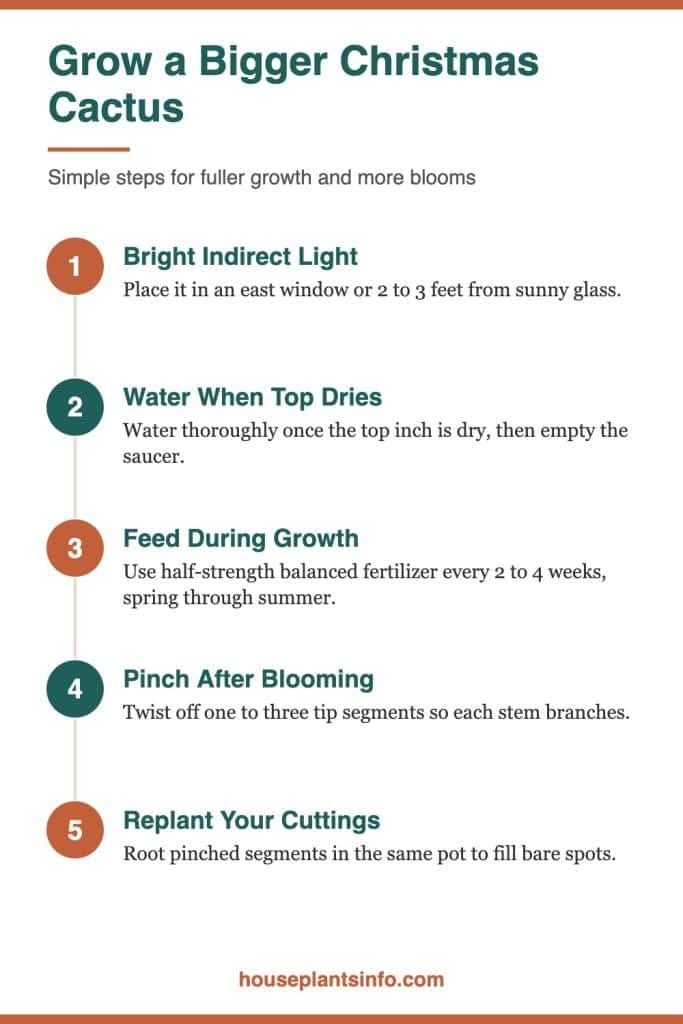
- Move your plant to an east window, or 2 to 3 feet back from a south or west window, before spring growth starts.
- Check soil moisture with your finger or a meter, and water only when the top inch is dry.
- Start half-strength balanced fertilizer every 2 to 4 weeks once new tips appear, and stop by early September.
- Pinch one to three segments off each stem tip a few weeks after blooming ends.
- Root the pinched segments and plant them into bare spots in the same pot.
- Plan a repot into a pot 1 to 2 inches wider every 2 to 3 years, in spring.
Common Questions About Growing a Bigger Christmas Cactus
How fast does a Christmas cactus grow?
It is a slow to moderate grower, adding a few new segments per stem each growing season in good conditions. With strong light, steady feeding and yearly pruning, a plant can noticeably increase in width within one or two years.
How big can a Christmas cactus get?
Mature plants commonly reach 1 to 2 feet tall and 2 to 3 feet wide, with older plants sometimes larger. They are long-lived, and well-kept specimens can keep growing for decades.
Will a bigger pot make my Christmas cactus grow bigger?
Not usually. An oversized pot holds extra wet soil that can rot the roots, and these plants grow and bloom best when slightly snug, so move up only 1 to 2 inches at a time.
Should I prune my Christmas cactus every year?
Yearly pruning after flowering is a good habit if you want a full, bushy plant. Even a light pinch of the stem tips encourages branching and more flowering points the following season.
Does a bigger Christmas cactus produce more flowers?
Generally yes, because flowers form at the tips of stems, and more branches mean more tips. A larger plant still needs long nights and cool temperatures in fall to set buds reliably.

Hi! I’m Sophia, and I love plants – especially an expert in growing house plants. I stay in Chicago, United States of America, and through my blog and social media platforms, provide tips and tricks on how to grow healthy, vibrant plants indoors. Check out more here.