
A tall green column studded with pointed, leaf-like spikes sits in your window, and you want to keep it looking that sturdy. Learning how to grow and care for Eve’s needle cactus indoors mostly comes down to bright light, gritty soil, and careful watering.
The short version: Give Eve’s needle cactus the sunniest window you have, plant it in fast-draining cactus mix in a pot with a drainage hole, and water only when the soil is completely dry.
Keep it cooler and drier in winter, and it will grow quickly and stay upright.
This guide covers light, watering, soil, temperature, feeding, pruning, propagation, common problems, and pet safety.
At a Glance
| Factor | What it needs |
|---|---|
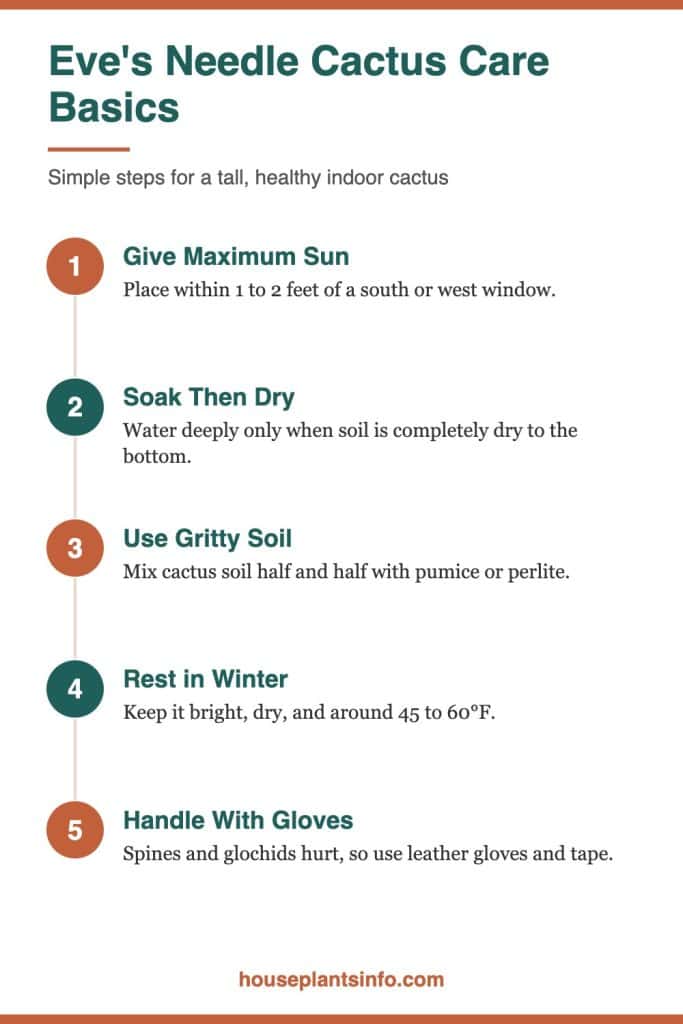
| Light | Full sun; a south or west window within 1 to 2 feet of the glass, or a strong grow light |
| Water | Soak thoroughly, then let the soil dry completely; much less in winter |
| Humidity | Low; ordinary dry indoor air is fine |
| Temperature | 65 to 90°F in the growing season; 45 to 60°F for a winter rest |
| Soil | Gritty cactus mix with extra pumice or perlite, in a pot with a drainage hole |
| Pet safety | Sharp spines and glochids can injure pets; keep out of reach |
| Difficulty | Easy, as long as light is strong and watering is sparse |
How Much Light Does Eve’s Needle Cactus Need Indoors?
Eve’s needle cactus needs as much direct sun as you can give it, ideally 6 or more hours a day. Low light is the most common reason indoor plants turn thin, pale, and floppy.
This plant, known botanically as Austrocylindropuntia subulata, comes from the high, sunny Andes of South America. It is built for intense light, so a typical indoor room is already a step down for it.
Choosing the Right Window
A south-facing window is the best choice in most homes, followed closely by a west-facing one. Place the pot within 1 to 2 feet of the glass, because light intensity drops sharply as you move into the room.
East windows can work if they get several hours of unobstructed morning sun. North windows rarely provide enough light on their own for this cactus.
Adding a Grow Light
If your brightest window is shaded by buildings or trees, a full-spectrum LED grow light makes a real difference. Position it 6 to 12 inches above the top of the plant and run it 12 to 14 hours a day.

A simple light meter app or handheld light meter can help you compare spots. Readings far lower than an outdoor sunny day are normal indoors, but you want the brightest reading available in your space.
Signs of Too Little or Too Much Light
Etiolation is the clearest sign of low light. New growth becomes narrow, pale green, and stretched, often bending toward the window.
Sunburn shows up as tan, bleached, or corky patches on the side facing the glass. This usually happens when a plant moves suddenly from low light into strong sun, such as onto a summer balcony.
Sophia’s tip: When moving the plant outdoors for summer or to a much brighter window, increase sun exposure over 1 to 2 weeks. Start with morning sun only, then add afternoon hours gradually.
How Often Should You Water Eve’s Needle Cactus?
Water deeply, then wait until the soil is dry all the way through before watering again. In spring and summer that often means every 1 to 3 weeks; in winter it may mean once a month or less.
The schedule depends on pot size, light, temperature, and soil mix. A small pot in a hot south window dries far faster than a large pot in a cooler room.
The Soak and Dry Method
When the soil is dry, water slowly until it runs from the drainage hole. Let the pot drain fully and empty any saucer within 15 to 30 minutes so the roots never sit in water.
Check dryness by pushing a wooden skewer to the bottom of the pot. If it comes out with damp soil clinging to it, wait a few more days. For a deeper look at seasonal timing, see this guide to Eve’s needle cactus watering.
Overwatering vs. Underwatering
Overwatering is far more dangerous than underwatering. Soggy soil leads to root rot, which shows as soft, dark, mushy stems near the base and can kill the plant.
Underwatering looks like wrinkled stems and the leaf-like spikes dropping off. If you notice a potted Eve’s needle cactus shriveling, check the roots before simply adding more water, since rot can also cause shriveling.
Water and Indoor Heat
Forced-air heat and radiators dry soil faster, but the plant still slows down in winter’s short days. Base watering on actual soil dryness, not on how warm the room feels.
Sophia’s tip: Keep a note of the date each time you water. After a few cycles you will see how quickly your specific pot dries in each season, which takes the guesswork out of it.
What Soil and Pot Work Best?
Use a gritty, fast-draining cactus mix in a pot with at least one drainage hole. The roots need air as much as water, and dense soil holds moisture too long.
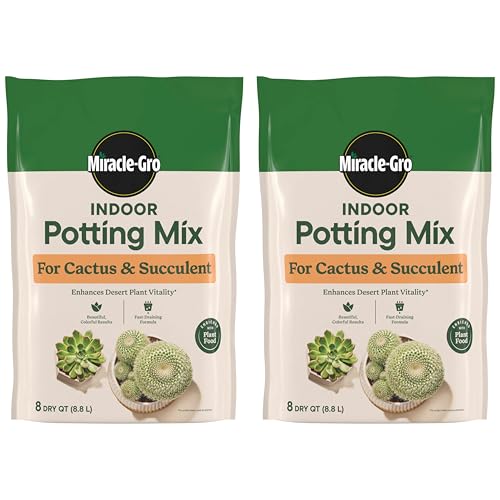
Building a Good Mix
Bagged cactus and succulent mix is a reasonable start, but many brands still hold a lot of moisture. Improve it by blending roughly half mix with half pumice, perlite, or coarse grit.
Avoid regular potting soil on its own, peat-heavy blends, and garden soil. These compact over time and stay wet in the center of the pot.
Picking the Pot
Unglazed terracotta is an excellent choice because it wicks moisture and dries quickly. It is also heavy, which helps keep a tall, top-heavy cactus from tipping.
Choose a pot only 1 to 2 inches wider than the root ball. Oversized pots hold extra wet soil around a small root system, which raises the risk of rot.
Stability for Tall Plants
As stems lengthen, the plant can become top-heavy and lean. A wide, heavy pot, a layer of gravel on top of the soil, or a discreet stake can keep it upright.
What Temperature and Humidity Does It Prefer?
Eve’s needle cactus is comfortable at 65 to 90°F while actively growing and appreciates a cooler rest around 45 to 60°F in winter. Normal indoor humidity, even very dry winter air, suits it well.
Summer Conditions
Typical room temperatures are fine in spring and summer. The plant handles heat well as long as it has good light and airflow.
Strong air conditioning drafts are not usually harmful, but they can slow drying of the soil in a cool room. Factor that in when checking moisture.
The Winter Rest
A cool, dry winter rest helps keep growth compact and may encourage flowering on mature plants, though indoor blooms are uncommon. A bright spot near a cool window, kept around 45 to 60°F, works well.
Keep the stems from touching cold glass, and move the plant away on nights below about 40°F near the window. Brief exposure near freezing can damage it, and hard frost can kill it.
Dry Air and Radiators
You do not need a humidifier for this cactus. Dry winter air in a heated apartment is closer to its natural conditions than humid air is.
The bigger risk with radiators is heat stress and very fast drying right beside them. Keep the pot at least a few feet from radiators and heating vents.
Does Eve’s Needle Cactus Need Fertilizer, and How Fast Does It Grow?
Feed lightly during spring and summer with a balanced or low-nitrogen fertilizer diluted to half strength or less, about once a month. Skip fertilizer entirely in fall and winter.
Feeding Schedule
A cactus or succulent fertilizer works well, applied only to moist soil after a regular watering. Too much nitrogen produces soft, weak growth that bends and is more prone to rot.
If the plant is in low light, feed even less. Fertilizer cannot make up for missing sunlight and will only encourage stretched growth.
Growth Expectations
This is one of the faster-growing cacti, often adding several inches to a foot of stem in a good season with strong light.
Outdoors in warm climates it can reach 10 feet or more, while indoor plants usually stay in the 2 to 4 foot range or are pruned to size.
Growth slows dramatically in winter and in dim spots. For details on what affects speed, read about an Eve’s needle cactus’ growth rate and how light and season change it.
How Do You Prune, Repot and Handle the Spines Safely?
Prune with clean, sharp tools in spring or early summer, and repot every 2 to 3 years or when roots fill the pot. Always protect your hands, because the spines and tiny barbed glochids are painful and hard to remove.
Handling Without Getting Hurt
Wear thick leather gloves, or wrap the stem in a folded towel, several sheets of newspaper, or a strip of foam. Kitchen tongs with padded tips also work for steadying stems.
Glochids are tiny, hair-like barbed bristles that lodge in skin. If they get in, press tape or a thin layer of white glue onto the area, let it set, and peel it off to lift them out.
Sophia’s tip: Keep a dedicated pair of leather gloves and a roll of wide packing tape near your cactus supplies. Having both ready makes pruning and repotting much less unpleasant.
When and How to Prune
Cut back stems that are leggy, leaning, or too tall for your space. Make a clean cut at a joint or just above a healthy section using a sharp knife or pruners wiped with rubbing alcohol.
Let the cut end on the plant dry and callus naturally. Keep the trimmed pieces, because they are easy to root into new plants.
Repotting Steps
Water a few days before repotting so the roots are not brittle, then let the soil dry slightly. Lift the plant out, loosen the root ball gently, and trim any black or mushy roots.
Set it in fresh gritty mix at the same depth as before. Wait about a week before watering so any damaged roots can heal.
How to Grow and Care for Eve’s Needle Cactus From Cuttings
Stem cuttings are the easiest way to start new plants. Take a healthy piece 4 to 6 inches long or more, let it callus for several days to two weeks, then set it upright in dry cactus mix.
Taking and Curing Cuttings
Spring and early summer are the best times, when the plant is actively growing. Cut cleanly and place the piece in a dry, bright spot out of direct sun while the cut end forms a firm callus.
Planting before the callus forms invites rot. The cut end should look dry and sealed, not wet or green.
Rooting and Early Care
Insert the callused end about 1 to 2 inches into dry, gritty mix, staking it if it wobbles. Wait about a week, then water lightly and let the soil dry between waterings.
Roots typically form within several weeks in warm, bright conditions. Gentle resistance when you tug lightly is a sign it has rooted. For a full walkthrough, learn how to propagate Eve’s needle cactus step by step.
Seeds as an Option
Growing from seed is possible but much slower and less common indoors. Cuttings give you a sizable plant far sooner.
What Are the Most Common Problems and How Do You Fix Them?
Most problems trace back to too much water, too little light, or pests. Catching changes early in color, firmness, and shape makes them easy to correct.
Yellowing and Soft Stems
Yellowing near the base, especially with softness, usually points to overwatering or root rot. Unpot the plant, cut away rotted tissue, let healthy parts dry, and replant in fresh dry mix.
Yellowing on the sunny side can be sunburn or stress from a sudden light change. If you are troubleshooting Eve’s needle cactus turning yellow, compare where the color appears and how firm the stem feels.
Leaf Drop
The leaf-like spikes are true, if temporary, leaves, and older ones naturally fall over time. Sudden heavy drop can come from drought, a quick change in conditions, or cold drafts.
Check soil moisture and recent changes in location. Stable light and steady watering habits usually stop the drop.
Leaning and Stretching
Leaning toward the window is a light problem. Move the plant closer to the glass or add a grow light, and rotate the pot a quarter turn every week or two.
Stretched growth will not thicken again. Prune it off once light is improved, and new growth should come in fuller.
Pests
Mealybugs appear as white cottony tufts in crevices and at the base of spines. Dab them with a cotton swab dipped in rubbing alcohol, and repeat weekly until they are gone.
Scale looks like small brown or tan bumps that can be scraped off. Spider mites leave fine webbing and speckling, often in dry, still air; rinse the plant and improve airflow.
Is Eve’s Needle Cactus Safe for Pets and Kids?
The main danger is physical: the long spines and barbed glochids can injure curious pets and children. Its toxicity status is not clearly documented, so treat it as a plant to keep firmly out of reach.
Place it on a high, stable shelf or in a window where cats cannot jump and dogs cannot brush against it. A heavy pot also helps prevent tipping if a pet bumps it.
If a pet chews the plant or gets spines in its mouth or paws, contact your veterinarian or the ASPCA Animal Poison Control Center for guidance. Teach children not to touch it, and handle it with gloves yourself.
Your Next Steps
- Move your plant to your sunniest south or west window, within 1 to 2 feet of the glass, or add a grow light.
- Check that the pot has a drainage hole and the soil is gritty; repot in spring if it is dense or soggy.
- Test soil dryness with a wooden skewer before every watering, and empty the saucer after watering.
- Plan a cool, bright winter rest around 45 to 60°F with sparse watering.
- Inspect crevices and spine bases monthly for mealybugs or scale.
- Set aside leather gloves and tape before you prune, repot, or take cuttings.
Common Questions About Eve’s Needle Cactus Care
Is Eve’s needle cactus a true cactus?
Yes, it is a true cactus in the same subfamily as prickly pears and chollas. Unlike most cacti, it keeps fleshy, pointed leaves on new growth, which gives it its distinctive look.
Why are the “needles” falling off my plant?
The pointed green spikes are leaves, and older ones drop naturally over time. Heavy or sudden loss usually means drought stress, cold drafts, or a quick change in light, so check those conditions first.
Can Eve’s needle cactus live outside?
It grows well outdoors in warm, frost-free climates and in summer elsewhere. In cold-winter areas like Chicago, bring it inside before nights drop below about 40°F.
Should I mist my Eve’s needle cactus?
No, misting is unnecessary and can encourage rot or fungal spots in crevices. This cactus prefers dry air, so focus on light and proper watering instead.
Will my Eve’s needle cactus flower indoors?
Flowering indoors is uncommon, though mature plants may bloom with red to pinkish flowers. A bright location, a cool, dry winter rest, and age all improve the chances.

Hi! I’m Sophia, and I love plants – especially an expert in growing house plants. I stay in Chicago, United States of America, and through my blog and social media platforms, provide tips and tricks on how to grow healthy, vibrant plants indoors. Check out more here.