
You glance at the cactus on your windowsill and notice pale patches, chalky spots, or a whitish fuzz where there used to be healthy green skin.
If you are asking why is my cactus turning white, the answer usually depends on exactly where the white shows up and what it feels like.
The short version: Most white on a cactus comes from sunburn, mealybugs, hard water deposits, or natural corking at the base. Less often, it signals pale growth from low light, cold damage, or a fungal problem.
Matching the pattern to the cause tells you whether to move the plant, clean it, or simply leave it alone.
This guide walks you through each cause, how to recognize it, and the specific fix for an indoor cactus.
Check These First
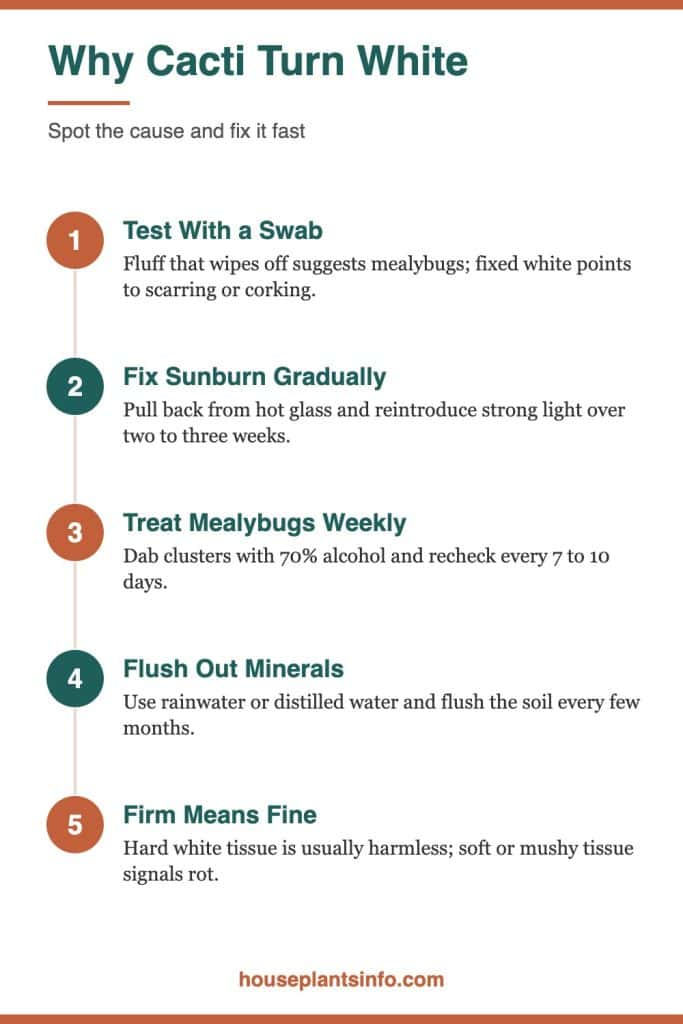
- Touch the white area gently with a cotton swab. If it wipes off as fluff, suspect mealybugs. If it stays put and feels hard, it is likely sunburn scarring, corking, or mineral crust.
- Note which side is affected. Bleaching only on the side facing the window points to too much sun.
- Press the stem near the soil line. Firm tissue is a good sign, while soft or mushy tissue needs attention right away.
- Look at the soil surface and pot rim. A white crust there usually means minerals from tap water or fertilizer.
- Think about recent changes. A new window, a move outdoors, or a cold draft in the past few weeks often explains sudden color loss.
Why Is My Cactus Turning White? Read the Pattern First
Your cactus is turning white because something has changed its skin, coated its surface, or weakened its growth. The location, texture, and timing of the white areas narrow the cause down quickly.
Start with good light and a close look. A small magnifying glass helps you spot tiny mealybugs tucked between spines, and a soil moisture meter tells you whether the root zone has stayed wet too long. Both are inexpensive and save a lot of guessing.
Match the Symptom to the Cause
| What you see | Where it appears | Likely cause |
|---|---|---|
| Pale, bleached, or tan patches | Side facing the window | Sunburn |
| Cottony white fluff | Between spines, areoles, roots | Mealybugs |
| Chalky, crusty spots | Stem surface, soil, pot rim | Hard water minerals |
| Tan, whitish, bark-like skin | Base of older plants | Corking (normal) |
| Pale, thin, stretched growth | New growth at the tip | Low light (etiolation) |
| Whitish or translucent mushy areas | Anywhere, often after cold | Frost or cold damage |
| Powdery white film | Stem surface | Fungal growth |
| Pale, washed-out color overall | Whole plant | Nutrient shortage or root problem |
Hard Versus Soft Matters Most
The single most useful test is firmness. Sunburn scars, corking, and mineral deposits are all hard and stable. Rot, frost damage, and advanced pest damage often feel soft, look translucent, or spread over days.
If the white area is firm and not growing, you have time to observe. If it is soft or expanding, act within the next day or two.
Some Cacti Are White on Purpose
Before treating anything, check your species. Old man cactus, many Mammillaria species, and some Espostoa produce natural white hairs or wool to shade their skin. These are evenly spread and look tidy, not patchy.
Some species also have a waxy, bluish-white coating called farina or bloom that protects against sun. Avoid rubbing it off, since it does not grow back on the same tissue.
Sunburn: Bleached Patches and How to Fix Them
Sunburn shows up as pale yellow, white, or tan patches on the side of the cactus facing the strongest light. It happens when a plant gets more intense sun than it has adjusted to, usually after a sudden change in location.
Why Indoor Cacti Burn
It seems surprising that a desert plant could burn, but cacti grown indoors adapt to filtered window light. Move one abruptly to a sunny balcony in May, or to an unshaded south or west window, and the skin can scorch within a few days.
Glass does not magnify sunlight the way people sometimes assume, but a plant pressed right against hot glass in a west window can still overheat. Reflected light from white walls or a light-colored sill adds to the stress.
How to Recognize It
Early sunburn looks slightly faded or yellowish. As it worsens, the patch turns white to beige and may later become brown, dry, and corky. The damage stays on one side and does not wipe off.
The tissue is firm. If the patch turns soft or black, rot may have entered the damaged area and needs separate attention.
The Fix for Sunburn
- Move the plant a foot or two back from the glass, or add a sheer curtain for a week or two.
- Rotate the pot a quarter turn every week so no single side takes the full afternoon sun.
- Reintroduce stronger light gradually over two to three weeks.
- Leave the scar alone. Burned tissue will not turn green again, but new growth will look normal.
Sophia’s tip: When moving a cactus outdoors for summer, start with one to two hours of morning sun in a shaded spot, then add about an hour every few days. Bring it back into a south window the same way in fall.
Mealybugs and White Fuzz: How to Clear Them
Cottony white tufts on your cactus are most often mealybugs, small sap-sucking insects that hide in protected spots. They spread from plant to plant, so treat them as soon as you see them.
If you want a closer look at fuzz specifically, including other harmless causes, the guide on why your cactus have white fuzz covers that in more detail.
Where Mealybugs Hide
Check areoles, the base of spines, the crease where the stem meets the soil, and any ribs or grooves. Adult mealybugs are oval, about 1/8 inch long, and covered in white wax. Egg masses look like tiny cotton balls.
Root mealybugs live below the soil line. If your cactus looks dull and stops growing with no visible pests, slide it out of the pot and check the roots for white, powdery patches.
Telling Pests From Natural Wool
Natural areole wool on cacti sits neatly at each areole and stays the same over time. Mealybug fluff appears in irregular clumps, may be sticky, and multiplies. Gently poke it with a toothpick. Insects will show a small body underneath.
The Fix for Mealybugs
- Isolate the plant from your other houseplants right away.
- Dab each cluster with a cotton swab dipped in 70% isopropyl alcohol.
- For heavy infestations, spray with insecticidal soap, covering every crevice. Keep the plant out of direct sun until it dries.
- For root mealybugs, remove old soil, rinse the roots, let them dry for a day, and repot in fresh mix and a clean pot.
- Repeat checks and spot treatments every 7 to 10 days for at least a month, since eggs hatch in waves.
Scale insects can also look whitish. They form small, hard, flat bumps that do not move. Scrape them off with a fingernail or soft brush and treat the area with alcohol the same way.
Sophia’s tip: Keep a dedicated cup of alcohol and a pack of cotton swabs near your plant shelf. Inspecting each cactus during your regular watering takes about a minute and catches pests while they are still a single cluster.
Hard Water and Mineral Crust: Clean It and Flush the Soil
Chalky white spots on the stem, a crust on the soil, and white rings on terracotta pots usually come from minerals in tap water or leftover fertilizer salts. This is mostly cosmetic at first, but heavy buildup in the soil can stress the roots.
How Minerals Build Up
Many cities supply water high in calcium and magnesium. When that water evaporates from the soil surface or splashes on the stem, it leaves white residue behind. Fertilizer adds dissolved salts that collect in the top inch of soil over time.
Softened water is a separate concern. Water treated by a salt-based softener contains extra sodium, which cacti tolerate poorly.
Signs It Has Moved Past Cosmetic
Spots on the skin alone are harmless. Watch for tip browning, slowed growth, or a thick crust that cracks when you press it. Those suggest salts are concentrated enough to affect root uptake.
The Fix for Mineral Buildup
- Wipe spots off the stem with a soft cloth or brush dampened with distilled water. A few drops of white vinegar in the water helps on stubborn spots, but rinse afterward.
- Scrape away crusted soil from the top half inch and replace it with fresh cactus mix.
- Every few months during the growing season, flush the pot with plain water until it runs freely from the drainage hole, then let it drain completely.
- Switch to rainwater, distilled water, or filtered water if your tap water is very hard.
- Repot every two to four years to refresh the soil entirely.
Corking or Rot? Telling Natural Aging From Trouble
Corking is a natural process where the lower stem of a mature cactus turns tan, gray, brown, or whitish and develops a firm, bark-like surface. It helps support tall or heavy growth and is not a disease.
What Normal Corking Looks Like
Corking almost always starts at the base and moves slowly upward over months or years. The surface feels hard and dry, and the change progresses evenly around the stem. Columnar cacti and older barrel types cork most noticeably.
You will see it more on plants that are several years old. A young cactus that suddenly turns pale at the base deserves a closer look.
When Whitish Tissue Is a Warning
Rot starts differently. Affected areas feel soft, look watery or translucent, and may turn yellow, brown, or black. The change can spread over days rather than years, and it sometimes comes with a sour smell.
Dark rot has its own distinct look. If you grow columnar types, the article on a peruvian apple cactus turning black explains how to separate black rot from harmless marks.
What to Do
- If the tissue is hard and the plant is growing, leave the corking alone.
- If it is soft, stop watering and unpot the plant to inspect the roots.
- Cut away mushy roots and stem tissue with a clean, sterilized knife until you reach firm, healthy flesh.
- Let cuts dry and callus for several days to a week, then replant in dry, gritty cactus mix.
- Wait about a week before watering lightly.
Low Light and Etiolation: Pale, Stretched Growth
When a cactus does not get enough light, new growth often turns pale green to whitish, thin, and stretched toward the window. This is called etiolation, and it is very common indoors during winter.
Why It Happens in Apartments
Most cacti want bright light, ideally several hours of direct sun daily. A north window, a spot six feet back from the glass, or the short, gray days of a Chicago winter often fall well short of that.
Etiolated growth looks narrow and weak compared to the older body, giving the plant an hourglass or pencil-tip shape. The pale color comes from soft new tissue, not a coating.
The Fix for Low Light
- Move the cactus to a south or west window, within about a foot of the glass.
- Add a full-spectrum LED grow light set 6 to 12 inches above the plant for 10 to 14 hours a day in winter.
- Increase light gradually so the pale, tender growth does not sunburn.
- Accept that stretched growth will not shrink back. New growth will be normal once light improves, and you can trim and reroot the stretched portion if appearance matters.
Sophia’s tip: A simple outlet timer on your grow light keeps the schedule consistent through winter, so you do not have to remember to switch it on before work.

Overwatering Makes It Worse
Pale growth plus wet soil is a risky combination. In low winter light, cacti use very little water, so soil stays damp much longer.
Let the mix dry completely, and in winter water only every four to six weeks, depending on pot size and room temperature.
Cold Damage, Fungal Spots and Other Less Common Causes
If the obvious causes do not fit, look at temperature, air movement, and feeding. These problems are less frequent indoors but explain many mystery cases.
Cold Drafts and Frost Damage
Most common desert cacti handle cool nights in the 40s °F when kept dry, but freezing damages their tissues. Cold-damaged areas may look whitish, translucent, or water-soaked at first, then turn brown or black and soft.
Indoors, the risk comes from plants touching icy window glass in January, sitting near a door that opens to winter air, or being left on a balcony during an early freeze. Pull pots a few inches back from the glass on the coldest nights.
Sudden heat matters too. A cactus placed directly above a radiator or in the stream of a forced-air vent dries unevenly and can develop pale, stressed patches. Keep plants at least a few feet from heat sources and air conditioner drafts.
Fungal Growth
A powdery or fuzzy white film that spreads across the skin can point to fungal growth, which thrives in stagnant, humid air and wet soil. It is less common on cacti than on leafy plants because their environment is normally dry.
Improve airflow by spacing pots apart or running a small fan on low nearby. Remove affected parts, keep water off the stem, and use a fungicide labeled for cacti if it keeps returning.
Nutrient Shortages and Overfeeding
A cactus that has sat in the same soil for many years can look washed out from a lack of nutrients. Feed with a diluted cactus fertilizer once a month in spring and summer, and skip feeding in fall and winter.
Overfeeding causes the opposite issue: salt buildup and tip burn. Use half the label strength rather than more.
Related Cactus Color Changes
Different species show stress in different colors. Thin, spiny types are covered in the guide on needle cactus turning white.
Holiday cacti tend to redden instead, so read about why are christmas cactus leaves turning red or what causes christmas cactus leaves turning pink if you grow one.
Pet Safety
Christmas cactus is listed as non-toxic to cats and dogs by the ASPCA. For spiny desert cacti, the main hazard is the spines, which can injure curious pets and kids, so keep those plants on high shelves or out of reach.
Basic Care That Prevents Most White Patches
| Care factor | What a typical desert cactus needs indoors |
|---|---|
| Light | Bright light, several hours of direct sun; south or west window |
| Water | Soak, then let soil dry fully; every 2 to 4 weeks in summer, 4 to 6 in winter |
| Soil | Gritty cactus mix with added perlite or pumice |
| Pot | Drainage hole required; terracotta dries fastest |
| Temperature | 65 to 85 °F in growing season; 45 to 60 °F winter rest is fine if dry |
| Feeding | Diluted cactus fertilizer monthly in spring and summer only |
Your Next Steps
- Do the cotton swab test today to separate wipe-off fuzz or minerals from fixed scarring.
- Press the base and any white area to confirm the tissue is firm, not soft.
- Isolate any plant with mealybugs and start alcohol spot treatments, repeating every 7 to 10 days.
- Adjust light in small steps, either pulling back from harsh sun or adding a grow light in winter.
- Switch to distilled, filtered, or rainwater if you see crust, and flush the soil every few months.
- Check that the pot drains well and let the soil dry completely between waterings.
Common Questions About Cactus Turning White
Can a cactus turn green again after turning white?
Sunburned or corked tissue will not regain its green color. Mineral spots and mealybug residue can be cleaned off, revealing normal skin underneath. Once you correct the cause, new growth should come in healthy and green.
Is white fuzz on my cactus always mealybugs?
No. Many cacti produce natural wool at their areoles or white hairs for sun protection, which look neat and even. Mealybug fuzz appears in irregular clumps, may feel sticky, and spreads over time.
Why is the bottom of my cactus turning white and hard?
That is usually corking, a normal part of aging in mature cacti. As long as the tissue stays firm and dry and the plant keeps growing, no treatment is needed. If the base turns soft or mushy instead, check for rot.
Should I cut off the white parts of my cactus?
Only cut tissue that is soft, mushy, or rotting. Firm sunburn scars and corking protect the plant and should stay in place. Use a clean, sterilized blade and let any cuts dry before watering.
Can tap water make my cactus turn white?
Yes, hard tap water leaves chalky mineral spots on the stem and a white crust on the soil and pot. Wipe the spots gently and flush the soil occasionally. Rainwater, distilled water, or filtered water prevents buildup.

Hi! I’m Sophia, and I love plants – especially an expert in growing house plants. I stay in Chicago, United States of America, and through my blog and social media platforms, provide tips and tricks on how to grow healthy, vibrant plants indoors. Check out more here.