
Your Christmas cactus sits on the windowsill with its segmented stems hanging flat and floppy instead of arching out with their usual firm, glossy spring.
If you are wondering why the leaves on your Christmas cactus are limp, you are dealing with one of the most common complaints about this plant, and it is usually fixable.
The short version: Limp Christmas cactus leaves almost always point to a water problem. Either the plant is too dry to keep its segments plump, or the roots are too wet to absorb water at all.
Heat, light, drafts, pot size and pests can cause or worsen the same symptom.
This guide walks through each cause, how to tell them apart, and the exact fix for each one.
Check These First
- Push a finger 1 to 2 inches into the soil. Bone dry points to thirst. Wet and sour-smelling points to rot.
- Lift the pot. A very light pot means the plant needs water, and a heavy pot days after watering means it is draining poorly.
- Check the plant’s spot. Within 3 feet of a radiator, heat vent or AC unit is a likely culprit.
- Look at the base of the stems. Mushy, brown or black tissue where the stems meet the soil signals root or stem rot.
- Ask yourself what changed recently: a move, a repot, a new window, or the heat turning on for winter.
Why Are the Leaves on My Christmas Cactus Limp?
Christmas cactus leaves go limp when the segments lose the water pressure that keeps them firm. That happens when roots cannot take up enough water, either because the soil is dry or because the roots are damaged.
The flat, segmented “leaves” are actually stems called phylloclades. They store water, so they act like a gauge. Plump, stiff segments mean the plant is hydrated. Thin, wrinkled or floppy segments mean it is running short.
A forest plant, not a desert plant
Christmas cactus (Schlumbergera) grows naturally in the humid mountain forests of Brazil, perched on trees and rocks. It wants more water and humidity than a desert cactus, but its roots also need air.
Treating it like a typical succulent, or like a fern, both lead to limp leaves.
Read the soil before you water
The single best habit is checking moisture before you reach for the watering can. A soil moisture meter takes the guesswork out, especially in a deep pot where the surface dries long before the root zone.
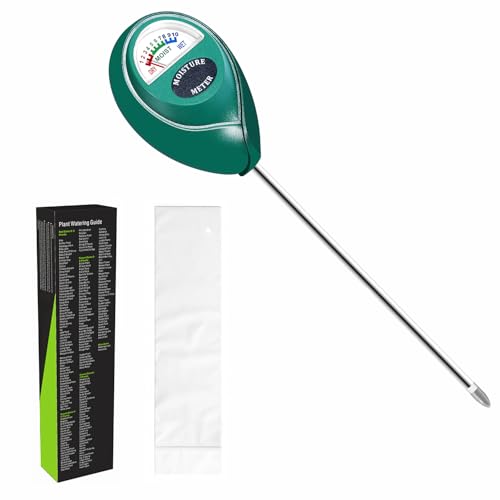
A wooden chopstick pushed into the soil works too: it comes out clean when the mix is dry.
Pot material matters as well. A terracotta pot with a drainage hole dries faster and breathes better than glazed ceramic or plastic, which helps if you tend to overwater.
Firm versus soft limpness
Limp and soft are related but not identical. Limp segments can still feel leathery, just floppy. If the segments feel squishy or translucent, see our guide on Christmas cactus leaves soft for that specific symptom.

Underwatering: Rehydrate Thoroughly and Set a Schedule
If the soil is dry an inch or more down and the segments look thin and wrinkled, your plant is thirsty. Give it a deep, thorough watering and it should firm up within a few days.
Underwatering is common in Chicago-style winters. Forced-air heat and radiators dry both the air and the potting mix far faster than in summer, so a schedule that worked in July can leave the plant parched by December.
How to rehydrate a dry plant
- Water slowly at the soil surface until water runs out the drainage hole.
- If water runs straight through without soaking in, the mix has become hydrophobic. Set the pot in a bowl of room-temperature water for 15 to 20 minutes, then let it drain fully.
- Empty the saucer so the pot does not sit in standing water.
Expect the segments to plump up over 2 to 7 days. Very wrinkled older segments may never fully smooth out, but new growth will be firm.
How often to water going forward
Water when the top 1 to 2 inches of soil feel dry. Indoors, that usually means every 1 to 2 weeks during spring and summer growth, and somewhat less often in fall. Small pots, terracotta, bright windows and dry heated air all shorten the interval.
Sophia’s tip: Pick up the pot right after a thorough watering and again when the top inch is dry. Learning that weight difference lets you check moisture in two seconds, even on a high shelf.
Overwatering and Root Rot: Stop Watering and Check the Roots
If the soil is wet but the leaves are still limp, the roots are likely suffocating or rotting. Damaged roots cannot absorb water, so the plant wilts even while standing in moisture.
This is the cause that catches people off guard. The plant looks thirsty, so it gets more water, and the problem accelerates. Rot is also the most serious cause on this list, so act quickly.
Signs it is rot, not thirst
- Soil stays wet for a week or longer after watering.
- A sour, swampy or moldy smell from the pot.
- Segments near the soil line turn yellowish, translucent or mushy.
- The base of the main stem feels soft or looks dark brown to black.
- Segments drop when lightly touched.
Heavy segment drop often accompanies rot. Our guide to Christmas cactus dropping leaves covers the other reasons segments fall off.
How to rescue a rotting plant
- Slide the plant out of the pot and gently shake off the wet soil.
- Inspect the roots. Healthy roots are firm and white to tan. Rotten roots are brown or black, mushy, and the outer layer slips off easily.
- Trim away all rotten roots with clean scissors, wiping the blades with rubbing alcohol between cuts.
- Repot into fresh, fast-draining mix in a clean pot with a drainage hole, sized to the remaining root ball.
- Wait 3 to 5 days before watering lightly, so cut roots can callus.
When the plant is too far gone
If most roots and the base of the stem are rotten, the plant may not recover. Save it through cuttings instead.
Snip healthy sections of 2 to 3 segments, let them dry for a day or two, then set them about an inch deep in slightly moist cactus mix. They usually root within a few weeks.
Heat, Radiators and Dry Air: Move It to Steady Temperatures
Heat stress makes Christmas cactus lose water faster than its roots can replace it, so segments go limp even with reasonable watering. Moving the plant away from heat sources usually fixes it quickly.
This plant is most comfortable around 60 to 75°F during the day, with somewhat cooler nights. Sustained temperatures above roughly 85°F, or hot blasts of air, push it into stress.
Common indoor heat traps
- A radiator directly beneath the windowsill.
- A forced-air vent blowing across the plant.
- The top of a refrigerator or near a stove.
- Glass in a south or west window on a hot summer afternoon, especially with the plant touching the pane.
Keep the plant at least 3 feet from radiators and vents. In winter, that often means moving it to a different wall rather than the sill above the heat.
Raising humidity
Christmas cactus prefers humidity around 50 percent or higher, while heated winter air indoors can fall to 20 to 30 percent. Low humidity alone rarely causes severe limpness, but it compounds thirst.
A room humidifier nearby is the most effective fix. Grouping plants together or setting the pot on a tray of pebbles and water, with the pot base above the waterline, adds a small local raise. Misting helps very little and only briefly.
Sophia’s tip: Put an inexpensive digital hygrometer next to your plants in November. If it reads below 35 percent once the heat kicks on, that is your cue to run a humidifier and check soil moisture more often.
Cold Drafts and Sudden Temperature Swings: Find a Stable Spot
Cold damage and abrupt swings also cause limp segments, often with a darker, water-soaked look. Christmas cactus tolerates cool nights well but does not like freezing glass or icy drafts.
Where cold stress comes from
Temperatures below about 50°F for extended periods can stress the plant, and frost damages tissue outright. Indoors, cold usually comes from leaves pressed against a winter window, a drafty entry door, or an air conditioner blowing directly on the plant in summer.
The fix
- Keep segments a few inches back from winter glass.
- Move the plant out of the path of AC units, ceiling fans and exterior doors.
- After bringing a summering plant indoors, do it before nights drop below about 50°F.
Mild cold stress usually recovers in a week or two once conditions stabilize. Frost-damaged segments turn mushy and should be trimmed off.
Cool nights are not the enemy
Do not confuse damaging cold with the cool nights that trigger blooms. Nights around 50 to 60°F in fall help set flower buds. The issue is freezing glass and harsh drafts, not a cooler room.
Wrong Light: Give It Bright, Indirect Light
Too much direct sun scorches and dehydrates segments, while too little light weakens the plant over time. Both can leave stems floppy, though strong sun is the faster cause of limpness.
Signs of too much sun
Hot, direct sun bleaches segments, can leave scorched patches, and makes the plant lose water rapidly. Sun stress also tints segments reddish. If that is your main symptom, see why Christmas cactus leaves turn red for more detail.
Move a sun-stressed plant a few feet back from a south or west window, or diffuse the light with a sheer curtain.
Signs of too little light
Low light produces thin, stretched, pale segments that sag under their own weight. The plant may also refuse to bloom. A north window or a spot deep in a room is often too dim.
The ideal placement
- An east window is close to perfect, with gentle morning sun.
- A west or south window works if the plant sits 3 to 5 feet back or behind a sheer curtain.
- Under a grow light, keep the plant roughly 12 to 18 inches below the fixture.
If you use a grow light in fall, turn it off in the evening. Christmas cactus needs long, uninterrupted nights, about 12 to 14 hours of darkness, to set buds.

Rootbound Pots, Old Soil or a Fresh Repot: Fix the Root Zone
Roots that are cramped, sitting in broken-down soil, or recovering from a repot cannot move water well, and limp segments follow. The fix depends on which of these applies.
Rootbound or worn-out soil
Christmas cactus likes being slightly snug, but after several years roots can fill the pot so completely that water runs straight through. Old potting mix also breaks down, compacts and stops draining properly.
Signs include roots poking out the drainage hole, water rushing through without soaking in, and soil that has shrunk away from the pot edges. Repot every 2 to 3 years, ideally in spring after flowering, going up only 1 to 2 inches in pot diameter.
The right potting mix
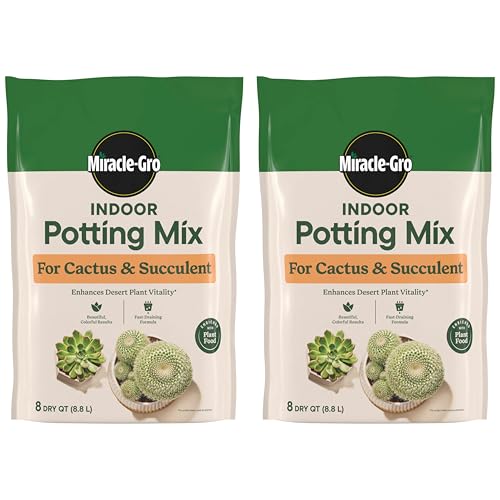
Use a loose, fast-draining blend. A good homemade mix is roughly two parts standard potting soil to one part perlite and one part orchid bark. A cactus and succulent mix with added bark also works. Avoid dense, moisture-heavy soil on its own.
Transplant shock
Limpness for a week or two after repotting is normal. Disturbed roots need time to regrow fine root hairs. Keep the plant in bright, indirect light, water lightly once the top inch dries, and skip fertilizer for about a month.
Sophia’s tip: Never repot a Christmas cactus while it is covered in buds. The disturbance often causes bud drop and limp stems at the same time, so wait until flowering finishes.
Pests, Fertilizer and Other Less Common Causes
When watering, light and temperature all check out, look for pests, fertilizer burn or simple old age in the stems. These causes are less common but easy to miss.
Sap-sucking pests
Mealybugs, scale and spider mites drain sap from segments, leaving them weak and limp. Check where segments join and along the undersides.
- Mealybugs look like small tufts of white cotton.
- Scale appears as tan or brown bumps that do not move.
- Spider mites leave fine webbing and tiny speckles.
Wipe mealybugs and scale with a cotton swab dipped in rubbing alcohol. Follow with insecticidal soap every 7 to 10 days until no new pests appear. Root mealybugs, which show up as white fuzz on roots, require repotting into fresh mix.
Fertilizer salt buildup
Too much fertilizer leaves salts that damage roots, producing limp segments and sometimes a white crust on the soil. Flush the pot with plenty of water, letting it drain fully, and feed only during spring and summer at half strength, about once a month.
Nutrient and color changes
Limp segments sometimes show color changes too. Mild stress, magnesium shortage or cool temperatures can tint them, which is covered in our articles on Christmas cactus leaves turning pink and why Christmas cactus leaves turn purple.
Natural aging
Very old plants develop woody, gray-brown bases, and segments near the oldest stems can sag. This is normal. Light pruning after flowering, removing a few segments at the joints, encourages fresh, firm growth.
Pet safety
The ASPCA lists Christmas cactus as non-toxic to dogs and cats. Pets that chew it may still get a mild upset stomach, so keep it out of reach of curious cats and kids where possible.
Your Next Steps
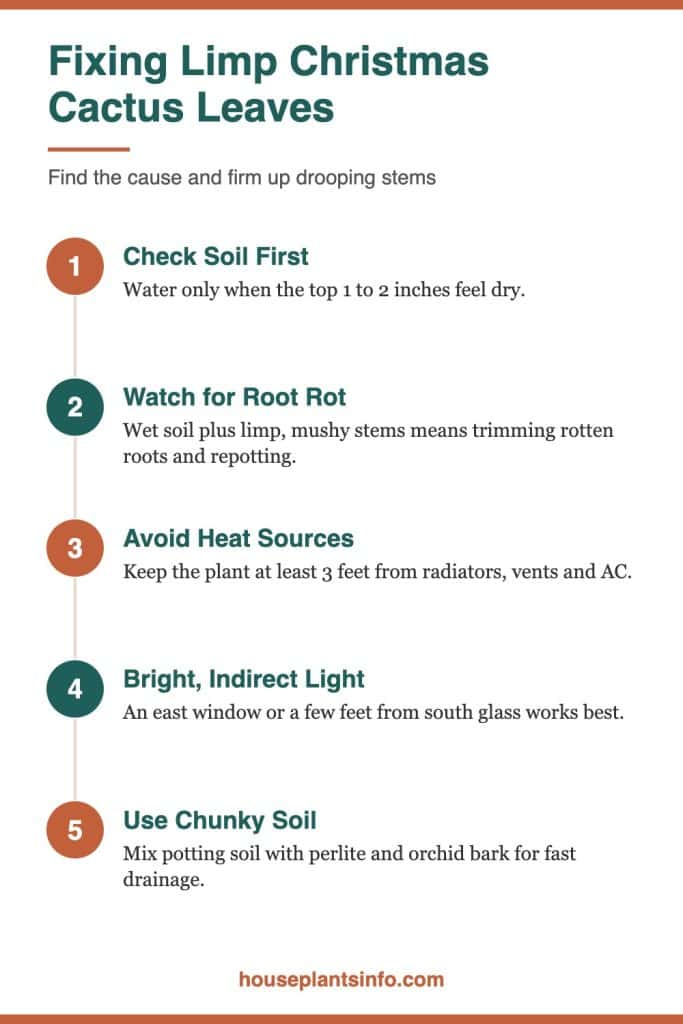
- Check soil moisture 1 to 2 inches deep today, and water thoroughly only if it is dry.
- If the soil is wet and the stem base is soft, unpot the plant and inspect the roots for rot.
- Move the plant at least 3 feet from radiators, vents and AC units, and keep it off cold glass.
- Place it in bright, indirect light, such as an east window or a few feet back from a south or west window.
- Plan a repot into a chunky, bark-rich mix in spring if it has been more than 2 to 3 years.
- Inspect stem joints for mealybugs or scale and treat right away if you spot any.
Common Questions About Limp Christmas Cactus Leaves
How long does it take a limp Christmas cactus to recover?
A thirsty plant usually firms up within 2 to 7 days after a thorough watering. Plants recovering from rot, heat stress or a repot can take 2 to 4 weeks. Badly wrinkled older segments may stay creased, but new growth should look healthy.
Should I water a Christmas cactus with limp leaves?
Only if the soil is dry 1 to 2 inches down. If the soil is already wet, more water will make root problems worse. Check the roots for rot instead before doing anything else.
Can limp Christmas cactus leaves become firm again?
Yes, as long as the segments are not mushy or rotten. Segments that are limp from dehydration refill with water once the roots can absorb it. Mushy, translucent or blackened segments will not recover and should be removed.
Is it normal for a Christmas cactus to go limp after blooming?
A little softness after flowering is common, since blooming uses a lot of energy and water. Give the plant a rest with slightly less water for about a month. If limpness is severe, check for underwatering or root issues.
Should I cut off limp Christmas cactus segments?
Not right away. Fix the underlying cause first and give the plant a few weeks, because many limp segments plump back up. Trim only segments that are mushy, shriveled beyond recovery or clearly dead, cutting cleanly at a joint.

Hi! I’m Sophia, and I love plants – especially an expert in growing house plants. I stay in Chicago, United States of America, and through my blog and social media platforms, provide tips and tricks on how to grow healthy, vibrant plants indoors. Check out more here.