
You look at your cactus on the windowsill and notice white specks, fuzzy patches, or chalky blotches that were not there a few weeks ago.
If you are wondering why does my cactus have white spots, the answer depends on whether the white rubs off, moves, or sits flat and dry on the skin.
The short version: White spots on a cactus usually come from pests like mealybugs, scale, or spider mites, from fungal growth such as powdery mildew, or from sunburn and hard water residue.
Some white markings are natural wool, wax, or flecks that belong to the plant. Fuzzy or raised spots that spread need treatment, while flat, stable marks are usually harmless.
This guide shows you how to identify each cause, treat it indoors, and stop it from coming back.
Check These First
- Touch the spot with a cotton swab. If it smears, lifts away, or leaves a sticky residue, pests are the likely cause.
- Look between the ribs, at the areoles, and under the pot rim with a flashlight. Mealybugs and scale hide in tight, shaded spots.
- Check whether the white is only on the side facing the window. Bleached patches there usually point to sunburn.
- Look at the soil surface and the pot rim. A crusty white ring suggests mineral buildup from hard tap water or fertilizer.
- Compare the plant with photos of its species. Many cacti grow with white wool, hairs, or dotted wax as part of their normal appearance.
Why Does My Cactus Have White Spots? How to Tell the Causes Apart
Most white spots fall into three groups: living pests, fungal growth, and dry surface marks from sun, minerals, or natural features. Texture, location, and whether the spots spread over a week or two tell you which group you have.
Get a Close Look
Good light makes the difference. A bright flashlight and a handheld magnifying glass let you see whether a spot has legs, a shell, a powdery surface, or no texture at all. Turn the pot slowly and check every rib, including the areoles where spines emerge.
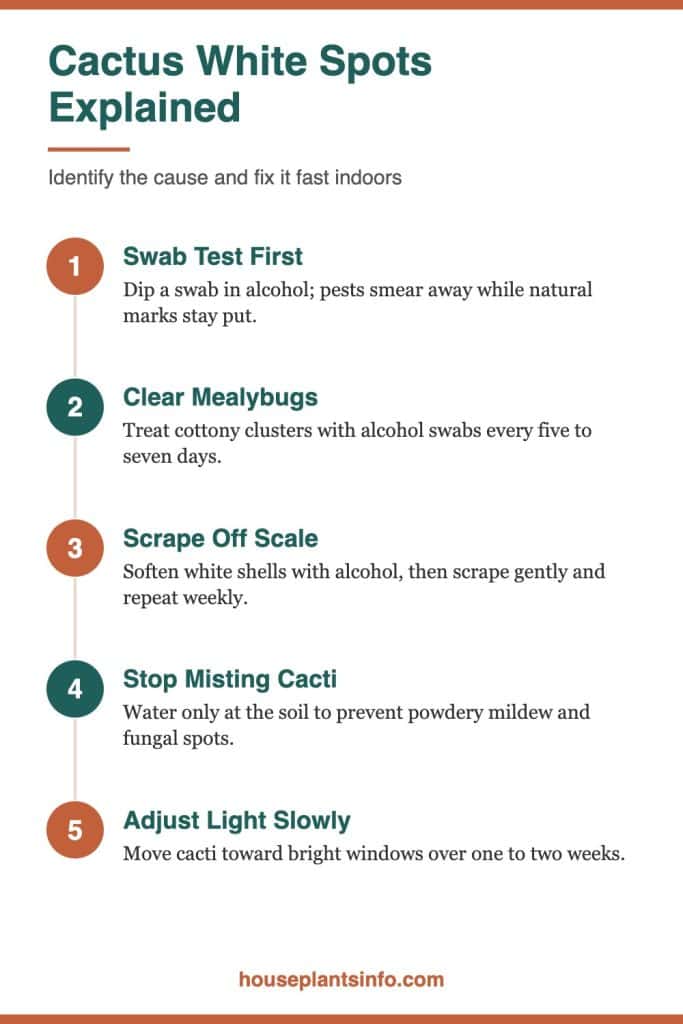
A cotton swab dipped in 70% isopropyl alcohol is the fastest test. Living pests wipe away and often leave an orange or reddish smear when crushed. Mineral crust and natural wax stay mostly in place or flake off dry.
Read the Pattern
Spots clustered in crevices and at the base usually mean mealybugs. Small, flat, shell-like bumps scattered over the skin suggest scale. Fine pale stippling with faint webbing points to spider mites, especially in dry winter air near a radiator.
A thin, flour-like coating that spreads across the surface suggests powdery mildew. Large, dry, bleached patches only on the window side usually mean sunburn. White dots that match the plant’s natural pattern and never change are likely normal.
Track Changes Over Time
Take a dated phone photo of the affected area. If the spots multiply or grow within a week, something active is happening. If they stay the same for two to three weeks, the cause has likely passed or the marks are natural.
| What you see | Most likely cause | Urgency |
|---|---|---|
| Cottony clusters in crevices or at areoles | Mealybugs | High |
| White fluff on roots when unpotted | Root mealybugs | High |
| Flat, white, shell-like bumps that scrape off | Scale insects | High |
| Pale speckling with fine webbing | Spider mites | Medium |
| Powdery coating that spreads | Powdery mildew | Medium |
| Dry, bleached patches on window side | Sunburn | Low |
| Chalky crust on soil, pot, or lower stem | Hard water or fertilizer salts | Low |
| Even white wool, hairs, or dotted flecks | Natural features | None |
Mealybugs: Cottony White Clusters and How to Clear Them
Mealybugs are the most common reason for white spots on indoor cacti. They look like tiny tufts of cotton tucked between ribs, at the areoles, or at the soil line, and they feed on sap.
How to Recognize Them
Each mealybug is a soft, oval insect about 1/8 inch long, covered in white waxy filaments. They cluster in protected spots and leave behind white, cottony egg masses. You may also notice sticky honeydew on the stem or the pot.
Heavy infestations cause yellowing, stunted growth, and weak new tissue. Honeydew can attract sooty mold, which shows up as a dark film.
If you see dark patches alongside the white fluff, our guide on why your cactus has black spots explains how to tell sooty mold from rot.
Removing Them From the Stem
Isolate the cactus from your other plants right away. Dip a cotton swab in 70% isopropyl alcohol and touch each mealybug and egg mass directly. The alcohol dissolves their waxy coating and kills them on contact.
For crevices you cannot reach, use a small soft brush or a cotton swab trimmed to a point. After removing visible insects, spray the plant with insecticidal soap labeled for houseplants, following the label.
Test on a small area first and keep the plant out of direct sun until it dries.
Repeat the treatment every five to seven days for at least four weeks. Eggs keep hatching after the adults are gone, so a single treatment almost never works.
Checking for Root Mealybugs
If the plant looks weak but the stem seems clean, check the roots. Root mealybugs leave white, waxy patches on roots and inside the root ball that look like mold or perlite at first glance.
Unpot the cactus, shake off the soil, and look closely. If you find white fluff on the roots, rinse them with lukewarm water, trim any dead roots, and let the plant dry for a few days.
Repot in fresh cactus mix in a clean pot, and discard the old soil.

Fuzzy white growth can also be natural wool or a fungal issue. Our article on why your cactus has white fuzz covers how to tell these apart.
Sophia’s tip: Before any new cactus joins your collection, keep it on a separate shelf for three to four weeks. Check it weekly with a flashlight between the ribs and under the pot rim, where mealybugs hide first.
Cactus Scale: White Bumps That Scrape Off
Scale insects appear as small, flat, white to tan bumps stuck firmly to the skin. They do not move once settled, and they scrape off with a fingernail or toothpick to reveal a tiny shell.
What Scale Looks Like on Cacti
Cactus scale is an armored type that often looks white or grayish and forms crusty patches. A light infestation looks like scattered white flecks. A heavy one can coat large areas of the stem in a scaly white layer.
Scale feeds on sap and weakens the plant over time. Infested areas may turn yellow beneath the shells. Soft scale species also produce honeydew, which can lead to sooty mold.
How to Get Rid of Scale
Wipe each bump with a cotton swab soaked in 70% isopropyl alcohol, then scrape it away gently with a toothpick or soft toothbrush. Work slowly so you do not scar the skin. The alcohol softens the protective shell and kills the insect underneath.
Follow up with insecticidal soap or horticultural oil labeled for houseplants. Oil sprays should only be used when the plant is out of direct sun and the room is not too warm, since oil can burn cactus skin. Always follow the label directions.
Repeat every five to seven days for several weeks. Young scale, called crawlers, move around before settling and are easiest to kill, so consistent repeat treatments catch new generations.
When the Infestation Is Severe
If scale covers most of the plant, a systemic insecticide labeled for houseplants can help, since it works from inside the plant. Use it exactly as directed and keep treated plants away from pets and kids.
A heavily damaged cactus may be best replaced, or you can save a clean section as a cutting.
Spider Mites: Pale Speckling and Fine Webbing
Spider mites cause tiny pale or whitish dots across the skin, often with faint webbing near the areoles and spines. They thrive in warm, dry air, which makes radiator-heated apartments in winter a common trouble spot.
Spotting Mite Damage
The mites themselves are barely visible, often red, brown, or pale. Their feeding leaves fine stippling that can make the cactus look dusty, faded, or slightly bronzed. Hold a white sheet of paper under the plant and tap it; moving specks confirm mites.
Damage often starts on the newest growth near the top. Over time, the stippled areas can turn tan or corky. If the marks have already turned brown, our guide on why your cactus has brown spots explains corking and scarring.
Treating Spider Mites
Isolate the plant and rinse it gently with lukewarm water, letting the pot drain fully. Tilt the plant so water does not soak the soil if it is already damp. Let the cactus dry in bright, indirect light.
Spray with insecticidal soap labeled for houseplants, covering all sides and the areoles. Repeat on the label schedule, usually every five to seven days for several weeks. Mites reproduce fast in warm rooms, so consistency matters.
Making the Room Less Inviting
Move cacti out of the direct airflow from forced-air vents and away from radiators. Do not mist the cactus to raise humidity, since a wet surface invites fungal problems.
Grouping plants away from heat sources and keeping the room under about 80°F helps slow mite populations.
Powdery Mildew and Fungal Growth: Dry It Out and Treat
Powdery mildew looks like a thin, white, flour-like coating that spreads across the surface. It is less common on cacti than on leafy plants, but it can show up in cool, still, damp rooms or on crowded shelves.
How to Tell Mildew From Pests
Mildew forms a flat, powdery film rather than distinct bumps or cottony tufts. It wipes off partially but tends to return in the same area. Under a magnifying glass, you will see no insects, legs, or shells.
Other fungal infections can cause white or pale spots that later darken, sometimes with a sunken center. These often follow misting, water splashing on the stem, or poor airflow.
Clearing the Infection
Move the cactus away from other plants so spores cannot spread. Stop misting completely and water only at the soil. Gently wipe off the powdery coating with a soft, dry cloth or brush.
For persistent mildew, use a fungicide labeled for ornamental plants, such as a sulfur-based or potassium bicarbonate product. Follow the label and test on a small area first.
If a spot has become soft or sunken, cut it out with a knife wiped in 70% isopropyl alcohol and let the cut callus.
Improving Airflow Indoors
Leave a few inches between pots on the shelf. A small fan on low in the room keeps air moving, as long as it does not blow directly on the cactus. Water in the morning so any splashes dry quickly.
Sophia’s tip: Water your cacti from the bottom by setting the pot in a shallow tray for 15 to 20 minutes, then letting it drain fully. This keeps the stem completely dry and cuts down on fungal spots.
Sunburn and Mineral Deposits: Dry White Marks That Do Not Spread
Dry, flat white patches that never change are usually caused by sunburn or mineral buildup, not by pests. These marks are cosmetic once the cause is fixed.
Sunburn and Bleaching
A cactus moved from a dim room to a south- or west-facing window, or set outdoors in summer without adjusting, can scorch on the exposed side. The burn often starts as a pale, white, or yellowish patch that may later turn tan or brown.
Burned tissue does not return to green. To prevent more damage, increase light over one to two weeks. Start the plant a few feet back from the glass or behind a sheer curtain, then move it closer gradually.
If the whole plant is fading rather than showing spots, read our guide on why your cactus is turning white for causes like too much light or etiolation.
Hard Water and Fertilizer Salts
Tap water in many areas contains dissolved minerals that leave a white, chalky crust on the soil, the pot rim, and sometimes the lower stem. Fertilizer salts can build up the same way, especially in plastic or glazed pots.
Minerals on the skin are usually harmless and can be wiped away with a soft, damp cloth. Heavy buildup in the soil can stress the roots.
Flush the pot with plain water several times, letting it drain completely, or repot in fresh mix every two to three years.
Preventing Residue
Use rainwater, distilled water, or filtered water if your tap water is hard. Apply fertilizer at half strength or less, and only during spring and summer.
Water at the soil instead of over the plant so drops do not dry into white spots on the skin.
Sophia’s tip: If a white crust keeps forming on your terracotta pots, scrub them with a vinegar and water solution before repotting. It removes mineral buildup so the clay can breathe and dry evenly again.
Natural White Markings You Can Leave Alone
Many cacti grow white wool, hairs, wax, or dotted flecks as part of their normal look. These marks are evenly spaced, match the species pattern, and do not spread or rub off easily.
Areoles, Wool, and Hairs
Areoles are the small cushions where spines, flowers, and new growth emerge. On many species they are covered in white or cream wool.
Some cacti, such as old man cactus types and many mammillarias, are covered in fine white hairs that shade the skin from strong sun.
To understand how areoles and spines work, our article on why does a cactus have thorns explains their role in protecting the plant and reducing water loss.
Waxy Coatings and Flecks
Some cacti produce a powdery or waxy bloom that gives the skin a frosted look. Others, like several Astrophytum species, have natural white dots or flecks across the surface. Rubbing these off can damage the plant’s protective layer, so leave them alone.
The quickest test is consistency. Natural markings appear in a regular pattern across the plant and stay the same for months. Pests and fungus appear in clusters, spread, and often show up suddenly.
Pet Safety Around Cacti
The ASPCA lists the Christmas cactus as non-toxic to cats and dogs, but toxicity varies across the many cactus species. For most desert cacti, the bigger risk to pets and kids is the spines.
Keep treated plants on high shelves until alcohol, soap, or insecticide sprays have fully dried.
What If Pests Keep Coming Back?
Pests that return usually survived as eggs, hid in the soil or roots, or moved from a nearby plant. Breaking the cycle takes repeat treatments, a clean pot, and checks on every plant in the room.
Why Treatments Fail
A single round of alcohol or soap kills adults but rarely reaches every egg. Mealybugs and scale hide deep in crevices, under the pot rim, and on roots. Stopping treatment after one or two weeks gives the next generation time to hatch.
A Plan That Breaks the Cycle
- Treat every five to seven days for at least four to six weeks, even after the plant looks clean.
- Unpot the cactus, inspect the roots, and repot in fresh cactus mix in a scrubbed or new pot.
- Wipe down shelves, saucers, and windowsills with soapy water.
- Inspect every plant nearby, since mealybugs spread easily between pots.
- Consider a systemic insecticide labeled for houseplants for repeat infestations, used exactly as directed.
Keeping Plants Strong
Healthy cacti resist pests better. Give most cacti at least four to six hours of bright light daily. North-facing rooms usually need a grow light 6 to 12 inches above the plant for 12 to 14 hours a day.
Water thoroughly, then wait until the soil is completely dry. In winter, most cacti need water only every four to six weeks. Use a fast-draining mix with about one-third to one-half perlite or pumice.
| Prevention habit | How often | Why it helps |
|---|---|---|
| Inspect ribs and areoles with a flashlight | Weekly | Catches pests early |
| Quarantine new plants | 3 to 4 weeks | Stops pests entering |
| Rotate the pot a quarter turn | Every 1 to 2 weeks | Evens light, reduces burn |
| Water at the soil only | Every watering | Prevents fungal spots |
| Repot in fresh mix | Every 2 to 3 years | Removes salts and hidden pests |
Your Next Steps
- Test each white spot with an alcohol-dipped cotton swab to see whether it wipes away, moves, or stays put.
- Isolate the cactus from other plants if you find mealybugs, scale, mites, or mildew.
- Treat pests with alcohol swabs and insecticidal soap every five to seven days for at least four weeks.
- Unpot and inspect the roots if the plant looks weak but the stem seems clean.
- Move the plant away from radiators, forced-air vents, and sudden strong sun.
- Photograph the spots and compare them again in two weeks to confirm they have stopped spreading.
Common Questions About Cactus White Spots
Are white spots on a cactus dangerous?
It depends on the cause. Mealybugs, scale, and spider mites can weaken and eventually kill a cactus if left untreated. Sunburn scars, mineral residue, and natural wool are cosmetic and do not harm the plant.
Can I wipe white spots off my cactus?
You can wipe off mealybugs, mineral residue, and powdery mildew with a cotton swab or soft cloth. Do not rub natural wax, flecks, or wool, since these protect the plant’s skin. Sunburn marks will not wipe away because the tissue itself is damaged.
Will white spots on my cactus go away?
Pest and mildew spots disappear once you remove the cause and finish treatment. Sunburn and feeding scars are permanent, but they stop spreading. New healthy growth will appear from the top or sides over time.
Does rubbing alcohol hurt cacti?
Spot treatment with 70% isopropyl alcohol on a cotton swab is safe for most cacti. Avoid soaking the whole plant, and keep it out of direct sun until it dries. Test on a small area first if you are unsure.
How do I know if it is mealybugs or natural wool?
Mealybugs appear in clusters, especially in crevices, and leave a smear when crushed with a swab. Natural wool grows evenly at every areole and stays in place. Mealybugs also tend to spread and multiply within a week or two.

Hi! I’m Sophia, and I love plants – especially an expert in growing house plants. I stay in Chicago, United States of America, and through my blog and social media platforms, provide tips and tricks on how to grow healthy, vibrant plants indoors. Check out more here.