
You look at the cactus on your windowsill and notice a few spines lying on the soil, or a bare patch where a neat row of needles used to be.
The short version: Most cacti lose needles because of physical bumps, natural aging near the base, or a care problem such as overwatering, pests, or poor light.
Lost spines almost never grow back from the same spot, but healthy new growth will produce fresh ones. Your job is to find the cause and protect the rest of the plant.
This guide covers the eight most common causes, how to tell them apart, and exactly what to do for each one.
Check These First
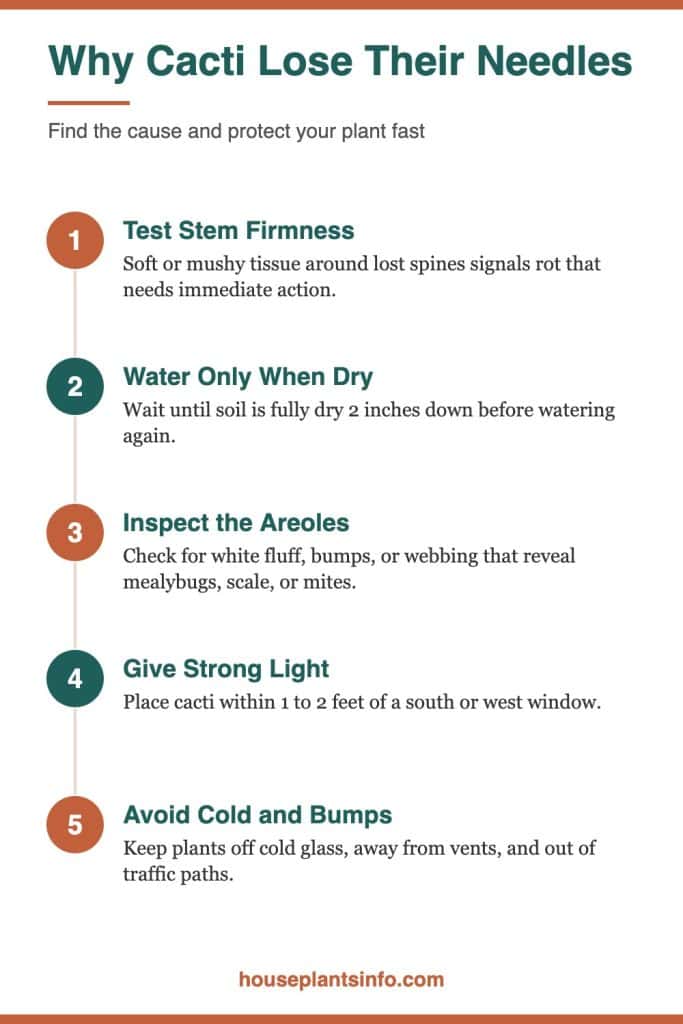
- Press gently on the stem near the bare spot. Soft, mushy, or dark tissue points to rot, which needs action today.
- Look closely at the areoles (the fuzzy pads where spines grow) for white cottony fluff, tiny bumps, or fine webbing.
- Think about the last week. Did the plant get bumped, moved, repotted, or set near a cold window?
- Check whether the missing spines are only on old, lower growth or on the newer top section.
- Push a finger or wooden skewer 2 inches into the soil to see if it is soggy or bone dry.
Why Is My Cactus Losing Needles? How to Read the Clues
Where and how the spines are falling off tells you most of what you need to know. Spines lost from firm, green tissue usually mean damage or aging, while spines lost from soft or discolored tissue mean a health problem.
Cactus spines are modified leaves that grow from areoles. Once an areole has produced its spines, it rarely makes new ones. That is why a bare patch stays bare, and why you should focus on stopping further loss rather than regrowing what is gone.
Match the Pattern to the Cause
| What you see | Most likely cause |
|---|---|
| A few spines missing, stem firm and green | Bumps, handling, or pets brushing past |
| Bare, brown, bark-like skin at the base | Natural corking from age |
| Spines dropping from soft, dark, or mushy areas | Root or stem rot from overwatering |
| Shriveled, wrinkled stem with loose spines | Severe underwatering |
| White fluff, bumps, or webbing on areoles | Mealybugs, scale, or spider mites |
| Thin, pale, stretched growth with sparse spines | Too little light |
| Bleached or tan patches with brittle spines | Sunburn after a sudden light change |
| Spines loosening after a cold snap, mushy spots | Cold or frost damage |
Simple Gear for Diagnosis
A soil moisture meter takes the guesswork out of whether the pot is wet at the root level, which matters because cactus pots often stay damp deep down while the surface looks dry.

A magnifying glass or your phone camera zoomed in helps you spot small pests hiding in areoles.
Cause 1: Physical Damage and Handling
Bumping, brushing, or handling is the most common and least worrying reason cacti lose spines. If the stem underneath is firm and green, the plant is healthy and simply missing some armor.
Common Indoor Culprits
Indoor cacti get knocked by curtains, cleaning cloths, elbows, and blinds. Cats and dogs that brush past a low shelf can pull spines loose, and kids are often curious enough to test them by touch.
Repotting is another frequent cause. Gripping the plant with bare hands or a towel can snap spines or tear them out of the areoles.
How to Fix It
There is nothing to treat on the plant itself. Move the cactus out of high-traffic paths, away from swinging curtains and pet routes, and handle it more carefully next time.
Sophia’s tip: When you repot, wrap the cactus in a folded strip of newspaper or thick cardboard to form a sling. Kitchen tongs with silicone tips also work for small plants and spare the spines.
Cause 2: Natural Aging and Corking
Older cacti often lose spines near the base as that tissue turns tan, brown, and woody. This process is called corking, and it is normal as long as the area stays hard and dry.
Corking vs. Rot
Corking starts at the soil line and slowly moves upward over months or years. The surface feels firm, rough, and bark-like, and the plant above it keeps growing.
Rot, by contrast, feels soft or squishy, often looks darker or wet, and can spread within days. If you can dent the tissue with a fingernail, treat it as rot rather than corking.
When Corking Is a Warning
Corking that appears suddenly on young growth, or on the sun-facing side only, can be a sign of stress such as sunburn or irregular watering. Columnar cacti show this clearly.
If you grow one, the guide on Peruvian apple cactus yellowing explains how to tell normal color changes from stress.
What to Do
Leave natural corking alone. Do not scrape it, oil it, or try to remove it, because it protects the older stem. Keep giving the plant good light and careful watering so the healthy growth above stays strong.
Cause 3: Overwatering and Rot
Overwatering is the most dangerous cause of spine loss because it leads to root and stem rot. Spines fall out when the tissue holding them softens and breaks down.
Signs Your Cactus Has Rot
- Spines pull out easily or fall with a light touch
- Soft, mushy, or translucent patches on the stem
- Brown or black discoloration spreading upward from the base
- A sour or rotten smell from the soil
- The plant leaning or wobbling in the pot
Why It Happens Indoors
Cacti need soil that dries out completely between waterings. Indoors, dense potting mix, pots without drainage holes, cool rooms, and low winter light all slow drying. A watering schedule that worked in July can drown a cactus in January.
How to Save a Rotting Cactus
Remove the cactus from its pot and shake off the soil. Cut away any soft or black roots with a clean, sharp knife. If the stem has rot, slice above the damage until the cut surface is clean, pale green, and free of brown streaks.
Let the plant dry in bright, indirect light for several days to two weeks, until a dry callus forms over every cut. Then repot into a fresh, gritty cactus mix in a pot with a drainage hole, and wait about a week before watering lightly.
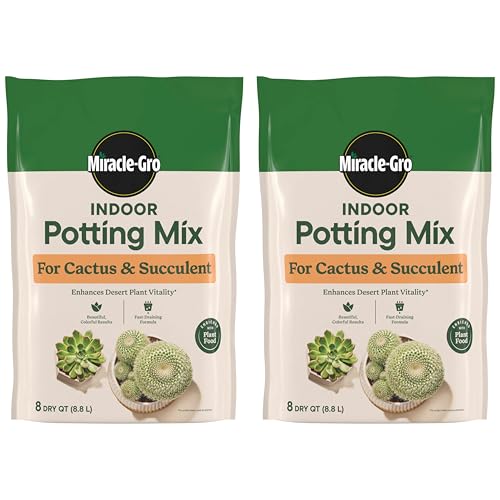
If the base is too far gone, you can save a healthy top section as a cutting.
The steps are the same for many columnar species, and this guide on how to grow Peruvian apple cactus from cutting walks through callusing and planting.
If a rescued cutting sits for weeks with no roots, check the troubleshooting for Peruvian apple cactus not rooting.
Preventing It
Water only when the soil is completely dry at least 2 inches down, and in winter that may mean once a month or less. Use an unglazed terracotta pot if your apartment stays cool, since it dries faster than plastic or glazed ceramic.
Sophia’s tip: Empty the saucer or cachepot 15 to 30 minutes after watering. Standing water under a cactus is one of the fastest ways to start root rot, especially near a drafty winter window.
Cause 4: Underwatering and Dehydration
Severe underwatering can loosen spines, though it is far less common than overwatering. The stem will usually look shriveled, wrinkled, or deflated before spines start dropping.
How to Recognize Thirst
A thirsty cactus pulls in on itself. Ribs look deeper and closer together, round species flatten, and the skin may look dull or puckered. The soil will be hard, dry, and pulling away from the pot edges.
Forced-air heat and radiators make this worse in winter. A cactus sitting right above a radiator can dry out much faster than you expect.
How to Rehydrate Safely
Water deeply until it runs from the drainage hole, then let the pot drain fully. If the soil is so dry that water runs straight down the sides, bottom water by setting the pot in a few inches of water for 15 to 20 minutes.
The stem should plump up over several days to a couple of weeks. After that, go back to watering only when the soil is dry, which is often every 2 to 3 weeks in spring and summer.
Move It Away From Heat
Keep cacti at least a few feet from radiators, heating vents, and space heaters. Dry, hot air blowing directly on the plant stresses the stem and can make spines brittle.
Cause 5: Mealybugs, Scale, and Spider Mites
Sap-sucking pests weaken the tissue around areoles, which can cause spines to loosen and fall. They also leave scarring, yellowing, and sticky residue.
Mealybugs
Mealybugs look like small tufts of white cotton, and they love to hide in areoles, between ribs, and on roots.
If you are unsure what you are seeing, this explainer on whether you can cactus get mealybugs covers the signs in detail. Root mealybugs show up as white specks in the soil and on roots when you unpot the plant.
Scale
Scale insects look like small brown, tan, or white bumps that stay in one place. They can be mistaken for part of the plant until you scrape one off with a fingernail.
Spider Mites
Spider mites are tiny and thrive in warm, dry indoor air. Look for fine webbing near the areoles and a speckled, tan, or rusty discoloration on the skin.
How to Treat Pests
Isolate the cactus from your other plants right away. Dab mealybugs and scale with a cotton swab dipped in 70% isopropyl alcohol, using tweezers to reach between spines.
For larger infestations, spray with insecticidal soap or neem oil, following the label directions and keeping the plant out of direct sun until it dries. Repeat every 7 to 10 days for several weeks, because eggs hatch after the first treatment.
For root mealybugs, unpot the plant, rinse the roots, trim any damaged ones, and repot into fresh mix in a clean pot. For spider mites, rinsing the plant with lukewarm water and repeating treatments works well.
Cause 6: Too Little Light
Low light does not usually make old spines fall out, but it produces weak, stretched growth with fewer, thinner, and shorter spines. The cactus can look like it is losing needles when it is really growing new tissue without them.
What Etiolation Looks Like
The new growth turns pale green, narrows, and stretches toward the window. The top may look pinched compared with the base, and areoles are spaced farther apart with sparse spines.
This damage is permanent. The stretched section will stay narrow even after the light improves, though healthy growth above it will look normal.
How Much Light Cacti Need Indoors
Most desert cacti want at least 4 to 6 hours of direct sun a day. In a Chicago-style apartment, a south or west window within 1 to 2 feet of the glass is the best spot.
East windows can work for smaller species. North windows rarely provide enough light, so a full-spectrum grow light placed 6 to 12 inches above the plant for 12 to 14 hours a day is a practical substitute.

Sophia’s tip: Rotate your cactus a quarter turn every week or two. Even in a bright window, the side facing the room gets less light, and regular turning keeps the growth straight and the spines evenly dense.
Cause 7: Sunburn and Sudden Light Changes
A cactus moved abruptly from low light into strong sun can scorch. Burned tissue turns white, yellow, or tan, and spines in that area may become brittle and fall away.
Common Triggers
Sunburn often happens when a plant goes outside for summer, moves to a new south-facing window, or sits behind glass after a long dim winter. The damage usually appears on the side facing the sun.
How to Fix It
Move the plant to bright, indirect light for a while. The burned scars will not heal back to green, but they will firm up and turn tan as they dry.
How to Prevent It
Acclimate gradually over 1 to 2 weeks. Start with a couple of hours of direct sun or a spot a few feet from the window, then increase exposure step by step.
Grow lights placed too close can also scorch, so keep them at the recommended distance.
Cause 8: Cold Damage and Drafts
Cold air can damage cactus tissue and lead to soft spots and spine loss. Most common indoor cacti prefer temperatures between 65 and 85°F, with cooler winter nights in the 50 to 60°F range being fine.
Where Cold Hits Indoors
Window glass in a cold climate can drop well below room temperature at night. A cactus with stems touching the glass, or sitting in a drafty sill, can suffer chill damage even when the room feels comfortable.
Strong, cold air from an AC vent in summer can also stress cacti, especially if the plant is also wet.
Signs of Cold Damage
Look for water-soaked, translucent, or blackened patches, often on the side nearest the glass. These areas soften and may lose spines within days.
What to Do
Move the plant a few inches back from the window on cold nights, or slip a piece of cardboard between plant and glass.
Keep the soil dry during cold spells, since wet roots and low temperatures together are a common path to rot. If damaged tissue turns mushy, trim it as you would for rot.
Keeping Your Cactus Safe Around Pets and Kids
Many cacti are not listed by the ASPCA, and the main risk from most species is physical injury from the spines rather than poisoning. The Christmas cactus is listed by the ASPCA as non-toxic to cats and dogs.
Spines can lodge in paws, mouths, and small fingers. Place spiny cacti on high shelves or in rooms pets cannot reach, and check the floor around the pot for fallen spines, which stay sharp.
For a columnar plant you want to keep long term, good general care prevents most spine problems. This guide explains how to care for Peruvian apple cactus indoors, including light, watering, and winter rest.
Your Next Steps
- Press the stem around the bare area today. If it is soft, unpot the plant and check the roots for rot.
- Inspect every areole and the soil surface for white fluff, bumps, or webbing, and isolate the plant if you find pests.
- Check soil moisture 2 inches down before your next watering, and only water when it is completely dry.
- Move the cactus to a south or west window within 1 to 2 feet of the glass, or add a grow light.
- Pull the pot a few inches away from cold glass, radiators, and heating or AC vents.
- Relocate the plant out of pet paths and traffic areas so it stops getting bumped.
Common Questions About Cactus Losing Needles
Do cactus needles grow back?
Spines rarely regrow from an areole that has already lost them. The plant will produce new spines on fresh growth at the top or tips, so a healthy cactus will look fuller over time even if bare patches remain.
Is it normal for a cactus to lose spines at the bottom?
Yes, older cacti often lose spines near the base as the tissue corks and turns brown and woody. This is normal as long as the area stays hard and dry, with no soft or dark spots.
Can overwatering make a cactus lose needles?
Yes, overwatering is one of the most serious causes because it leads to root and stem rot. Spines fall out when the surrounding tissue softens, so act quickly by unpotting, trimming rot, and repotting in dry, gritty mix.
Should I pull off loose cactus spines?
You can gently remove spines that are already loose, using tweezers so you do not get poked. Do not pull on firmly attached spines, since that can damage the areole and leave an open wound.
How often should I water a cactus to prevent spine loss?
Water only when the soil is completely dry at least 2 inches down. That usually means every 2 to 3 weeks in spring and summer, and once a month or less in winter, depending on light and room temperature.

Hi! I’m Sophia, and I love plants – especially an expert in growing house plants. I stay in Chicago, United States of America, and through my blog and social media platforms, provide tips and tricks on how to grow healthy, vibrant plants indoors. Check out more here.