
You lean in toward your windowsill cactus and notice soft white tufts tucked between the ribs, around the spines, or on the soil.
If you are asking why does my cactus have white fuzz, the answer depends on where the fuzz sits and what happens when you touch it.
The short version: White fuzz on a cactus is either natural wool and hair the plant grows on purpose, or a pest such as mealybugs or cochineal scale hiding under a waxy coating.
Less often it is harmless mold or mineral crust on the soil. A quick touch test and a closer look will tell you which one you have.
This guide covers how to identify each cause, how to treat pests safely indoors, and how to keep the fuzz from coming back.
Check These First
- Press a white tuft with a cotton swab. Natural wool stays put and dry, while pests smear, move, or leave a sticky or colored residue.
- Look at where the fuzz grows. Even spacing at every areole points to normal growth, while random clumps in crevices point to insects.
- Check new growth at the top of the plant. Healthy cacti often grow fresh wool there, while pests prefer joints, the base, and the underside of pads.
- Scan the soil surface and pot rim. Fuzz only on the soil usually means mold or mineral salts, not a problem with the cactus itself.
- Inspect nearby plants. Mealybugs and scale spread easily between pots that touch or share a sill.
Why Does My Cactus Have White Fuzz? Start With This Test
Most white fuzz is identified in under a minute with a touch test and good light. You are looking at three things: pattern, texture, and what is underneath.
Look at the pattern
Cacti grow from areoles, the small cushioned points where spines emerge. Many species produce white wool at every areole, so the fuzz appears in neat, repeating dots along each rib.
Pests do not follow that pattern. They cluster in protected spots: the folds between ribs, the joints between pads, the crown, and the place where the stem meets the soil.
Get a closer view
A hand lens or a magnifying glass makes a big difference here. Under magnification, mealybugs look like tiny oval bodies with fringed edges, and cochineal looks like a white cottony shell with a dark insect underneath.
If you grow under a grow light, take the plant to a bright north or east window for inspection. Natural daylight shows color and texture more accurately than many LED panels, which can wash out pale details.

Try the swab test
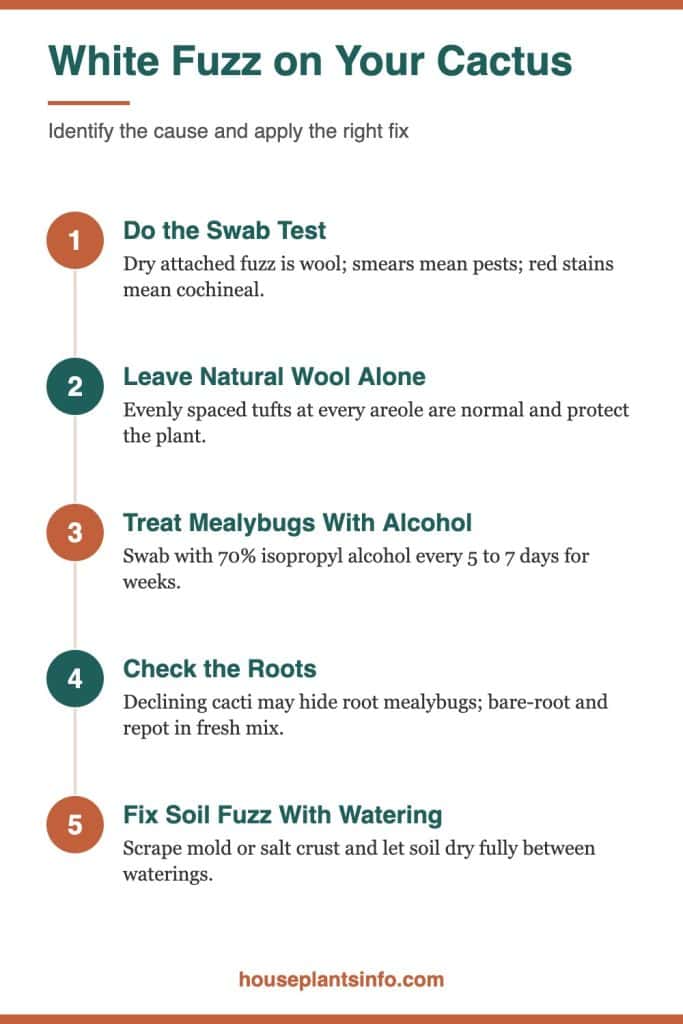
Gently roll a cotton swab across the fuzz. Natural wool feels like felt and stays attached to the plant.
Mealybugs squash into a pale, waxy smear. Cochineal crushes into a bright red or purple stain. Mold wipes away easily and often smells musty, and mineral crust feels gritty and hard.
| What you see | Where it is | Touch test result | Likely cause |
|---|---|---|---|
| Even white tufts at each areole | Along every rib, often denser at the top | Dry, firmly attached, felt-like | Natural wool |
| Long silky white hairs covering the stem | Whole plant | Soft, attached, no residue | Natural hair (species trait) |
| Cottony clumps, sticky residue | Crevices, joints, base, crown | Smears pale, may move | Mealybugs |
| Waxy white fluff on pads | Mostly prickly pear and related cacti | Crushes red or purple | Cochineal scale |
| White powder on roots | Root ball, inside pot | Smears pale | Root mealybugs |
| Thin white or gray web-like fuzz | Soil surface | Wipes away, musty smell | Mold |
| Hard white crust | Soil surface, pot rim | Gritty, crumbly | Mineral salts |
Natural Wool and Hairs: No Fix Needed
If the fuzz is evenly spaced, dry, and firmly attached, your cactus is simply growing the way it is supposed to. Leave it alone.
Why cacti grow wool
Wool and hair help cacti handle intense sun, temperature swings, and moisture loss in their native habitats. The white covering reflects light and shades the skin, much as spines do.
If you are curious about that defensive role, this explainer on why does a cactus have thorns covers how spines and wool work together.
Many popular cacti carry visible wool, including several Mammillaria species, the old man cactus, and woolly torch types. Some Mammillaria produce wool between the tubercles as well as at the areoles.
Wool at the crown and flowering zones
Fresh wool often appears at the top of the plant during active growth in spring and summer. Some cacti also grow extra wool where flowers form. A few mature species develop a dense woolly cap called a cephalium, which is a normal flowering structure.
How to tell aging wool from a problem
Natural wool can turn gray or tan as it ages and collects dust. That is cosmetic. Pests, by contrast, usually increase in number over days or weeks and show up in new spots.
Sophia’s tip: Snap a close-up photo of your cactus in the same window light each month. Comparing pictures makes it easy to spot new clumps that do not match the plant’s normal wool pattern.
Should you clean natural wool?
You can, gently. A soft, dry paintbrush removes dust without pulling wool from the areoles. Avoid washing hairy species often, since the hairs can mat and hold moisture against the skin in a cool apartment.
Mealybugs: Cottony Clusters in the Crevices
Mealybugs are the most common pest behind white fuzz on indoor cacti. Treat them as soon as you confirm them, because they multiply quickly in warm, dry rooms.
How to recognize mealybugs
Adult mealybugs are soft, oval insects roughly 1/10 to 1/5 inch long, coated in white wax. Females lay eggs inside cottony sacs, which is the fuzz most people notice first.
Other signs include sticky honeydew on the plant or sill, sooty black mold growing on that honeydew, and stalled or distorted growth.
Feeding damage can also leave pale or discolored marks, which is one reason a cactus have white spots problem sometimes overlaps with a pest problem.
Why indoor cacti get them
Mealybugs arrive on new plants, cut flowers, or reused pots and soil. Dry winter air from radiators and forced-air heat does not slow them down, and stressed plants near hot vents tend to be hit harder.
Fix: remove and treat
- Move the cactus away from other plants right away.
- Dip a cotton swab in 70% isopropyl alcohol and touch each visible mealybug and egg sac. The alcohol dissolves their wax coating.
- For heavy infestations, spray the plant with insecticidal soap or a diluted alcohol solution, following label directions, and test a small area first.
- Use tweezers or a soft brush to reach bugs deep between spines and ribs.
- Repeat every 5 to 7 days for at least 3 to 4 weeks, since eggs keep hatching after the adults are gone.
Keep a treated cactus out of direct hot sun until it dries, because wet skin plus strong light can scorch. A spot a few feet back from a south or west window works well during treatment.
When to consider a systemic product
If mealybugs keep returning after several rounds of spot treatment, a systemic insecticide labeled for houseplants is an option. Read the label carefully, use it in a well-ventilated area, and keep treated plants away from pets and kids.
Cochineal Scale: White Fluff That Bleeds Red
Cochineal is a scale insect that feeds almost entirely on prickly pear and closely related cacti. If your fuzz crushes into a vivid red or purple stain, you have found cochineal.
What makes cochineal different
Female cochineal insects stay mostly in one place on the pad and cover themselves with white, waxy, cottony fluff. Under that fluff is a dark, rounded body full of carminic acid, the compound that produces the red color.
That same pigment has been used for centuries as a natural dye. On your windowsill, though, it means a colony is draining sap from the pads.
Damage to watch for
Light infestations mostly look unsightly. Heavy ones can yellow and weaken pads, and badly damaged pads may collapse or drop. Feeding wounds can also turn discolored over time, so check whether your cactus have brown spots where colonies were feeding.
Fix: blast, scrub, and treat
- Take the plant to a sink or bathtub and spray the colonies with a firm stream of water to knock off the waxy fluff.
- Scrub stubborn spots with a soft toothbrush dipped in soapy water or 70% isopropyl alcohol.
- Follow with insecticidal soap, covering both sides of every pad.
- Wear gloves, since the red pigment stains skin, cloth, and grout.
- Repeat weekly until no new fluff appears for several weeks.
Sophia’s tip: Lay an old towel in the tub and use a handheld shower sprayer on its gentlest firm setting. Let the cactus drain upright on the towel for a full day before returning it to its window.
Severely infested pads
If a single pad is covered and already soft or yellow, it is often easier to remove it with a clean, sharp knife. Bag and discard it in household trash rather than compost.
Root Mealybugs: White Powder Below the Soil
If your cactus looks dull, stops growing, or wobbles in the pot with no fuzz on the stem, the white fuzz may be hiding underneath.
Root mealybugs live on roots and in the soil, and they cause slow decline that is easy to mistake for watering trouble.
Signs above and below
Above the soil, look for a plant that stays wrinkled even after watering, shows no new growth during spring and summer, or looks faded. You may also see white fuzz along the inside rim of the pot or at drainage holes.
Below the soil, unpot the plant and look at the root ball. Root mealybugs appear as white, powdery or waxy patches clinging to roots and soil particles.
Fix: bare-root and repot
- Unpot the cactus wearing thick gloves or holding it with folded newspaper.
- Shake and gently brush off all old soil.
- Rinse the roots in lukewarm water, or soak them briefly in a diluted insecticidal soap solution following label directions.
- Trim away any dead, mushy, or heavily infested roots with clean scissors.
- Let the roots air-dry for several days in a bright spot out of direct sun.
- Repot in fresh, fast-draining cactus mix and a cleaned or new pot.
Wait about a week before watering after repotting. This gives any trimmed roots time to callus and lowers the risk of rot.
Do not reuse the old soil
Throw out the infested soil in sealed household trash. Scrub the old pot with hot soapy water, or soak it in a diluted bleach solution and rinse well before reuse.
Mold, Mildew, or Mineral Crust: Soil and Surface Fuzz
White fuzz on the soil rather than the cactus is usually harmless mold or mineral salts. Both point to watering habits worth adjusting.
White mold on the soil surface
Fine, cottony or web-like white growth on soil is usually a harmless saprophytic fungus feeding on organic matter. It shows up when soil stays damp, the room is cool, and air movement is low.
To fix it, scrape off the top 1/2 inch of soil and replace it with fresh mix or a layer of grit. Then water less often, letting the soil dry completely between waterings.
Powdery mildew on the plant
True powdery mildew on cacti is uncommon indoors. It looks like a flat, dusty white film rather than raised tufts. If you see it, improve air circulation, avoid wetting the plant, and remove badly affected sections.
Mineral salt crust
A hard, white crust on the soil or pot rim is built-up minerals from tap water and fertilizer. It is common in regions with hard water and in terracotta pots, which wick salts to the outside surface.
Scrape off the crust, then flush the pot by running water slowly through the soil until it drains freely from the bottom. Repeat this every few months, and use distilled or rainwater if your tap water is very hard.
When the skin itself changes color
If the cactus skin is fading or bleaching rather than growing fuzz, the cause is usually light, not pests or mold. This guide on a cactus turning white covers sunburn and etiolation in detail.
How to Keep White Fuzz From Coming Back
Prevention comes down to quarantine, regular inspection, and conditions that keep cacti strong. Healthy, unstressed plants resist pests better and recover faster.
Quarantine every new plant
Keep new cacti and succulents in a separate room or at least several feet from other plants for 2 to 3 weeks. Inspect them weekly with a hand lens, paying close attention to crevices and the soil line.
Give them the right light
Most desert cacti want 4 to 6 hours or more of direct sun. A south or west window is ideal, placed within about a foot of the glass.
In darker apartments or during short Chicago winters, a full-spectrum grow light 6 to 12 inches above the plant for 12 to 14 hours a day works well.
Water on a dry-soil schedule
Water thoroughly only when the soil is completely dry, then let it drain fully. That often means every 2 to 4 weeks in spring and summer and every 4 to 8 weeks in winter, depending on pot size, light, and heat.
A soil moisture meter or a wooden skewer pushed to the bottom of the pot helps you judge dryness. Overwatered cacti are prone to mold on the soil and rot at the base, which can also show up when a cactus have black spots.
Manage heat and airflow
Keep cacti at least 2 to 3 feet from radiators and forced-air vents, which stress plants and dry them unevenly. A small fan on low nearby improves airflow and discourages soil mold. Avoid placing cacti directly in an AC draft during summer.
Sophia’s tip: Pair your inspection with watering day. Each time you water, tilt the pot, check the base, and look into the crevices with a hand lens before you put it back.
Use clean supplies
Use fresh, fast-draining cactus mix for every repot, and clean pots before reusing them. Wipe pruning tools with isopropyl alcohol between plants to avoid carrying pests across your collection.
Is White Fuzz a Risk to Pets or Other Plants?
The fuzz itself does not usually harm pets, but pests spread quickly to other plants and some treatments need care around animals. Spines remain the main hazard most cacti pose to pets.
Pet safety
The ASPCA lists Christmas cactus as non-toxic to cats and dogs. For most other cacti, the bigger concern is physical injury from spines, which can lodge in paws, mouths, and noses. Keep spiny plants on high shelves or in rooms pets cannot reach.
When you treat pests, keep pets and kids away until sprays and alcohol have fully dried. Store insecticidal soap and systemic products out of reach, and follow label directions exactly.
Risk to your other houseplants
Mealybugs feed on many houseplants, including succulents, hoyas, jade plants, and tropical foliage. They crawl between touching pots and can hitch rides on hands and tools. Cochineal mostly sticks to prickly pear and its close relatives, so it rarely spreads to unrelated plants.
Root mealybugs travel through drainage water and shared trays. Give each pot its own saucer and avoid bottom-watering several plants together.
Your Next Steps
- Swab one white tuft today and note whether it stays dry, smears pale, or stains red.
- Move any cactus with suspected pests at least several feet from your other plants.
- Treat mealybugs or cochineal with 70% isopropyl alcohol or insecticidal soap, repeating every 5 to 7 days for 3 to 4 weeks.
- Unpot any cactus that is declining without visible stem fuzz and check the roots.
- Scrape soil mold or mineral crust, then adjust watering so the soil dries fully between drinks.
- Set a monthly inspection reminder and quarantine every new plant for 2 to 3 weeks.
Common Questions About White Fuzz on Cactus
Is white fuzz on a cactus always bad?
No. Many cacti naturally grow white wool at their areoles or hair across their stems, especially Mammillaria and old man cactus types. If the fuzz is evenly spaced, dry, and firmly attached, it is normal growth.
Can I just wipe the white fuzz off?
You can wipe off pests, but wiping alone rarely ends an infestation because eggs and hidden insects remain. Use isopropyl alcohol or insecticidal soap and repeat treatments for several weeks. Do not try to scrub off natural wool, since it protects the plant.
Will white fuzz kill my cactus?
Natural wool and soil mold will not harm it. Untreated mealybugs, root mealybugs, or heavy cochineal can weaken a cactus over months and eventually kill it. Early treatment usually saves the plant.
Why did my cactus get mealybugs if it never goes outside?
Mealybugs usually arrive on new plants, cut flowers, used pots, or bagged soil. They can also move from other houseplants in the same room. Warm indoor temperatures let them breed year-round, so infestations often appear in winter.
How long does it take to get rid of mealybugs on a cactus?
Expect at least 3 to 4 weeks of treatment every 5 to 7 days. Eggs hatch after adults are killed, so stopping early often leads to a quick return. Keep inspecting for another month after you see no new insects.

Hi! I’m Sophia, and I love plants – especially an expert in growing house plants. I stay in Chicago, United States of America, and through my blog and social media platforms, provide tips and tricks on how to grow healthy, vibrant plants indoors. Check out more here.