
Your cactus sits on the windowsill looking paler than it used to, with a washed-out, yellowish or minty tone where the deep green once was.
If you are asking why is my cactus turning light green, the answer usually shows up in the plant’s shape, the feel of its base and the side of the stem that faded first.
The short version: Most cacti turn light green because they are not getting enough direct light, which causes pale, stretched growth.
Other common causes are overwatering, sudden strong sun, low nutrients after years in old soil, spider mites and cold drafts. Fresh new growth is also naturally lighter and darkens with time.
This guide covers how to tell each cause apart, how to fix it, and how to keep your cactus firm and green through a dim indoor winter.
Check These First
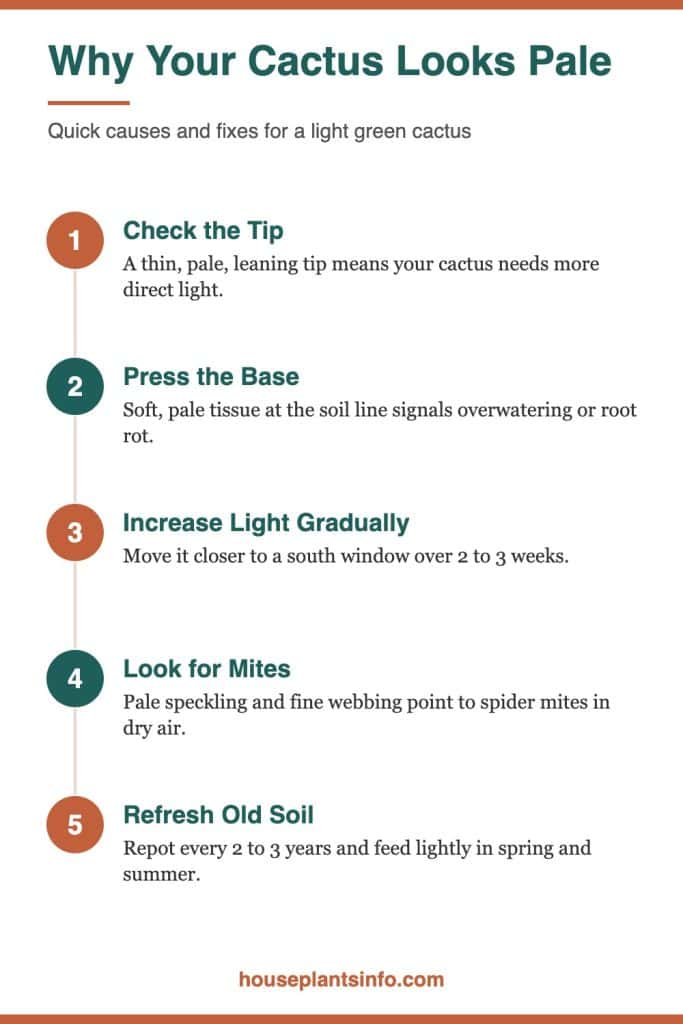
- Look at the tip of the stem. A narrow, pointed, pale tip that leans toward the window means the plant is stretching for light.
- Press the base gently. Soft, squishy or darkening tissue at the soil line points to overwatering and possible rot.
- Check which side faded. Pale or bleached patches only on the window-facing side suggest sunburn, while all-over paleness suggests low light or nutrients.
- Hold a white sheet of paper under the stem and tap it. Tiny moving specks or fine webbing mean spider mites.
- Feel the soil 2 inches down. Soil that stays damp for more than a week after watering is a strong warning sign.
Why Is My Cactus Turning Light Green? How to Read the Signs
A cactus turns light green when it produces less chlorophyll or loses the healthy pigment it already has. Light, water, roots, nutrients and pests all affect chlorophyll, so the pattern of the fading tells you which one is behind it.
Cacti evolved in bright, open places with intense sun and fast-draining ground. Indoors, even a sunny window delivers far less light than open sky, and potting mix dries much more slowly than desert soil. Those two gaps explain most color problems.
Where the Color Changed
Paleness that starts at the growing tip and comes with thinner, stretched growth almost always means low light. Paleness that starts at the base and moves upward, especially with softness, points to roots and water.
Fading confined to one side of the stem is usually environmental. In summer that side is often sunburned from hot glass, while in winter it may be chilled by cold glass.
How Fast It Happened
A slow, even fade over several months usually comes from low light or a nutrient shortage. A change over a week or two after a move, a hot spell or a cold night suggests sunburn, cold injury or a sudden watering problem.
Before you change anything, push a soil moisture meter near the base of the plant to see how wet the root zone really is.

If the plant lives more than a few feet from a window, a full-spectrum grow light may end up being the most useful fix you can make.
| Symptom | Likely cause | Urgency |
|---|---|---|
| Pale, thin, stretched tip leaning toward window | Too little light | Medium |
| Pale base, soft or mushy feel, wet soil | Overwatering or root rot | High |
| Bleached, whitish or yellow patch on window side | Sunburn | Low to medium |
| Even, slow fade on older growth, firm stem | Nutrient shortage or old soil | Low |
| Pale speckling, fine webbing | Spider mites | Medium |
| Pale, glassy patch after a cold night | Cold damage | Medium |
| Light green only on the newest growth | Normal new growth | None |
Too Little Light: Etiolation and the Fix
Low light is the most common reason a cactus turns light green indoors. The plant stretches toward the window, growing thin, pale and soft, a process called etiolation.
Most desert cacti want at least 4 to 6 hours of direct sun a day. A spot a few feet back from a north or east window, or a shelf in the middle of a room, rarely provides enough, especially from November through February.
Signs Your Cactus Is Stretching
- New growth is narrower than the older stem, creating an hourglass or pencil shape
- The tip is pale green or yellow-green rather than deep green
- Spines on the new growth are spaced farther apart
- The whole plant leans toward the window
- Globe-shaped cacti grow taller and more cone-shaped
Moving It Into Better Light
Place the cactus directly at a south or west window, within about 1 to 2 feet of the glass.
Move it there gradually over 2 to 3 weeks, because a plant that has been in dim light can sunburn if it suddenly gets full afternoon sun.
Rotate the pot a quarter turn every week or two so all sides get light. This keeps the plant growing straight instead of leaning.
Adding a Grow Light
In a north-facing apartment or during short Chicago-style winter days, a full-spectrum grow light makes a real difference. Set it about 6 to 12 inches above the plant and run it 12 to 14 hours a day on a timer.

Stretched growth will not shrink back to its original shape. Once the light improves, new growth comes in thicker and darker, and you can later trim off the leggy section and reroot it if you want a tidier plant.
Sophia’s tip: In winter, I keep cacti right at the glass during the day for maximum light, then slide them a foot back at night. That keeps them bright without letting the stems chill against cold window panes.
Overwatering and Root Rot: When Pale Means Trouble
Overwatering turns a cactus pale because damaged roots cannot take up water and nutrients properly. The plant fades first, then the base may soften, darken and collapse if rot sets in.
Roots sitting in soggy soil run out of oxygen and begin to die. Without working roots, the stem loses its healthy color even though the soil is wet, which confuses many growers into watering more.
How Overwatering Looks
- Pale or yellowish color starting at the base and moving up
- Stem feels slightly soft or rubbery instead of firm
- Soil stays damp for a week or longer after watering
- The plant wobbles in the pot
- A sour smell comes from the soil
If the base has already turned soft and dark, read our guide on a cactus turning brown and soft for rescue steps.
Columnar species show a similar pattern, and the article on a Peruvian apple cactus turning black explains how to cut back to clean tissue.
Checking and Trimming Roots
Slide the cactus out of the pot while wearing thick gloves or holding it with folded newspaper. Healthy roots are firm and white to tan, while rotted roots are dark, mushy or hollow and pull apart easily.
Trim damaged roots back to firm tissue with a clean, sharp knife wiped with rubbing alcohol. Let the plant sit bare-root in a dry, shaded, airy spot for several days to a week so the cuts can callus.
Repotting Into Fast-Draining Mix
Repot into a dry cactus mix with roughly 30 to 50 percent perlite or pumice. Use a pot with a drainage hole that is only 1 to 2 inches wider than the root ball, since extra soil holds extra water.
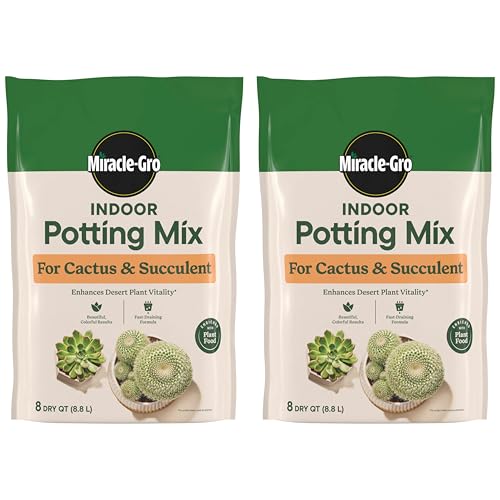
Wait about a week before watering lightly. After that, water only when the mix is completely dry all the way down.
Sudden Strong Sun: Sunburn and Bleaching
Sunburn makes a cactus turn pale, whitish or yellowish on the side facing the light. It usually happens after a sudden move into stronger sun than the plant is used to.
Cacti can handle intense light, but only after they adjust. A plant that spent winter in a dim corner and then goes straight to a south window or an outdoor balcony often bleaches within days.
Telling Sunburn From Low Light
Sunburn appears as patches or a one-sided fade, often with a slightly yellow, white or tan cast. Low light causes paleness over the whole new growth, along with stretching.
Badly burned patches may turn tan or brown and harden into corky scars over a few weeks. For pale coatings that might be pests or mineral deposits instead, compare the signs in our guide to a cactus turning white.
Helping It Recover
Move the cactus a few feet back from the glass or behind a sheer curtain. Then shift it closer over 2 to 3 weeks so it can build up tolerance.
Mild bleaching often greens up as the plant adjusts. Hard, scarred patches are permanent but cosmetic, and they do not spread.
Sophia’s tip: When you move a cactus outside for summer, give it a week in bright shade, then a week of morning sun only, before any afternoon sun. That gradual step-up prevents most bleaching.
Nutrient Deficiency and Old, Worn-Out Soil
A cactus that slowly fades to light green while staying firm and well-shaped may be short on nutrients. This is common in plants that have lived in the same soil for several years without feeding.
Nitrogen and magnesium both play a direct role in chlorophyll. When they run low, older tissue often pales first because the plant moves its remaining nutrients toward new growth.
Why Indoor Soil Runs Out
Potting mix holds a limited supply of nutrients, and each watering washes some out the drainage hole. Over 2 to 4 years, the mix also breaks down, compacts and drains more slowly, which stresses roots.
Hard tap water can leave mineral buildup that changes soil chemistry and makes nutrients harder to absorb. A white crust on the soil surface or pot rim is a common sign.
Feeding the Right Way
During spring and summer, feed with a balanced or low-nitrogen fertilizer made for cactus and succulents. Dilute it to about half the label strength and apply it every 4 to 6 weeks while the plant is actively growing.
Stop feeding in fall and winter, when growth slows. Fertilizer on a resting plant in a cool, dim room can build up as salts and damage roots.
When to Repot
If the cactus has been in the same mix for more than 2 or 3 years, repot it in spring into fresh cactus mix. Fresh soil restores drainage and nutrients at the same time.
Do not fertilize a plant that is pale because of root rot. Fix the roots and watering first, since damaged roots cannot use the fertilizer.
Spider Mites and Other Pests That Drain Color
Sap-sucking pests can make a cactus look dull, pale or speckled light green. Spider mites are the most common culprit indoors, especially in the dry air created by radiators and forced-air heat.
Mites pierce the skin and remove the contents of individual cells. Each feeding spot loses its color, and thousands of spots together make the stem look faded or grayish.
Spotting Spider Mites
- Fine pale or yellowish speckling, often starting near the areoles
- Very thin webbing between spines
- A dusty, dull look to the skin
- Tiny moving dots when you tap the stem over white paper
Mealybugs appear as small white cottony clumps in the ribs, around the areoles or at the soil line. Scale insects look like small flat or domed brown bumps stuck to the skin.
Treating an Infestation
Isolate the plant from other houseplants right away. Rinse the cactus with lukewarm water from a sprayer or under the faucet, keeping the soil covered so it does not get soaked.
Dab mealybugs and scale with a cotton swab dipped in rubbing alcohol.
For spider mites, an insecticidal soap labeled for cactus and succulents works well; test it on a small area, keep the plant out of direct sun until dry, and repeat every 5 to 7 days for several weeks.
Damaged speckled tissue will not regain its color, but new growth will come in green once the pests are gone.
Cold Drafts, Heat and Underwatering
Temperature stress and long dry spells can also leave a cactus pale. Cold injury tends to look glassy or washed out, while extreme thirst makes the plant look dull, shriveled and lighter in color.
Cold Glass and Drafts
Most cacti grown indoors prefer temperatures between about 60°F and 85°F in the growing season. Many tolerate winter rest at 45°F to 55°F, but only if the soil stays dry.
A stem pressed against winter window glass or sitting near a drafty door can develop pale or translucent patches. If the patch stays firm, it will likely dry into a scar; if it turns soft, cut it out as you would rot.
Hot Vents and AC Drafts
A pot sitting right on top of a radiator or in front of a forced-air vent dries out fast and can stress the plant. Air conditioning blowing directly on a cactus in summer can also chill one side.
Keep the plant at least a few feet from vents, radiators and AC units. Dry winter air itself is fine for cacti; the problem is direct, concentrated heat or cold.
Too Little Water
Cacti are drought-tolerant, but they still need water during the growing season. A plant left completely dry for many months in spring and summer may look pale, wrinkled and deflated.
Water thoroughly when the mix is fully dry, letting excess drain out, then wait until it dries again. In spring and summer this is often every 1 to 3 weeks; in winter, every 3 to 6 weeks or less in a cool room.
Sophia’s tip: Lift the pot right after watering and again when it is bone dry. Learning that weight difference makes it easy to judge watering by feel instead of by the calendar.
Is It Just New Growth? Normal Color Changes
Fresh growth on many cacti starts out lighter green and darkens over several weeks to a few months. If only the newest tip is light green and it is the same width as the rest of the stem, the plant is healthy.
How Healthy New Growth Looks
- Light green only at the very top or at new pads and arms
- Same thickness as the stem below, not narrower
- Spines spaced evenly like the older growth
- Firm texture with no softness
Some cacti also develop a natural tan, gray or bark-like layer called corking near the base as they age. Corking starts at the bottom, creeps up slowly and feels hard, unlike rot.
Color Shifts in Holiday Cacti
Christmas and Thanksgiving cacti change color in response to light, temperature and stress.
Their segments can go reddish or purplish in bright sun or cool rooms, which our guides on why are Christmas cactus leaves turning red and Christmas cactus leaves turning pink explain in detail.
These forest cacti prefer bright indirect light rather than full desert sun. A holiday cactus that turns pale yellow-green may be getting too much direct sun or too little water and feeding.
Pet and Child Safety
The ASPCA lists Christmas cactus as non-toxic to cats and dogs. For other cactus species, check the ASPCA toxic and non-toxic plant list, and keep spiny plants on high, stable shelves away from curious pets and kids.
Your Next Steps
- Check the tip shape, base firmness and which side faded to narrow down the cause today.
- Test the soil 2 inches down and stop watering until the mix is completely dry.
- Move the cactus within 1 to 2 feet of a south or west window over 2 to 3 weeks, or add a grow light for 12 to 14 hours a day.
- Inspect the ribs, areoles and soil line for spider mites, mealybugs or scale, and treat weekly if you find any.
- Repot into fresh, gritty cactus mix in spring if the soil is more than 2 or 3 years old.
- Feed at half strength every 4 to 6 weeks in spring and summer only.
Common Questions About Cactus Turning Light Green
Will my cactus turn dark green again?
Mildly faded tissue can regain some color once light, water or nutrients improve. Stretched growth and scarred patches stay as they are, but new growth comes in darker. Over time, healthy new growth hides much of the faded section.
Should I cut off the pale, stretched part?
You can, but it is not required for the plant’s health. If the leggy section bothers you, cut it off in spring with a clean knife, let the cutting callus for 1 to 3 weeks, and reroot it in dry cactus mix. The base often sprouts new growth below the cut.
Can a grow light fix a pale cactus?
Yes, a full-spectrum grow light is one of the most effective fixes for low light indoors. Keep it about 6 to 12 inches above the plant for 12 to 14 hours a day. Expect new, greener growth within a few weeks during the growing season.
Is a yellow-green cactus the same as a light green one?
They often share the same causes, but yellowing more strongly suggests overwatering, root problems or sunburn. Press the base and check the soil before anything else. A soft base with wet soil needs attention right away.
How long does it take a pale cactus to recover?
Recovery depends on the cause and the season. With better light or care in spring and summer, you may see healthier new growth within 3 to 6 weeks. In winter, growth is slow, so changes can take until spring to show.

Hi! I’m Sophia, and I love plants – especially an expert in growing house plants. I stay in Chicago, United States of America, and through my blog and social media platforms, provide tips and tricks on how to grow healthy, vibrant plants indoors. Check out more here.