
Your cactus is sitting on the windowsill looking soft, shriveled, or oddly discolored, and you are not sure whether it is resting or gone.
Knowing how to tell if a cactus is dead comes down to a few hands-on checks of the stem, the base, and the roots. Most of these take less than five minutes.
The short version: A dead cactus is mushy, hollow, or black all the way through, with brown, slimy, or crumbling roots and no firm green tissue anywhere.
If any part of the stem is still firm and green inside, the plant is alive and can often be saved by cutting away the damage or rooting a healthy piece.
This guide covers the signs of a dead cactus, the problems that only look fatal, the six most common causes with a fix for each, and how to rescue what is left.
Check These First
- Press the stem gently near the soil line. Firm means alive; soft and squishy means rot is present.
- Look at the color of the base. Black, dark brown, or translucent tissue at the bottom usually signals root or stem rot.
- Smell the soil. A sour or rotten odor points to overwatering and decay below the surface.
- Tip the plant out of its pot and look at the roots. White or tan and firm is healthy; brown, slimy, or hollow is not.
- Scratch a tiny spot of skin with a fingernail on an upper section. Green and moist underneath means living tissue.
How to Tell If a Cactus Is Dead: The Signs That Matter
A cactus is dead when its stem has no firm, green, moist tissue left and its roots are rotted or completely dried out. One sign alone is rarely enough, so check the stem, the base, and the roots together before deciding.
Stem Texture and Color
Healthy cactus tissue feels firm and slightly springy, like a cold cucumber. A dead stem either collapses under light pressure, feels hollow when tapped, or has dried into a stiff, papery shell.
Color matters too. Uniform black, gray, or yellow-brown tissue that spreads upward from the soil is a strong warning. Small tan or brown patches on the surface, especially near the base of older plants, are often harmless corking.
The Cut Test
If the outside is unclear, the inside will tell you. Use a clean, sharp knife wiped with rubbing alcohol and make a shallow slice into the stem a few inches above any visible damage.
Living tissue is pale green to creamy white and moist. Dead tissue is brown, black, orange, or stringy, and it often smells sour. If you find healthy tissue anywhere, you have something to work with.
Root Condition
Ease the plant out of its pot, holding it with folded newspaper or thick gloves. Healthy roots are pale and firm, and they hold the soil together.
Rotted roots are dark, mushy, and slip off when you tug them. Roots that are dry and brittle may come from long drought, and those plants can sometimes regrow new roots if the stem is still plump enough.
Soil Moisture as a Clue
A soil moisture meter or a plain wooden chopstick pushed to the bottom of the pot shows whether the root zone has been staying wet. Cactus soil that is still damp a week or more after watering is a major red flag for rot.

Sophia’s tip: Push the chopstick all the way to the bottom and leave it for 10 minutes. If it comes out dark or with soil clinging to it, do not water, and check the roots for rot right away.
Dying or Just Stressed? Signs That Look Worse Than They Are
Many cacti look alarming during normal stress or dormancy but are perfectly alive. Wrinkling in winter, brown corky skin at the base, and pale color after a move are common false alarms.
Winter Shrinkage and Wrinkles
Cacti kept dry over winter often shrink slightly and develop light wrinkles or pleats. They are drawing on stored water while growth pauses.
If the stem is still firm and green inside, this is normal. The plant will plump up within a week or two of the first spring watering.
Corking on Older Stems
Corking is a tan, bark-like layer that forms on the lower stem of mature cacti. It starts at the base and works upward slowly over years.
Corky tissue is hard and dry, not soft. Rot, by contrast, is soft, dark, and often moves quickly. Press the area: hard means corking, squishy means trouble.
Color Changes After a Move
A cactus moved from a dim spot to a bright south window can turn yellow, white, or reddish within days. Some species blush red or purple under strong light as a protective response.
Reddish or purple tones on an otherwise firm plant are usually stress coloring, not death. Bleached white or tan patches that stay put are sunburn scars, which are permanent but not fatal.
Stretching Toward the Window
A cactus that grows thin, pale, and leans toward the glass is etiolated from too little light. It looks weak, but it is very much alive.
The stretched growth will not thicken again. New growth will return to normal shape once light improves.
Root Rot From Overwatering: Cause and Fix
Overwatering is the most common reason indoor cacti die. Roots sitting in wet soil run out of oxygen, then fungi and bacteria move in and the rot climbs into the stem.
How Rot Shows Up
Early signs include a soft, darkening base, yellowing that starts low on the plant, and a stem that suddenly leans or wobbles in its pot. Later, the base turns black and the whole plant may collapse.
Rot is fastest in winter, when light is low, growth is slow, and soil in a cool apartment can stay wet for weeks. A pot without a drainage hole makes the risk much higher.
Fixing Root Rot
- Remove the cactus from its pot and shake or rinse off the old soil.
- Cut away every soft, dark root with a sterilized blade until only firm, pale roots remain.
- If rot has entered the stem, cut upward until the cross section is clean and green all the way across.
- Let the plant sit in bright, indirect light for 3 to 7 days so the cuts dry and seal.
- Repot into fresh, dry cactus mix in a pot with a drainage hole, and wait about a week before watering lightly.
Preventing a Repeat
Water only when the soil is completely dry from top to bottom. In spring and summer that may mean every 1 to 3 weeks, depending on pot size, light, and heat.
In winter, most cacti need water only every 4 to 6 weeks, or not at all if kept cool. A gritty mix with extra perlite or pumice, about half mineral content, drains far better than standard potting soil.
Sophia’s tip: Choose an unglazed terracotta pot only an inch or so wider than the plant. The clay wicks moisture away, and a snug pot dries out much faster than an oversized one.
Underwatering and Dehydration: Cause and Fix
A cactus can die of thirst, though it takes a long time. A badly dehydrated cactus is deeply shriveled, may turn yellow or brown, and feels hard or leathery rather than mushy.
Signs It Needs Water
Deep wrinkles during the growing season, a stem that has visibly shrunk away from the pot edge, and soil that has pulled away from the sides all point to dehydration. Radiators and forced-air heat make this more likely in dry winter air.
Unlike rot, dehydration starts from the top or the thinnest parts of the plant. The base usually stays firm until late.
Bringing It Back
Check the roots first. If they are dry but not rotted, soak the pot from the bottom in a basin of room-temperature water for 15 to 30 minutes, then let it drain fully.
The stem should begin to firm up within a few days to two weeks. If the soil has become hydrophobic and water runs straight through, a slow bottom soak is the best way to rewet it.
Why Some Cacti Never Recover
A cactus left dry for many months in hot, bright conditions may lose its roots completely. If the stem is hollow and brittle with no green tissue inside, it is dead. If part of it is still green, you can try rooting a healthy section.
Light, Sunburn, and Cold Damage: Cause and Fix
Most desert cacti want 4 to 6 hours of direct sun or very bright light indoors, but sudden changes cause damage. Cold drafts and frosty glass can also kill tissue quickly.
Too Little Light
A cactus several feet back from a north window, or in a room with only overhead light, slowly weakens. It stretches, pales, and becomes more prone to rot because it uses water slowly.
Place it within a foot or two of a south or west window. If your windows face north or are shaded by nearby buildings, a full-spectrum grow light 6 to 12 inches above the plant for 12 to 14 hours a day works well.

Sunburn
Sunburn appears as white, tan, or yellow patches on the side facing the window. It happens when a plant moves from low light to strong sun, or gets hot behind glass in summer.
Burned tissue does not heal, but the plant usually survives. Move it back a little and increase light gradually over 2 to 3 weeks so new growth can adapt.
Cold and Frost Damage
Most cacti are comfortable between 50°F and 85°F indoors. Tissue pressed against icy glass, or left outside during a cold snap, can freeze below about 32°F, turning mushy and dark within a day or two.
Move the plant a few inches away from the glass on winter nights and away from AC vents in summer. Cut frozen sections back to firm tissue once the damage becomes clear.
Sophia’s tip: On winter nights, slide a piece of cardboard between the window glass and your cactus, or pull it back about 6 inches. Glass in a Chicago January can drop close to freezing even when the room is warm.
Pests and Infected Wounds: Cause and Fix
Pests rarely kill a cactus outright, but heavy infestations weaken it, and wounds from damage or bad pruning let rot organisms in. Catching both early keeps a small problem from spreading through the stem.
Common Cactus Pests
Mealybugs look like white cottony tufts in spine clusters and around the roots. If you have wondered whether you can cactus get mealybugs, the answer is yes, and they are one of the most frequent indoor cactus pests.
Scale appears as small brown or tan bumps that do not wipe off easily. Spider mites leave fine webbing and a dusty, pale, speckled look, especially in warm, dry air near heaters.
Treating Pests
- Isolate the plant from other houseplants immediately.
- Dab mealybugs and scale with a cotton swab dipped in 70% isopropyl alcohol.
- Spray with insecticidal soap, repeating every 7 days for at least three weeks to catch new hatchlings.
- For root mealybugs, unpot the plant, rinse the roots, and repot into fresh soil and a clean pot.
Infection in a Wound
A cactus can be wounded by a fall, a pet, pest feeding, or a careless bump. Infected wounds turn soft, dark, and wet, and may ooze or smell sour as rot spreads outward.
Clean infection out by cutting into healthy tissue with a sterilized knife, leaving a firm, green margin around the wound. Keep the plant dry and in bright indirect light so the cut calluses, and avoid misting or splashing the area.
How to Save a Dying Cactus by Rooting a Healthy Piece
When rot has destroyed the roots and lower stem, the plant itself may not survive, but a healthy upper section can grow into a new cactus. This works for most columnar and branching cacti.
Taking the Cutting
Cut above the damaged area with a clean, sharp knife, then keep slicing thin layers until the cross section shows no brown spots or rings. Any discoloration left behind can keep spreading.
For columnar types, beveling the edge slightly helps the cut surface callus evenly. The same steps you would use to grow peruvian apple cactus from cutting apply to most rescued stems.
Callusing and Rooting
Let the cutting sit upright in bright, indirect light for 1 to 3 weeks until the cut end is dry and firm. Thick stems need longer than thin ones.
Set it on top of, or just barely into, dry cactus mix and wait about a week before watering lightly. Roots usually form in 3 to 8 weeks, faster with warmth around 70°F to 80°F and in spring or summer.
When Rooting Stalls
Cuttings sometimes sit for months without roots, especially in cool winter rooms or if watered too soon. If your cutting stays firm but shows no growth, the guide on peruvian apple cactus not rooting walks through the usual reasons.
Once the new plant is established, regular care keeps it healthy. For columnar species, it helps to learn how to care for peruvian apple cactus indoors, since its light and watering needs match many other tall cacti.
Pets and Spines
The ASPCA lists the Christmas cactus as non-toxic to cats and dogs, but status varies across the many cactus species, and the spines of desert cacti can injure curious pets and kids. Keep rescued plants and cuttings on a high shelf while they recover.
Your Next Steps
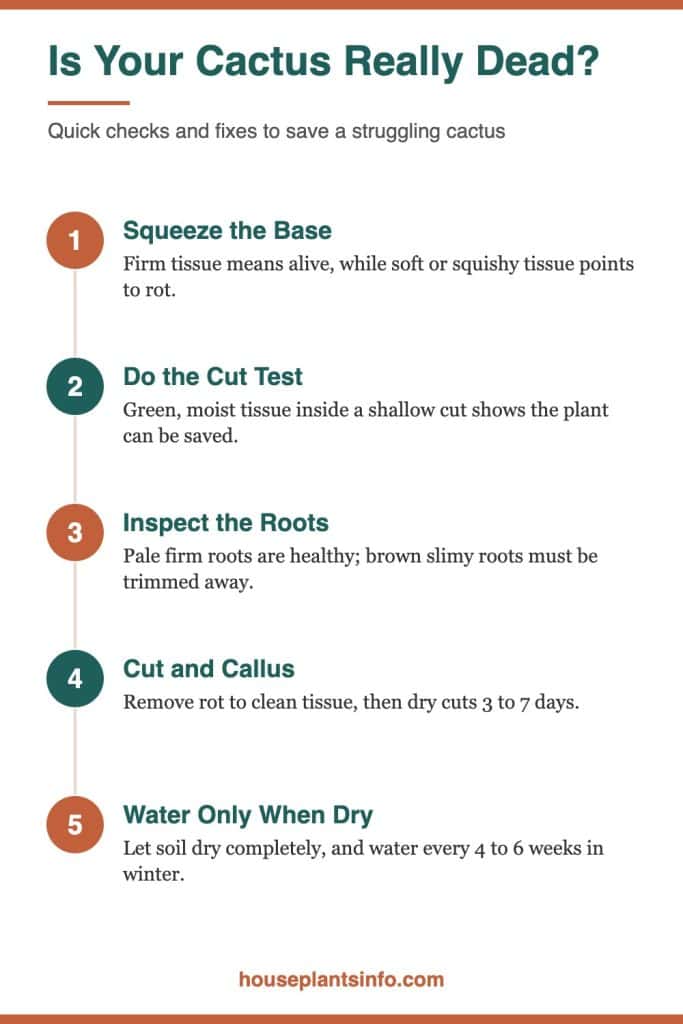
- Press the base, cut-test the stem, and check the roots to decide whether your cactus is alive.
- Cut away all soft, dark tissue with a sterilized knife until only firm, green tissue remains.
- Let any cuts callus for several days before repotting into dry, gritty cactus mix with a drainage hole.
- Move the plant to a bright south or west window, a few inches from cold glass, or add a grow light.
- Water only when the soil is fully dry, and cut back sharply in winter.
- Inspect spine clusters and roots for mealybugs or scale, and treat early.
Common Questions About Dying Cacti
Can a cactus come back from being completely mushy?
A cactus that is mushy all the way through, from the base to the tip, cannot recover. If even a small section near the top is still firm and green inside, you can cut it off, let it callus, and root it as a new plant.
Why is my cactus turning yellow?
Yellowing that starts at the base usually means overwatering and root rot. Yellowing on the side facing the window often means sunburn, while overall pale yellow growth can point to too little light or a long time without repotting.
How long can a cactus survive without water?
A healthy, mature cactus kept in a cool, dormant state can go 1 to 3 months without water, sometimes longer in winter. In a warm, bright room during active growth, most need water every 1 to 3 weeks.
Is brown on my cactus a sign it is dying?
Hard, dry, tan bark at the base of an older cactus is usually corking and is normal. Soft, dark brown or black patches that spread are a sign of rot and need cutting out right away.
Does this apply to prickly pear cactus too?
Yes, prickly pear pads show rot, dehydration, and sunburn the same way, and healthy pads root easily once callused. If you grow one outdoors in summer, you may also want to know how to tell if a cactus pear is ripe once it fruits.

Hi! I’m Sophia, and I love plants – especially an expert in growing house plants. I stay in Chicago, United States of America, and through my blog and social media platforms, provide tips and tricks on how to grow healthy, vibrant plants indoors. Check out more here.