
You notice dark, dotted, or blotchy patches on your cactus where the skin used to be an even, healthy green.
The short version: Black spots on a cactus usually come from overwatering and rot, fungal or bacterial infection, pests and the sooty mold they leave behind, or damage from sun, cold, or chemicals.
Soft, spreading, or smelly spots need fast action, while dry, firm, unchanging spots are usually old scars you can leave alone. This guide shows you how to tell the causes apart, fix each one, and keep the problem from returning.
Check These First
- Press gently next to the spot. Soft or mushy tissue points to rot; firm, dry tissue points to scarring, sunburn, or an old injury.
- Push a finger 2 inches into the soil. If it is damp days after watering, overwatering is the most likely driver.
- Look at the base of the plant at soil level. Black, wet-looking tissue there is the most urgent warning sign.
- Check for sticky residue, cottony fluff, or small bumps that you can scrape off with a fingernail. These point to pests.
- Think about recent changes: a move to a sunnier window, a cold draft, a new spray, or a fresh repotting.
Why Does My Cactus Have Black Spots? How to Read the Signs
Most black spots fall into two groups: active problems that spread and need treatment, and finished damage that will stay as a scar. The texture, location, and speed of change tell you which group you are dealing with.
Start with good light. A bright flashlight and a magnifying glass make it much easier to see whether a spot is raised, sunken, fuzzy, or slick.
A soil moisture meter pushed down near the root ball also helps, since surface soil can look dry while the bottom of the pot stays wet for a week or more.
Texture and Shape Clues
Sunken, soft, or weeping spots usually mean rot or infection. Raised, crusty bumps that scrape off are often scale insects. A black film that wipes away with a damp cloth is sooty mold, which grows on honeydew left by sap-sucking pests.
Small, round spots with a defined edge or a yellow halo suggest a fungal leaf spot. Large, irregular, dry patches on the side facing the window suggest sunburn.
Where the Spots Show Up
Spots at the soil line or moving upward from the base almost always connect to wet soil and root problems. Spots only on the window side point to light or cold glass.
Spots scattered across the plant after misting or spraying point to fungus or chemical damage.
How Fast They Change
Mark the edge of a spot lightly with a pencil or take a dated phone photo. If it grows within a few days, something active is happening. If it stays the same for two to three weeks, the cause has likely passed.
| Spot appearance | Most likely cause | Urgency |
|---|---|---|
| Soft, mushy, spreading from base | Root or stem rot | High |
| Wet, slimy, foul smell | Bacterial soft rot | High |
| Round spots, sometimes with halo or rings | Fungal infection | Medium |
| Black film that wipes off | Sooty mold from pests | Medium |
| Raised bumps that scrape off | Scale insects | Medium |
| Dry, flat patches on window side | Sunburn | Low |
| Dark, glassy patches after cold | Cold or frost damage | Medium |
| Dry, sudden spots after spraying | Chemical burn | Low |
Soft Black Spots From Rot: Stop Watering and Cut It Out
Rot is the most common and most serious reason for black spots on indoor cacti. It starts when roots sit in wet soil, lose oxygen, and let fungi or bacteria move up into the stem.
Indoors, this often happens in winter. The plant slows its growth under short days, but the watering schedule stays the same, and a pot without drainage holes or a dense potting mix keeps the roots wet for too long.
Signs Rot Has Started
Look for soft, dark tissue near the soil line, a stem that wobbles in the pot, or skin that turns translucent before going black. A sour or rotten smell confirms it. Spots that begin at the base and climb upward are a classic pattern.
How to Remove the Damaged Tissue
Unpot the cactus with folded newspaper or thick gloves to protect your hands. Shake off the soil and inspect the roots. Healthy roots are firm and pale; rotten roots are black, hollow, or slip apart when you touch them.
Wipe a sharp knife with 70% isopropyl alcohol. Cut away all soft, dark tissue until the inside of the stem is clean, firm, and evenly colored. Clean the blade again between cuts so you do not spread the infection.
If the rot reaches deep into the core, cut off a healthy top section and save it as a cutting. The base may not recover, but the top can root again.
Letting It Heal Before Replanting
Set the trimmed plant somewhere bright and dry, out of direct sun, for several days to two weeks, until the cut surfaces form a dry callus. Larger cuts need longer. Then replant in fresh, dry cactus mix in a clean pot with a drainage hole.

Wait about a week before watering lightly. This gives damaged root areas time to seal over before they meet moisture again.
Sophia’s tip: Mix your cactus soil with about one-third to one-half perlite or pumice. In a dry, radiator-heated apartment it still drains fast enough to keep roots safe, and it dries out evenly from top to bottom.
Fungal Spots and Anthracnose: Dry the Plant and Treat Early
Fungal infections cause round or irregular black spots that may have a sunken center, a yellow or reddish edge, or fine rings. Common culprits include anthracnose and several leaf spot fungi that thrive when the cactus surface stays wet.
Indoors, the triggers are usually misting, water splashing on the stem during watering, crowded plants with little airflow, and cool, damp rooms. Cacti do not need misting, and regular spraying invites fungal problems.
What Fungal Spots Look Like
Early spots are often small and look like dark freckles. As they grow, they can merge into larger patches, and some develop a slightly fuzzy or powdery surface.
Anthracnose typically produces sunken, water-soaked spots that darken and may show pinkish or orange spore masses in humid conditions.
If the plant also has pale or powdery patches, compare them with the causes covered in our guide on why your cactus has white spots, since mealybugs and mildew are easy to confuse with fungal growth.
How to Treat Fungal Infections
Move the cactus away from other plants so spores cannot spread. Stop misting completely and water only at the soil, never over the stem.
For small, surface-level spots, a fungicide labeled for ornamental plants, such as a copper-based or sulfur-based product, can stop further spread. Follow the label directions closely and test on a small area first.
For deep or sunken spots, cut out the infected tissue with a sterilized knife and let it callus.
Improve airflow by spacing plants several inches apart. A small fan on low in the room helps in a closed space, as long as it is not blowing cold air directly on the plant.
When Spots Will Not Disappear
Treatment stops new spots, but existing ones do not turn green again. Cacti cannot replace damaged skin on mature stems. Judge success by whether new spots stop appearing and whether old ones stop growing.
Bacterial Infection: Isolate the Plant and Remove Diseased Tissue
Bacterial infections cause black spots that look wet, slimy, or oozing, often with a strong unpleasant smell. Bacterial soft rot can turn a firm stem into mush in a matter of days.
Bacteria usually enter through wounds, such as a scratch, a broken spine base, an insect bite, or a fresh cut that got wet before it healed. Warm, humid, poorly ventilated conditions speed them up.
How to Tell Bacterial From Fungal Problems
Bacterial spots tend to look greasy or water-soaked, spread quickly, and smell foul. Fungal spots usually progress more slowly, look drier, and may show fuzzy growth or spore masses. When in doubt, treat the plant as if the problem is serious and act quickly.
What to Do Right Away
There is no reliable spray that cures bacterial rot in a cactus. Your best option is surgery. Cut out every bit of discolored tissue plus a margin of healthy-looking tissue around it, sterilizing your knife between each cut.
If the infection covers most of the plant, take a clean cutting from any healthy section and discard the rest. Throw away the soil and scrub the pot with hot soapy water before reusing it.
Keep the plant isolated for several weeks after treatment. Watch for new soft spots around the cut edges, which mean some bacteria were left behind.
Sunburn and Cold Damage: Fix the Placement
Environmental damage creates black or dark brown spots that are dry and stable rather than soft and spreading. Sunburn and cold injury are the two most common versions indoors.
Sunburn From Sudden Light Changes
Cacti love light, but they need time to adjust to stronger sun. A plant moved from a dim room to a south- or west-facing window, or set outside for summer without a gradual transition, can scorch on the exposed side.
The burn often starts yellow or white and darkens to brown or black.
Burned patches are scars and will not heal back to green. To prevent more damage, increase light gradually over one to two weeks. Start a few feet back from the glass or behind a sheer curtain, then move the plant closer.
Spots that stay tan or brown and feel corky may be a different issue. Our article on why your cactus has brown spots explains corking, scarring, and other dry discoloration in more detail.
Cold Damage Near Windows
Most desert cacti are uncomfortable below about 50°F, and tissue can be damaged as temperatures approach freezing.
In a Chicago winter, glass on a single-pane window can get far colder than the room, and a cactus touching the pane can develop dark, glassy patches that later turn black and collapse.
Keep cacti at least a few inches from the glass on frigid nights, or slide them back from the window after sunset. Avoid placing them near exterior doors that open often in winter.
Heat and Drafts
Forced-air vents and radiators do not usually blacken a cactus directly, but they dry the surface and stress the plant. Hot air blasting from a vent combined with strong sun can make burn worse.
Keep plants out of direct air streams from heaters and AC units.
Sophia’s tip: On winter nights, rest a thermometer on the windowsill right next to your cactus for a day or two.
The reading at the glass is often 10°F or more below the room, which tells you whether you need to pull the pot back at night.
Pests and Sooty Mold: Treat the Insects First
Several sap-feeding insects cause black spots, either directly through their bodies and feeding damage or indirectly through sooty mold. The fix is to remove the pests; the spots follow.
Scale Insects
Scale look like small, round, or oval brown to black bumps stuck to the stem. They do not move once settled. If you can scrape the spot off with a fingernail or toothpick and see a tiny insect shell, it is scale.
Remove light infestations by wiping each bump with a cotton swab dipped in 70% isopropyl alcohol, then scraping it away. Repeat every five to seven days for several weeks, since eggs keep hatching.
Mealybugs and Sooty Mold
Mealybugs leave white, cottony clusters, often between ribs, at the areoles, and on roots. Both mealybugs and scale excrete sticky honeydew. A black fungus called sooty mold grows on that residue, creating a dark coating that looks alarming but sits on the surface.
Wipe the sooty mold off with a soft, damp cloth or a soft brush. If it comes away and the green skin underneath is healthy, the plant is fine.
Then treat the insects with alcohol swabs, insecticidal soap, or a systemic product labeled for houseplants, following the label.
Spider Mites and Thrips
Spider mites cause fine stippling and faint webbing, especially in dry winter air near radiators. Thrips leave tiny dark specks of waste along with silvery scarring.
Both can leave dark marks behind. Rinse the plant gently, isolate it, and treat with insecticidal soap, repeating on the label schedule.
Sophia’s tip: Before any new cactus joins the others, keep it on a separate shelf for three to four weeks and inspect it weekly with a flashlight. Check between the ribs and under the rim of the pot, where scale and mealybugs hide.
Chemical Damage and Physical Injury: Rinse and Wait
Black spots that show up suddenly after spraying, fertilizing, or handling usually come from chemical burn or injury. These spots are dry and do not spread once the cause is removed.
Common Chemical Causes
Leaf shine products, oil sprays used in direct sun, strong insecticides, cleaning sprays drifting from nearby surfaces, and overly strong fertilizer can all burn cactus skin.
Fertilizer salts can also build up in soil and damage roots, which shows up as dark discoloration near the base.
If you suspect chemical contact, rinse the stem with lukewarm water and let it dry in bright, indirect light. If fertilizer is the likely cause, flush the pot with plain water several times, letting it drain completely, or repot in fresh mix.
Use fertilizer for cacti at half strength or less, and only during spring and summer growth. Skip it entirely in winter.
Bumps, Scratches, and Spine Damage
Cacti in busy apartments get knocked by curtains, pets, kids, and vacuum cleaners. A bruise or scrape can darken into a black scar. Damaged areas around the spines are also common, and understanding why a cactus has thorns helps explain why broken areoles can scar.
Keep injured areas dry until they heal over. Since open wounds are entry points for bacteria, avoid watering over the plant until the damage has sealed.
Spots on Specific Species
Some cacti are especially prone to certain patterns. Columnar types with tall, thick stems can show spreading dark patches from internal rot, which we cover in our guide on a Peruvian apple cactus turning black.
Cylindrical opuntias have their own common issues, explained in our article on Eve’s needle cactus black spots.
How Do I Prevent Black Spots From Coming Back?
Prevention comes down to dry roots, dry stems, steady light, stable temperatures, and early pest checks. Most black spot problems start with one of these slipping.
Watering That Fits Indoor Seasons
Water thoroughly, letting excess drain from the hole, then wait until the soil is completely dry before watering again. In spring and summer, that may mean every one to three weeks, depending on pot size, light, and heat.
In winter, most cacti need water only every four to six weeks, and some need almost none in a cool room. Always empty saucers within 15 to 30 minutes so the pot never sits in water.
Pots, Soil, and Airflow
Use a pot with a drainage hole and a fast-draining cactus mix with added perlite or pumice. Terracotta dries faster than plastic or glazed ceramic, which helps in humid rooms or for heavy waterers. Leave a few inches between plants.
Light and Temperature
Give most cacti at least four to six hours of bright light daily. A south- or west-facing window works well, while north-facing rooms usually need a grow light placed 6 to 12 inches above the plant for 12 to 14 hours a day.
Keep the room between roughly 60°F and 85°F during the growing season. A cooler, brighter winter spot around 50°F to 60°F suits many desert cacti, as long as they stay dry and away from frozen glass.
Pet Safety
The ASPCA lists the Christmas cactus as non-toxic to cats and dogs, but toxicity varies across the many cactus species.
For most desert cacti, the bigger risk to pets and kids is the spines, which can lodge in mouths and paws, so place spiny plants on high shelves.
| Prevention habit | How often | Why it helps |
|---|---|---|
| Check soil moisture before watering | Every watering | Prevents root rot |
| Inspect stems and ribs with a flashlight | Weekly | Catches pests early |
| Rotate the pot a quarter turn | Every 1 to 2 weeks | Evens light, reduces burn |
| Wipe dust gently with a soft brush | Monthly | Keeps pores clear |
| Repot in fresh mix | Every 2 to 3 years | Restores drainage |
Your Next Steps
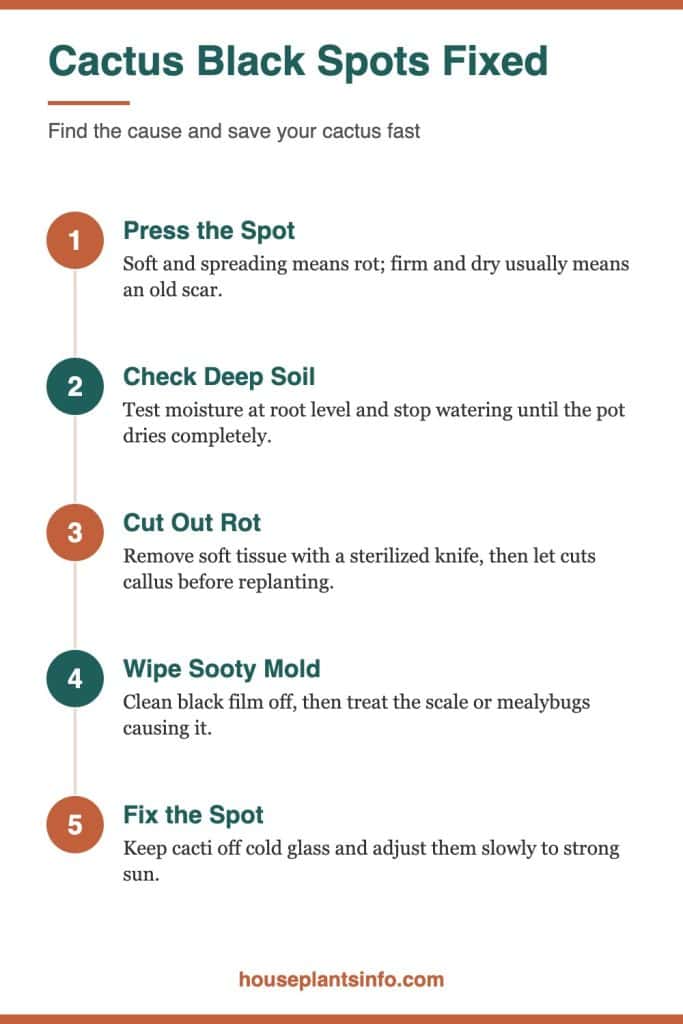
- Press each spot gently and decide whether it is soft and spreading or dry and stable.
- Check soil moisture at root level, and stop watering until the pot dries out completely if it is damp.
- Cut out any soft or slimy tissue with an alcohol-sterilized knife, then let the plant callus before replanting.
- Wipe off sooty mold and treat scale or mealybugs with alcohol swabs or insecticidal soap on a weekly schedule.
- Move the plant away from cold glass, direct heater blasts, or sudden strong sun.
- Photograph the spots and compare them again in two weeks to confirm they have stopped growing.
Common Questions About Cactus Black Spots
Will black spots on my cactus go away?
No, the existing black tissue will not turn green again, since cacti cannot repair damaged skin. Once you fix the cause, the spots should stop spreading and remain as scars. New healthy growth will appear from the top or sides over time.
Can a cactus with black spots be saved?
Yes, in most cases, especially if the spots are dry or limited to a small area. Soft rot that reaches deep into the stem is harder to save, but you can often take a healthy cutting from the top and root it. Acting quickly gives the best chance.
Is it rot or just a scar?
Rot feels soft, looks wet or translucent, and usually spreads, sometimes with a bad smell. A scar is firm, dry, and stays the same size for weeks. Pressing gently next to the spot is the fastest way to tell the difference.
Should I use cinnamon or sulfur on cactus cuts?
Many growers dust fresh cuts with sulfur powder to help keep them dry while they callus, and this is a common practice. The most important step is letting the cut dry completely in bright, indirect light before replanting. Clean tools matter more than any dusting powder.
Can overwatering cause black spots even if the soil looks dry?
Yes, because the top inch of soil can dry quickly while the bottom of the pot stays wet. Roots sitting in that hidden moisture can rot and push black spots up into the stem. Check deeper with a finger, a wooden skewer, or a moisture meter before watering.

Hi! I’m Sophia, and I love plants – especially an expert in growing house plants. I stay in Chicago, United States of America, and through my blog and social media platforms, provide tips and tricks on how to grow healthy, vibrant plants indoors. Check out more here.