
Your cactus sits on the windowsill, leaning hard to one side or sagging at the top, and the stem that used to stand upright now looks tired and bent.
If you are asking why is my cactus drooping, the answer is usually water, light, or roots, and the stem itself tells you which one.
The short version: A soft, mushy, or discolored droop almost always means overwatering and root rot, while a shriveled, wrinkled droop points to thirst.
A firm cactus that leans or stretches toward the window is short on light, and a sudden collapse after a cold night or a move often comes from temperature shock or damaged roots.
This guide walks you through each cause, how to confirm it, and the exact fix that works indoors.
Check These First
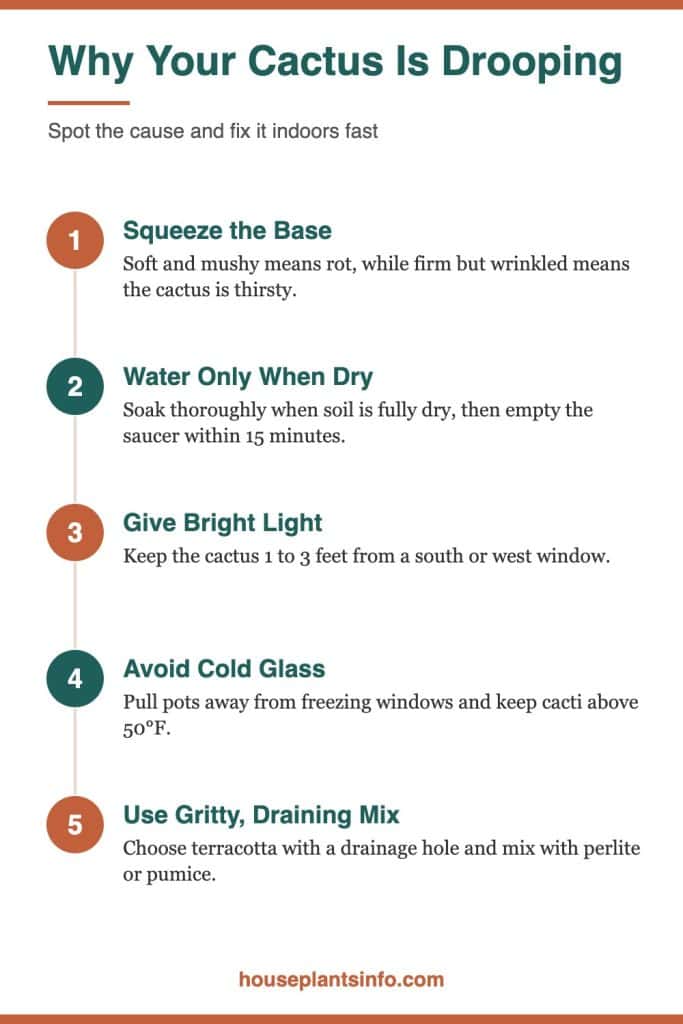
- Squeeze the base of the stem gently. Soft or squishy means rot; firm but wrinkled means thirst.
- Push a finger or a wooden skewer 2 inches into the soil. Wet soil days after watering is a warning sign.
- Look at the shape. Thin, pale, stretched growth that bends toward the glass means low light.
- Lift the pot. A very heavy pot with no drainage hole, or a saucer full of water, points to soggy roots.
- Think back over the last two weeks. A cold window, a move, repotting, or a heat vent change can all trigger drooping.
Why Is My Cactus Drooping? How to Read the Signs
A cactus droops when its stems can no longer hold their own weight, either because water pressure inside the tissue has dropped or because the roots have stopped working. Reading the texture, color, and shape of the droop narrows the cause quickly.
Cactus stems stay upright through stored water pressing outward against the cell walls. When that pressure falls, the stem bends. Rot, thirst, and root damage all lower it, while low light weakens the stem structure itself.
Texture Tells You the Most
Firm and plump means the plant is probably fine on water. Firm but wrinkled, shrunken, or puckered means the cactus has used up its reserves. Soft, rubbery, or mushy tissue, especially near the soil line, is the classic sign of rot.
Color Adds the Next Clue
Brown, black, or translucent patches near the base point to rot. Yellowing that starts at the top or on the sun side can mean sunburn or a sudden light change. Pale green, weak growth usually means not enough light.
Confirm Before You Change Anything
Guessing leads to the most common mistake, which is watering a rotting cactus because it looks thirsty. A soil moisture meter helps you check deeper than your finger can reach, especially in tall pots.

If the pot sits far from a window, a clip-on grow light can fill the gap while you sort out the cause.
| Symptom | Most Likely Cause | First Move |
|---|---|---|
| Soft, mushy base | Root rot | Unpot and inspect roots |
| Wrinkled, shrunken stem | Underwatering | Soak thoroughly, then drain |
| Thin, pale, leaning growth | Low light | Move closer to a bright window |
| Sudden collapse after cold | Chill damage | Move to a warmer spot |
| White or tan scorched patch | Sunburn | Shade and acclimate slowly |
| Sticky residue or white fluff | Pests | Isolate and treat |
Overwatering and Root Rot: Cause and Fix
Overwatering is the most common reason an indoor cactus droops, and it does the most damage. Constantly wet soil starves the roots of oxygen, they rot, and the plant can no longer take up water even though it sits in it.
Indoors, soil dries far more slowly than outdoors. Low light, cool rooms, deep pots, and dense potting mix all keep moisture around the roots for weeks. Winter makes this worse because the cactus is mostly resting and using very little water.
Signs the Roots Are Rotting
- The stem feels soft or spongy near the soil line.
- The base turns brown, black, or looks translucent.
- The soil smells sour or musty.
- The cactus wobbles in the pot because the roots no longer anchor it.
- Drooping continues or worsens after you water.
How to Rescue a Rotting Cactus
Slide the cactus out of its pot, using folded newspaper or thick gloves to protect your hands from the spines. Shake or rinse off the old soil so you can see the roots clearly.
Healthy roots are firm and white to tan. Rotted roots are dark, mushy, and slip apart when pulled. Trim every rotted root back to firm tissue with clean, sharp scissors or a knife, wiping the blade with rubbing alcohol between cuts.
If rot has moved into the stem, cut the stem above the damage until the cut surface looks clean and green with no brown streaks.
Let the cactus sit in a dry, bright spot out of direct sun for several days to two weeks until the cuts form a dry callus.
Repot into fresh, dry cactus mix in a pot with a drainage hole. Wait about a week before giving the first light watering so any small root wounds can seal.
Sophia’s tip: Water a cactus only when the soil is dry all the way through, then soak it until water runs from the drainage hole and empty the saucer within 15 minutes.
In winter, that often means once every 4 to 6 weeks, or even less in a cool room.
Underwatering and Dehydration: Cause and Fix
A cactus can droop from thirst when it has been dry for so long that its stored water runs out. The stem shrinks, wrinkles, and softens slightly, but it stays dry and clean rather than mushy.
This happens most often in spring and summer, when the plant is actively growing and the apartment is warm. A south or west window, a nearby radiator, or forced-air heat can dry a small terracotta pot in just a few days.
How to Tell Thirst From Rot
A thirsty cactus has dry, light, crumbly soil that may pull away from the sides of the pot. The stem looks deflated or puckered, often with vertical creases. There is no bad smell and no dark patch at the base.
How to Rehydrate Safely
Water slowly and deeply until it runs from the bottom.
If the soil has gone hard and water rushes past it, set the pot in a bowl of room-temperature water for 15 to 30 minutes so the mix can soak up moisture from below, then let it drain fully.
A dehydrated cactus usually firms up within a few days to two weeks. After that, return to a normal rhythm of watering only when the soil is completely dry.
During the growing season, most indoor cacti need water every 1 to 3 weeks depending on pot size, light, and warmth. Small pots near a sunny window fall on the frequent end, while large pots in bright but cool rooms dry more slowly.
Not Enough Light: Etiolation and Leaning
A cactus that leans toward the window, grows thin and pale at the tip, or bends under its own top-heavy growth is stretching for light. This is called etiolation, and the weak new growth can droop or flop over.
Most cacti need the brightest spot you have. Indoors, that usually means a south- or west-facing window, with the pot within 1 to 3 feet of the glass. East windows can work for smaller species, while north windows rarely provide enough light alone.
What Etiolation Looks Like
- The top of the stem narrows into a pencil-like point.
- New growth is lighter green than the older base.
- Spines on new growth are spaced farther apart.
- The whole plant tilts toward the window.
How to Fix a Stretched Cactus
Stretched growth will not thicken back up, but you can stop it from getting worse. Move the plant closer to bright light gradually over 1 to 2 weeks, so the stem can adjust without scorching.
In Chicago winters and other low-light seasons, a full-spectrum grow light placed 6 to 12 inches above the plant for 12 to 14 hours a day keeps growth compact. Rotate the pot a quarter turn every week so all sides receive even light.

If the stretched section is badly bent or thin, you can cut it off. The base will often send up new, healthier growth once it gets enough light.
Sophia’s tip: Never move a cactus straight from a dim corner into full afternoon sun. Give it a few hours of bright light each day for the first week, then extend the time so the skin does not burn.
Temperature Stress: Cold Drafts, Heat and Sunburn
Cacti tolerate heat well but react badly to cold, and a sudden temperature drop can make a stem collapse within days. Scorching from direct sun after a move can also cause sagging and discoloration.
Most indoor cacti grow best between 65°F and 85°F during the day. Many species handle cooler nights around 50°F to 55°F in winter, and that cool rest can even help flowering, but freezing temperatures damage the tissue.
Cold Damage at the Window
Glass gets very cold in winter. A cactus touching a frosty pane, or sitting in a draft from a leaky window or an open door, can suffer chill damage that shows up as soft, dark, water-soaked patches followed by drooping.
Pull pots at least a few inches away from the glass on freezing nights. Avoid watering right before a cold snap, because wet tissue and wet soil make cold damage worse.
Heat Sources and AC Drafts
Radiators and forced-air vents do not usually kill a cactus outright, but they dry the soil very fast and can bake one side of the plant.
Keep pots at least 2 to 3 feet from radiators and out of the direct blast of heating or AC vents.
Sunburn After a Move
A cactus moved from a store, a shaded room, or indoors to a summer balcony can burn quickly. Sunburn shows as white, tan, or yellow scorched patches on the side facing the sun, sometimes with sagging.
Burned tissue will not turn green again, but the plant usually recovers with gradual exposure.
Pot, Soil and Root Problems: Cause and Fix
The wrong pot or soil can make a cactus droop even when your watering schedule seems reasonable. Heavy soil holds water, oversized pots stay wet, and recent repotting can leave roots temporarily unable to support the plant.
Choose a Mix That Drains Fast
Regular potting soil holds too much moisture for cacti. Use a commercial cactus and succulent mix, and improve drainage further by adding perlite, pumice, or coarse grit so roughly a third to half of the mix is mineral material.
Use the Right Pot
A drainage hole is not optional. Decorative pots without holes trap water at the bottom where you cannot see it. Unglazed terracotta breathes and dries faster than plastic or glazed ceramic, which suits most cacti indoors.
Pick a pot only slightly wider than the root ball, usually about 1 to 2 inches larger. A pot that is too big holds extra soil that stays wet long after the roots have drunk what they need.
Rootbound or Freshly Repotted Plants
A cactus that has been in the same pot for many years can become so rootbound that it dries out too fast and struggles to stay hydrated. Repot every 2 to 4 years, ideally in spring or early summer when it is actively growing.
After repotting, mild drooping for a week or two is common while the roots settle. Keep the plant in bright, indirect light, wait about a week before watering, and avoid fertilizing for at least a month.
Top-Heavy Leaning
Tall columnar cacti sometimes lean simply because the stem has outgrown the pot or shallow roots cannot anchor it. Move to a heavier pot, firm the soil around the base, and add a small stake with soft ties until new roots grip.
Pests That Weaken a Cactus
Sap-sucking pests drain a cactus slowly, and a heavy infestation can leave it weak, discolored, and drooping. Mealybugs, scale insects, and spider mites are the most common indoor offenders.
Mealybugs
Mealybugs look like tiny tufts of white cotton tucked between spines, along ribs, or at the base. If you are wondering whether you can cactus get mealybugs, the answer is yes, and some types also feed on the roots below the soil.
Dab visible bugs with a cotton swab dipped in 70% isopropyl alcohol. For root mealybugs, unpot the plant, rinse the roots, and repot into fresh, clean mix.
Scale and Spider Mites
Scale appears as small brown or tan bumps stuck to the stem that you can scrape off with a fingernail. Spider mites leave fine webbing and a dull, speckled, rusty look, and they thrive in the dry air of heated winter apartments.
Scrape off scale with a soft toothbrush and alcohol. For spider mites, rinse the plant with lukewarm water, then follow up with insecticidal soap every 7 to 10 days until no new signs appear.
Isolate any infested cactus from other plants until it is clean. Check new plants carefully before bringing them home, since pests usually arrive on a new purchase.
Can a Drooping Cactus Be Saved? Recovery, Cuttings and Species Notes
Most drooping cacti can be saved if some firm, healthy tissue remains. Thirst and low light are very fixable, while severe rot may mean rooting a healthy section as a new plant.
When to Take a Cutting
If rot has spread through the base but the top of the stem is still firm and green, cut off the healthy top with a clean knife. Check that the cut shows no brown or orange streaks, which mean rot has traveled upward.
Let the cutting dry in a bright spot out of direct sun until the end forms a firm callus, usually 1 to 3 weeks depending on thickness. Then set it upright in dry cactus mix and wait for roots before watering lightly.
Columnar types root especially well this way. If you want a detailed walkthrough, see how to grow peruvian apple cactus from cutting, and once it is established, learn how to care for peruvian apple cactus so the new plant stays upright.
Species That Droop in Their Own Ways
Some cacti have distinct habits. Tall, cylindrical types often lean from low light, which is covered in detail in this guide to eve’s needle cactus drooping.
Pad-forming opuntias can sag when pads grow heavy or the roots are waterlogged. If you grow one, this guide on bunny ear cactus drooping explains pad-specific causes and fixes.
Holiday cacti, such as Christmas and Thanksgiving cactus, are jungle species. They prefer more regular watering, bright indirect light, and higher humidity than desert cacti, so limp segments often mean thirst or stress rather than rot.
Pet Safety
The ASPCA lists Christmas cactus as non-toxic to cats and dogs, but spines on most desert cacti can still injure curious pets and kids.
Pencil cactus, which is actually a euphorbia, is listed by the ASPCA as toxic, so check the exact plant name before placing it within reach.
Sophia’s tip: Keep a written note of the date each time you water your cactus. A simple log on your phone stops the most common indoor mistake, which is watering again before the soil has fully dried.
Your Next Steps
- Squeeze the base and check the soil 2 inches down to decide between rot, thirst, or light.
- If the base is soft, unpot right away, trim rotted roots, let it callus, and repot into dry, gritty cactus mix.
- Move the cactus within 1 to 3 feet of a south- or west-facing window, or add a grow light for 12 to 14 hours daily.
- Pull pots away from frosty glass, radiators, and heating or AC vents.
- Switch to a terracotta pot with a drainage hole and a mix that is a third to half perlite or pumice.
- Inspect ribs, spines, and roots for mealybugs or scale and treat with isopropyl alcohol.
Common Questions About Drooping Cactus
Will a drooping cactus stand back up on its own?
A cactus that drooped from thirst usually firms up within a few days to two weeks after a deep watering. Stems that bent from low light or rot will not straighten, but correcting the cause stops further damage and new growth can grow upright.
How often should I water an indoor cactus?
Water only when the soil is completely dry from top to bottom. That is often every 1 to 3 weeks in spring and summer and every 4 to 6 weeks or less in winter, depending on light, warmth, and pot size.
Should I stake a leaning cactus?
Staking helps a top-heavy or freshly repotted cactus while new roots anchor it. Use a thin stake and soft ties, and fix the underlying cause, usually light or roots, so the plant can eventually support itself.
Why is my cactus drooping after repotting?
Repotting disturbs fine roots, so mild drooping for a week or two is normal. Keep the plant in bright, indirect light, wait about a week before watering, and skip fertilizer for at least a month while it settles.
Can cold air make a cactus droop?
Yes, a cold draft or a stem touching freezing window glass can damage tissue and cause soft, dark patches followed by collapse. Keep indoor cacti above 50°F, move them away from glass on cold nights, and avoid watering before a cold snap.

Hi! I’m Sophia, and I love plants – especially an expert in growing house plants. I stay in Chicago, United States of America, and through my blog and social media platforms, provide tips and tricks on how to grow healthy, vibrant plants indoors. Check out more here.