
Your Christmas cactus is sitting on the windowsill with limp, wrinkled segments, the soil still feels damp from last week, and a few pads drop off when you brush past.
Overwatered Christmas cactus care starts with figuring out how far the damage has gone, because a soggy plant and a rotting plant need different rescues.
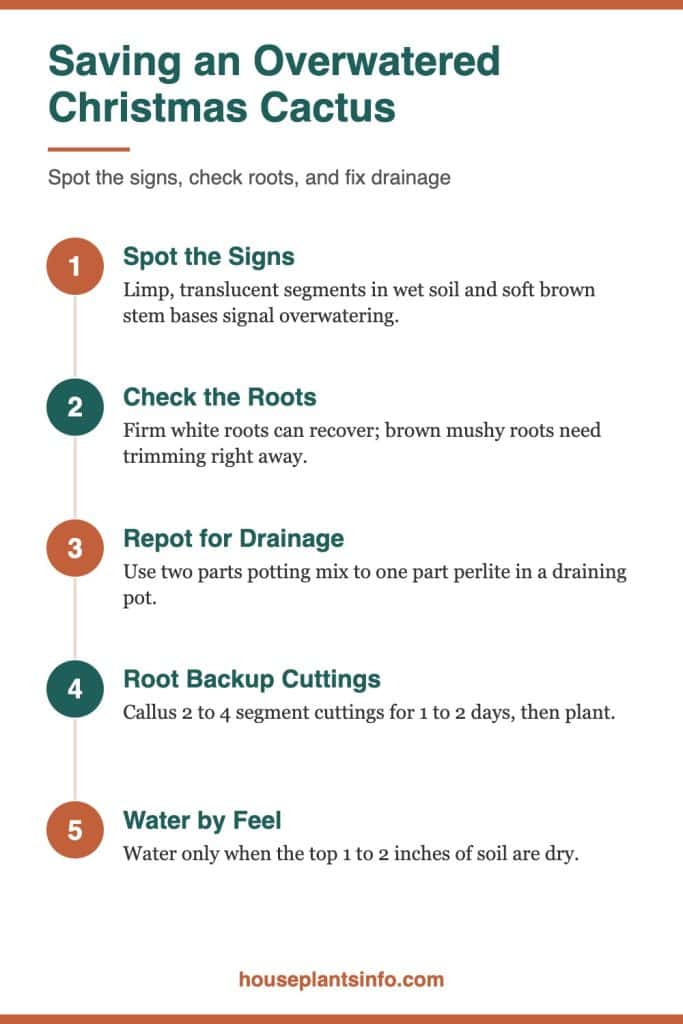
The short version: Stop watering, slide the plant out of its pot, and check the roots. If they are firm and white, let the soil dry and improve drainage.
If they are brown and mushy, trim the rot, repot into fresh, fast-draining mix, or root healthy segments to start over.
This guide covers the warning signs, how to tell overwatering from underwatering, step-by-step rescue, root rot treatment, propagation, and a watering routine that fits indoor conditions.
Check These First
- Push a finger 1 inch into the soil. If it feels cool and wet several days after watering, the plant is likely overwatered.
- Lift the pot. A heavy pot days after watering means water is not draining or evaporating.
- Look under the pot. Water pooling in a saucer or decorative cover pot keeps the roots soaking.
- Gently tug a stem near the soil. If it wobbles or feels soft at the base, roots or stem tissue may be rotting.
- Sniff the soil. A sour or swampy smell points to root rot.
What Are the Signs of an Overwatered Christmas Cactus?
The clearest signs are limp or translucent segments, soft brown spots at the stem base, dropping buds or pads, and soil that stays wet for a week or more. A rotten smell from the pot confirms that the roots are in trouble.
Before you rely on appearance alone, check moisture below the surface.
A soil moisture meter pushed halfway into the pot gives a quick reading, and a plain wooden skewer works too: if it comes out dark and damp with soil clinging to it, hold off on watering.
Leaf and Stem Changes
- Limp, floppy segments that look deflated even though the soil is wet.
- Pale, yellowish, or slightly translucent pads, often starting near the base.
- Soft, dark brown or black patches where stems meet the soil.
- Segments that snap off easily at the joints.
Flowers and Buds
Overwatered plants often drop buds before they open. Bud drop has other causes too, like moving the plant, cold drafts, or sudden heat from a radiator, so check the soil before blaming water.
Soil and Root Clues
Wet soil, fungus gnats hovering around the pot, white mold on the surface, and a musty smell all point to a root zone that stays saturated. Healthy roots are white or light tan and firm.
Rotting roots are brown or black, mushy, and slip apart when pinched.
Overwatered or Underwatered? How to Tell the Difference
Both problems cause limp, wrinkled segments, which is why they get confused. The deciding factor is the soil: wrinkled pads in dry soil mean thirst, while wrinkled pads in wet soil mean the roots are damaged and cannot take up water.
| Symptom | Overwatered | Underwatered |
|---|---|---|
| Soil | Damp or soggy for days | Dry, pulling away from pot edges |
| Segments | Limp, soft, sometimes translucent | Thin, wrinkled, but firm |
| Stem base | Soft, brown, or black | Firm and woody |
| Roots | Brown, mushy, smelly | Dry and wiry but intact |
| Response to water | Gets worse | Plumps up within a day or two |
Color changes can add to the confusion. A reddish or purple tint on the pads usually comes from strong sun, cold, or root stress, and you can read more about why Christmas cactus leaves turn red if your plant shows that pattern.

Why Christmas Cactus Gets Overwatered Indoors
Most overwatering comes from a mismatch between how often you water and how fast the pot dries. A Christmas cactus is an epiphyte from Brazilian mountain forests, where it grows on trees and rocks with its roots in loose, airy debris that never stays waterlogged.
Pots That Hold Water
Pots without drainage holes are the most common cause. Plants sold for the holidays often come in a plastic nursery pot slipped into foil or a decorative cover pot, and water collects at the bottom unseen.
An oversized pot causes the same problem. Extra soil holds extra water that the roots cannot reach, so the mix stays wet long after the top looks dry.
Dense or Old Soil
Standard potting mix holds too much moisture for this plant. Over time, mix breaks down, compacts, and drains even more slowly, which is why a plant that did fine for years can suddenly start rotting.
Seasonal and Indoor Conditions
Water needs drop when light drops. In a Chicago winter, a plant on a north window or several feet back from the glass uses far less water than it did in July, yet many people keep watering on the same schedule.
Cool rooms slow drying too. A plant near a drafty window or in an unheated sunroom can stay wet for two weeks, while one near forced-air heat dries in days.
Treating It Like a Desert Cactus or a Tropical Fern
This plant sits between the two extremes. It wants more water than a desert species, and if you also care for a Peruvian apple cactus, you will notice the Christmas cactus needs more frequent watering and less direct sun.
Yet it still needs the soil to dry partway between drinks.
Overwatered Christmas Cactus Care: How to Save a Waterlogged Plant
If the roots are still mostly firm and white, the plant has a good chance of full recovery. The goal is to get air back into the root zone and stop the cycle of saturation.
Step 1: Stop Watering and Remove the Cover Pot
Do not add any water until you have checked the roots. Take the plant out of any decorative pot or foil and empty any standing water from the saucer.
Step 2: Inspect the Roots
Tip the pot on its side, support the base of the stems, and slide the root ball out. Loosen the outer soil with your fingers so you can see the roots clearly.
- Mostly white and firm: the plant is overwatered but not rotting.
- Some brown, mushy roots: early root rot, treat as described in the next section.
- Mostly brown, with a soft stem base: severe rot, plan to propagate.
Step 3: Dry Out the Root Ball
For a mildly overwatered plant with healthy roots, you can set the root ball on a few layers of newspaper or paper towel for several hours to wick away excess moisture. Keep it out of direct sun while the roots are exposed.
If the soil is old, compacted, or smells sour, replace it rather than drying it. Shake off as much as you can without tearing roots.
Step 4: Repot Into Fresh, Fast-Draining Mix
Use a pot with a drainage hole that is only slightly bigger than the root ball, usually the same size or 1 inch wider. Fill with a mix of about two parts potting mix to one part perlite or orchid bark.
Set the plant at the same depth as before and firm the mix lightly. Wait 3 to 7 days before watering, so any damaged roots can seal.
Step 5: Give It Gentle Recovery Conditions
Place the plant in bright, indirect light, such as a few feet back from an east or west window or close to a north window. Keep it at roughly 60 to 75°F and away from radiators, heat vents, and AC drafts.
Skip fertilizer until you see new growth. Feeding stressed roots can burn them, so wait and then check when to fertilize Christmas cactus to resume on a gentle schedule.
Sophia’s tip: After repotting, write the date on a piece of tape on the pot. It keeps you from watering out of worry during the first week, when the plant still looks limp but needs time, not water.
How Do You Treat Root Rot on a Christmas Cactus?
Cut away every soft, brown root with clean scissors, remove the old soil completely, and repot into fresh mix in a clean pot.
Root rot is caused by fungi and water molds that thrive in wet soil, so leaving any infected material behind invites it back.
Trimming the Damage
Wipe your scissors or pruners with rubbing alcohol before you start and between cuts. Trim each rotten root back to firm, pale tissue.
If the base of a stem is soft or blackened, that stem is likely lost. Cut it off above the damage and set any healthy segments aside for propagation.
Choosing the Right Pot
If the plant lost a lot of roots, move it into a smaller pot to match the remaining root system. Too much soil around a small root ball is the fastest way to restart rot.
Reuse the old pot only after scrubbing it with hot, soapy water. Terracotta is a good choice for a recovering plant because it lets moisture escape through the sides, though in a dry, heated apartment it may need water a bit more often.
What Recovery Looks Like
Expect the plant to look flat for several weeks while new roots grow. Firm, plumping segments and fresh growth at the tips are the signs it has turned the corner, typically within 3 to 6 weeks.
If segments keep softening and the stem base darkens after repotting, the rot has reached the main stem. At that point, propagation is the most reliable way to save the plant.
How to Save an Overwatered Christmas Cactus by Rooting Cuttings
When the roots are mostly gone or the main stem is rotting, take cuttings from healthy growth and root them. Christmas cactus roots easily from segments, so even a badly rotted plant can usually be rescued this way.
Picking Good Segments
Choose firm, green segments from the tips of healthy stems. Twist or cut off pieces with 2 to 4 segments each, making the break at a joint.
Avoid any pieces that are soft, translucent, or discolored near the cut. Take several cuttings, since not every one will root.
Letting the Cuts Callus
Lay the cuttings on a dry paper towel in a spot out of direct sun for 1 to 2 days. The cut end should look dry and slightly sealed before it touches soil, which lowers the chance of rot.
Planting and Rooting
Push the bottom segment about half its length into barely moist, fast-draining mix. Group several cuttings in one small pot for a fuller plant.
Keep them in bright, indirect light at around 65 to 75°F. Water lightly only when the top of the mix is dry, and expect roots in about 2 to 4 weeks. A gentle tug that meets resistance means roots have formed.
Sophia’s tip: In a dry winter apartment, cuttings can shrivel before they root. Place the pot on a tray of pebbles with a little water below the pebble line, which raises humidity around the cuttings without wetting the soil.
How Often Should You Water a Christmas Cactus?
Water when the top 1 to 2 inches of soil feel dry, then soak the pot until water runs from the drainage hole and empty the saucer.
In most homes, that works out to every 1 to 3 weeks depending on season, light, and pot size.
| Season | Typical watering | Notes |
|---|---|---|
| Spring and summer | Every 7 to 10 days | Active growth, more light, faster drying |
| Fall bud setting | Every 10 to 14 days | Slightly drier helps buds form |
| Blooming | When top inch is dry | Even moisture prevents bud drop |
| Post-bloom rest | Every 2 to 3 weeks | Let soil dry more for 4 to 6 weeks |
These are starting points, not rules. Always check the soil first, because the same plant may need water weekly on a warm south-facing sill and every three weeks in a cool, dim room.
Adjusting for Indoor Conditions
Forced-air heat and radiators dry the top of the soil quickly while the bottom stays wet. Check deeper with a skewer before watering a plant that sits near a heat source.
Under a grow light, plants use more water and may need checking more often. In low light, extend the gap between waterings.

Watering After the Holidays
The rest period after blooming is when many plants get overwatered, because growth slows while watering habits stay the same. For a full routine, see what to do with Christmas cactus after flowering.
Sophia’s tip: Learn the weight of your pot right after a thorough watering, then lift it every few days. Once it feels noticeably light, check the soil; this habit catches overwatering better than any calendar.
What Soil and Pot Prevent Overwatering?
A loose, airy mix in a snug pot with a drainage hole prevents most overwatering problems. The roots of this plant need oxygen as much as water, so drainage matters more than any watering schedule.
A Mix That Drains Well
Blend about two parts quality potting mix with one part perlite, pumice, or fine orchid bark. A commercial cactus mix works too, especially with a handful of bark added for extra air.
Avoid heavy garden soil or moisture-retaining mixes with water-holding crystals. These keep the root zone wet far too long indoors.
Pot Size and Material
Christmas cactus blooms well when slightly root-bound, so there is no need to upsize often. Repot every 2 to 3 years, moving up only 1 inch in diameter, and check when to transplant Christmas cactus to time it outside the bloom season.
Plastic holds moisture longer and suits plants in hot, dry rooms. Terracotta dries faster and suits people who tend to water often or keep plants in cool rooms.
Using Decorative Pots Safely
If you love a cover pot, keep the plant in its draining nursery pot inside it. Lift the inner pot out to water at the sink, let it drain fully, then return it.
Pet Safety
The ASPCA lists Christmas cactus as non-toxic to cats and dogs. Chewing on the segments can still cause mild stomach upset, and a pet nosing around a damp pot can spread soil, so keep the plant on a shelf if your cat likes to dig.
Your Next Steps
- Check the soil 1 inch down and lift the pot to judge moisture before doing anything else.
- Remove any cover pot or foil and empty standing water from the saucer.
- Slide the plant out and inspect the roots, sorting it into healthy, early rot, or severe rot.
- Repot into a fast-draining mix of potting soil and perlite or bark, in a pot with a drainage hole.
- Take healthy tip cuttings as a backup if more than half the roots or any stem bases are soft.
- Water only when the top 1 to 2 inches are dry, and adjust for heat, light, and season.
Common Questions About Overwatered Christmas Cactus Care
Can an overwatered Christmas cactus recover on its own?
A mildly overwatered plant with healthy roots can recover if you stop watering and let the soil dry. If the roots have started to rot, the damage will spread unless you trim the rot and repot into fresh mix.
How long does it take an overwatered Christmas cactus to recover?
Most plants with mild damage firm up within 2 to 4 weeks once the soil dries and drainage improves. Plants recovering from root rot can take 6 weeks or longer to show new growth.
Should I water my Christmas cactus after repotting it for root rot?
Wait about 3 to 7 days before the first watering so any cut or damaged roots can seal. Then water lightly and let the top inch dry before watering again.
Why are my Christmas cactus segments falling off?
Segments drop when the plant is overwatered, severely underwatered, moved suddenly, or exposed to cold drafts or heat. Check the soil and stem base first, since soft, brown joints point to rot from too much water.
Is it better to underwater or overwater a Christmas cactus?
Slight underwatering is much easier to fix, since a thirsty plant plumps up within a day or two after a good soak. Overwatering can cause root rot, which may kill the plant or force you to start over from cuttings.

Hi! I’m Sophia, and I love plants – especially an expert in growing house plants. I stay in Chicago, United States of America, and through my blog and social media platforms, provide tips and tricks on how to grow healthy, vibrant plants indoors. Check out more here.