
Your cactus sits on the windowsill looking shriveled, its ribs pinched close together and its skin creased like a raisin instead of firm and smooth.
If you are asking “why is my cactus wrinkled,” the good news is that the answer usually shows up in the soil, the roots, and the season.
The short version: A wrinkled cactus has lost water from its stem tissue, either because it isn’t getting enough water or because damaged roots can’t absorb it. Dry soil plus wrinkles usually means thirst. Wet soil plus wrinkles usually means root rot.
This guide covers how to tell the causes apart, how to fix each one indoors, and how to keep your cactus plump through the year.
Check These First
- Push a finger or wooden chopstick 2 inches into the soil. Bone dry points to thirst. Damp or soggy points to rot.
- Gently squeeze the base of the stem. Firm is good. Soft, mushy, or brown means rot needs attention right away.
- Look at the pot. No drainage hole, or a saucer full of standing water, is a red flag.
- Think about the season. Mild wrinkling in winter can be normal dormancy, especially near a radiator.
- Inspect the spines, crevices, and soil line for white fluff, webbing, or small bumps that signal pests.
Thirsty or Rotting? How to Read the Wrinkles
Most wrinkled cacti fall into one of two camps: dehydrated with healthy roots, or dehydrated because the roots are failing. Your first job is to figure out which one you have, because the fixes are opposites.
A soil moisture meter takes the guesswork out of this step. Push the probe toward the bottom third of the pot, where roots sit and moisture lingers longest.
A wooden chopstick works too: if it comes out dark and damp after 10 minutes, the soil is still wet.
Signs It’s Simply Thirsty
A thirsty cactus wrinkles evenly from top to bottom. The stem stays firm, the color stays green, and the soil has been dry for weeks. Many cacti also lean or look slightly deflated before the wrinkles deepen.
Signs the Roots Are in Trouble
Rot-related wrinkling often starts at the base and moves upward. You may see yellowing, translucent patches, brown or black spots, or a sour smell from the soil. The plant may wobble in the pot because the roots no longer anchor it.
| Symptom | Likely Thirst | Likely Root Rot |
|---|---|---|
| Soil moisture | Dry for 2+ weeks | Damp or wet |
| Stem feel | Firm but creased | Soft or mushy at base |
| Color | Green, maybe dull | Yellow, brown, or black patches |
| Smell | None | Sour or musty |
| Stability in pot | Steady | Wobbly or loose |
| Response to watering | Plumps up in days | Gets worse |
Underwatering: Soak Thoroughly, Then Let It Dry
Underwatering is the most common reason a cactus wrinkles, and it is the easiest to fix. Cacti store water in their stems, and when the reserve runs low, the tissue contracts and the ribs fold inward.
How to Water a Dehydrated Cactus
Water slowly until it runs freely out of the drainage hole, then let the pot drain completely. If the soil has shrunk away from the pot edges and water runs straight through, bottom-water instead.
To bottom-water, set the pot in a few inches of room-temperature water for 20 to 30 minutes. Lift it out and let it drain on a rack. Never leave it sitting in the saucer.
What Recovery Looks Like
A thirsty cactus usually begins to firm up within a few days and can look noticeably fuller in one to two weeks. Deep, old wrinkles may soften but leave faint lines, and that’s fine.
Don’t water again right away to speed things along. Wait until the soil is dry all the way through before the next soak.
How Often to Water Going Forward
Indoors, most desert cacti need water roughly every 2 to 4 weeks from spring through summer. The exact timing depends on pot size, soil mix, light, and how warm your apartment runs.
Small pots in sunny south windows dry fastest. Large pots in cooler rooms dry slowest. Jungle cacti like Christmas cactus prefer more frequent watering, and if yours is shriveling, see why your Christmas cactus looks wrinkled, since its needs differ from desert types.

Sophia’s tip: Lift the pot right after watering and again when it’s fully dry. Once you know the difference in weight, you can check by hand in two seconds instead of guessing from the calendar.
Overwatering and Root Rot: Cut Out the Damage
Overwatering causes wrinkles in a confusing way: the roots drown, rot, and stop absorbing water, so the stem dehydrates while sitting in wet soil. The fix is to remove the plant, cut away rotten tissue, and replant in dry mix.
Unpot and Inspect the Roots
Wear thick gloves or wrap the cactus in folded newspaper to protect your hands. Ease it out of the pot and shake off the soil. Healthy roots are white to tan and firm. Rotten roots are brown or black, mushy, and pull apart easily.
Trim and Let It Callus
Use clean, sharp scissors or a knife wiped with rubbing alcohol. Cut away every soft root, then check the stem base. If rot has reached the stem, slice off thin sections until the cut surface shows clean, pale tissue with no brown streaks.
Let the plant sit in a bright spot out of direct sun for several days to two weeks, until the cuts form a dry callus. Then plant it in fresh, dry cactus mix and wait about a week before watering lightly.
When the Base Is Too Far Gone
If rot has spread through most of the lower stem, you can often save a healthy top section as a cutting. Columnar species are good candidates, and the same method used to grow Peruvian apple cactus from a cutting applies to many upright cacti.
Expect roots to take several weeks or longer, especially in cool months. If a cutting stalls, the common causes are covered in this guide on Peruvian apple cactus not rooting.
Poor Drainage and Dense Soil: Repot Into a Gritty Mix
Even careful watering fails if water can’t escape the pot. Dense soil and pots without drainage holes keep roots wet for days, which leads to rot and the wrinkles that follow.
Choose the Right Pot
Every cactus pot needs at least one drainage hole. Unglazed terracotta is a strong choice because it wicks moisture from the soil and dries faster than plastic or glazed ceramic.
Pick a pot only slightly wider than the root ball, usually 1 to 2 inches larger. An oversized pot holds extra soil that stays damp long after the roots have taken what they need.
Build a Fast-Draining Mix
Regular potting soil holds too much water for most cacti. A good indoor mix is about half to two-thirds mineral grit, such as pumice, perlite, or coarse sand, blended with a cactus potting mix.
When you water, it should drain from the bottom within a few seconds. If water pools on the surface for long, the mix is too fine.
Skip the Gravel Layer
A layer of gravel at the bottom of the pot doesn’t improve drainage. It actually raises the zone of saturated soil closer to the roots. Use a gritty mix throughout the pot instead.
Sophia’s tip: Never use a decorative cachepot without checking it after watering. Water collects at the bottom unseen, and a cactus sitting in a hidden puddle can rot in a week or two.
Why Is My Cactus Wrinkled in Winter? Dormancy and Dry Heat
Mild wrinkling in winter is often normal. Many desert cacti slow down in cooler, darker months, use less water, and draw on their stored reserves, which can leave the stem slightly shrunken.
What Winter Dormancy Means
Dormancy is a natural rest period triggered by shorter days and cooler temperatures. Growth stops, and the plant needs much less water. Many desert cacti rest best at about 45 to 60°F, which also helps them bloom in spring.
During dormancy, water lightly every 4 to 8 weeks, or just enough to prevent severe shriveling. Some growers keep cacti in cool rooms almost completely dry. A little wrinkling is fine. Deep folding or a soft base is not.
Radiators and Forced-Air Heat
Indoor heating changes the picture. A cactus sitting near a radiator, heat register, or baseboard heater stays warm and loses moisture fast, so it can dry out more quickly than a typical dormant plant.
Keep cacti at least 3 feet from heat sources. If your window sits directly above a radiator, move the plant to a nearby table at the same height, or check the soil every week or two.
Cold Windows and Drafts
The opposite problem happens against cold glass. On frigid nights, the area right next to a single-pane window can drop well below room temperature. Avoid letting spines touch the glass, and pull plants back a few inches on very cold nights.
Cold, wet soil is a dangerous combination. Never water heavily in winter if the plant sits in a chilly spot, because the soil stays wet for a long time and invites rot.
Too Much Sun or Too Little: Adjust the Light Gradually
Light problems cause wrinkles indirectly. Intense, sudden sun can scorch and dehydrate the stem, while weak light weakens the plant and leaves it unable to use water well.
Sunburn and Sudden Exposure
Cacti love sun, but they need time to adjust. A plant moved from a dim room to a south window, or set outside on a balcony in summer, can develop yellow, white, or tan bleached patches on the side facing the light.
Sunburned tissue may wrinkle, scar, or turn corky. The damage won’t reverse, but the plant can grow past it. Increase light over 1 to 2 weeks, starting with a few hours of direct sun and building up.
Hot Glass and Summer Heat
A cactus pressed against a west window in July can overheat. Glass intensifies the afternoon heat, and the soil dries quickly. Move the plant a few inches back, or check the soil more often during heat waves.
Air conditioning vents create a different stress. Constant cold, dry airflow pulls moisture from the stem. Keep cacti out of the direct path of AC and fan drafts.
Not Enough Light
Most desert cacti want 4 to 6 hours of direct sun, which indoors usually means a south or west window. In weak light, cacti stretch, turn pale, and lean toward the window, a process called etiolation.
If your windows face north or east, a full-spectrum grow light placed 6 to 12 inches above the plant for 10 to 14 hours a day makes a real difference.

Light needs vary by species, so check how to care for Peruvian apple cactus or your own variety for specifics.
Pests and Fungal Infections: Inspect and Treat
Sap-feeding pests and fungal disease drain a cactus of moisture or damage the tissue that moves water. If watering and light look right but wrinkles persist, inspect closely for these culprits.
Mealybugs and Root Mealybugs
Mealybugs look like small tufts of white cotton tucked into areoles, spine clusters, and crevices. They suck sap and weaken the plant. If you’re unsure whether these pests affect your plant, here’s a guide on whether cactus can get mealybugs and how to treat them.
Root mealybugs hide in the soil and leave a white, waxy residue on roots and the inside of the pot. A cactus that wrinkles despite proper watering and has no visible pests above ground deserves a root check.
Dab visible mealybugs with a cotton swab dipped in 70% isopropyl alcohol. For root mealybugs, unpot the plant, wash the roots, discard the old soil, and repot into fresh mix and a clean pot.
Spider Mites and Scale
Spider mites thrive in dry indoor air and leave fine webbing and tiny pale or rusty speckles on the stem. Scale insects appear as small brown or tan bumps that don’t move. Both feed on sap.
Wipe scale off with an alcohol-dampened swab. Rinse spider mites off with a gentle stream of water and repeat weekly. Insecticidal soap labeled for cacti can help with persistent cases.
Fungal Rot and Stem Lesions
Fungal problems often start where water lingers, or in a wound. Look for dark, sunken, or water-soaked spots, sometimes with a ring around them. Spreading lesions can collapse the tissue and cause wrinkling around the damage.
Cut away infected tissue down to clean, healthy flesh, let the wound callus, and correct the watering and airflow problems that allowed the fungus in. Isolate the plant from other succulents until it recovers.
Sophia’s tip: Quarantine any new cactus for 2 to 3 weeks on a separate shelf before grouping it with your other plants. Check the crevices and soil line with a flashlight before it joins the windowsill.
Fertilizer and Salt Buildup: Flush the Pot
Too much fertilizer or the wrong type can burn roots, and damaged roots can’t take up water. Salt buildup from tap water and fertilizer produces the same effect over time.
Signs of Fertilizer Burn
Look for a white or crusty layer on the soil surface or around the pot rim. The cactus may wrinkle, discolor at the base, or stop growing during spring and summer when it should be active.
How to Flush the Soil
Water slowly and thoroughly, letting several times the pot’s volume run through and out the drainage hole. This rinses excess salts below the root zone. Let the soil dry completely afterward.
If the soil crust is heavy or the roots look damaged, repot into fresh cactus mix instead of flushing.
Feeding the Right Way
Cacti need little fertilizer. Use a cactus or low-nitrogen fertilizer diluted to half strength, about once every 4 to 6 weeks in spring and summer. Skip feeding entirely in fall and winter.
Never fertilize a cactus that is dry, newly repotted, or recovering from rot. Water first, then feed, so the roots aren’t hit by concentrated salts.
Is a Wrinkled Cactus Safe Around Pets?
Wrinkling doesn’t make a cactus more or less toxic. The ASPCA lists Christmas cactus as non-toxic to cats and dogs, but the bigger risk with desert cacti is injury from spines.
Watch out for plants sold as “cactus” that aren’t true cacti. The ASPCA lists pencil cactus, a Euphorbia, as toxic to pets, and its sap irritates skin and eyes. Place spiny plants on high shelves away from curious pets and kids.
Your Next Steps
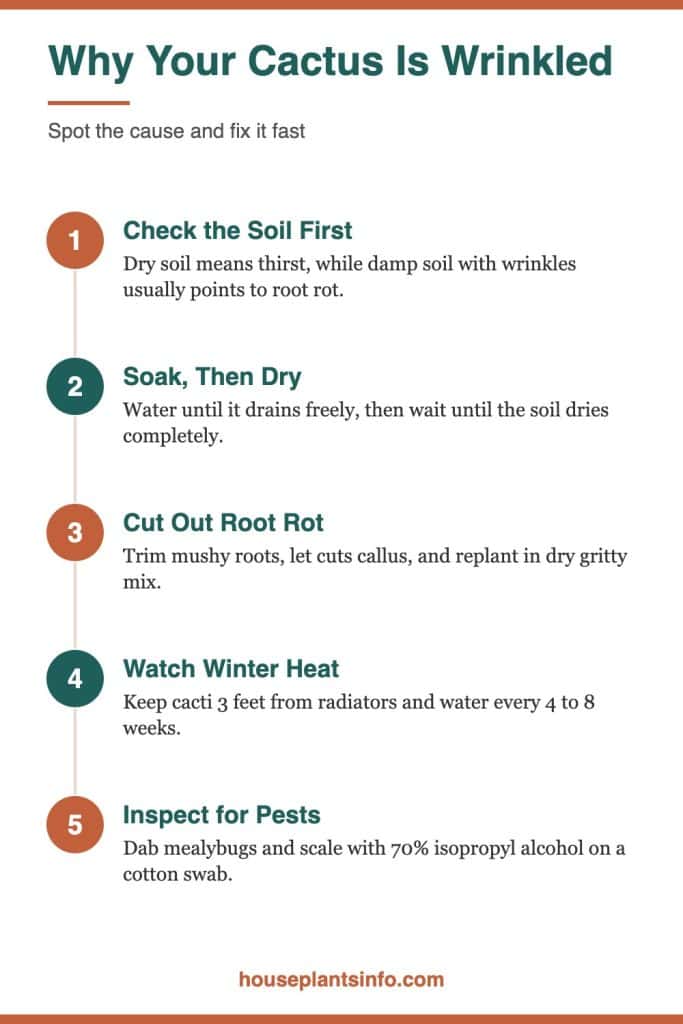
- Check soil moisture 2 inches down and squeeze the stem base to decide between thirst and rot.
- If the soil is dry and the stem is firm, soak thoroughly, drain completely, and wait for the soil to dry before watering again.
- If the soil is wet or the base is soft, unpot, trim rotten roots, let the cuts callus, and replant in dry, gritty mix.
- Confirm the pot has a drainage hole and move the plant at least 3 feet from radiators and heat vents.
- Inspect spine clusters, crevices, and roots for mealybugs or scale, and treat with 70% isopropyl alcohol.
- Adjust watering by season: every 2 to 4 weeks in the growing season, every 4 to 8 weeks in winter.
Common Questions About Wrinkled Cactus
Will a wrinkled cactus plump back up?
Yes, a cactus wrinkled from thirst usually plumps up within a few days to two weeks after a thorough soak. Very deep or long-standing wrinkles may leave faint lines. A cactus wrinkled from root rot won’t recover until the rot is removed.
Should I water my cactus if it’s wrinkled in winter?
Check the soil and the stem first. If the soil is bone dry and the wrinkles are deepening, give a light drink. If the soil is damp or the plant sits in a cold spot, wait, because winter wet soil invites rot.
Can I mist a wrinkled cactus to help it?
Misting doesn’t hydrate a cactus, because the stem absorbs water through the roots, not the skin. Moisture sitting on the stem and in crevices can encourage fungal problems. Water the soil instead.
How long can a cactus go without water?
Many desert cacti can tolerate several weeks to a few months without water, depending on size, season, and conditions. Indoors, warm rooms and sunny windows shorten that window. Regular watering during the growing season keeps them firm and healthy.
Why is my cactus wrinkled and soft at the bottom?
Softness at the base usually means rot, often from overwatering or poor drainage. Unpot the plant right away, cut away all mushy tissue, and let it callus before replanting. If the rot is extensive, save a healthy top section as a cutting.

Hi! I’m Sophia, and I love plants – especially an expert in growing house plants. I stay in Chicago, United States of America, and through my blog and social media platforms, provide tips and tricks on how to grow healthy, vibrant plants indoors. Check out more here.